“Well There’s Your Problem Right There, Vern”: Deflecting Accountability for Christian Hypocrisy

I think most of us can agree that political violence is evil, that Charlie Kirk didn’t deserve to be murdered, and that his killer is a real fucked-up person who should be brought to justice.

What we CAN’T seem to agree on is just how hateful and destructive Kirk’s rhetoric actually was during his life.

I’m sorry the man was killed, but I’m not shedding any tears for him, and his forward to Lucas Miles’ recently published The Pagan Threat is a textbook example as to why.

I won’t dissect the entire thing, and there are numerous problems with Lucas’ entire book that will require a much more in-depth analysis. The trouble is that there are so many falsehoods crammed into each and every sentence, it might require an entire encyclopedia collection just to address them all. For now, I will just address this one cute little hum-dinger from Kirk right here:

“In the Pagan world, the individual human life was of no importance. Therefore abortion, infanticide, human sacrifice, and more were just a part of life. Under Paganism, there is no notion that humans had equal innate worth, so one tribe enslaved another, or rulers enslaved their subjects, all with impunity.”

The idea that only Christianity introduced the concept of human dignity, or that human dignity was utterly unknown in ancient polytheism, is provably false.

Ancient Egypt alone possessed a complex legal system, with extensive writings on Ma’at. People valued hospitality and kindness, and they mourned both people and animals who died, very much like we do today.

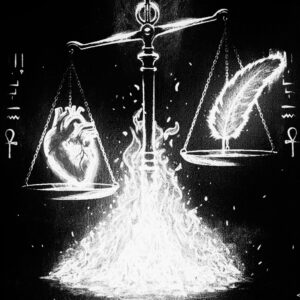
The entire concept of Ma’at involves living a good, balanced life and being a responsible member of society who treats others with dignity. The way we treat others has a direct effect on one’s afterlife as well: for people who uphold Ma’at will have a good afterlife, while those who violate Ma’at will not.

And this is just from ancient Egypt; other polytheist civilizations had their own complex legal and ethical systems as well. Virtually all of them had space for things like (1) grieving for the dead, (2) seeking lawful action against crime, and (3) believing they might somehow be judged in the afterlife for their actions here on Earth. Each of these ideas is built upon the assumption of human dignity; you don’t have things like funerals or laws against theft of personal property when you think the individual human life is of “no importance.”

I find it extremely problematic whenever Christians raise alarms about “human sacrifice.” For one thing, “human sacrifice” often served as capital punishment in many societies, with the sacrifices being criminals or prisoners of war. While there was often a ritualized element to appease certain deities or restore cosmic order, the functionality was really no different from sending someone to the gas chamber today (and having a minister “pray over” them before they go).

In other cases, the “human sacrifices” were not killed but left to die, either because they were fatally ill or there weren’t enough resources to be spared. This might sound callous, but we can be sure that it wasn’t easy for the families involved. Imagine having to leave a baby behind because you can’t feed it, and there are no hospitals or orphanages. Not a very easy decision to make, and I daresay that even Christians would find themselves making such hard decisions under the right circumstances. Thankfully, such practices tend to die out as civilizations (including polytheist ones) develop more and more infrastructure over time.

In still other cases, the “human sacrifices” were not killed to glorify any deities at all, but to accompany a king or a loved one in the afterlife (these are called “retainer sacrifices”). There is evidence to suggest that these were voluntary suicides, rather than ritualized murders. Either way, the practice was eventually phased out, EVEN DURING POLYTHEIST TIMES. The Egyptians in particular developed ushabti figures as a replacement, which could be used to accompany people in Duat *without* anyone being killed. And again, none of these “sacrifices” had anything to do with appeasing any deities; they had more to do with afterlife beliefs than with any theological claims about the Gods.

It is also a little bizarre to see Christians froth at the mouth against “human sacrifice,” when all of their religious symbolism and literature emphasizes the torturing and painful death of a man who was executed for an alleged crime, and who is himself presented to be their own version of a “human sacrifice.” Something about (1) the glorification of this horrific imagery combined with (2) the appetite many American Christians seem to have for watching other people suffer or be punished has always made my skin crawl. So much for Matthew 7:3-5, I guess.

Plenty of people in history have been slaughtered either for (1) not believing in Christ or for (2) not believing in Christ “correctly,” according to whichever authorities happened to be in power at the time. From the Crusades to the Inquisition to the witch hysterias, history is full of murders and violence being committed in the name of Christ. These heinous acts qualify as “human sacrifices” as well, and NOWADAYS, most religious violence and terror is being perpetuated by either Christians, Muslims or Jews. You’re more likely to be murdered by someone just for talking shit about Christ or Allah or Israel or Palestine than you are to find yourself in any real-life re-enactments of “The Wicker Man” or “Rosemary’s Baby.”

As for abortion; the concept of “fetal personhood” literally didn’t exist ANYWHERE – not even IN CHRISTIANITY – until the 1960s CE, *after* Roe v. Wade. This belief is NOT EVEN A CENTURY OLD, and Christians can’t even apply it to their very own predecessors. It’s about as “biblical” and “historical” as the Rapture.

Now for the bit about slavery. Dear GODS, Charlie; SLAVERY? Where do I even start?

Slavery has existed in virtually EVERY human society at some point – INCLUDING those shaped by Christianity, long after its arrival. Our own American history is full of horrific examples. American slaveholders often used selectively quoted scripture to argue for the divine sanction of slavery. They even popularized the so-called “Curse of Ham” as justification for this unfounded belief. Additionally, here are some specific examples of American Christian involvement in promoting slavery:

  • The Jesuits sold 272 enslaved people in 1838 to save Georgetown University from financial ruin; the Society of Jesus had previously relied on slave labor for decades.
  • The Church of England (Anglican) made direct investments in the transatlantic slave trade, operating profitable sugar plantations in Barbados. Profits from these plantations funded the church, and the slaves there faced brutal conditions.
  • The Southern Baptist Convention specifically broke away from their northern counterparts in 1845 to defend the “right” of their missionaries to own slaves; the entire denomination is founded on a pro-slavery ideology.
  • The Presbyterian Church had ministers who were slaveholders, including its earliest American leader, Reverend Francis Makemie, and it invested profits from selling slaves to generate income.

Frankly, I don’t want to hear ANOTHER FUCKING WORD about Christianity supposedly being morally “superior” to other religions in terms of its historical stance on slavery, EVER AGAIN. This is categorically, and quite despicably, FALSE.

To equate Paganism with wanton violence, and Christianity alone with compassion, is to erase the genuine spiritual, ethical, and legal advancements made by various non-Christian cultures throughout history. It also ignores the history of violence and oppression that has historically occurred under Christian rule, including slavery, persecution, and marginalization of outsiders.

This is NOT to say that “nothing good” ever comes from Christianity, or that everything ancient polytheists ever did was “okay.” Reality is seldom ever so cut-and-dry, no matter how much we might want it to be. No one is bad or evil just for being Christian, any more than they are just for being Pagan or anything else. I would like to live in a world where we don’t even need to have these discussions anymore, and everyone just understands that there are good people and crazy people in every possible religious category you might care to mention, and that no one is “evil” just because they fall into one category or another.

The point here is that Kirk and his fellows are blaming Pagans (in addition to transgender people, atheists, leftists, feminists, Democrats, etc.) for “stealing” people away from Christianity, when the thing that’s really driving most people away from their religion is CHRISTIAN HYPOCRISY. This is a problem that can only be addressed by Christians, and for which Christians can only hold themselves responsible.

But of course, such distortions of reality are the entire point, aren’t they? In writing this and other such extreme statements, people like Kirk show us they have zero interest in any facts or the truth. They don’t care about fairness, good faith, or actual dialogue. This is not the kind of verbiage people use when they truly believe in “peaceful coexistence.” If you truly “love your neighbor,” you don’t talk about them like they’re systematically organized and funded to “infiltrate” society, “brainwash” your kids, “overthrow the government,” etc.

No, this kind of language is specifically designed by and for people who want to see whatever demographic(s) they’re talking about removed from public life entirely. Dehumanize the target as much as possible so as to discourage any further helpful dialogue between our communities whatsoever. Make the reader feel “persecuted,” when really THEY are the ones most well-positioned to do the persecuting. Increase the likelihood of persecution—and religious violence—against the target by instilling as much misinformation and fear in the audience as possible. People are always more likely to obey and not ask questions when they’re scared.

In contrast, you won’t find nearly so many Pagan authors who call for Christians to be completely removed from society. Most of us just want to co-exist and be left alone. Some of us might say things that are extremely critical about Christianity, but this is no different from any other religion critiquing its peers. Besides, if Charlie Kirk can accuse people like me of being an “evil conspiracy” that threatens the very fabric of society, it seems only justified that I should be able to have my say too. And I say that all the right-wing politicians and media people who are actively capitalizing on Kirk’s death right now—like, say, Lucas Miles, for instance—are the REAL evil conspiracy, and one that we should ALL be worried about (Christians, Pagans, atheists alike).

How ironic it is that Kirk should claim Paganism denies the significance of individual human life, when the significance of his OWN life appears to have been denied to him by a fellow Christian, and when the entire narrative of his life has now been hijacked by OTHER fellow Christians, who are now using his “martyrdom” to fill their pockets, demonize innocent Americans, and dismantle our entire republic.
Same Shit, Different Millennium

How my favorite TV show—a 1990s police procedural with apocalyptic overtones—influenced my walk with Set.

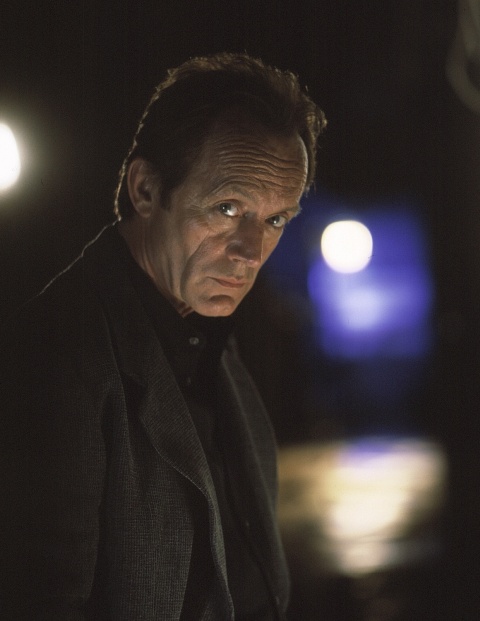
Millennium is one of my favorite TV shows ever made. It was created by Chris Carter, who also created The X-Files, and certain characters have appeared in both shows. But Millennium is no mere “X–Files spin-off”; it features a completely different cast of characters dealing with entirely different problems. While Special Agents Fox Mulder and Dana Scully track down weird monsters and alien conspiracies, retired FBI profiler Frank Black (played by genre favorite, Lance Henriksen) gets sucked back out of retirement to track down some of the most evil human beings imaginable. This is because Frank has a preternatural knack at seeing into the mind of every rapist, serial killer, or terrorist he targets his attention on. He can read about a murder in the paper and start getting random flashes of whatever the perpetrator is thinking and feeling. Much of this is due to Frank just being really good at his former job; yet he also clearly has “the second sight,” even catching glimpses of ghosts, angels, and demons from time to time. And as much as he wants to stay home with his wife and daughter and pretend “the bad men” aren’t really out there, Frank just can’t help himself; he’s driven to track down every evil thing he can pick up on his psychic radar, no matter what.

Lance Henriksen as “Frank Black” in Millennium (1996-1999)

Frank is approached by a private investigation firm called the Millennium Group, which consists of various ex-law enforcement personnel who’ve drawn some terrifying conclusions from all the horrific cases they’ve worked. For them, evil isn’t just a human ethical failing; it’s a real supernatural force that actively seeks to destroy our world (and which gets closer to achieving this goal every day). Every single rape or murder that happens is really a part of this gigantic plot, whether the human perpetrators fully understand what they’re doing or not. The Millennium Group also worries that the world might actually end in the year 2000, or perhaps not too long afterwards. Even though many members are deeply religious Christians who look forward to an eventual Second Coming, they nevertheless believe we can’t just sit back and “hope for a happy ending.” If something isn’t done about the state of things right fucking now, there may not be any human civilization left for Jesus to save when he comes back. So the Group uses a wide variety of resources to apprehend the human monsters that live among us, trying to save the world one case at a time. These resources include everything from all the best forensic science units to vast libraries of astrological, theological, and magical texts. And the Millennium Group is especially interested in Frank Black since he’s not only a total wizard at criminal profiling, but apparently an actual seer or oracle of sorts as well.

Terry O’Quinn as “Peter Watts,” a prominent Millennium Group member.

This show was inspired by many of the apocalyptic fears that ran rampant toward the end of the 1990s. (Does anyone else remember the Y2K scare?). This leads some people to think its subject matter is no longer relevant today. Let me just say, I beg to fucking differ. If there is one horrible truth that Millennium taps into, it’s the fact that people will always have apocalyptic fears that drive them to do terrible things. Even more terrifying, certain people actually want the world to end and will do everything they can to ensure that it does. This is every bit as true today in 2020 as it was back in 1996, and I would go so far as to say that Millennium is actually far more frightening and disturbing now than it was back then. I always found it much scarier than The X-Files because it was willing to take so many more risks. This is a show in which literally anyone can die at any time, and the fact that it lasted for three seasons (in the era of more popular shows like Angel and Buffy the Vampire Slayer) is nothing short of amazing.

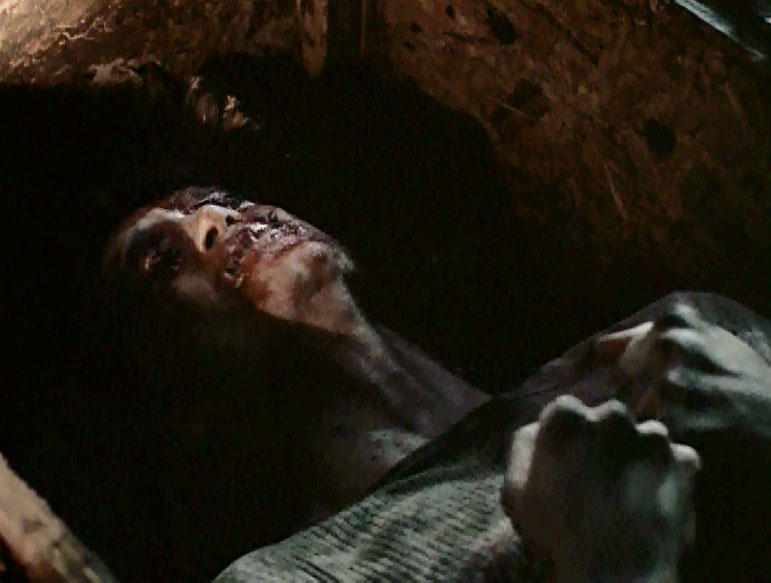
In the very first episode, Frank picks up his newspaper and learns that a local stripper has been horribly butchered. He then starts having visions of how (and, more importantly, why) this happened. That’s when Frank realizes he can’t just stay home and be with his family; he has to go back to work. (And the look that crosses Lance Henriksen’s face at that pivotal moment always makes me tear up and cry a little). So he approaches some old pals in the Seattle PD and offers to help them investigate the case. They eventually catch the killer, who thinks he’s the Messiah and is “passing judgment” on people by doing things to them that would have made Josef Mengele proud. But not before we see two of the most disturbing things that were ever shown on TV in the 1990s. First, Frank’s gift allows us to see just how Mr. Serial Killer sees the world, and it might as well be called “Hellraiser in the Park.” Then we get a scene where Frank and the cops uncover a man who’s been buried alive…and whose bodily orifices have all been stitched shut. They don’t just refer to this stuff off-camera, either; they fucking show it to us, clear as you please. That might not seem too impressive in today’s post-CSI world of gory police procedurals; but this was in 1996, and nothing like that had ever been seen on prime-time network TV before. Not even Law & Order or NYPD Blue went that far at the time, and this was all in the very first episode of Millennium, to boot! It scared me to death when it first aired back in October 1996, and it still gives me the shivers today.

This still ranks as one of the most disturbing things I have ever seen in any TV drama.

The three seasons of Millennium are drastically different from each other, as well. Apart from Frank Black’s psychic gift, there is almost nothing of the supernatural to be seen in the first season at all; the show is mostly just a police procedural at first, with our heroes chasing a different serial killer or terrorist each week. But as the season progresses, more explicitly supernatural things begin to happen. I will never forget the episode, “Lamentations,” in which Frank and the Millennium Group realize the killer they’re chasing is really a shapeshifting demon. The episode “Maranatha” is also terrific, featuring a Russian dignitary and mob boss who might actually be the Antichrist. These episodes were so brilliantly written, they completely caught audiences off guard at the time. Here we were, thinking this was just a police procedural with entirely human antagonists to be defeated; and then all of a sudden Chris Carter changes the rules on us and turns things up to 11. I remember being scared shitless by the scene in “Lamentations” when “Lucy Butler” walks down the staircase, showing us her real face between lightning strikes.

The formidable Lucy Butler in another of Millennium’s freakiest moments.

The second season of Millennium is my personal favorite; we get into some really crazy stuff here. Frank’s psychic powers become much stronger, he becomes more involved in the Millennium Group’s internal affairs, and he meets a lady named Lara Means (played by Kristen Cloke) who can see angels. (Whenever she sees the angels, it means something real fucked up is about to happen.) Frank also learns the Millennium Group consists of different factions that are bitterly opposed to each other, and that some high-level members are every bit as evil as all the serial killers and terrorists they help to catch. This leads to some truly remarkable stuff, including a civil war within the Millennium Group, a battle against Nazis for the Cross of the Crucifixion, and even the outbreak of a deadly supervirus! In some ways, Millennium Season Two almost feels like a totally different show; but the changes all worked, and every Millennium fan I know considers this era of the series to have been the very best. 

Another of Millennium‘s most disturbing scenes, from the Season 2 Finale (“The Time Is Now”).

Unfortunately things did not turn out quite so well for Millennium Season Three. I remember waiting patiently through the entire summer of 1998 to see how Frank and his daughter Jordan (played by Brittany Tiplady) were going to escape a plague-infested Seattle. But when Season 3 begins, Frank and Jordan are suddenly living in Virginia with Jordan’s grandparents. We are told the outbreak in Seattle “wasn’t actually as bad as it seemed,” and nobody but Frank even seems to remember that it happened. Meanwhile, Frank teams up with FBI Special Agent Emma Hollis (played by Klea Scott) to try and bring down the Millennium Group, which has become completely evil. Peter Watts (played by Terry O’Quinn), who was Frank’s sidekick in Seasons One and Two, is now re-cast as Frank’s arch-nemesis. None of this has anything to do with where Millennium appeared to be going in Season 2, and it alienated most of the fan base pretty badly. Plus, most of the stories in Season 3 make no fucking sense at all; they are more like rejected X-Files episodes that are just weird for weirdness’ sake. It took me several years to finally watch the entire season all the way through, and I have zero interest in ever trying to doing so again. It felt like Chris Carter lost his marbles and decided to just give all of us Millennium fans the finger.

To add insult to injury, Carter included Frank Black as a guest character in an episode of X-Files after Millennium was canceled in 1999. In this episode (rather creatively titled “Millennium”), Frank is living in a psych ward when Mulder and Scully come to ask him some questions about the Millennium Group. This leads to a so-called “final confrontation” between Frank and the Group at a cabin in the woods, where the last remaining Group members have been turned into zombies. I for one do not know what the fuck Chris Carter was thinking when he wrote all of this. During Millennium‘s three-year run, viewers learned the Group is up to all kinds of crazy shit, including biological warfare. But according to The X-Files, the Millennium Group is really just a handful of zombies locked up in a basement. What the FUCK? To say that Millennium fans were disappointed by this is an understatement. 

Frank Black and Fox Mulder watching football in “Millennium” (X-Files, Season 7).

In Egyptian cosmology, our universe is sustained and held together by Ma’at, which is both a principle and a Goddess. As a principle, it essentially represents helping others to help yourself, both in this life and in Duat (the Otherworld). The ancient Egyptians believed Ma’at is always endangered by the forces of isfet, which are led by the Chaos Serpent. Should Ma’at ever be completely dismantled, the entire cosmos would cease to exist. The “apocalypse” was not a “future” event that had yet to occur, but an ever-present threat that could happen at any possible moment. And the Egyptians believed it was really everyone’s responsibility to help prevent this from happening. The key to upholding Ma’at and fighting isfet was to be a good neighbor and citizen, treating others as you yourself wished to be treated. In this way, every human ethical decision has some part to play in the never-ending war between the Netjeru and Apep, no matter how small or insignificant such decisions might seem.

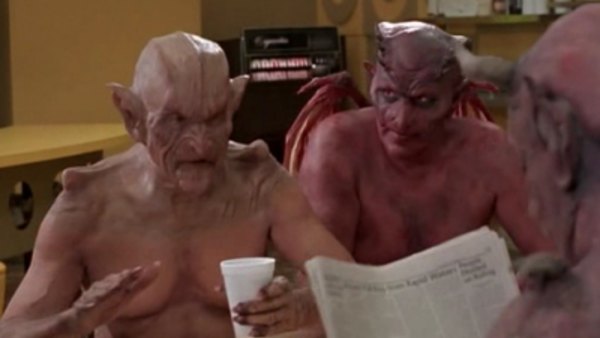
Even the powers of isfet need a coffee break. (From Season 2, “Somehow, Satan Got Behind Me.”)

Millennium really speaks to me on this level. Though it is mostly inspired by Christian themes, the idea of the Millennium Group trying to save the world one case at a time struck me as being more of a Kemetic concept. It was especially meaningful to me that Season 2 aired during my freshman year of high school, which was my very first year of walking with Set. My first weekend Sabbats were spent watching Millennium with Big Red and wondering how I could grow up to become just like Frank Black. I even considered studying to become a criminal profiler myself at one point, if you can believe it. (But then I came to my senses and remembered I struggle with depression enough as it is; so investigating murders and such is probably the last thing I should be doing). If there is any particular character from popular culture who has shaped my concept of “What it means to be a Setian,” it is most definitely Frank Black, who taught me that even the smallest acts of human kindness can be major victories for Ma’at!