
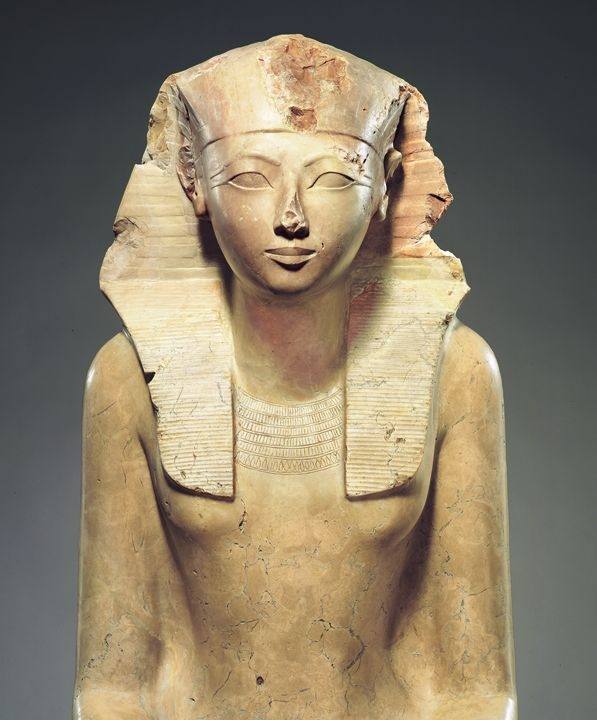
The Pharaoh Hatshepsut was a woman. But in her role as Pharaoh, she presented herself as a man. When you become the Pharaoh, you became a human incarnation of the male God Horus, and the Egyptians figured this applies just as well to a woman as it does to a man. The office itself was more important than the sex or gender of the office-holder. So Hatshepsut wore the Pharaoh’s crown, the royal kilt, the trademark “false beard,” and she was even addressed as male by the people, at least within the context of her rulership. And since her reign was remarkably stable and successful, no one in Egypt considered her being the Pharaoh or wearing men’s clothes to be “scandalous.”
While this is not exactly a perfect parallel to the world we live in today, it does go to show that ancient peoples were not nearly so rigid about sex and gender as people living today would like to assume.