
Author: G.B. Marian
Rest In Peace, Sam Neill

I was sad to learn yesterday of Sam Neill’s passing. Like most people, I first encountered Neill in Steven Spielberg’s Jurassic Park (1993), wherein he plays Dr. Alan Grant. I next encountered him in John Carpenter’s In the Mouth of Madness (1995) and in Paul Anderson’s Event Horizon (1997). But what really captivated me was Neill’s performance as the adult Damien Thorn in Graham Parker’s The Final Conflict (1981), which is the third and final entry in the original Omen Trilogy.
I have already reviewed this film extensively in In the Desert of Set #34: Ishtar’s Final Conflict with “the Man,”; it is, in my opinion at least, the single most engaging entry in the entire Omen series to date. While the 1976 original starring Gregory Peck is probably the superior film by all objective standards, I personally enjoy The Final Conflict much more. This film also features the very best cinematic portrayal of the Antichrist I have ever seen; none of those Left Behind movies on the Trinity Broadcast Network can compare to it. Sam Neill doesn’t just play Damien as some two-dimensional cartoon villain; he plays the role as if he personally believes Damien is actually the hero in this story. And he succeeds in getting us to actually root for his character, even while he orders countless newborn babies to their deaths.
I’ve showed this movie to several people over the years, and they have each had the exact same initial reaction: “Sam Neill is supposed to be the bad guy here, right? I’m not supposed to be rooting for him, right? Because I really, really want to see him win, and this is making me feel really weird.” That right there is the brilliance of this film in a nutshell. The entire point of the Antichrist is that he’s supposed to be this evil world ruler who deceives people into loving him and worshiping him. He’s supposed to be so suave and charismatic that no one can resist him, not even when they learn what he really is. To date, I have never seen any other actor portray the Antichrist as being so irresistable; Sam Neill is the only actor to have truly captured this aspect of the legend.
The Final Conflict is also much more than a “normal” Antichrist or Armageddon film, in that its titular conflict is not simply between Satan and Christ, but between male religious tyranny (both Christian and Satanist) and female agency. The character of Kate Reynolds (played by Lisa Harrow, who was Sam Neill’s romantic partner for a few years, as well as the mother of his son Tim) is the true savior figure in this narrative. She is not the normal “Christian” hero we might expect to see in this kind of story; in fact, she is actually a skeptic, a secularist, a feminist, and a single mother to boot. In my opinion at least, Kate is almost like a cinematic avatar for the Babylonian Goddess Ishtar, sent to sacrifice Damien for his failed and tyrannical leadership. Though the film has some structural flaws, it offers a suprisingly feminist and Pagan-influenced reinterpretation of biblical horror.
Alas, I’m supposed to be commemorating Sam Neill here. I first saw The Final Conflict when I was 17 years old, and this viewing coincided with a phase in my spiritual journey where it seemed like Set had “traded” me with the Goddess Ishtar for about a year. This is probably why the film makes me think about Her so much, in particular. I am indebted to both Sam Neill and Lisa Harrow for helping me connect with Ishtar in such a fulfilling way during this time. I love this film, it’s what made me a Sam Neill fan for life, and now that Mr. Neill has departed, I feel the urge to watch it several times on loop.
Rest in peace, good sir; you will be remembered for each and every one of your roles by those who adore you.
Supergirl (2026)

The original Supergirl film from 1984 is one of my childhood favorites, though it is an extremely terrible film. This is not the fault of Helen Slater, who does a terrific job portraying the character and working with what she is given. It’s more an issue with the film’s script, which was written by horny old men. As a result, 1984’s Supergirl is little more than a two-dimensional soap opera in which the titular hero and the primary antagonist (a goofy witch played by Faye Dunaway) have a prolonged catfight over a man. It’s also mostly an excuse for the male gaze to linger on Helen Slater while she flies around in her skirt. The story is shit, the plot is full of gaping holes, and the film flopped in theaters so miserably that it took almost three entire decades for Hollywood to give us another female-led superhero drama. Indeed, 1984’s Supergirl was cited as “evidence” that audiences “just didn’t want to see female action heroes on the big screen,” which is absolutely not true. Films like Aliens (1986) and Terminator 2: Judgment Day (1991) demonstrate that audiences were perfectly capable of accepting female action heroes at the time; the makers of Supergirl (1984) simply didn’t care enough to make a good film.
But now, 42 years later, a new Supergirl film (2026) has come along to help us forget all about that 1984 travesty. I saw the film last weekend, and I was deeply satisfied. Craig Gillespie’s new film is much more character-driven than its predecessor, exploring the titular Kara Zor-El’s anguish over losing her home planet of Krypton (something that her cousin, Kal-El/Superman, never personally experienced, since he was just a newborn when Krypton died). Milly Alcock is phenomenal in the role, communicating both vulnerability and strength. I love the fact that Alcock’s Supergirl never wastes time fighting with anyone over a man, and she is never framed onscreen for the male gaze either. (She doesn’t need to be; that woman is already compelling enough to look at all her own, without any need for being sexualized.)
But most importantly (for the storyteller in me, at least), Supergirl deserves special mention for avoiding the typical superhero movie mistake. For the past two decades, damn near every superhero movie has culminated in some kind of “end of the world” plot. They’re all about trying to prevent the destruction of the universe or whatever — which is totally a noble goal, of course; but it is overused way too often in superhero films these days. Not every superhero movie needs to feature an alien invasion or a portal to hell opening up in the sky and what-not. It’s refreshing to see a superhero film where the hero goes on a much smaller (but no less important) kind of quest — a quest to save her dog, Krypto, and to help avenge the murder of a young girl’s family. In many ways, Supergirl feels less like your standard superhero flick and more like a Western that just happens to take place in outer space. (This is a compliment.)
I’ve always liked Supergirl a little bit more than Superman. I love both characters, but Kara Zor-El has always captured my heart in a way that Kal-El can’t. So it was extremely important to me that this new Supergirl movie should give her character the solid respect she deserves. Well now I finally have what I’ve always wanted: a Supergirl movie where Supergirl isn’t just a sex object, but a real three-dimensional character with a unique soul of her own. Milly Alcock is now my favorite onscreen Supergirl ever, and I don’t think anyone will be taking her place anytime soon.
Unfortunately, not everyone seems to enjoy Supergirl (2026) as much as I do. Before the film was even released, there was a passionate campaign by misogynist internet trolls to vilify the film, and to humiliate anyone who had anything positive or nice to say about it. Dean Cain (“Nobody’s Favorite Superman,” who played Big Blue in TV’s The Adventures of Lois and Clark) even weighed in, making fun of Milly Alcock for her ear piercings and for her looks. An awful lot of toxic men have even compared Alcock to “the Feral Kid” from George Miller’s Mad Max 2: The Road Warrior (1981), which is just unacceptable. And again, all of this was said before the film was even released and before anyone could even give Alcock’s performance a chance.
First of all, the earrings argument is dumb because everybody knows Kryptonians are just normal mortal humans when they live beneath a red sun, such as the native sun of Krypton. It’s also dumb because we have seen Kryptonians wear clothing and jewelry in many other adaptations of the same source material, including 1978’s Superman: The Movie. So it is completely believable that Kara Zor-El might have had her ears pierced when she was still a young woman on Krypton, long before she came to Earth and was empowered by our yellow sun.
Secondly, everyone knows the quickest way for men to punch down on women is by targeting their bodies and vilifying their looks. Creeps like Dean Cain should be ashamed of themselves for continuing to perpetuate such commentaries against Alcock.
Some viewers have more solid reasons for disliking the film. It is partly based on a graphic novel entitled Supergirl: Woman of Tomorrow, which has quite a fanbase; and some fans of the graphic novel take issue with the film for not adapting that story well enough. I can respect and understand this argument, but I do think it is being leveled against Supergirl somewhat inconsistently. Other superhero films have been partly based on popular graphic novels as well, including 2008’s The Dark Knight (which is partly inspired by Batman: The Long Halloween, one of the most successful Batman stories ever told). In fact, The Dark Knight takes many liberties with The Long Halloween; yet I have never heard a single person accuse the film of “bastardizing” that comic. Of course, Batman is a male superhero, so the filmmakers are given much more leeway to do whatever they want. But when the exact same thing is done for a female superhero movie, everybody and their lawyer suddenly thinks every comic book adaptation needs to be 100% accurate. The same comic book fans who are fine with Batman murdering Ra’s al-Ghul or Two-Face will give Supergirl hell just for “not smiling enough.”
Movie culture has become so toxic and divisive over the past decade, it simply isn’t fun anymore. We can’t even wait for a film to be released before people start politicizing and shitting all over it. Movies are no longer treated as art, but as mere investments, even by regular moviegoers. And I am pretty Gods-damned sick of it.
Having said all of that; I consider Supergirl (2026) to be the best film I have seen this year so far, and I highly recommend it to anyone else who might be a Supergirl fan, or who might just want to see a female-led action film that doesn’t feature any sex or romantic subplots. I look forward to seeing this film again, and I look forward to seeing Milly Alcock return as Kara Zor-El in a future film.
More Than One Thing Can Be True At The Same Time
I’m very glad for the Pope’s stance against /rump, and I can certainly appreciate why people across various religions and philosophies are siding with the Catholic Church at this time.
But some of us are also conveniently forgetting certain things about the church that are still quite relevant, even in our current political environment.
The Pope has said that “God does not listen to the prayers of those who wage war.” Yet the Catholic Church was responsible for launching the Crusades to reclaim Jerusalem from Muslim control.
Yes, this happened a very long time ago; yet it clearly continues to affect things that are happening today. While I quite agree with this Pope’s stance against warmongering, I can’t ignore the fact that Pete Hegseth’s macho-posturing is pretty much a DIRECT CONTINUATION of Catholic Crusader rhetoric. (“Deus vult,” anyone?)
In other words, the current Pope is criticizing Hegseth (and the rest of this administration) for doing the same thing earlier Popes did, while believing “God” was completely and most definitely on their side.
The Catholic Church is also responsible for the medieval Inquisition, which resulted in the senseless murders of thousands of “heretics.” It participated in the Trans-Atlantic Slave Trade. It purchased and owned slaves. It forcibly de-culturalized Native American children, forcing them to convert and even snatching them away from their birth families.
Additionally, the church continues to fund and support anti-LGBTQ+ policies across the world. And lest we forget, it was American Roman Catholics who invented the term “fetal personhood” (which had never existed previously in any culture) during the 1960s.
Even just a few short years ago, the previous Pope made headlines for saying people who choose not to have children, or who prioritize raising animals instead, are “being selfish.” Rather hilarious words from a man who never had any children or pets himself; but my point here is that even THAT Pope was more concerned with other people’s bodies than he should have been.
If we’re talking about immigrants, we are on much steadier ground. The Catholic Church has long been pro-immigrant, and the current Pope is absolutely right to take that stance.
But let’s not forget that more than one thing can be true at the same time. Yes, it’s great the Pope is defending immigrants. But unfortunately, the Catholic Church still doesn’t accept you for being trans. It still wants you to carry your pregnancy to term, even if you were raped. It still believes men are superior to women, that women can’t be ordained. It still harbors and protects abusers, prioritizing them over their victims.
So while we applaud the Pope for his stance against warmongering, let’s not forget that the institution he runs has a horrific legacy that is not limited to ancient history by any means, but which is still happening and hurting innocent people even today.

Remembering Hatshepsut
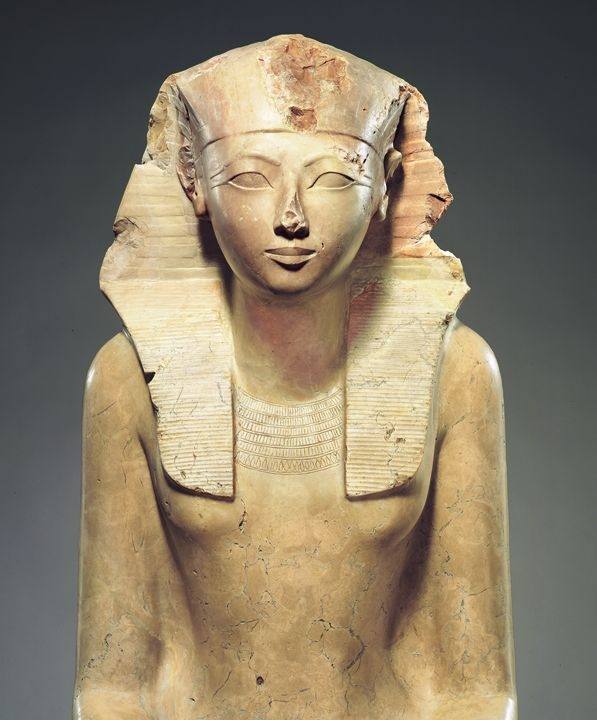
The Pharaoh Hatshepsut was a woman. But in her role as Pharaoh, she presented herself as a man. When you become the Pharaoh, you became a human incarnation of the male God Horus, and the Egyptians figured this applies just as well to a woman as it does to a man. The office itself was more important than the sex or gender of the office-holder. So Hatshepsut wore the Pharaoh’s crown, the royal kilt, the trademark “false beard,” and she was even addressed as male by the people, at least within the context of her rulership. And since her reign was remarkably stable and successful, no one in Egypt considered her being the Pharaoh or wearing men’s clothes to be “scandalous.”
While this is not exactly a perfect parallel to the world we live in today, it does go to show that ancient peoples were not nearly so rigid about sex and gender as people living today would like to assume.
Shut Up About “Ba’al” and “Moloch,” Already!
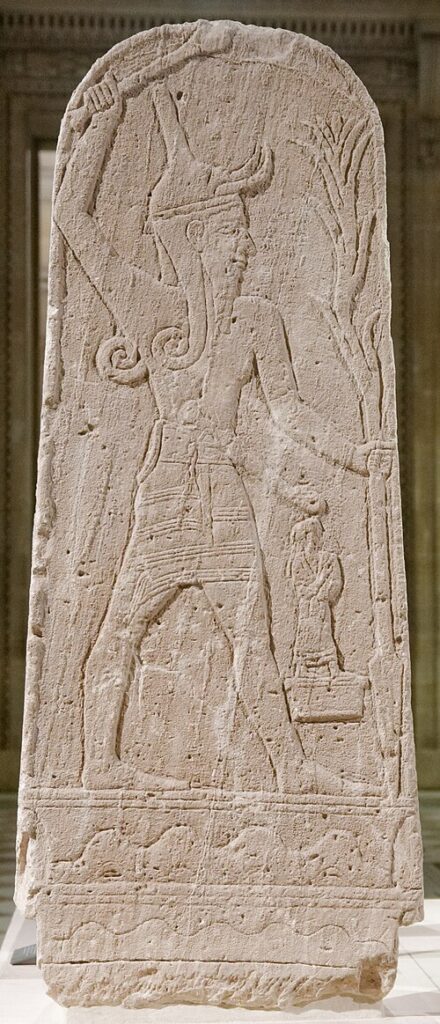
Everyone who keeps repeating this bullshit about “worshiping Ba’al” needs to treat themselves to a nice hot cup of SHUT-THE-FUCK-UP.
When people start murdering people in the name of HaShem, Jesus or Allah, you don’t get to re-write the narrative and blame Paganism.
A Near Eastern polytheist storm deity is not in any way, shape or form responsible for the evil things that people who claim to be Christian, Muslim, or Jewish are doing.
Saying, “These people aren’t really worshiping ‘God,’ they’re worshiping BA’AL” is real fucking cheap. Their evil and hypocrisy can’t POSSIBLY be due to something toxic within their very own religions, cultures or power structures, right? It HAS to be some kind of external “Pagan” influence, right? Because absolutely nothing good can ever come from anything that isn’t monotheism, right?
It is vital that we distinguish historical polytheism from the ghoulish polemics of monotheistic establishments. Modern claims of “Ba’al” or “Moloch” worship among global elites are based on ancient propaganda, not archaeological reality.
“Ba’al” is not a name; it is a Semitic title meaning “Lord,” “Master,” or “Owner.” Historically, it was applied to numerous distinct deities, such as Baal Hadad (storm god) or Baal Melqart. Treating “Ba’al” as a singular, demonic entity is a historical oversimplification used by biblical redactors to demonize neighboring cultures.
Modern scholarship suggests “Moloch” was never a deity. The term likely derives from the Punic word mlk (molk), referring to a type of sacrifice or votive offering.
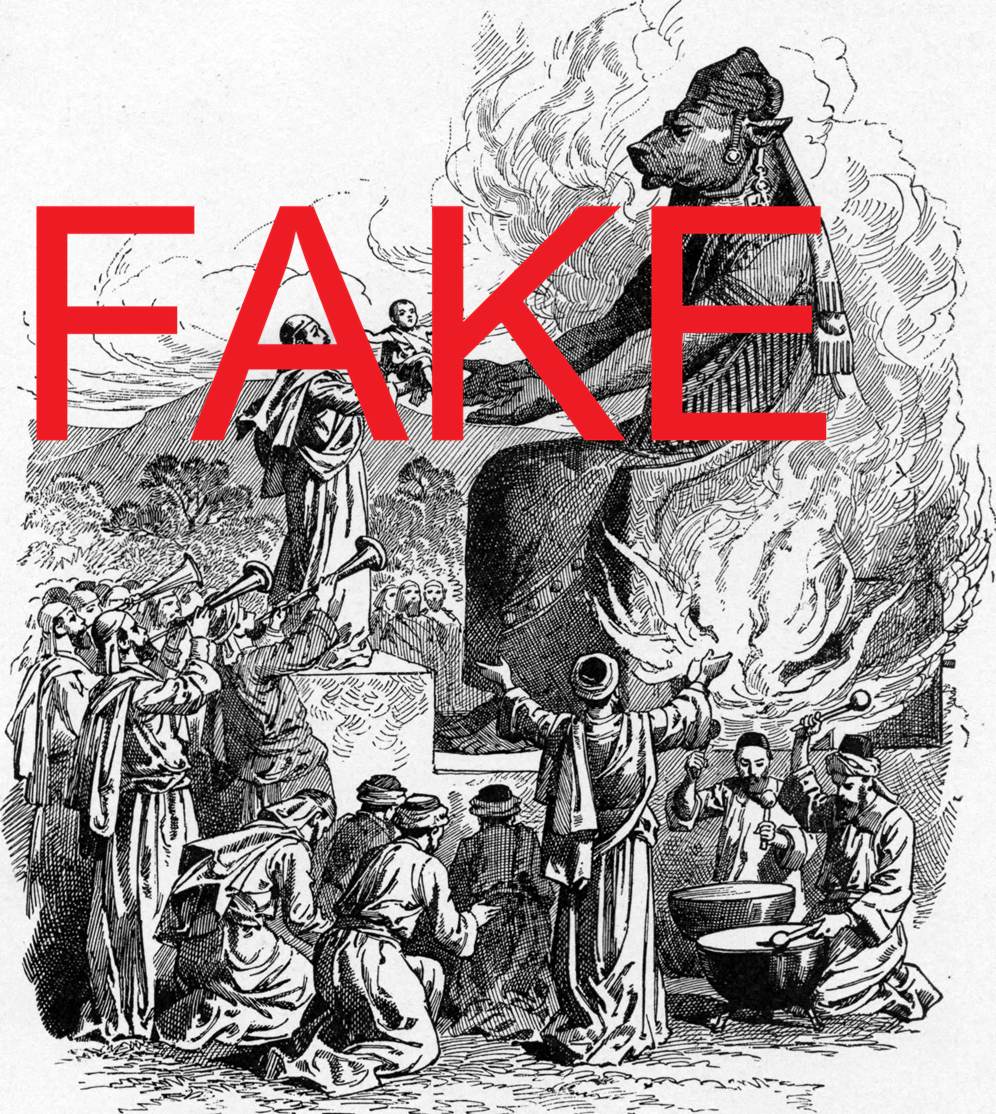
- The “Bull Oven”: There is zero archaeological evidence of a “bronze bull” used for burning infants. These accounts were largely Greek and Roman literary inventions (e.g., Diodorus Siculus) used to justify the destruction of Carthage.
- The Tophets: While infant burial sites (Tophets) exist, osteological evidence suggests many remains were infants who died of natural causes. In a time of high infant mortality, these cremations were likely a ritualized return of the deceased to the gods, not mass murder.
The “infant sacrifice” trope is a recurring tool of blood libel. Just as the Romans used it against Carthage and medieval Christians used it against the Irish (Crom Cruach), modern fundamentalists use it to demonize “Pagans” and those supporting reproductive freedom. This mythologizing transforms political enemies into “barbaric sociopaths.”
There is no organized, well-funded community of “Ba’al worshipers” today. Contemporary polytheists are decentralized and lack the resources to fund global conspiracies. Those currently holding power and committing atrocities typically align with Abrahamic traditions or secularism, not ancient Levantine polytheism.
“Moloch” is a centuries-old polemic. Insisting that modern atrocities are “Moloch worship” only serves the evangelical establishment’s goal of demonizing minority faiths.
So I mean this from the very bottom of my heart: FUCK you. FUCK you and your privilege, FUCK you and your “spiritual warfare,” FUCK you and your satanic panics, and FUCK you and your cheap, fragile, performative, empty-headed “faith.”
Punching Ap-p Right in the Kisser

“It feels like Ap-p is winning.”
I completely understand, and I empathize deeply. I have been struggling with similar emotions as of late.
One of Set’s many strengths is that He can stare right into the eyes of Ap-p without being hypnotized or paralyzed. So too must we, His people, learn to acknowledge the evil and ugliness that’s happening all around us, but without letting it freeze us dead in our tracks.
We might have varying degrees of success at this; Set knows we are only human, after all. The point isn’t to somehow become “perfect,” but to *keep working* to manifest His resilience in ourselves as best as we humanly can.
Execrating Ap-p is not a “one-and-done” kind of deal. This evil thing is deathless and can never be completely destroyed. It must be execrated again and again, repeatedly and forever, both by Gods and humans alike.
There can never be a “final definitive battle” with Ap-p. The monster can never claim a “final victory” (thanks be to Set), but then again, neither can we. There will never be a point where everything that needs to be fixed in this world is finally fixed, once and for all. There is always going to be some kind of room for improvement *somewhere*.
Yes, the world is even scarier right now than it already was, even just last week. But this fear is designed to make us STOP MOVING and FALL SILENT. To drown us in our inertia, and to make us feel that everything we do or hope for is absolutely futile. That’s just how isfet works.
The best way to fight Ap-p right now includes, but is not limited to, either of the following suggestions:
- Finishing that new paint job you’ve been wanting for your kitchen
- Continuing to work on your art or your writing
- Planning that new garden you’ve been thinking about
- Being extra kind to someone who’s having a bad day
- Continuing all that work you’ve been doing for your academic degree
- Randomly doing something nice for someone just to try and brighten their day a little
- Adopting a cat (or another critter of your choice)
- Etc.
Any movement, any creation, any improvement of your immediate environment that you can manage is a DIRECT STRIKE against the serpent – no matter how small or insignificant it might seem. Maybe that book you’ve been writing is going to really help someone in need! Or maybe that video you’ve been working on is just what someone else needs to make it through their day! Even if your house is in shambles, just cleaning up one little pile of stuff in one corner somewhere is like punching Ap-p right in the kisser. It HATES when we do things like that, because things like that are when Set manifests through us the most.
I can’t promise that what’s happening across the world right now *won’t* turn into WWIII. I can only promise you I will do my very best to keep on sticking it to Ap-p with all the good works and vibes I can possibly muster; and I hope that you will too.
Dua Set! MAY THE SERPENT TREMBLE WHEN WE PASS NEAR!!!
A New Satanic Panic

I am extremely upset to see people who are Pagans, polytheists or witches repeating these allegations that Epstein was a “Satanist.” I expect that kind of bullshit from evangelicals, but not from my own people. This is straight out of the 1980s Satanic Panic, and you should all KNOW BETTER. You are not doing Paganism, polytheism, or witchcraft any favors by peddling that stuff.
We all need to be VERY FUCKING CLEAR that there has NEVER been an international Satanist conspiracy to abuse, murder, or cannibalize entire populations of children. This entire construct is rooted in both anti-Pagan and anti-Semitic tropes. It was used in the 1980s and 1990s to distract the masses from REAL cases of systemic abuse that were happening in Christian churches and other spaces that nobody wanted to think about at the time. After all, it’s so much easier to protect an abusive priest or minister if you have everyone in your neighborhood terrified that “witches” are coming for their kids. That way, the neighbors are too busy keeping an eye out for the “devil worshipers” to even notice the abusers in their own midst.
If you’re Pagan and you are immediately jumping to this “Epstein was a Satanist” baloney, you are ignoring the fact that most of the people associated with Epstein seem to consider themselves Christian. You are ignoring the fact that a person does not HAVE to “worship Satan” to be evil; they can worship Christ, or at least claim to do so, and STILL be fucking evil. You are ignoring the fact that the entire time they had us terrified of an imaginary Satanic pedophile conspiracy, they were building and nurturing a REAL LIFE CHRISTIAN pedophile conspiracy. You are also ignoring the fact that repeating these tropes is actively harmful to our community, and will have negative consequences for ALL of us. The outside world is just too fucking stupid for us to be playing games with this shit.
I highly doubt Epstein believed in anything—and even if he did, it was only performative at best. His actions are already horrific enough for what they really are; they don’t need to be embellished with medieval tropes that have been used against various minorities over and over again. Seeing certain people in my own community share stories of Epstein making pacts with “Baal” or cooking and eating babies for some kind of magical ritual is just…really, really demoralizing. It would be one thing if there were actual evidence of these stories, but there (predictably) isn’t, which means these people are participating in a rumor panic.
Every Day Is Judgment Day
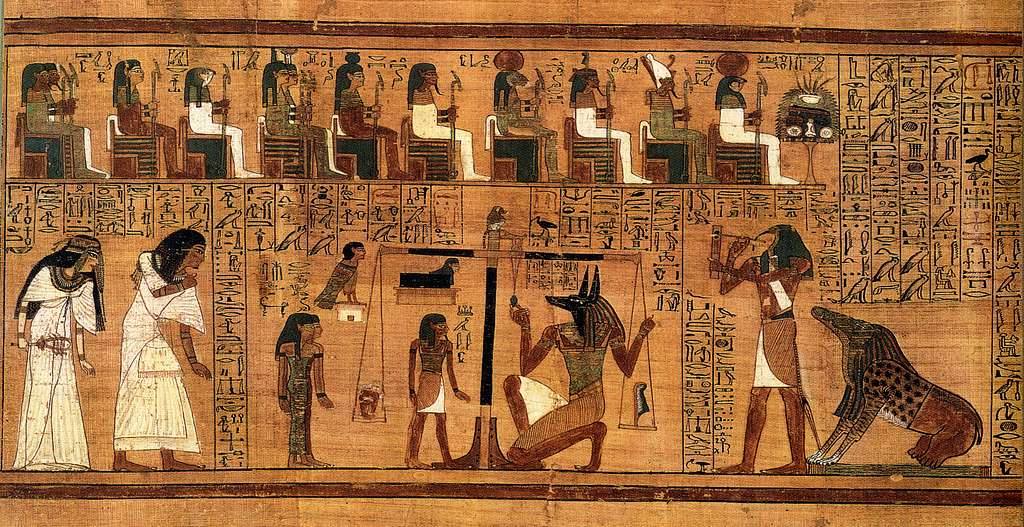
I firmly believe that in the afterlife, we will be judged for what we have done during our lives.
Despite the Western Orientalist use of “reincarnation” as a narrative device in several different “Mummy” movies, reincarnation does not figure into the Egyptian afterlife scenario. Souls instead have a linear afterlife wherein they are either transfigured into akhu (blessed ancestor spirits, identified with the stars in the nighttime sky) or are fed to the daemon Ammut, whereupon they cease to exist for all time. In other words, we will either live forever beyond death or we will “die the second death.”
In this way, Kemetic eschatology is much closer in principle to Christian afterlife beliefs than it is to, say, Hindu or Buddhist ideas. But there is still an extremely important difference. In evangelical Christianity especially, entrance into heaven is “impossible” without personal submission to Christ. But in Kemetic theology, the soul is measured against its earthly deeds and misdeeds during the Weighing of the Heart. We are either “saved” or “damned” based on OUR OWN ACTIONS, here upon this earth.
Evangelical eschatology is problematic because it prioritizes submission to a specific deity over ethical decision making. You could be a horrible psychopathic murderer your entire life, and all you have to do is “accept Christ” and alashazam, you’re suddenly “saved.” On the other hand, you could be a perfectly good person your entire life, but you will “go to hell” for “rejecting Christ” no matter how good a person you are. This theology makes the evangelical God seem like a total narcissist who just doesn’t care whether His followers are actually good people or not.
In Egyptian polytheism however, this problem does not exist. It literally doesn’t matter whether you worship Set, Osiris, Sekhmet, or even nobody at all. As long as you uphold Ma’at by being a good neighbor, modeling compassion, helping those who need help, taking responsiblity for your own actions, etc., then you have nothing to worry about. You don’t have to be a perfect person; you just have to have enough Ma’at in your heart that it outweighs any isfet or toxicity.
For someone like Jeffrey Epstein, who has committed countless crimes and abuses against innocent people, it will not matter how much they cry or beg for forgiveness. It will not matter if they beg Osiris, Set, or even Jesus Christ Himself to “have mercy” on them. There will be no mercy for them at all, for at the end of the day, neither Osiris nor Set nor Christ is responsible for what they have done. THEY are responsible for bringing their own damnation upon themselves.
The point here is that our eschatological destinies have nothing to do with which God(s) we worship (if any); nor are they dependent upon the whims of any God(s). What happens to us after we die is literally DETERMINED BY OUR VERY OWN ACTIONS IN THE HERE AND NOW, while we live and breathe.
Every single ethical decision we make will have some bearing on our afterlives, no matter how small or insignificant that decision might seem. Even the smallest acts of kindness can make all the difference; so too can even the smallest acts of malice.
The next time you’re standing in line for coffee and you find yourself losing patience with your barista, remember that even the way you choose to interact with this stranger is being spiritually tracked, and even this can have repercussions that reach far beyond your current scope of awareness. Maybe the barista is having a bad day, or maybe they are suicidal. The way you treat them can make their day either better or worse. It can also make the day better or worse for everyone else who might be involved in that person’s life. This one little interaction can either improve or ruin the day for a whole lot of people you might never even meet. If you are someone who values Ma’at, you will want to treat this person with kindness, even if they make a mistake or do something wrong. But if you are a toxic person whose soul is already destined for Ammut’s litterbox, you will more likely treat this person like an insect, or perhaps even yell at them or try to humiliate them in front of everyone,
There is also an apocalyptic implication to this, as well as the eschatological implication. If enough people uphold Ma’at and treat each other well, things get better and better for more people. But if too many people spread isfet and treat each other like total sacks of shit, things get worse and worse for more people instead. This shows us that even the smallest acts of kindness or malice can contribute to larger social trends. If we want to save the world, we have to start by improving ourselves and the ways we treat others. No amount of prayer or wishful thinking can replace this extremely important work.