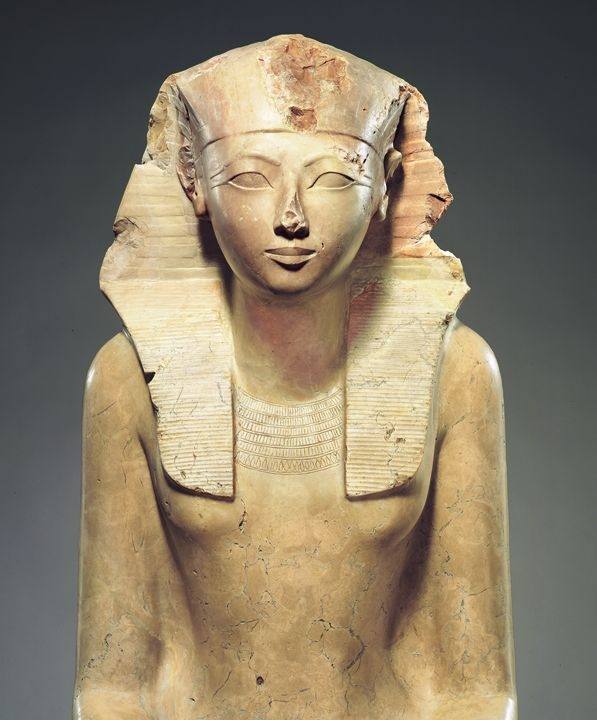
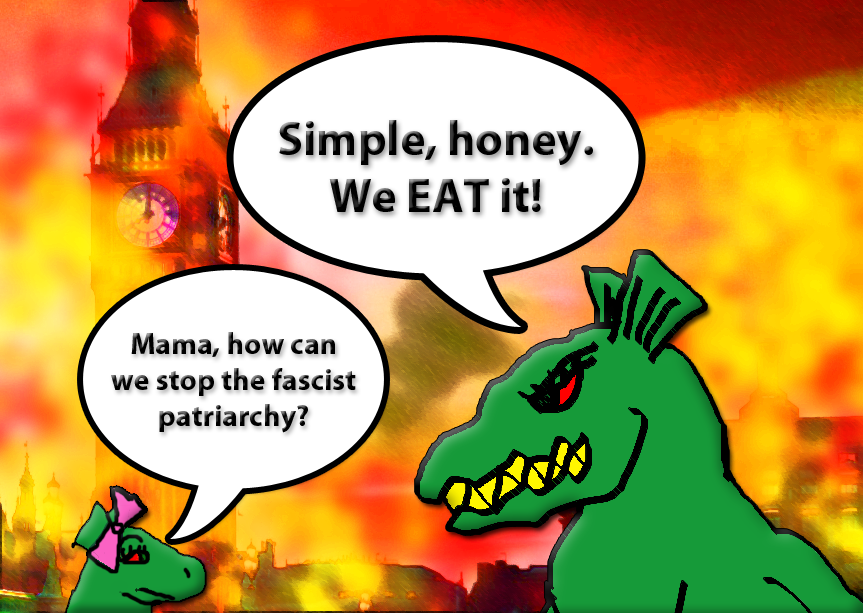
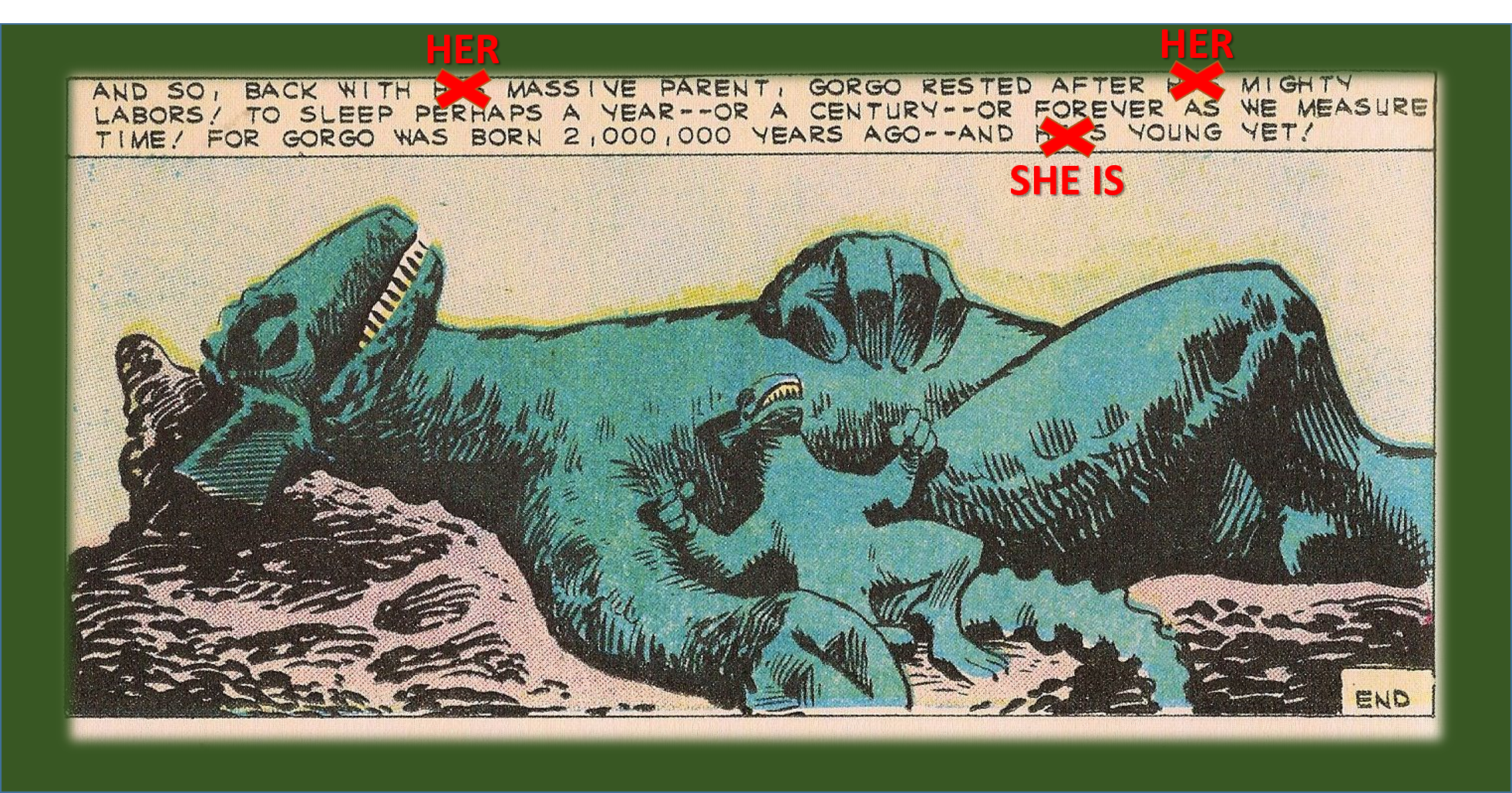
The Pharaoh Hatshepsut was a woman. But in her role as Pharaoh, she presented herself as a man. When you become the Pharaoh, you became a human incarnation of the male God Horus, and the Egyptians figured this applies just as well to a woman as it does to a man. The office itself was more important than the sex or gender of the office-holder. So Hatshepsut wore the Pharaoh’s crown, the royal kilt, the trademark “false beard,” and she was even addressed as male by the people, at least within the context of her rulership. And since her reign was remarkably stable and successful, no one in Egypt considered her being the Pharaoh or wearing men’s clothes to be “scandalous.”
While this is not exactly a perfect parallel to the world we live in today, it does go to show that ancient peoples were not nearly so rigid about sex and gender as people living today would like to assume.
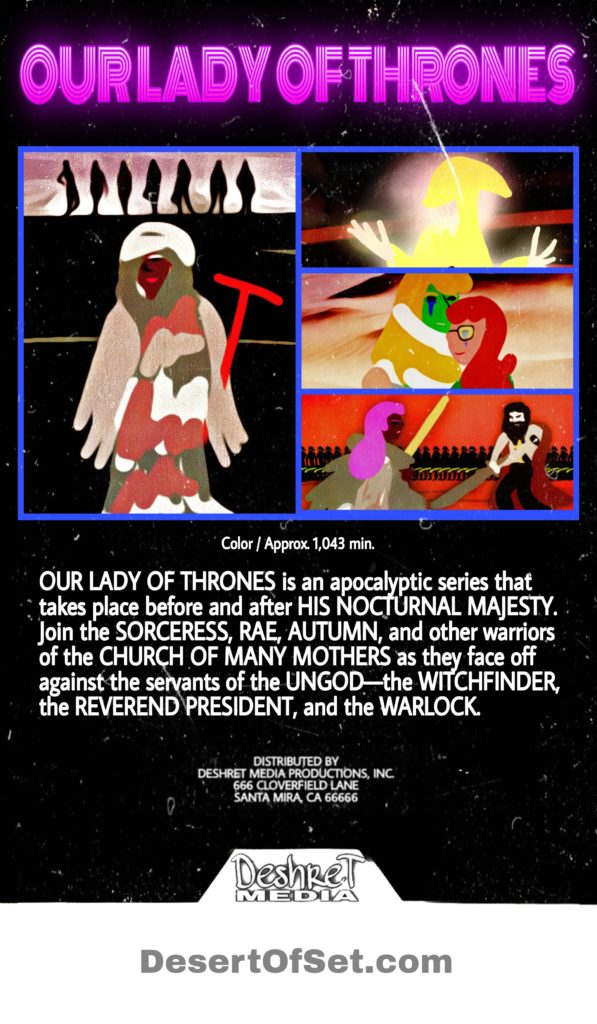
Our Lady of Thrones is the follow-up to last year’s His Nocturnal Majesty(2020). Both stories revolve around the appearance of a monster called “the Ungod” in the sky. But while His Nocturnal Majesty concerns one group of characters and their efforts to repel this monster back to the Other Side, Our Lady of Thrones concerns a very different group of characters and their efforts to rebuild human civilization. It is also a double album, with Disc One taking place prior to His Nocturnal Majesty, and Disc Two taking place afterwards.
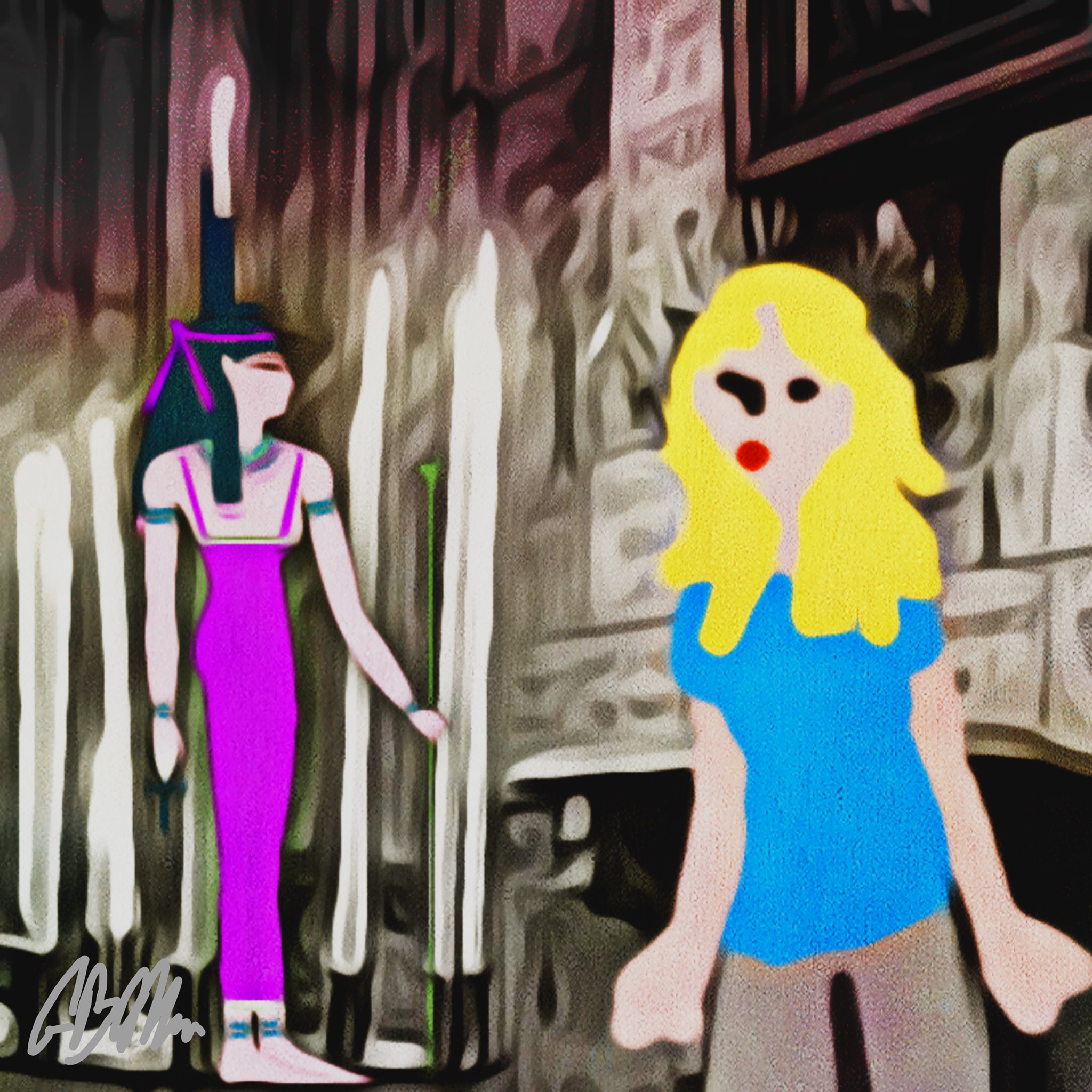
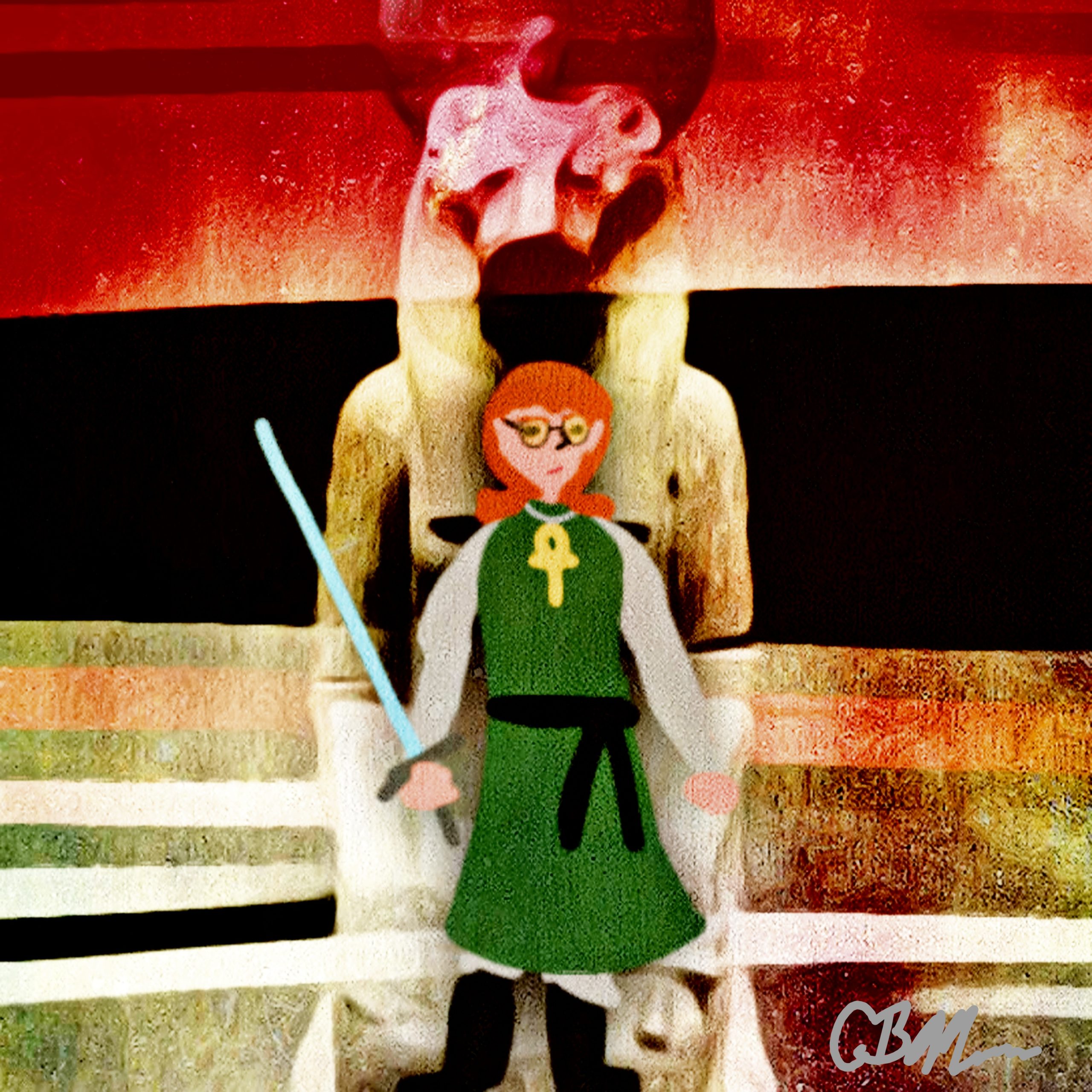
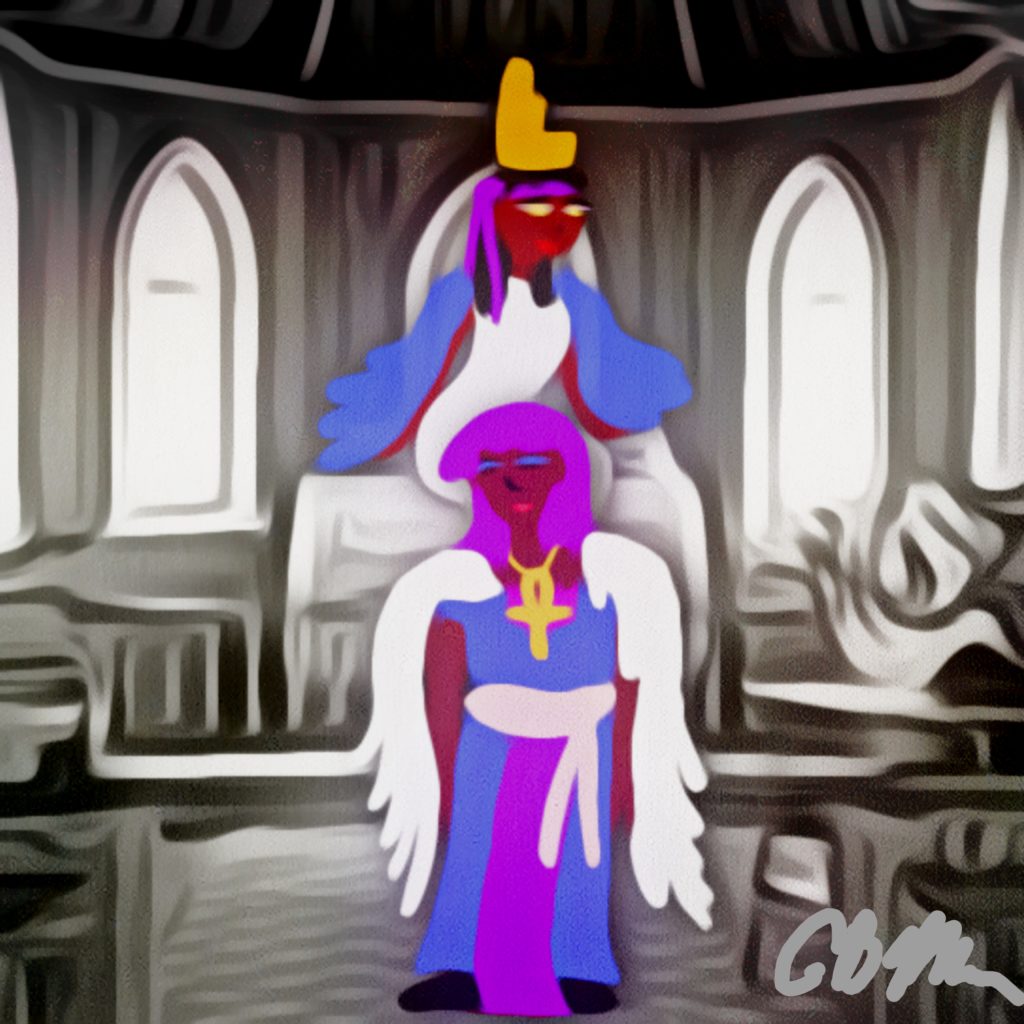
When the Sorceress was a girl, Lady Isis spoke to her in dreams, showing her the end of the world. “You must gather as many of your sisters in humanity as you can,” the Goddess advised. “Together, go forth and build the city of New Sennebytos. Those who follow My guidance will survive to heal this world from the horror that is soon to come.”
Witchfinder
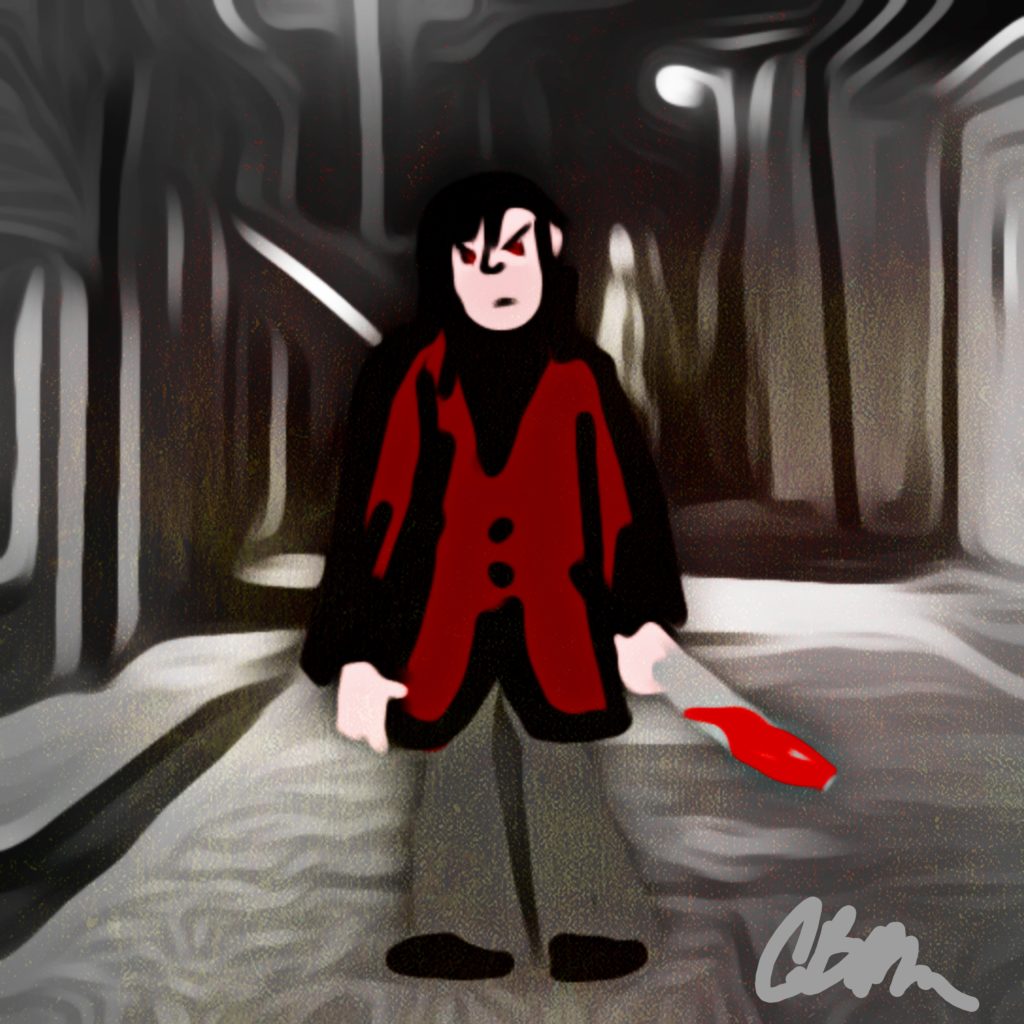
No one knew the Witchfinder’s true name or origin, but he could hear thoughts. He knew when other people had similiar abilities to his own. He killed as many such “witches” as he could, one by one, by any means necessary. No matter what was done to stop him, the “God” that commanded him to kill would not let him die. And the Sorceress, still a young girl, was next on his list…
The Church of Many Mothers
The Sorceress traveled far and wide, bringing women together in spirit from across the continent. Caregivers, educators, public servants…all became sisters in Lady Isis, and all pooled their resources to buy land in the West. Together, they built the community of New Sennebytos and made preparations to survive the coming disaster.
Initiation
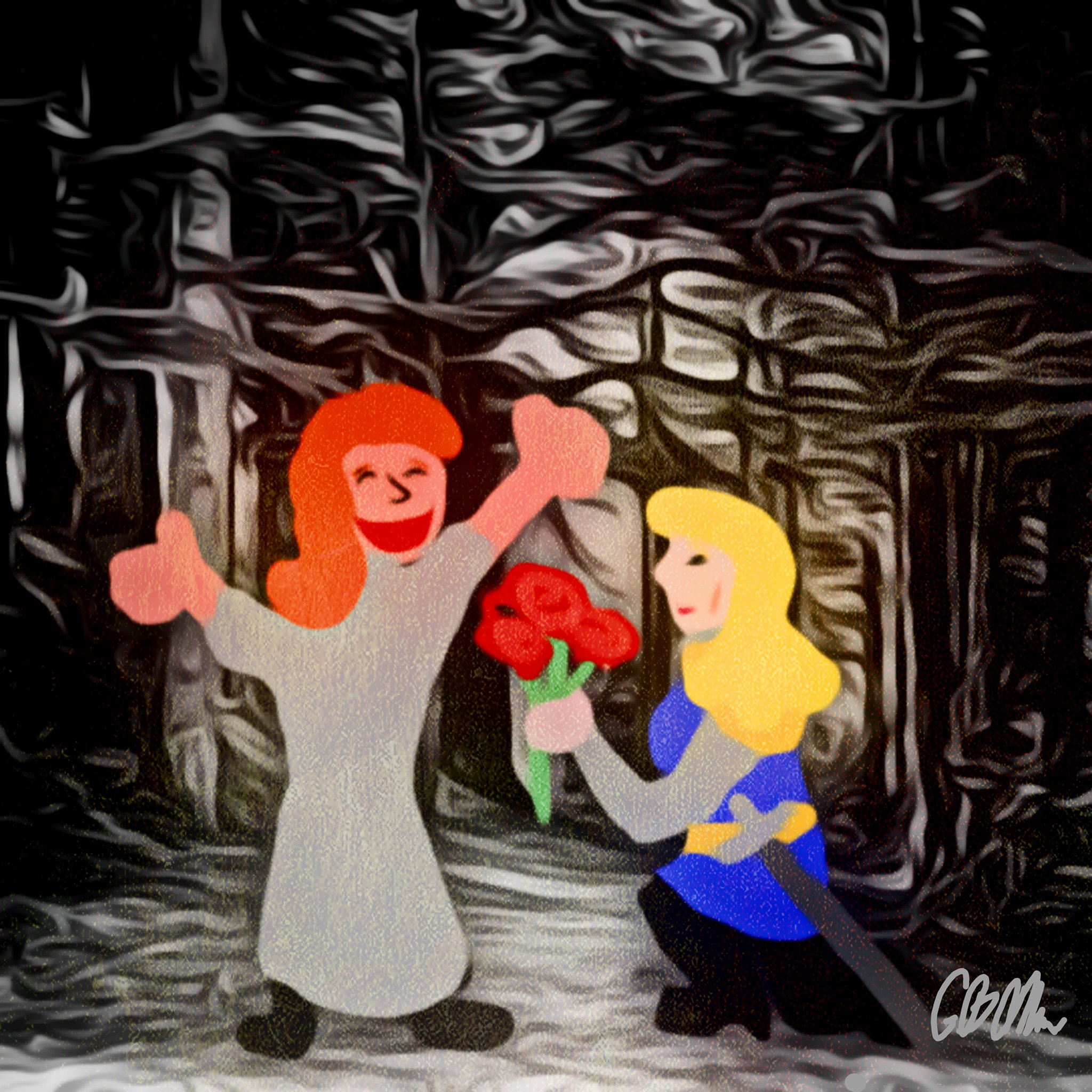
When Rae first learned of the Church of Many Mothers, she thought they were just another doomsday cult. But it soon became clear the Sorceress was no false prophet. And when Rae saw for herself how safe, happy, and powerful these women were together…she began to realize she was one of them at heart.
The Reverend President
He was a televangelist. He hypnotized the masses into swallowing his toxic brand of Christianity. He advised several American presidents on both foreign and domestic policy. Then the people voted him into the White House, and the Church of Many Mothers became Public Enemy Number One.
Satanic Panic (Disciple of the Worm)
The Reverend President enlisted the aid of the Warlock, who engineered a spell to possess thousands of viewers through their television sets. Like flicking a switch, the evil magicians drove entire communities to commit acts of mass violence and terror. This horror was then blamed on “cults” like the Church of Many Mothers, and the world descended into madness.
Go With The Goddess
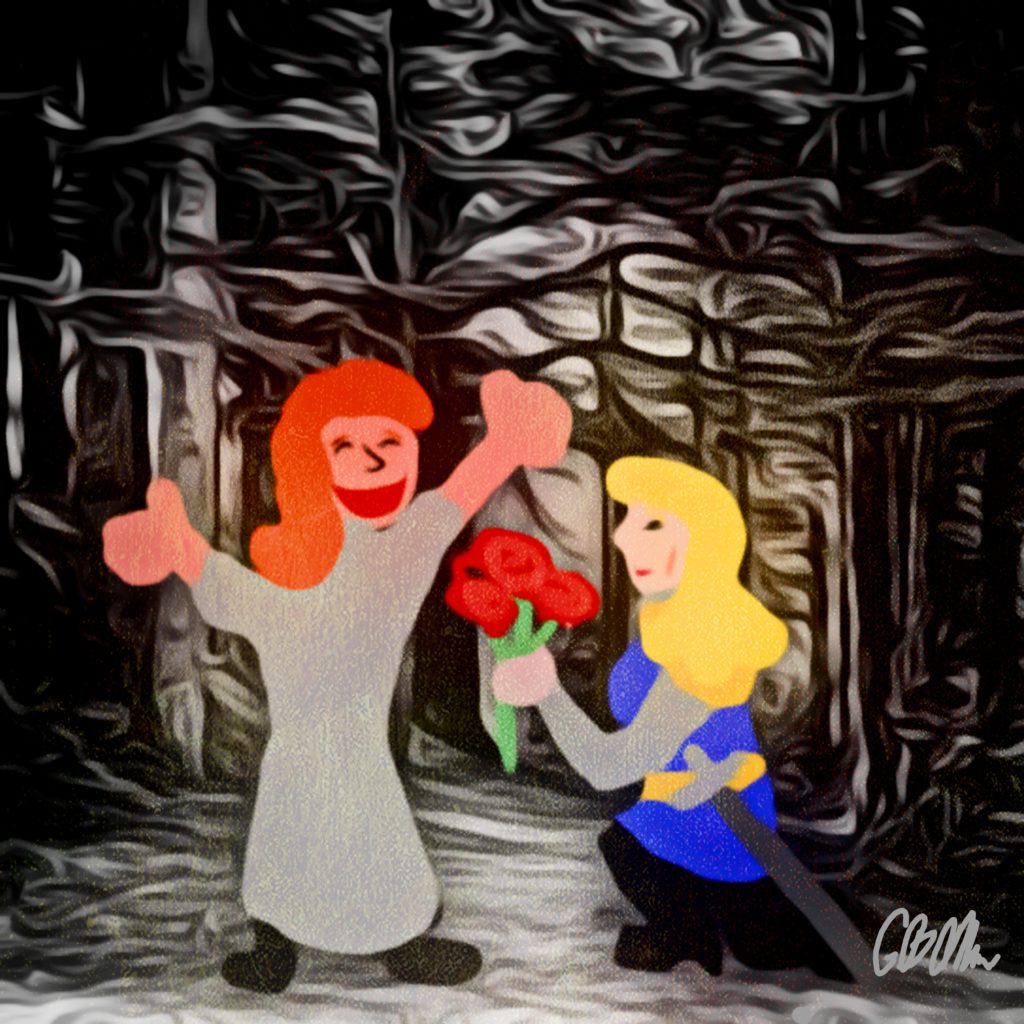
It was time for New Sennebytos to retreat underground, but the Sorceress refused to abandon those members of her church who had not yet escaped to the city. She sent her best warriors to rescue as many of their sisters from across the country as they could. One sister chosen for this quest was Rae, who had since taken a wife named Autumn. The lovers feared they might never see each other again.
Escape to New Sennebytos
Along with a warrior named Adrienne, Rae was assigned to rescue those Isians who were trapped in Atlanta. While there, the women were pursued by the Witchfinder. Rae sacrificed herself so that Adrienne and the other women could escape. It broke poor Autumn’s heart when her wife did not return home; but there was nothing to be done. For the end was about to begin…
The Screaming Sky
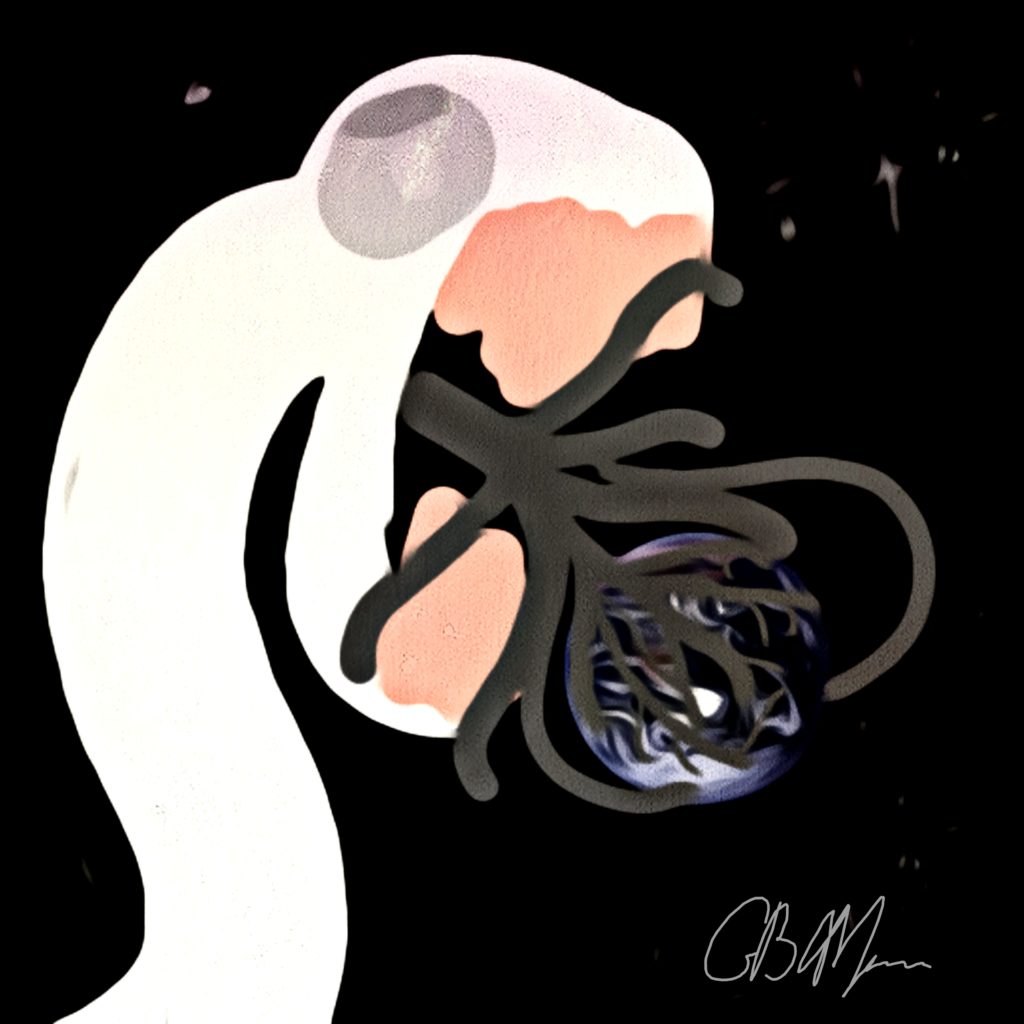
As civilization decayed, Ma’at began to unravel. Then the Ungod appeared in the sky, just as the Warlock had secretly planned. The monster’s countless tongues slithered down from its gigantic mouth to slowly encircle and devour the entire world. Most everyone who witnessed this immediately went insane. Our planet would never be the same again…
The Shieldmaiden’s Daughter (Part I)
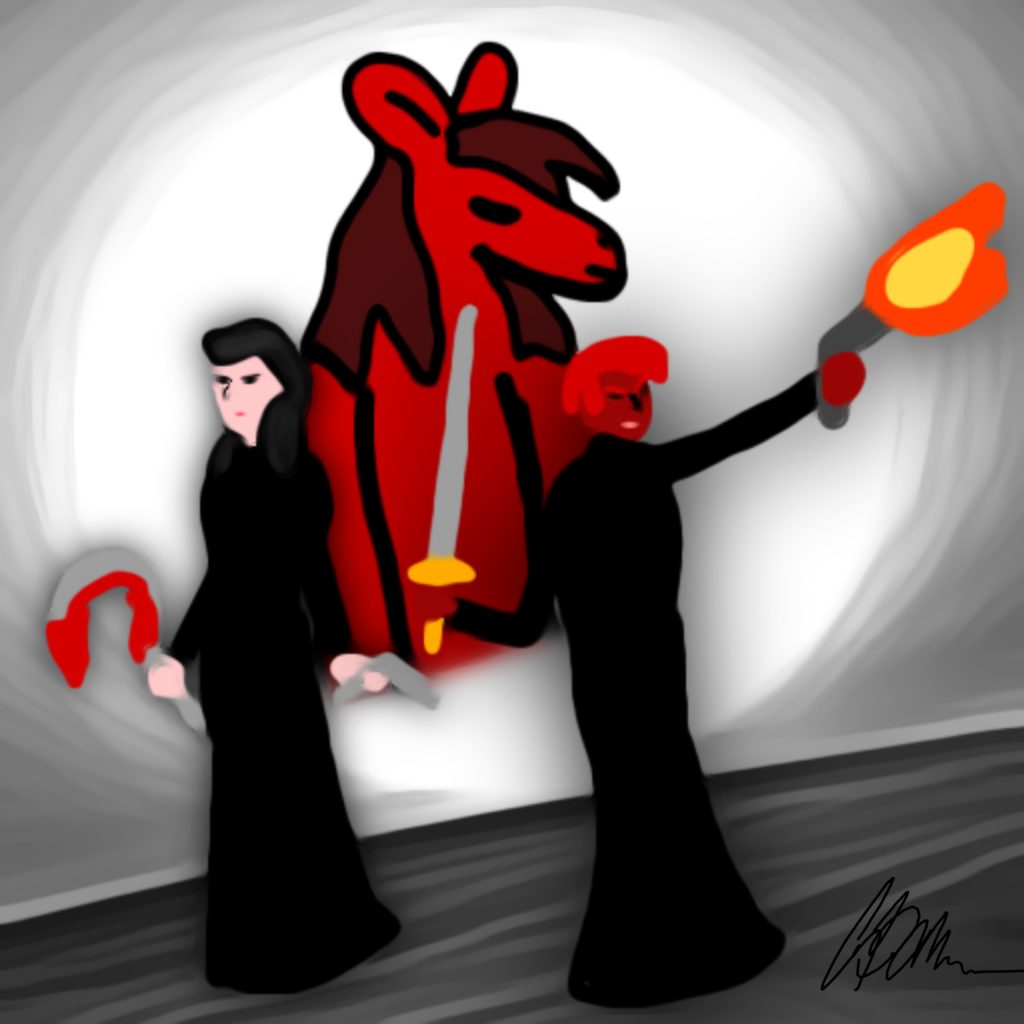
While the Church of Many Mothers remained hidden beneath New Sennebytos, the Shieldmaiden of Set fought to survive above. One day, the Shieldmaiden found an orphaned baby girl, whom she adopted as her own. Whenever mother and daughter both felt hopeless at night, Lord Sutekh appeared and gave them comfort. “You are My Shieldmaidens,” He explained, “and the Ungod will tremble when you are near.”
After the End
After the elder Shieldmaiden of Set repelled the Ungod back to the Other Side, the earth slowly returned to life. The Church of Many Mothers returned to the surface and began to rebuild civilization. They welcomed refugees into their society, and they helped neighboring communities rebuild themselves too. The women of New Sennebytos then became legendary defenders of civility and peace.
Sentinels of Sekhmet
Meanwhile, the Reverend President and the Witchfinder had both survived as well. Together, they transformed Atlanta into a theocratic totalitarian empire: the Kingdom Guard. In time, the Church of Many Mothers sent a special taskforce—the Sentinels of Sekhmet—to infiltrate the Kingdom Guard and help those of its citizens who were trying to escape. Autumn was chosen to lead this quest. She believed her wife Rae might still be alive in Atlanta, and she was desperate to find out.
The Kingdom Guard
The Sentinels of Sekhmet infiltrated Atlanta, searching for citizens who sought refuge. While there, they witnessed just how horrible things within the Kingdom Guard really were. They were soon captured and imprisoned, whereupon they found a tortured and beaten Rae, near death. Sobbing, Autumn embraced her wife and gave thanks to Lady Isis.
The Shieldmaiden’s Daughter (Part II)
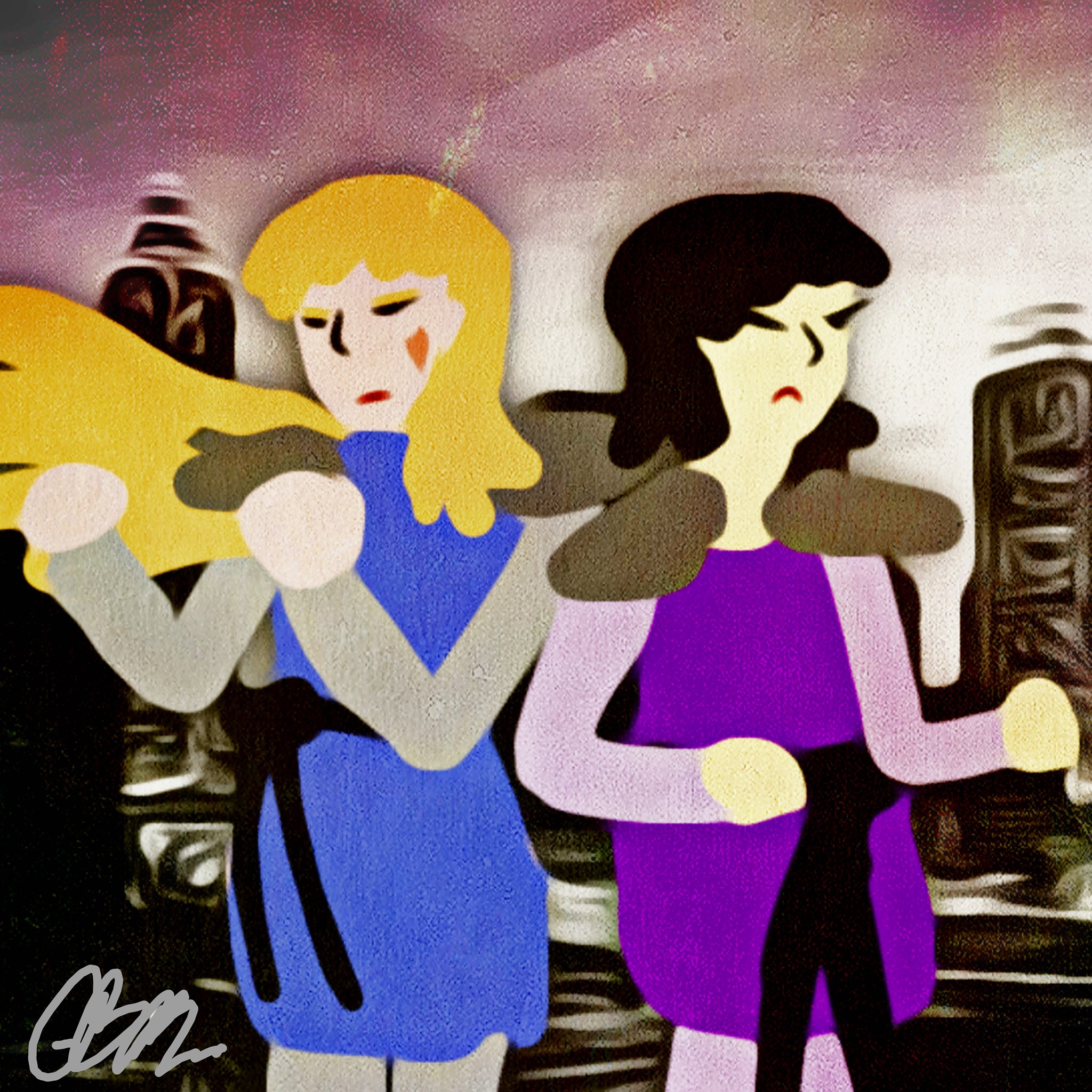
Just when the Sentinels of Sekhmet thought they were done for, the second Shieldmaiden of Set appeared, now fully grown. She helped the women break free, and she battled the Witchfinder as they made their escape. All of the women, including the Shieldmaiden, safely returned to New Sennebytos…But not in time for Rae’s life to be saved.
Resurrection Ceremony
Back in New Sennebytos, Autumn begged the Sorceress to use her magic and restore life to Rae. The Sorceress agreed, but explained that her magic could only resurrect Rae for a limited time. Once that time was up, Rae would have to return to the Other Side with all the rest of the dead. The Sorceress performed the ceremony, and Autumn and Rae were able to spend one last night together after all.
Last Embrace
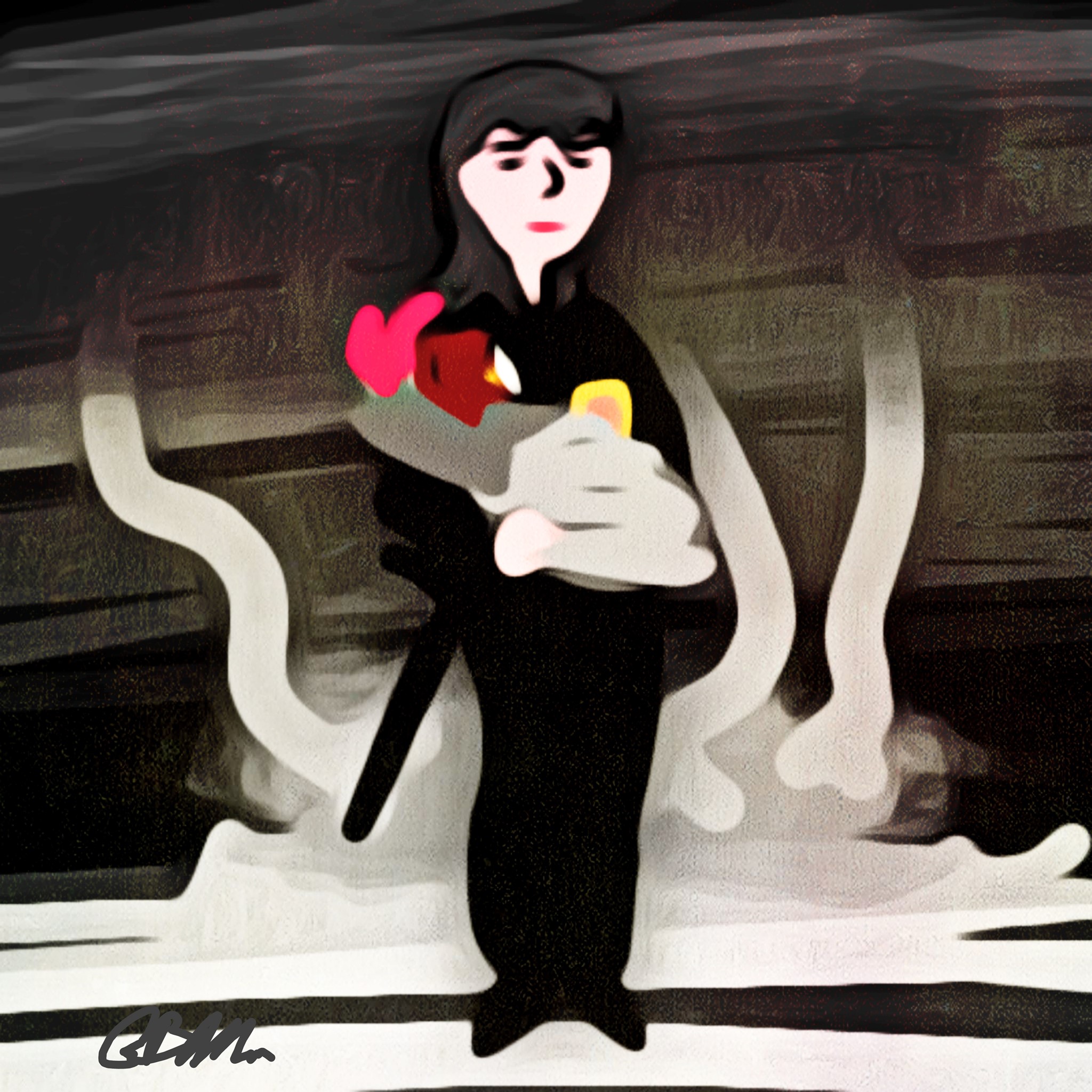
Autumn and Rae spent their last night together in each other’s arms. Rae promised to do whatever she could as a ghost on the Other Side to help Autumn in her battles. Autumn swore she would never take another wife so long as she lived.
Warlocked (Disciple of the Worm)
Before she left this world, Rae told Autumn what she had seen as a prisoner of the Kingdom Guard. Even the Sorceress was surprised to learn the Reverend President was actually long dead, and that his corpse was but a rotting puppet. The Warlock had been the true mastermind all along, manipulating the entire Kingdom Guard for his own purposes. Now he sought to facilitate the Ungod’s return…by destroying New Sennebytos.
Witchfinder General
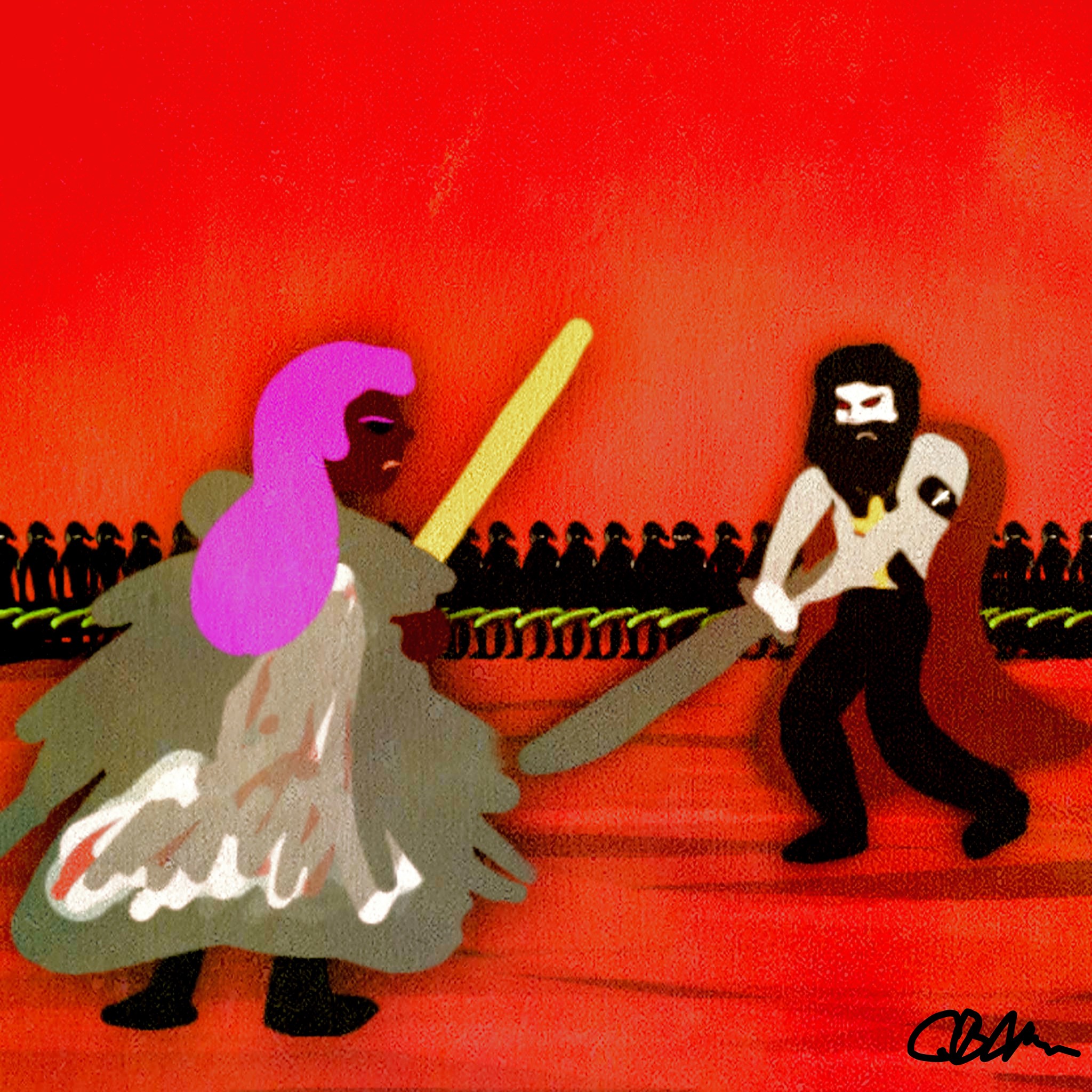
The Sorceress and the Witchfinder faced each other on the battlefield. The Sorceress was mighty, but even she could not phase her opponent. Then she shouted a word only the Witchfinder could hear. It was a name no one else understood. When the Witchfinder heard this, he froze like a statue…and he never moved again. Exhausted from her injuries, the Sorceress smiled…and then she died.
Defy the Ungod
The women of New Sennebytos launched their final assault against the Warlock’s hordes. They were joined in battle by the Shieldmaiden of Set, who had just returned from reuniting the Knights in Sutekh’s Service. When these mighty Setian warriors joined their Isian sisters on the battlefield, the Kingdom Guard soon dissolved into chaos.
Long Live the Queen
After defeating the Kingdom Guard, the Church of Many Mothers and the Knights in Sutekh’s Service returned to New Sennebytos. All who fell during the battle, including the Sorceress, were given the most beautiful funerals anyone had ever seen. Autumn was then coronated Pharaoh, and with their new Queen, the women of New Sennebytos went forth to continue rebuilding our world.
His Nocturnal Majesty and Our Lady of Thrones both hinge on a central apocalyptic event that occurs sometime in the not-too-distant future, and which I first envisioned when I was in high school back in the 1990s.
The key to understanding this apocalyptic event is Ma’at, the Egyptian concept of truth, justice, and healthy reciprocal relationships between sentient beings and the rest of nature.
When Ma’at is upheld, human civilization, the forces of nature, and even Duat (the Spirit World or Other Side) are all made to flourish. But whenever Ma’at is forsaken, it makes a crack in the very fabric of Creation itself. And there are all kinds of nasty things out there in the nothingness outside Creation—the myriad Powers of Isfet—that would like nothing more than to rip our multiverse apart from within.
Chief among these malevolent forces is an entity so utterly toxic and poisonous, even lesser Powers of Isfet are afraid to speak its true name. For the purposes of my narratives at least, this ancient enemy of all gods and creatures is simply called the Ungod.
Each of the Netjeru or Egyptian gods and goddesses plays various roles in upholding Ma’at and repelling the Ungod at a higher, cosmic level of existence. This prevents the foul thing and its hordes from simply swallowing the entire multiverse whenever they want.
But part of Ma’at requires appreciating the autonomy of all sentient beings, and human mortals are sentient. This means the Netjeru can’t just come down here and uphold Ma’at for us in all of our affairs. We are responsible for upholding Ma’at in our own dealings with each other, our environment, and any other sentient species we might eventually encounter. And so long as there are enough people upholding Ma’at across the world, the Powers of Isfet can never just seep into our area of the multiverse…
The flip side to this, of course, is that when human beings finally become too rotten and despicable in general, all bets are off. The Ungod will slither through the cracks we have made in Ma’at and un-create us (physically, mentally, spiritually, etc.), doing so as slowly and maliciously as it can. The gods will be unable to save us, as well, for we will have chosen this fate for ourselves by our own catastrophic actions. And this is exactly what I saw in my nightmares as a teen. One day, when it seems there’s just no more hope for humanity at all, the Ungod physically appears to everyone as a giant mouth in the sky. Its massive tongues reach down to devour all the people below. And the damned thing is in absolutely no hurry to eat us all at once, either; it prefers to play with its food first, since we taste much better when we are insane with fear.
I’m pretty sure I dreamed all this up from reading the Lament of Hermes, a Greco-Egyptian “prophecy” that foretells of the world falling apart due to a complete absence of Ma’at among humanity. But in my version of events at least, we still have a chance of reversing all this bullshit and exorcising the Ungod. There are still handfuls of good people across the earth who try to uphold Ma’at, even after the monster breaks loose and slithers into our atmosphere. These include the protagonists of both His Nocturnal Majesty and Our Lady of Thrones, who fight to repel the Ungod and restore enough Ma’at so it can’t return.
Our Lady of Thrones is a double album, and the first disc takes place during the final years before the Ungod breaks loose. The second disc takes place after the events of His Nocturnal Majesty, in which the Ungod is repelled by the Shieldmaiden of Set and the Knights in Sutekh’s Service. Once that particular battle is won, the protagonists of Our Lady of Thrones set to work trying to rebuild our world, and they also face off against the Ungod’s surviving mortal allies (who actually want to bring the monster back).
THE SHIELDMAIDEN OF SET
There are actually two Shieldmaidens of Set: a mother and a daughter.
The elder Shieldmaiden was born and grew up long before the Ungod appeared, and she was a police detective. She earned her chops hunting and apprehending some of the most dangerous human predators imaginable. She first encountered Lord Sutekh during a near-death experience, when He warned her of the doom that was to come. After she recovered, she became a survivalist and a martial artist.
When the Ungod appeared, nearly everyone who looked up to the sky went dangerously insane…except for the Shieldmaiden. Somehow, she could look at the Mouth above without losing her nerve. And with this indomitable nerve of steel, she went forth to rescue as many lives as she could during the apocalypse.
One life she saved was that of the second Shieldmaiden, who was just an orphaned baby girl at the time. The woman adopted the child as her own; then they traveled the dying earth, following Lord Sutekh’s instructions. The mother found other people who remained sane at the sight of the Ungod, and she raised a mighty army. The Knights in Sutekh’s Service then launched a counterattack against the Ungod, and the elder Shieldmaiden worked a spell that banished the monster back into the void. She had to attract all of the monster’s attention entirely to herself in the process.
When the Knights saw the gigantic red hand of Sutekh reach into our atmosphere and grab the Ungod in a chokehold, they knew they had won. Then the heroes all dispersed and went to live out their lives in the wilderness (as recounted in His Nocturnal Majesty).
In the years that followed, the elder Shieldmaiden taught the younger everything she knew. The two became known far and wide among the various civilizations that developed after the apocalypse. They were beloved as heroes in most places, but were also feared for being friendly with Lord Sutekh and other Powers people couldn’t understand.
As an adult, the second Shieldmaiden reunited the Knights in Sutekh’s Service to help prevent another visit from the Ungod, which is just part of the story in Our Lady of Thrones.
THE SORCERESS
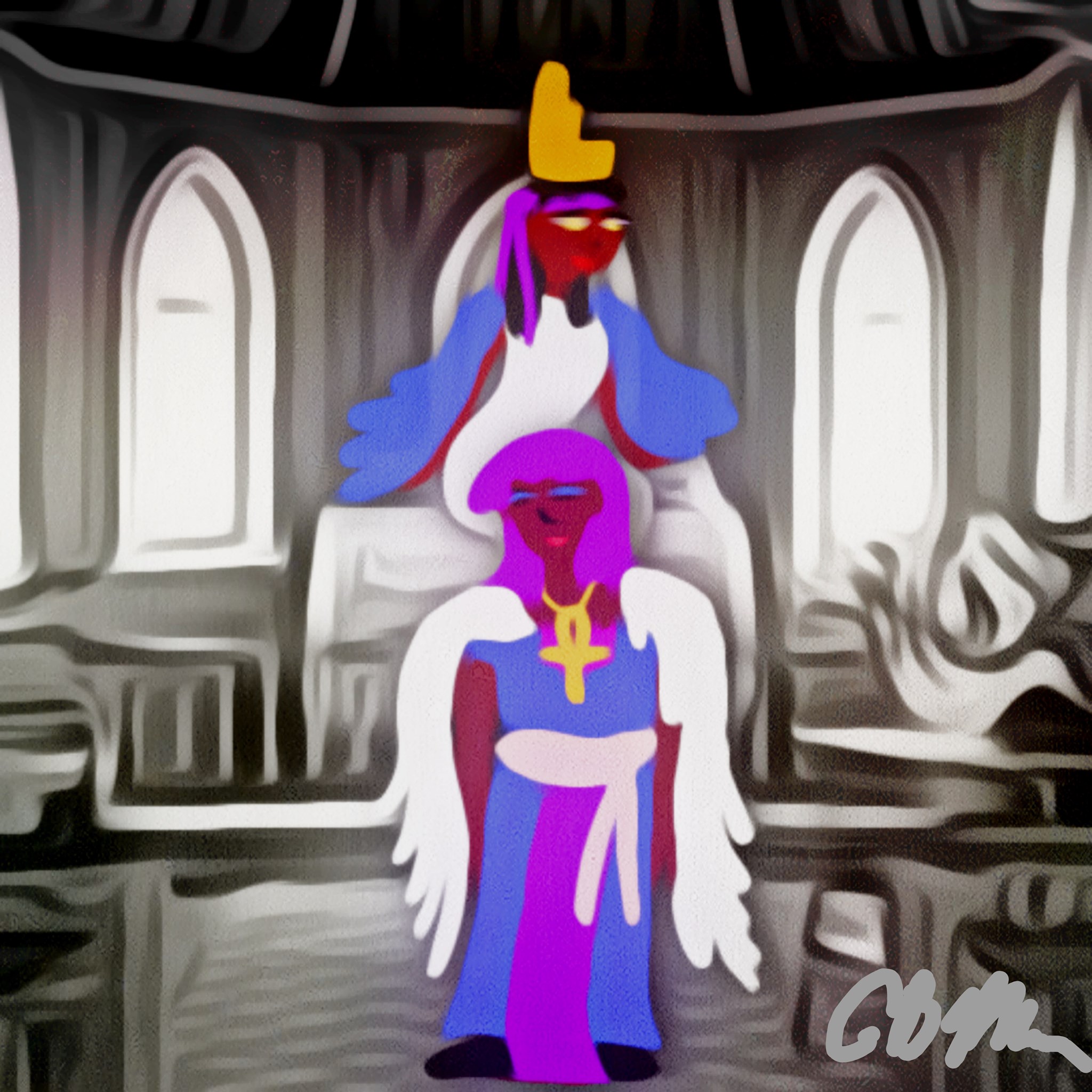
Like the elder Shieldmaiden of Set, the Sorceress was born and grew up long before the coming of the Ungod. When she was still a young girl, Lady Isis showed her the coming apocalypse in her dreams. These nightmares were terrifying, but the Sorceress took them to heart. Lady Isis told the girl everything she needed to do to plan for and survive the apocalypse as an adult, and the Sorceress followed Her instructions faultlessly.
When she came of age, the Sorceress traveled the world and brought women of different backgrounds together. They became the Church of Many Mothers, and they pooled their resources to buy land and build the town of New Sennebytos somewhere in the West. Not only would this town be dedicated to Lady Isis and the Church’s way of life; it was also equipped with plenty of bunkers and provisions for when the apocalypse began.
In time, the Church of Many Mothers became subject to greater scrutiny and was even perceived as a dangerous terrorist group by the federal government. Members of the Church were hunted down, arrested, even murdered. But the majority survived and hid deep within the bunkers of New Sennebytos when the Ungod appeared. After the monster was banished by the Knights in Sutekh’s Service, the Church returned to the surface and began to rebuild human civilization.
Members of the Church regarded the Sorceress as their prophet and Queen. Some have said she could even raise the dead. Later, she and her Church joined forces with the Knights in Sutekh’s Service to try and prevent the return of the Ungod.
AUTUMN AND RAE
Autumn and Rae were two of the greatest warriors in the Church of Many Mothers. Both thought the Church was just another “doomsday cult” until they saw for themselves how safe, happy, and powerful the women of New Sennebytos really were. After a few years of being members, Autumn and Rae fell in love and were married by the Sorceress.
Shortly before the Ungod appeared in the sky, the monster’s human allies tried to systematically exterminate the Church of Many Mothers. Members were targeted for death in every major city. So the Sorceress appointed a special team of warriors to go and save as many of their sisters in Isis as possible. Rae was chosen to lead the rescue team in Atlanta, and though she managed to save her sisters there, she did not return home herself. Autumn was mad with grief when she and the rest of New Sennebytos were finally forced to retreat underground.
After the Ungod was defeated and the women of New Sennebytos returned to the surface, Autumn trained like hell to become the deadliest warrior in the entire Church. Years later—when the second Shieldmaiden of Set was fully grown—Autumn would lead an excursion back to Atlanta and try to find Rae, assuming she was even still alive…
THE WITCHFINDER
No one knew the Witchfinder’s true name or origin, but he first appeared long before the World Fell Apart, when the Sorceress was still a young maiden. His existence was really known mostly to the Church of Many Mothers. What little media coverage he received was very closely monitored and censored from the general public.
The Witchfinder was absolutely impervious to any physical injury; he never became ill, and neither blades nor bullets nor blasts could bruise him. He was also a born psychic and could hear thoughts. He knew when other people had paranormal abilities, and he relentlessly stalked and killed as many of these “witches” as he could. He did this because he heard a voice in the sky telling him to do so—the insidious hiss of the Ungod.
The Witchfinder first attacked the Sorceress shortly after she started receiving her prophetic visions from Lady Isis. He relentlessly stalked her entire Church (among others) for decades afterwards. Then the end came, and after the Ungod was repelled, the Witchfinder became the second highest authority in the Kingdom Guard. He would eventually lead the armies of this brutal regime to war against the women of New Sennebytos, and with zero intent of taking any prisoners.
THE REVEREND PRESIDENT
The Reverend President began his career as a televangelist. He heard the hiss of the Ungod, whispering to him from the sky. He mistook it for the voice of “God,” and things always seemed to go his way when he heeded its advice.
He preached that “the Lord” was displeased with society recognizing the freedoms of women, the LGBTQ+ community, minority religions, and atheists and agnostics. He wanted his creeds made into law, requiring Americans to convert and obey upon threat of public execution by the state. The Reverend further taught that if this were not made to happen very very soon—within the next seven years, in fact—”the Lord” would give this world to Satan, and it would be forever destroyed.
As if on cue, the country was besieged by a cult of domestic terrorists who claimed to worship Satan. Even normal rational people started buying into the Reverend’s wild-eyed claims. It wasn’t long before the Reverend was voted into the White House and started issuing executive orders that tyrannized anyone who didn’t worship him and follow his every command. Suspected “witches” were harassed, assaulted, even murdered by their neighbors all across the country, and institutions like the Church of Many Mothers became Public Enemy Number One.
Then the Ungod appeared, and the World Fell Apart.
While the Knights in Sutekh’s Service fought to repel the Ungod back to the void, the Reverend President and the Witchfinder joined forces in Atlanta, which became the capital of their new empire. Known as the Kingdom Guard, this regime invaded and enslaved as many surviving communities across the country as it could. All who were occupied were either converted or exterminated. Those who encountered the Kingdom Guard and escaped with their lives have consistently described its citizens as monsters in the shapes of men.
Our Lady of Thrones culminates in the final confrontation between the Kingdom Guard and the Church of Many Mothers.
THE WARLOCK
The Warlock or “Disciple of the Worm” was known by many names across multiple universes. He wasn’t human, though he had a thousand human faces. Each world he visited soon decayed into nothingness. He used the same method for interdimensional travel as beings like the Fae—by walking between the worlds on different Halloween nights in history (a theme also explored in Summer’s End II)—and he first arrived in this reality in 1982. The Warlock then used (at least) two fake human identities to engineer the end of our world.
In one of his roles, the Disciple was a multimillion dollar media tycoon whose TV programs made him insanely rich. He pretended to be a born-again Christian, and he used his media wizardry to help the Reverend President win the White House.
In his other role, the Warlock was a psychiatrist who worked with the criminally insane. He discreetly hypnotized his patients and helped them all escape. Once free, his patients burned down entire neighborhoods in the name of Satan. The Warlock then encouraged the Reverend President to capitalize on these “satanic terrorists” and seize more and more power over time.
When this evil spell had spread across enough of the globe, the World Fell Apart and the Ungod appeared in the sky. The Warlock was seldom seen afterwards; yet his presence continued to be felt, especially in cities occupied by the Kingdom Guard. His true appearance remained unknown, and it was rumored he could create doubles of himself. Perhaps not even the Reverend President had ever seen the actual Disciple of the Worm face-to-face.
How could anyone know who, when, or where this master of misdirection really was?
A rambling discussion on horror movies and spirituality with two of my brethren in the LV-426 Tradition!
I am proud to announce that for our next two adventures, I will be joined by two of my brethren from theLV-426 Tradition, Tony and Patrick. Together we will discuss some of our favorite horror movies, and what they mean to us spiritually!
Tony and I met in Texas in 2000, and when we started meeting for Sabbats back in 2003, the LV-426 Tradition was born. Tony was also the frontman for an awesome death metal band called Hexlust, which released the album Manifesto Hexcellente in 2015.
Click here to read some of Patrick’s video game reviews!
Tony and Patrick are not just my friends, but my brothers in Set. We treat each other like family, and we are truly blessed to know each other. These gentlemen are also two of the most brilliant and analytical Setians I have ever had the pleasure of meeting. So without any further ado, please welcome Tony and Patrick to the show!
G.B.: Welcome brothers! Thank you so much for joining me today, just in time for Halloween, the Season of the Witch, to discuss two of my favorite things with me: our spiritual orientations and our favorite horror movies, something that many people probably don’t think would be readily connected. But as we know in our circle, a monster romp can often be much more divine, thought-provoking, and life-changing than any Kirk Cameron movie!
Tony: Well, he did save Christmas, even though it didn’t need to be saved in the first place! [Laughter.]
G.B.: Horror movies have definitely been a part of my life ever since I can remember, from being a little kid. I think probably the earliest movie I ever saw was the old universal Boris Karloff Mummy movie from 1932, where he plays Imhotep, who I learned was actually a real person in ancient history, not just a meet-up monster villain. The actual Imhotep was nothing like the Boris Karloff monster. He was like a fucking doctor or physician, and he was one of the first people in history to develop medical treatments for people that were completely scientific and not magical. His methods didn’t have anything to do with repelling spirits or anything like that; it’s more like, “No, this is something to do with some kind of disease.” And he also constructed the Djoser Pyramid, so seeing The Mummy was kind of a big deal for me. There’s just something about killer mummies that I love, but it was also very educational because it opened the door for me to learn about Imhotep.
G.B.: And then of course, I think everybody who stands within 20 to 30 feet of me probably knows the Halloween movies are fucking religion to me. I always make a big deal every year, on October 31st, about actually celebrating the holiday as a time for remembering our sacred ancestors, the Blessed Dead; they might not necessarily be relatives, but it can be observed for anyone who has passed away and whom we miss.
G.B.: So Tony, what have been some of your favorite monster romps that make you think about spiritual shit?
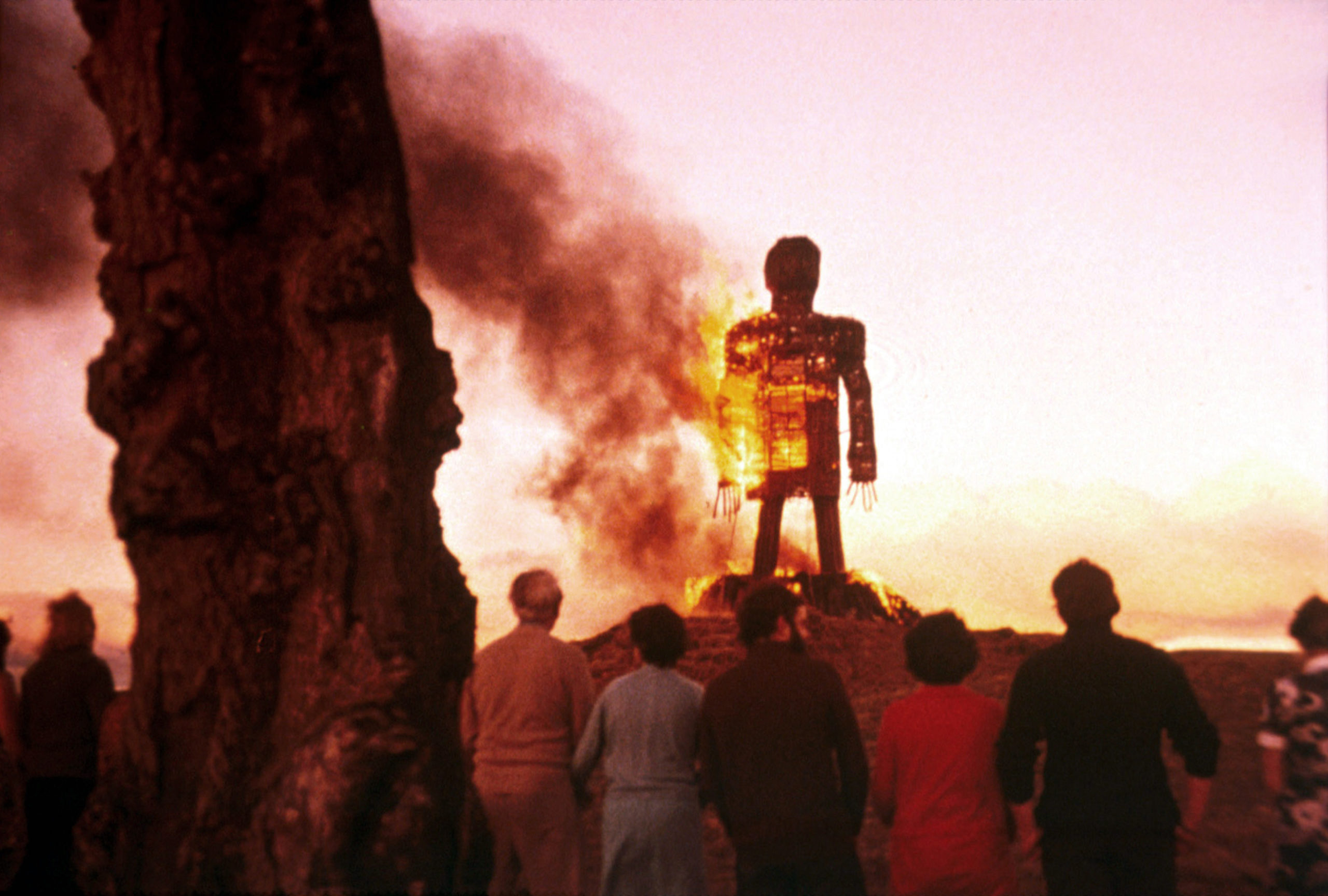
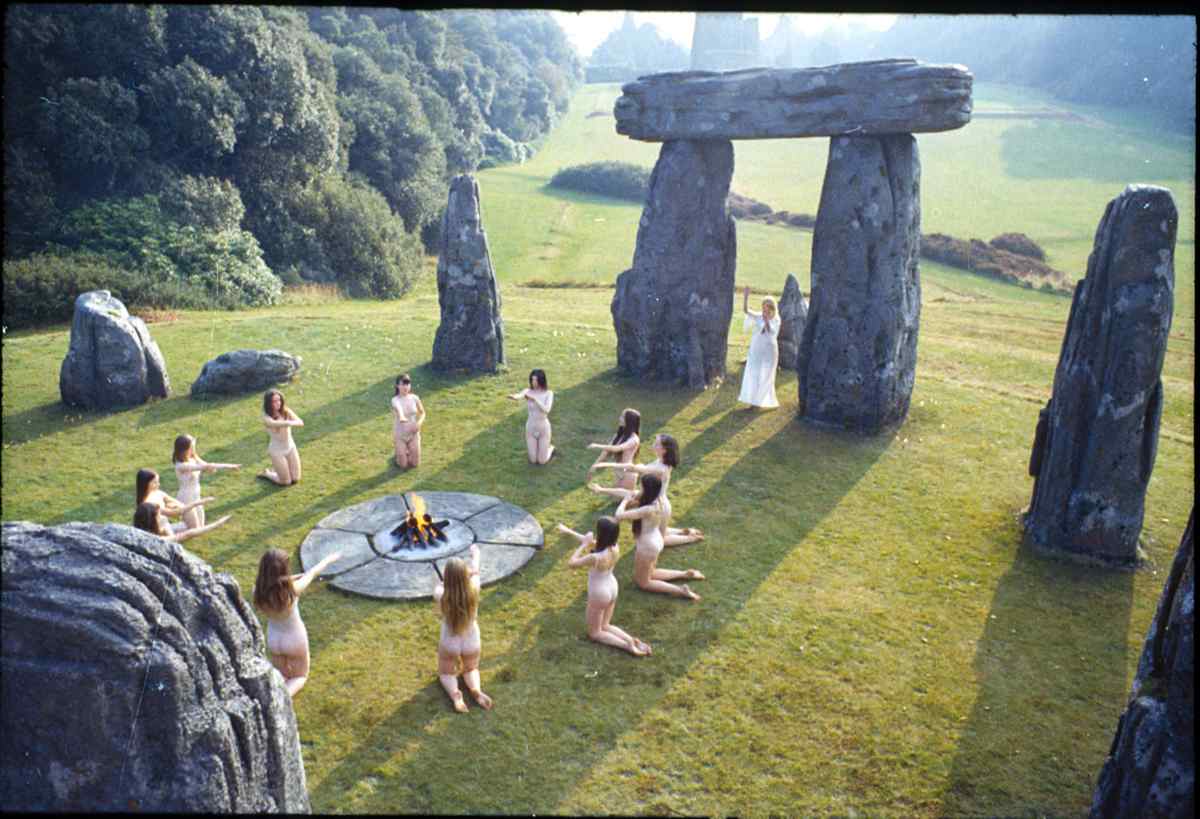
Tony: Many horror movies I see, the older I get, the more I review them, the more I see them; unfortunately, the same tale is told over and over again, and it’s a very straight, narrow Christian viewpoint of temptation, lust, punishment, and redemption. This same theme is used over and over and over again, whether it’s added with blood, added with sex, etc. That’s why I really enjoy The Wicker Man (1973). If that movie was remade yet again today, they would really play up on the fact that everybody’s having copious amounts of sex without being observant of the monogamous lifestyle. Or the fact that they’re “taking the Lord’s name in vain,” but in their Pagan God viewpoint. But in the 1970s film, you don’t feel like the people on that island are bad people. It’s just “Hey, we got a job to do, and we have a set of rules that we follow. We have a set of beliefs and creeds that we follow, and you’re coming in here and trying to destroy all of that.” We all know the twist at the end, but that’s what I like about that movie; it’s a very spiritual film, but at the same time it’s an excellent piece of horror, because it’s taking that Christian viewpoint of being judgmental and showing how that can bite you in the butt. As opposed to other movies where the shrewd, straight, and narrow people get to live. Not in this movie! That’s what’s so great about it.
From The Wicker Man (1973)
G.B.: A really good point. Another thing I like about that movie is the fact that Sergeant Howie [Edward Woodward’s character in the the 1973 original] is actually a pretty fully developed character, he’s very multi-dimensional. Yeah, he’s a judgmental asshole, but he’s also right. And he’s also a good dude who’s just trying to do his job, he’s just trying to save this girl. Yeah, he’s an asshole, but you kind of feel like if you were ever in trouble, Sergeant Howie would be a good person to have along with you. So [The Wicker Man] is not like a “good versus bad” movie, it’s like there’s good and bad on both sides, because the island people… Well, we won’t spoil it for anybody out there, but apart from that, the island people are actually very friendly and happy people, very celebratory of life, very liberated and very feminist, from the standpoint that the sexes are truly equal on this island.
Tony: That’s why I didn’t really care for the [Nicolas Cage] remake. What I loved about the original is it seemed like there was no power structure; yes, there was Lord Summerisle [Christopher Lee’s character in the 1973 original], but he was just the figurehead of the place. He didn’t necessarily say, “I demand all of you to do that,” versus in the other movie, where Hollywood is going, “Oh, let’s have a feminist outlook” and I’m like, “Okay, cool.” But they have one woman ruling everything, which is not really a feminist outlook, that’s just a woman controlling everything. “Oh, we’re gonna have all the men with their tongues cut out, we’re gonna have all this…” And I’m like, “No, no, no, no, no! That’s not feminism. There shouldn’t be any power struggle between the sexes, everybody should be the same, the women can have power and the men can have power. That’s why I like the original 1973 movie, rather than the remake. I like the fact that there was really no no dictator of the island. In any other traditional horror movie, there would have been a clearly evil bad guy; but it’s very ambiguous as to who the true bad guy was, as you pointed out. That’s the good thing about that movie, that’s why I think that movie is something to recognize. Plus, just the fact that it’s also a quasi-musical is something that you need to respect! The music isn’t anything groundbreaking, but this flick is still more dimensional than just, “Stab, stab, stab! You’re dead!”
G.B.: Yeah you’re right, it IS a musical! There are random sequences in the movie where people break out into song and dance. Sometimes naked!
Patrick: What’s wrong with that?
Tony: I mean, it’s basically just a Renaissance Faire caught on tape!
Patrick: [Laughs.] Well, there’s the parking lot. And then there’s the fair part. And then, if you go to the wooded clearing that’s beyond the falconing field, across the highway where everyone sleeps… That’s where it’s real!
Tony: We’ve all been there! [Laughter.]
From The Wicker Man (1973)
G.B.: So Patrick, how about yourself? Are there any particular movies – horror- and/or monster-related, supernatural and/or sci-fi – that have really appealed to you during all the years of your walk with Set?
Patrick: Yeah, definitely! So there are two movies that come to mind, and they happen to be my two favorite movies. I’ve always had an interesting relationship with spirituality in general. In some ways, you could make the argument that I am in fact an atheist, because I’ve always felt there is a sort of explanation, if we were to have all of the facts, all the tools, all of the information. I think what we experience with “the supernatural” is valid and exists, and the concept of divinity is compatible with how I’ve always looked at the concept of spirituality as a whole. But I think that much of the mystery and mysticism around our interactions with the Divine, the supernatural, and/or the spiritual comes from a lack of understanding. It’s like we’re looking at a three-dimensional image in two-dimensional space, basically.
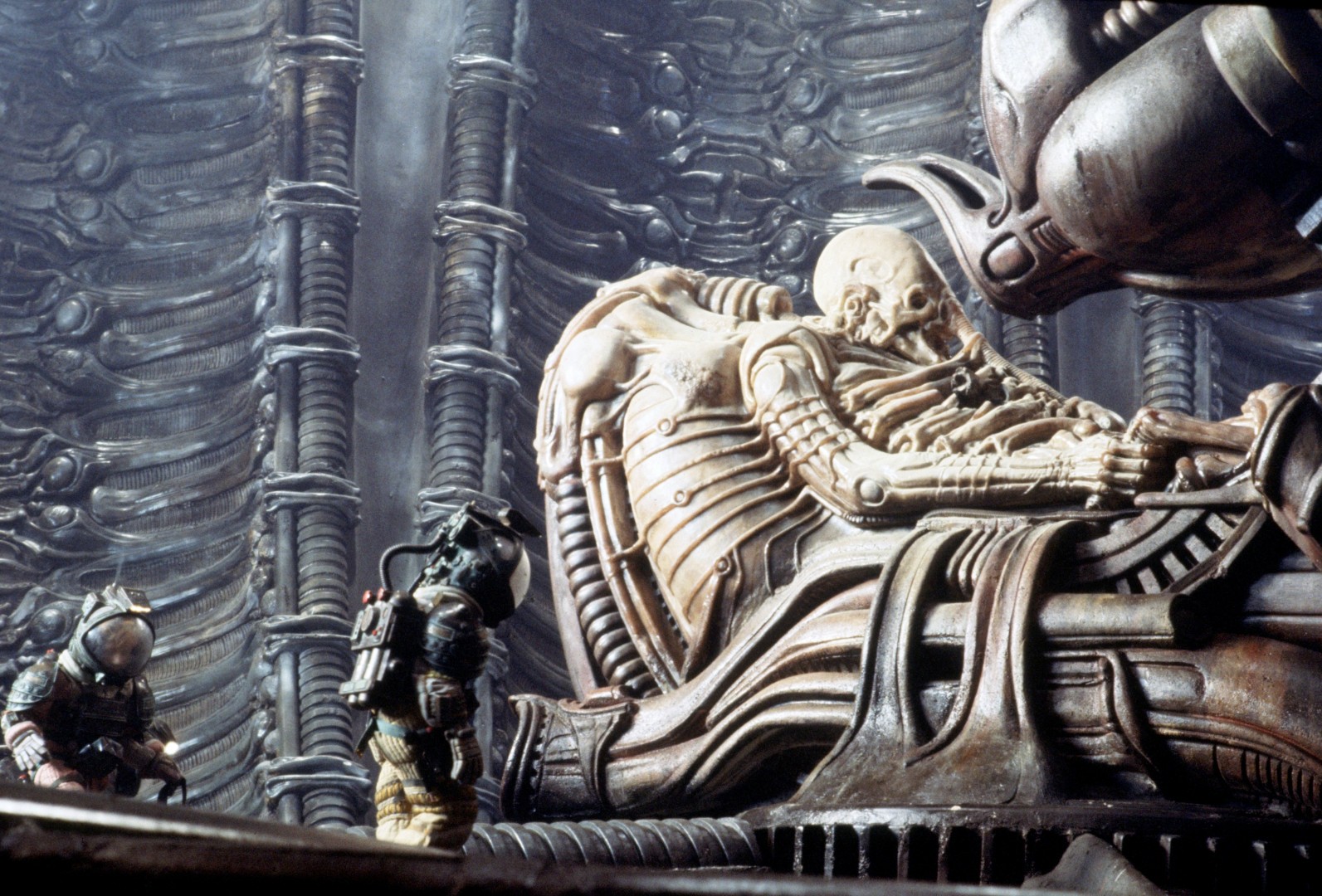
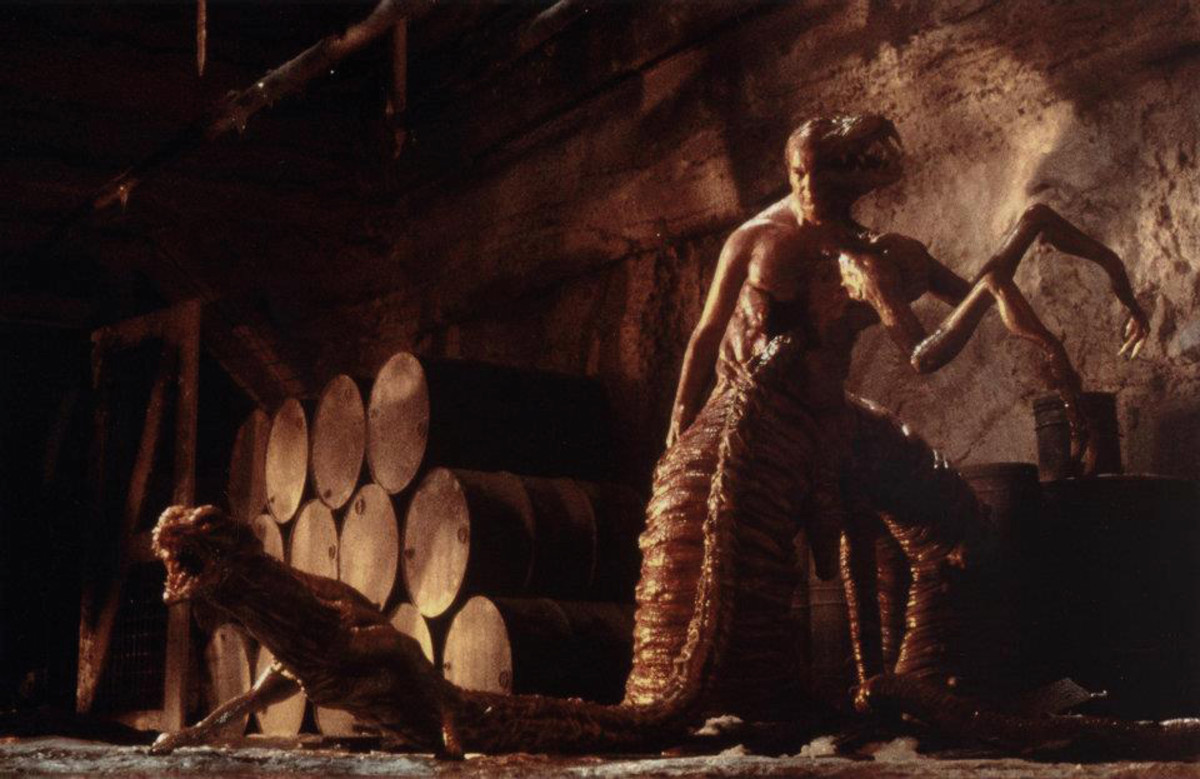
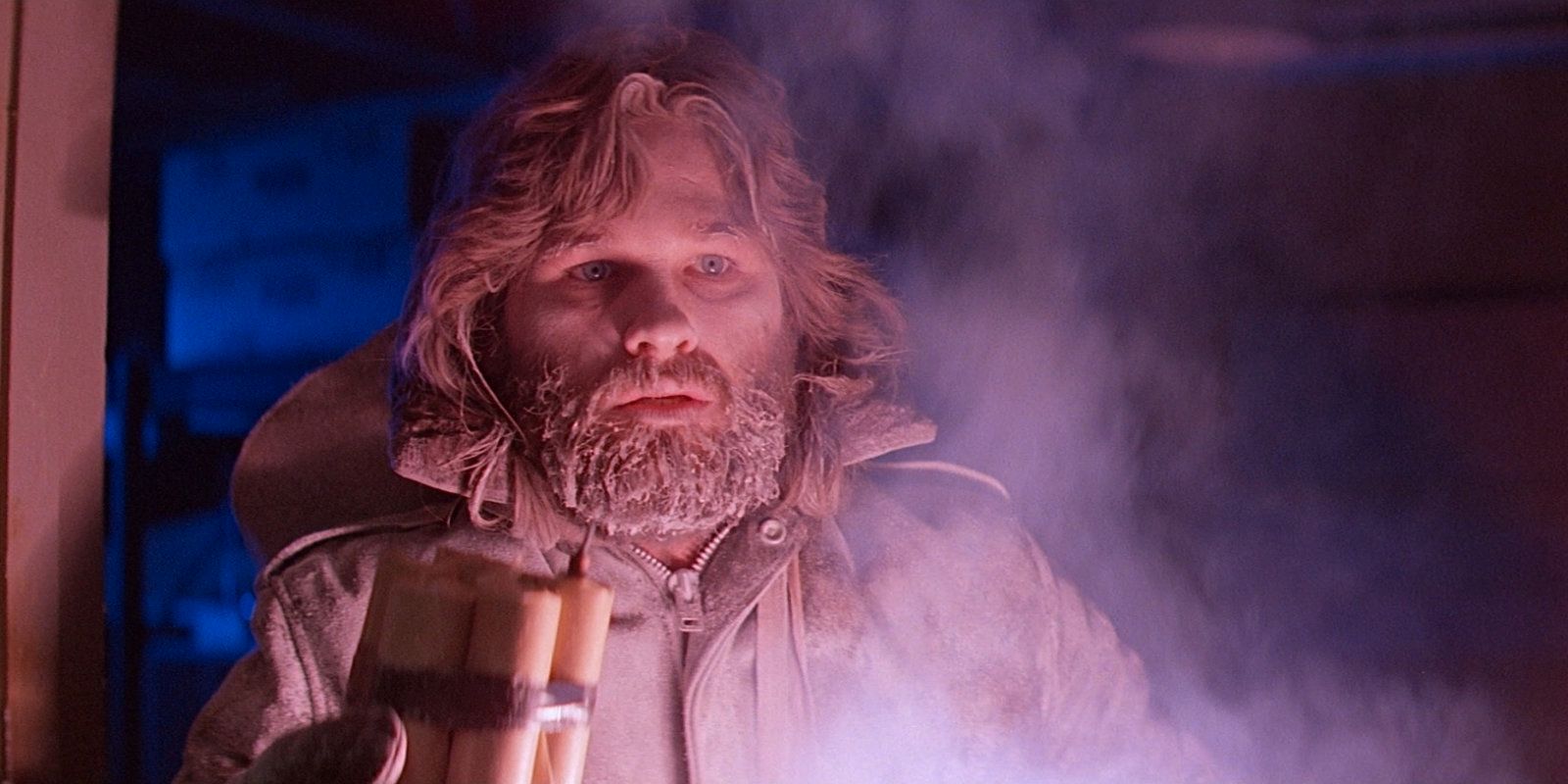
Patrick: So that is partly why these two movies have always really appealed to me. First is the original Alien, the first film from the Ridley Scott franchise; and the second is John Carpenter’s The Thing (1982). First of all, they’re just my favorite movies to watch from an enjoyment perspective, just putting everything else out of the way. But the things happening in Alien are so interesting to me because there is so much mystery, and when you first see the eggs on the Engineer ship, there is a religiosity to the way all that stuff is portrayed. The derelict craft is shot in the same way you would shoot a cathedral or something, with these huge, wide shots of this beautiful interior space that is just haunting, with an architecture that is clearly aesthetic. It is not just mechanical or practical, like the Nostromo (the human spacecraft in Alien), which doesn’t look pretty, doesn’t look good, it looks like an industrial machine floating through space.
From Alien (1979)
Patrick: I think that dovetails so well with my own relationship with spirituality, both as a larger topic, and then when you get into specifics of how the Alien is a kind of “stand-in” for Apep, the Apophis beast. It is horrifying, not because it is malicious, but because it is simply doing what it’s programmed to do, a concept that is later explored in movies like Prometheus (which I enjoy, even though it has nothing on the original Alien). It speaks to the concept of this force that just exists, and there’s nothing we can really do about it existing, all we can do is our best to survive its attacks. To me, Alien is such a pure representation of that, because you have this small localized group of characters who each have their own flaws and experiences, but none of them necessarily deserve to die. In contrast to many horror movies of the 1980s, it doesn’t feel like Scott is saying, “These are bad people and they deserve to die” in any way. If anything, the film paints a picture of working class people who are struggling to make a paycheck, and who are visited by this horrifying daemon and try their best to survive. And there’s nothing you can really do to stop it, except try to get away from it.
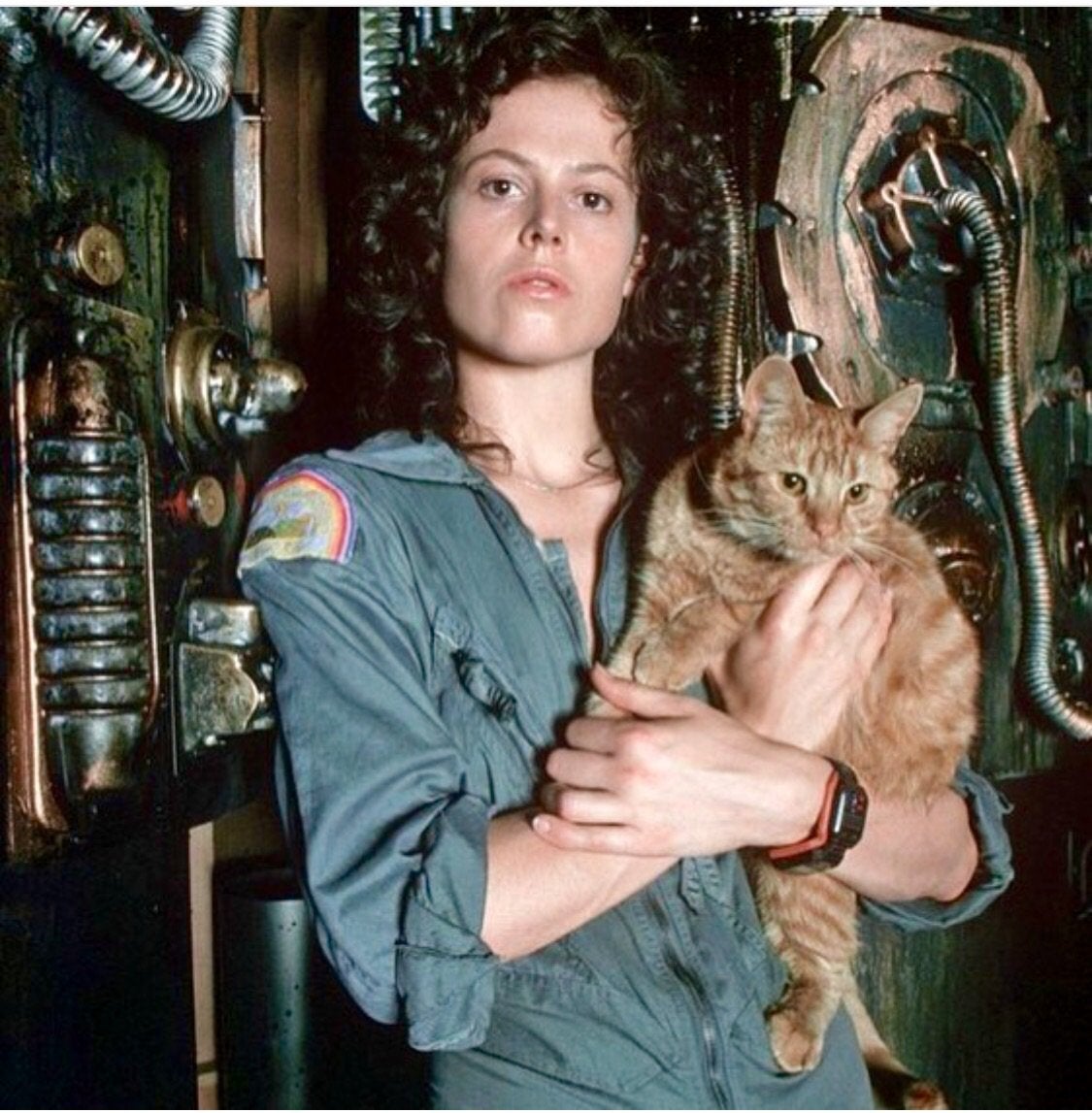
Patrick: Ellen Ripley [Sigourney Weaver’s character] is the one who figures out how to survive. One of the things I love about her and the arc of that film is, yes, she is the hero. Yes, she is the force for good in this movie. But she also doesn’t save anybody but herself and her cat. It’s like an examination of hope and resilience and fighting adversity, and of how there is only so much you can do in the face of something that powerful and inevitable. So Alien deals with how the universe works, and with how we emotionally deal with trauma and adversity. There are so many lessons to be had there, that’s part of why that’s always been my favorite film. And The Thing handles a lot of these exact same issues, but from an even darker, more bleak and cynical place.
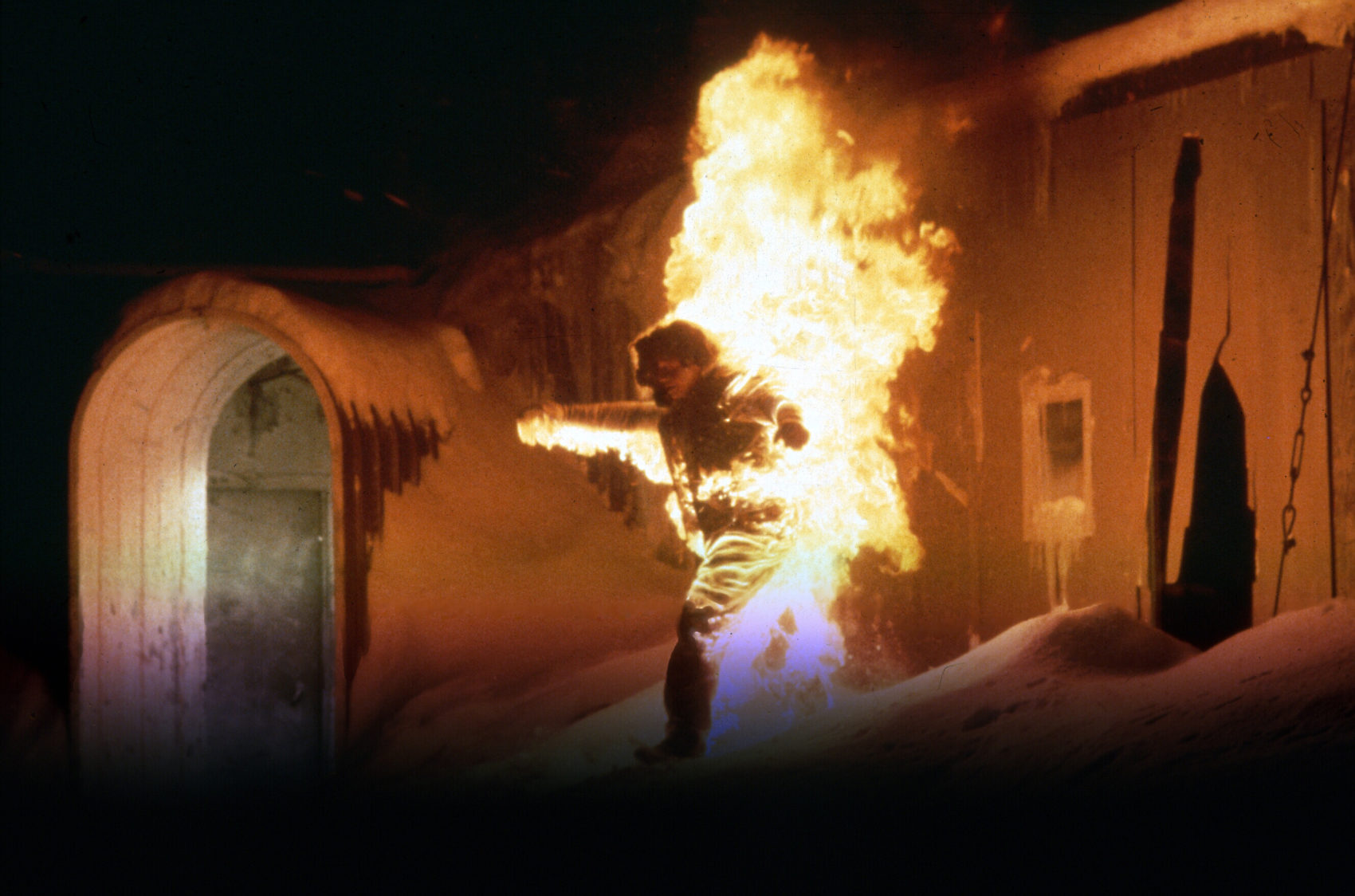
Patrick: In Alien, the creature is biological and not mystical in any way; but in The Thing, we understand even fewer of the circumstances as to how it got to be there. At least in Alien we know there were eggs in this big ship; clearly these creatures were either captured or created by these people, and that’s why it’s here. So there’s this slight anchor point where you can kind of understand why the thing that is happening to the Nostromo crew is happening. But in The Thing, yes, we know it’s because a UFO crashed; but we can’t even begin to imagine what the world that being came from looks like, and that makes it so much more terrifying. Then you get the scene when they’re estimating the model of how long it’ll take before the Thing conquers the world, and it’s very terrifying, and also particularly relevant for 2020. For anyone who has not seen this movie, it will be a little unsettling, but it’s definitely worth watching this season, because it has a lot of relevance.
Patrick: I also enjoy the way both films approach feminism. Alien is explicitly feminist and is brilliant for that reason. Then you look at The Thing, and it’s a cast that is all male; but the men aren’t necessarily portrayed as these disgusting pigs either. It’s very interesting that John Carpenter was able to take this all-male cast, and when you watch it, you don’t go, “Wow, what an asshole, you didn’t cast a single woman!” It’s not made in a way that feels exclusionary to anyone; this is the situation that we’re in, and all the people in the film feel like they fit, like there aren’t any pieces missing from the puzzle. Which brings us back to your point about the quality, Tony. To me, it doesn’t feel like mistakes were made in terms of representation in The Thing, specifically because everyone fulfills a role in the story that makes a lot of sense. Most movies that are predominantly men or predominantly white or whatever, I look at that and go, “Wow, this is a miss from a diversity perspective,” whether I like the movie or not. But not in this case.
From The Thing (1982)
G.B.: The all-male cast actually works to the film’s favor. This is a movie about a slimy, tentacled creature sticking itself into people’s orifices. If there had been women in this movie, considering the time in which it was made… There were other movies from that same period, like Galaxy of Terror from 1982 and Humanoids From the Deep from 1981, that have women being raped by monsters on camera.
Patrick: That is such an awful trope.
G.B.: Yeah, and if there had been any women cast in the film, I feel like at that time, there would have been way too much pressure to make a sexual trope out of it. This movie is already disturbing enough as it is, we don’t need that shit! In fact, The Thing deserves recognition for being one of the only horror movies of the entire 1980s with no sexual exploitation in it whatsoever!
Tony: That’s where I wanna step in with that. I’m glad you brought those two movies up, because those two movies are very interlinked as far as characters go. There is also no sexuality whatsoever in either of them, and you can literally switch the actors in both movies and both would still work. Sigourney Weaver would have played a hell of an R.J. MacReady [Kurt Russell’s character in The Thing], and Kurt Russell would have been an awesome Ripley. The point Dan O’Bannon was trying to make when he wrote the script for Alien was to not have sexuality, so the women and the men can be interchangeable.
Tony: Plus, Alien is basically “Space Rape: The Movie,” where it’s a man getting raped in the beginning. He’s violated and impregnated, and he has to go through what women have to go through from it. If you could boil the whole movie down to one sentence, it would have to deal with the fact that nobody’s listening to this woman [Ripley] who really knows better about these things than any of the men. “Hey, you know the quarantine rules, you can’t let these people in,” she says. But the men say, “What do you know? You’re a woman, I’m gonna let this thing in and we’ll just take care of it, ’cause we’re men and we know how to control this!” But you can’t control it, it’s nature, and the Alien’s only purpose is to penetrate, impregnate, reproduce, and repeat. That’s the whole point of its species. We know from the deleted scenes, as well as from the 1986 sequel (Aliens), that Ripley has a child, which was removed from the first movie to further desexualize everything. There was even a scene where Dallas [Tom Skerritt’s character in Alien] and Ripley have a relationship, but they cut that out too. I don’t know if it was actually filmed or if it was just in the script, but they cut that part out. I’m glad they separated from that, because otherwise we might have walked into Galaxy of Terror territory.
From Alien(1979)
Patrick: Part of why Alien is my favorite film is that horror and science fiction are my two favorite genres, and Alien is both of those things simultaneously. Sexual violence, of any kind, is my least favorite trope in storytelling, period. I think there are stories that definitely manage their implementation of that kind of device to tell a larger story; but Alien does it in such a way that is (to your point, Tony) not so focused on sex, and that is something that so much media fails to deliver.
G.B.: Though I think the argument can be made that Alien is also very sexual, given that it’s essentially about rape.
Tony: I mean look at the [Engineer] ship. I know you compared it to a cathedral earlier, but it also looks like one big, giant vagina.
Patrick: Oh, absolutely.
Tony: There’s all these orifices, and of course we’re getting into H.R. Giger Land, which is Penis City.
Patrick: And The Thing where is very much a film about masculinity and the ways men interact with each other in the world, which makes it feminist-adjacent in a way that many people don’t think about. Frankly it was ahead of its time, because intersectional feminism is definitely a more recent development; obviously there were people laying the groundwork for that in the 1970s and 1980s, and even before that. But intersectional feminism is not just about empowering women, though that is a key part of the feminist conversation. There are also many other pieces to that puzzle, including things like eliminating toxic masculinity, the ways that men are bad to each other, in addition to the ways that men are harmful to women. I think The Thing is very specifically going for that idea, and that is another reason both of those movies have always been connected in my mind, thematically.
G.B.: You’re really right, actually; now that I think about it, a lot of the men in The Thing, their relationships with each other are really quite toxic.
Patrick: Absolutely, yeah. It manages to touch on that toxic masculinity, and even on racism, though with a very light hand, not by beating you over the head with things. It’s such an interesting microcosm of different people and systems interacting with each other, and it’s always made me want someone to make a video game. Not like the one where you’re flamethrowing Thing monsters, but one where you’re managing all of the personalities at play around that crisis, from sort of a pullback perspective. I think the gross creature feature stuff is amazing in that movie, but what really makes it powerful and meaningful is the way in which all of these personalities interact as everything goes to shit.
Tony: I’ve always seen the main issue or the main subject that they’re trying to explain in The Thing as paranoia. Everybody in that movie is hyper-paranoid because you don’t know, “Am I me? Or is me going to be not me? Is my body going to betray me?” and it turns out I was never me this whole time. This to me is a reflection of identity crises in modern society. “Why, I’m supposed to be a ‘man.'” “No, no, no, no, you’re not supposed to be a man.” “Well who am I, then? What am I? Am I not me?” And when you become paranoid like that, some people try to strive for answers, like MacReady, who says, “We’re gonna fix this.” And then there are the people who freak out and pull out their guns to start shooting, because they don’t wanna know, they don’t wanna question what they think they know, because they live in a world of absolutes. “Men are men, and women are women, and I’m not going to break away from this.” But here is this creature that actually is breaking you away from it, because you don’t even know who are what you are when you become super paranoid. And what’s the one thing you wanna do? You wanna find some sort of sanity, you wanna find something that makes you less insane, going back to nostalgia, grabbing on to things from the past that make things seem “real” again. People want some semblance of sanity, but everybody is questioning everything because things are changing, so everybody’s ultra paranoid. And when everybody’s ultra paranoid… What do we gotta do? Oh, we gotta “Make America Great Again.” Okay; so when was it great? 40 years ago? Sure.
Tony: As for the sequel to The Thing – or excuse me, the prequel (2011). Instead of playing up the paranoia, they went with Alien‘s story model instead, with all these men saying, “Don’t listen to the woman, even though she clearly knows what she’s doing.” Still a great movie, but not as impactful as the first one, which is thanks to that theme of paranoia.
From The Thing (1982)
G.B.: I think Patrick mentioned earlier – or maybe it was both of you – how the Alien is really just following its natural life cycle, right? Its biological imperative is to rape and reproduce and do the whole thing all over again. The Thing, on the other hand, is clearly an intelligent, sentient being that is capable of building spacecraft superior to our own (and from pieces of trash that it finds around the camp). It’s presumably swallowed countless civilizations. One thing I’ve heard from some other reviewers is how the human characters are hostile to the Thing from the very start, meaning is actions in the story are purely defensive. Well, maybe it was the Thing that came into the story hostile from the beginning, because it certainly doesn’t seem friendly by nature, and even when it’s imitating a human American scientist, it can speak English perfectly, indicating that it understands what is said to it. Yet it never makes any attempt at communicating with the men at Outpost 31 at any point. So for me, whereas the Alien is just an animal, the Thing is actually evil, purely and simply evil.
Tony: Well, it’s basically Apep. Like, “I have one purpose and one purpose only: to destroy. That is my nature.” Do you remember the celestial creature from The Fifth Element where it says, “I eat on purpose, I’m going to destroy…” Well that thing is essentially Apep too, just as The Thing is Apep. It just consumes, it doesn’t do anything else. It’s the “Space Terminator,” it can’t be bargained with, it can’t be reasoned with, we can’t do anything against it, it just destroys, that’s all that it does.
Patrick: Another thing that’s interesting about Alien and The Thing. When you look at Alien, I think it is clearly the product of atheistic thinking. There are parallels with the Apophis beast and probably with other spiritual evils as well. But Ridley Scott makes it very clear at the beginning that the monster is a purely biological, scientific force that was either made or captured by something. It is not a supernatural force that sprang into existence, with the purpose to destroy on its own. And now of course, with the prequels, we know Scott’s ultimate vision for the origin of the Alien species: that it is a product of experimentation and genetic engineering. I think it’s interesting that Scott, who is himself an atheist, would create a story with a beast like that at the center. Whereas the Thing feels more comparable to a supernatural force, with its more mysterious origins. Again, we know a UFO crashed obviously; but there is no reason to assume the craft is actually from the Thing’s home world. We don’t know where it came from, whether it was created in a lab somewhere, or if it is perhaps a literal manifestation of Apep, this beast that’s been riding through space and has just now found its way to Earth. Not to suggest that John Carpenter was trying to make an explicitly spiritual or religious message here at all, of course.
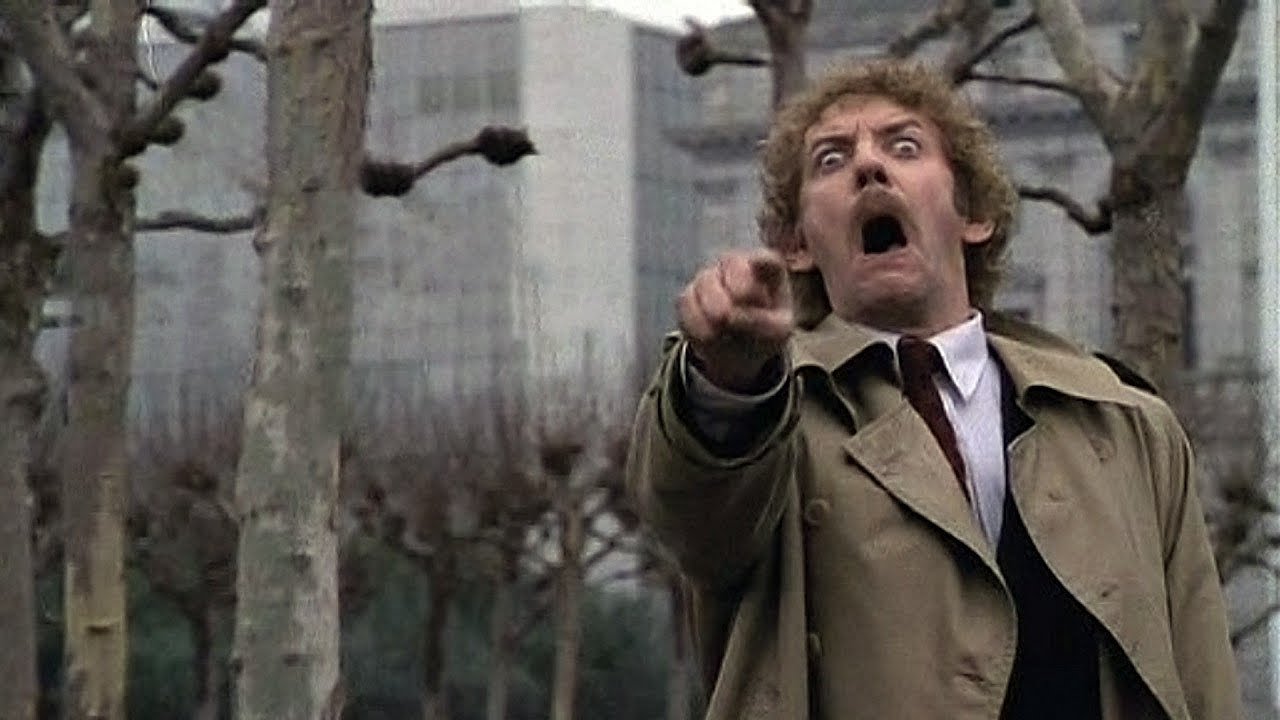
Tony: Continuing down the road of linking spirituality and paranoia with The Thing, and comparing it to what’s going on in the world. Especially here in this time right now, it seems like to me that everybody is paranoid about one side of humanity trying to wipe out the other. For example, we have conservatives scrambling to keep in power, to stomp out whatever progressive or liberal policies they can, to eradicate all of that. And we have the other side, these people who understand the need to grow and change and stuff. Considering this, I’m surprised that Invasion of the Body Snatchers (1978) isn’t something that people aren’t talking about right now. I’m talking about the 1978 movie; I’ve never actually seen the 1956 original. But the 1970s version is a really good movie to watch right now, given the polarizing times in which we’re living, how it’s “You’re either with us or against us.” It is fucking scary to think, “What if I wake up and I’m one of them?” And it’s the same message with The Thing. What if you wake up and you’re one of THEM? All three of us see ourselves as very tolerant people, but what if we wake up one day and WE’VE become the aliens, the invaders, the monsters? That is some super scary shit.
Patrick: Such a good movie. At the same time, I’m hesitant to watch it, because November 3 is coming around. Having re-watched The Thing many times, my opinion is that MacReady is not the Thing, and was never assimilated at any point. I think he’s human even at the end, and I think they kind of explicitly point to Childs [Keith David’s character] as being infected, though that is a debate that will rage for the ages. But when you compare it to political beliefs and a change in one’s interaction with sociopolitical issues over time, one of the reasons why I feel so confident in MacReady not being the Thing is that he always has an analytical view of the situation, and he is very smart in how he interacts with the potential for infection and the potential for getting turned into the Thing. I see MacReady as a model for staying true to your innermost convictions; he remains himself no matter what, just like I am very confident I will never become politically conservative.
Tony: That’s a great point. But let’s look at what happens with Blair [Wilford Brimley’s character in The Thing]. Okay, so we don’t know when Blair was eaten by the Thing, exactly, but look what happened when he discovered the truth of how long it would take for the Thing to infect the entire world. He just goes berserk. It depends on how you react with it, but some people just can’t handle that kind of information, they literally go crazy. If we sat down and were shown a model telling us the human race will go extinct in 22 years, how would we react to that? If you’re like MacReady, you take an analytical route and go, “Alright, well I’m just gonna do the best I can do, and keep learning and keep going.” But if you’re like Blair, you just flip the fuck out and start diving into paranoia, like those people in the QAnon movement, and you start scrambling and going crazy.
Patrick: Yeah. I certainly don’t have the answers when it comes to helping the Blairs of the world…
G.B.: There have been several times this past year when I felt like I was almost turning into Blair!
Patrick: I have zero tolerance for things like QAnon; but at the same time, I don’t have the answers for someone who is scared. And you’re right, Tony; whether Blair’s reaction to the Thing is a “reasonable” response or not, it is still a real response, a valid experience that can occur when we see things that horrify us. My partner and I talk frequently about how much easier it would be to just not know anything and not care about anything outside of our media bubbles. So I am hesitant to ascribe a reaction like Blair’s to any kind of moral or ethical weakness.
Tony: Some people like to take that and make that their shiny new shield on their chest. “Well, look at me, I’m more put together than you!” And that just feeds off the negativity. As weird and as cheesy as it sounds, many of those people just need a fucking hug, man. OK, you’re scared! I get it. But there’s no need to act like a buffoon!
From The Thing (1982)
If you enjoyed this discussion, stay tuned for Part 2 in the next episode of In the Desert of Set!
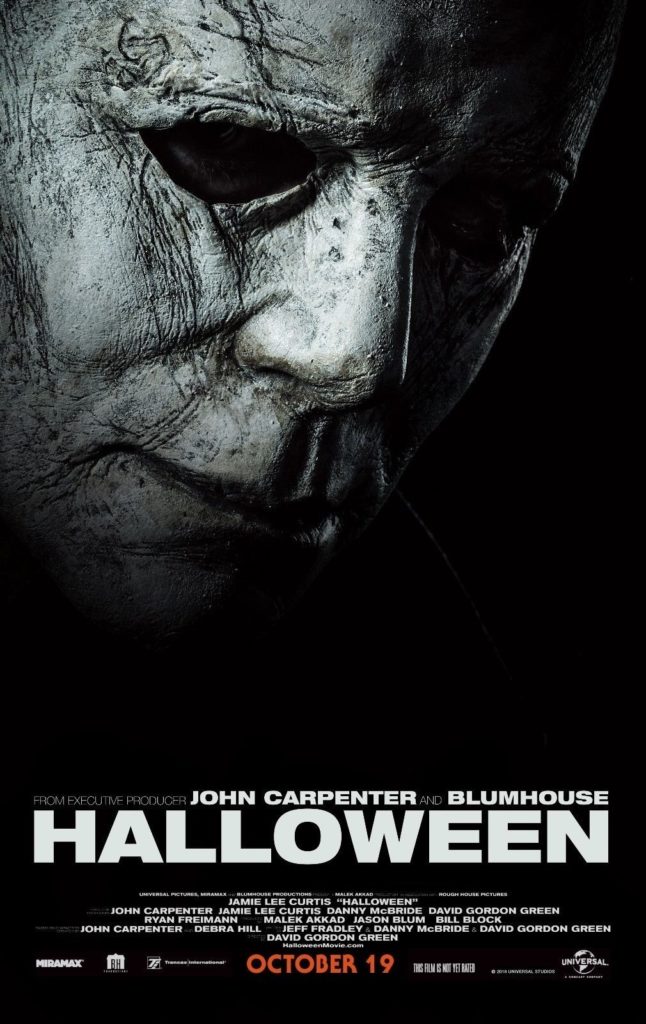
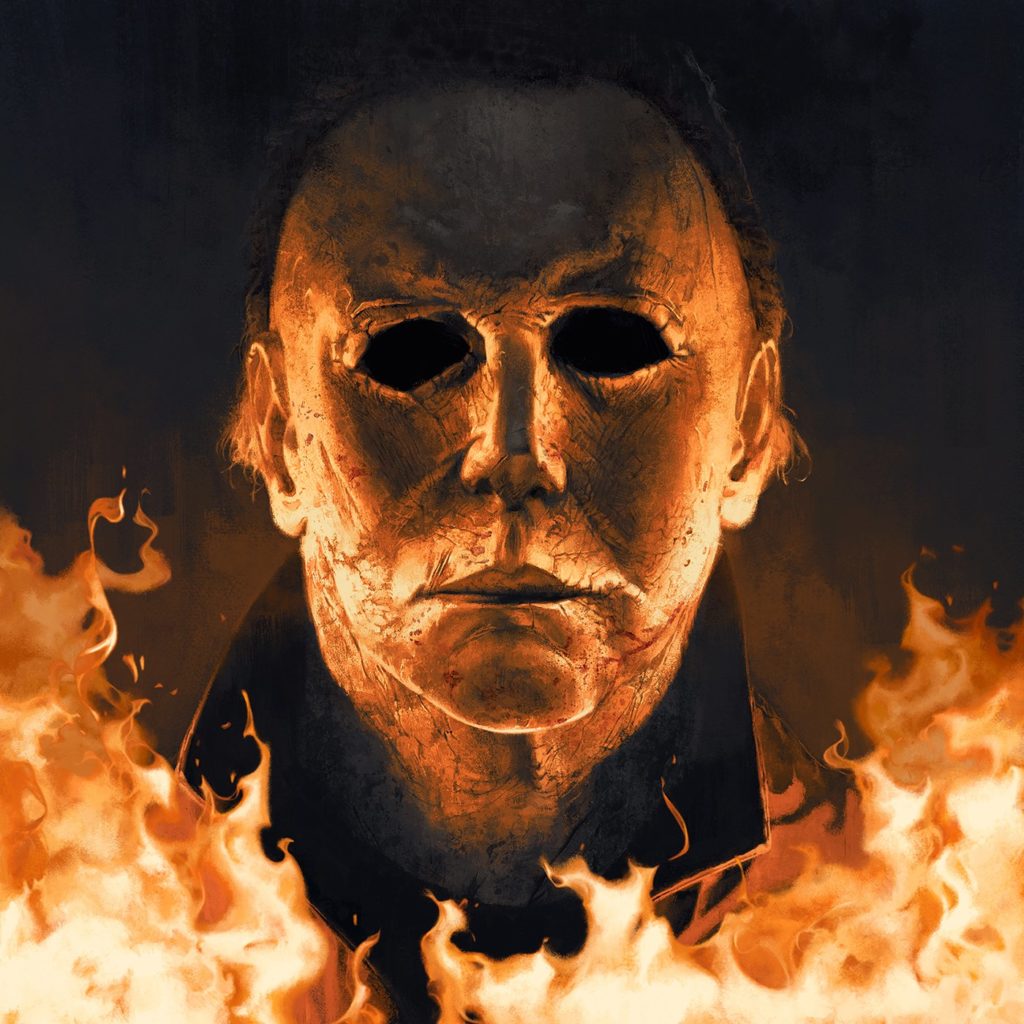
Why the 2018 “requel,” featuring the return of John Carpenter and Jamie Lee Curtis, is the best direct sequel to the original 1978 classic.
In the 2010s, David Gordon Green came along and pitched an idea to John Carpenter. Green proposed making a new film for the Halloween series that would establish a brand new timeline, but with an extra twist. This new film would be a direct sequel to just the 1978 original, ignoring all the other entries in the series (as well as the remakes). Green further proposed eliminating the “siblings” subplot that Carpenter first introduced in Halloween II (1981), re-establishing that Michael Myers and Laurie Strode are totally unrelated strangers. Jamie Lee Curtis would also become “the New Loomis” and take Donald Pleasence’s place as Haddonfield’s resident Boogeyman-hunter. Many people would balk at this suggestion, for the idea that Michael and Laurie are siblings has been considered “canon” for decades now. But John Carpenter, having always felt a little embarrassed over Halloween II, absolutely loved Green’s idea and signed on to be an executive producer, creative consultant, and composer for the film (his first involvement with the franchise since Halloween 4 was still in pre-production in 1988). It was almost too good to be true!
I can’t remember who it was, but when David Gordon Green’s Halloween (2018) was first released, some dingbat film critic trashed the notion that “Directors can apparently change canon at the drop of a hat now.” Whoever made that statement must not be a very good film historian, otherwise they’d know these movies have already been changing their own “canon” for decades (see 1998’s Halloween H20: Twenty Years Later as a good example). Halloween isn’t the first franchise to do this, either. Just look at Hammer Films and Toho Studios, which created alternate timelines for both Count Dracula and Godzilla in the 1970s and 1980s, respectively. The so-called “requel” is nothing new, and bringing the Shape back for a new spin on what happened after “The Night He Came Home” is really no different from letting Christopher Nolan take a crack at Batman. The Halloween flicks aren’t for everybody, but neither is this foolish idea that every film in a series must necessarily take place in the same cinematic universe.
That being said, the 2018 Halloween begins with two podcast reporters (Jefferson Hall and Rhian Rees ) who are visiting Smith’s Grove Sanitarium in Illinois to see Dr. Ranbir Sartain (played by Haluk Bilginer) and his patient, Michael Myers (James Jude Courtney). We learn that shortly after the events of John Carpenter’s Halloween, Dr. Loomis tracked Myers through the neighborhood and was about to nail the fucker with another six slugs to the chest when the local PD showed up and “de-escalated” the situation. Myers was brought into custody and returned to the sanitarium, and Loomis was revoked of his license to practice medicine, which is how Sartain took over. Now it’s 40 years later, Loomis is deceased, and Myers is about to be transferred to a maximum security prison, where he is expected to rot. The reporters try to stoke a reaction from Michael by pulling out that odd, white, faceless mask he wore while stalking his victims in 1978. Myers gives them nothing, but every other patient in the sanitarium suddenly goes rabid, and that tells us right there that these idiot reporters just made a really bad mistake.
Damn, Jamie Lee, you’re as beautiful as ever!
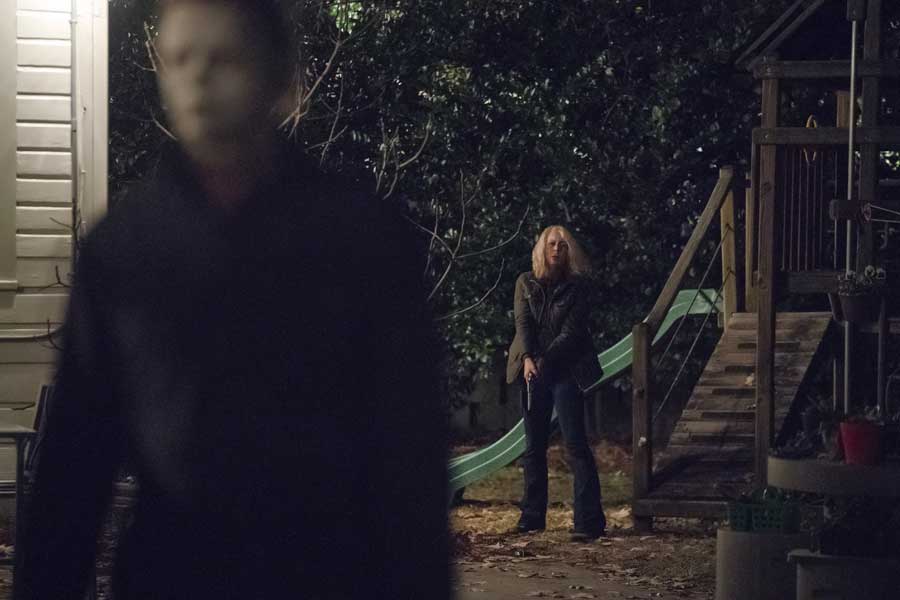
Next, the reporters go to Haddonfield to visit Laurie Strode, the only teenager among Michael’s victims to survive—the one who fought back and lived. We learn that over the past 40 years, Laurie had a daughter named Karen (played in adult form by Judy Greer); but Laurie continues to exhibit terrible PTSD, and she’s also become a survivalist gun-nut. Her day-to-day behavior is so alarming, in fact, that the state eventually took Karen away from her custody. Mother and daughter have been estranged ever since, and Laurie now lives in a lonely old house in the woods, with an armory fit for Armageddon. She has always known deep in her heart that Michael Myers will escape again one day, and that the mysterious Shape will stalk the streets of Haddonfield once more. And when that happens, Laurie aims to finish what the local police prevented Dr. Loomis from doing all those years ago, once and for all.
The reporters don’t get much farther with Laurie than they did with Michael; they’re disrespectful to her, suggesting she’s just a hysterical old woman and no one should believe or listen to her. But instead of being silenced, Laurie kicks them the fuck out and goes right back to preparing for the Big Blow-Up. Then she goes to visit her granddaughter, Alyson (Karen’s daughter, played by Andi Matichak), who is experiencing her own share of maternal estrangement. It seems the adult Karen Strode still carries all her childhood demons from growing up under Laurie; for while she is much more stable and capable of raising a family than the elder Strode, she has nevertheless succeeded in alienating her daughter as well. She has restricted Alyson’s access to her grandmother so much that the two of them must meet in secret if they are to interact with each other at all. And while Karen thinks Laurie is just an attention-seeking prophet of doom, Alyson knows her grandmother’s trauma and grief are completely authentic.
It’s only a matter of time, of course, before Laurie’s prophecies about Michael Myers all turn out to be 100% true. The patient somehow manages to escape from a prison bus while he is being transferred to the maximum security facility on Halloween Eve. Then he tracks down the two podcast reporters at a local gas station to retrieve his mask from their belongings. I have to admit, this is the most thrilling sequence I’ve witnessed in any Halloween movie since the late 1980s. Michael Myers is somehow even more intimidating when he’s out of costume, walking around in broad daylight, with everyone around him none the wiser. This part of the film also made me realize just how much Myers resembles a Batman villain like the Scarecrow—complete with escaping from a psychiatric prison and dressing in a costume that seems to enhance (rather than conceal) his true personality. For when Michael finally retrieves his mask and wears it once again, he reverts to his true identity as “the Shape.”
(Beware of spoilers!)
So the Shape returns to Haddonfield and invites itself into random people’s homes, carving the residents up like jack-o’lanterns. It then crosses paths with Alyson while she’s walking home from a school dance, but she manages to elude it and find Officer Hawkins (Will Patton), who’s out patrolling the neighborhood with Dr. Sartain. Hawkins, Sartain, and Alyson then encounter the Shape again, and when Hawkins prepares to kill it, Dr. Sartain goes apeshit and kills the cop. Then he throws an unconscious Shape in the backseat of Hawkins’ police car (along with Alyson) and drives off toward Laurie Strode’s house. He explains that he’s obsessed with learning the secrets of Michael’s true motives, and that he believes he can uncover those secrets by forcing a showdown between Laurie and the Shape. But once they’ve almost reached the Strode house, the Shape re-awakens and tears the police car to shit with its bare hands. Alyson manages to escape by the very skin of her teeth, but things don’t go so well for Dr. Sartain, whom the Shape soon dispenses with. Then the Shape sees Laurie’s house down the road, and the Big Blow-Up between Strode and Myers begins.
Some people complain profusely about this plot twist with Dr. Sartain, claiming that it totally “came out of left field” or “served no purpose” for the story; but I thought it was absolutely brilliant, and for several reasons. First off, it’s clear that while Laurie and Sartain both believe the Shape wants to get her, the Shape itself has very different ideas. While Laurie has never stopped dwelling on that fateful Halloween night in 1978, the Shape doesn’t appear to even remember who she is. Imagine that someone attacked you and traumatized you several years ago, to the point where everything you do in your life is now shaped and dictated by that awful experience. Now imagine that you will finally have a chance to confront your tormentor several years down the road, only to learn that he doesn’t even remember you or the things he did to you! Not because he’s been “rehabilitated” or because he honestly forgot, but simply because you are insignificant to him in every possible way. While Laurie has focused all her energy on destroying the Shape for the past 40 years, the Shape hasn’t thought about her even once since 1978, and that is some awful dark shit right there.
If it seems strange that a Halloween movie would feature another villain apart from the Shape, we need only remember Halloween 6. I believe the Sartain character is actually an homage to Dr. Terence Wynn, the “Man in Black.” According to Halloween 6, there are other people in Haddonfield who know what the Shape really is aside from Dr. Loomis, but who want to “control” or “understand” it rather than destroy it. Dr. Wynn and his “Thorn Cult” learned the hard way that this impossible, and Dr. Sartain learns the exact same lesson here. There are quite a few homages to earlier films in this movie, so I’m pretty certain this resemblance between Wynn and Sartain is intentional. I think the idea of the Shape having “fans” or “helpers” is not only interesting from a narrative perspective, but also quite scary and realistic. Just look at how people idolize monsters like Charles Manson or John Wayne Gacy in real life.
There are also numerous clues in the first half of the film that the Sartain plot twist is coming. Dr. Sartain is the one who deliberately allows the podcast reporters to taunt Michael with his mask at the start of the film. (What the hell kind of doctor lets the press fuck with his patient like that? Dr. Loomis would not have approved!) He also insists on accompanying Myers on the prison bus, and he is the only survivor we see on the bus after Michael’s escape. (Did Michael really kill all those guards—or did Sartain do it?) The doctor also says a lot of asinine things about empathizing with Michael, as if he doesn’t give a shit about any of the victims. Finally, when Laurie Strode and Dr. Sartain meet for the first and only time in the film, Laurie refers to him as “the New Loomis,” given his inherited role as Michael Myers’ psychiatrist. This line is absolutely loaded with irony considering that Sartain later turns out to be in cahoots with the Shape, and that Laurie herself turns out to be a much better Loomis than Sartain could ever be!
I also enjoy the Sartain plot twist because I honestly didn’t see it coming; despite all the clues, David Gordon Green does a masterful job of hiding the surprise, and it truly caught me off guard when I first watched the film. I can’t tell you how many times I will sit down and watch a new horror movie I’ve never seen before, only to correctly guess everything that’s going to happen throughout the film. I have even lower expectations when it comes to slasher movie sequels, which tend to follow a very rigid formula. So the fact that this sequence surprised me as much as it did is nothing short of amazing. And considering how important Sartain actually is to the story (mind you, he is the only reason Michael and Laurie ever cross paths), he has now become one of my favorite characters in the franchise. (Too bad he won’t be showing up in any more sequels, unless it’s in a flashback!)
Each of the male characters in this film is either helpless (like Officer Hawkins), untrustworthy (like Alyson’s boyfriend Cameron), or downright evil (like Myers and Sartain). There is a recurring theme about women not being heard and not being believed (not only by men, but by other women as well). After Michael was apprehended in 1978, no one aside from Laurie and Dr. Loomis seems to have considered him responsible for his own actions. The State of Illinois simply locked him away again, and everyone moved on. When the podcast reporters question Laurie about this, they seem to take Michael’s side for some reason, excusing him for his actions in 1978 because “He’s crazy” and “It happened so long ago.” So Laurie isn’t just fighting the Shape here; she’s fighting the entire patriarchy, which cares more about her tormentor’s side of the story than her own. In this way, David Gordon Green’s Halloween is really the only sequel in the entire franchise that taps into one of the original 1978 film’s most important themes: how society protects and even aids monsters like Michael Myers by gaslighting their victims. When the Strode women finally band together at the end to tackle the Shape, they aren’t just taking down a man in a mask; they are taking down the entire toxic narrative their patriarchal society has used to keep them disempowered for so long.
Another thing I love about this movie is the fact that the “babysitters-in-jeopardy” element of the story is limited to just the second act. We’ve already seen Michael Myers stalk babysitters for 90 minutes at a time (several times, in fact); there is so much more he can do as a character. David Gordon Green proves this by using the first and final acts to elaborate on things we’ve never seen in any Halloween movie before. The first act does a fantastic job of putting us in Laurie’s head, exploring her complexity as she alternates between her doomsday prepping and her struggles with PTSD. And the final act is a real powerhouse, escalating the conclusion of the 1978 original to full-blown action movie proportions. Now that Green is currently filming not one but two more Halloween films (to be released in October 2021 and 2022, respectively), I’m very excited to see what other new situations he might throw these characters into next. (I’ve always wanted to see the Shape square off against an entire SWAT Team, myself!)
Keep your eyes peeled for some awesome Halloween III-related sight gags!
Without a doubt, David Gordon Green’s Halloween wins my vote for “Absolute Best Direct Sequel to the 1978 Original” (a title previously held by Halloween 4). This isn’t just some run-of-the-mill slasher movie; this is an example of how one night of terrible violence can still affect people several decades afterwards (even if they weren’t even born yet at the time!). And while the Halloween series has always featured strong female protagonists, the 2018 requel deserves special recognition for bringing this theme to a whole new level. I really can’t recommend it highly enough, especially for viewers who enjoy seeing powerful women beat the stuffing out of evil men (like I do!).
How a simple “slasher movie” deplores the patriarchy and evokes Celtic folklore.
Merry Samhain! Happy Hallowtide! To mark this blessed holiday occasion, the next several episodes of this series will feature my analyses of the Halloween horror film franchise, with a particular focus on my five favorite installments thereof.
If I had to rank my top 5 Halloween movies as things currently stand here in 2020, the countdown (from fifth to first favorite) would run as follows:
I find it difficult to discuss these films in a countdown, and would prefer to discuss them chronologically instead. But unlike most other popular movie franchises, the Halloween series does not follow a single coherent timeline. It instead includes several alternate continuities, and even a completely different cinematic universe in the case of Halloween III (which diverges thematically from all the other films). That being said, I think it would make the most sense if I discussed my favorite entries from the “A-plot” storyline of the series (the Michael Myers saga) first, then concluded with an analysis of the “B-plot” story. So the first four episodes in this little mini-series will feature my four favorite Myers films in their chronological order of release; then I will end by discussing Halloween III.
It’s Halloween night, 1963, in the sleepy little town of Haddonfield, Illinois. Dressed as a clown, a six-year old boy named Michael Myers stabs his teenage sister, Judith, to death—and for no apparent reason at all. He neither moves nor speaks afterwards, and he is admitted to a state mental hospital, where he is treated by Dr. Samuel Loomis (Donald Pleasence). After a while, Loomis claims Myers is the single most dangerous patient he has ever observed, and he does everything he can to have the boy transferred to a maximum security prison—despite the fact that Michael just sits there motionless, never reacting to any external stimuli. The doctor’s colleagues think Loomis has gone crackers, but he seems to understand something about Michael that modern psychiatry just isn’t equipped to explain. Much to everyone’s horror, Loomis is proven 100% correct about his patient 15 years later, when a full-grown Myers gets a hair up his ass and makes a jailbreak on Halloween Eve. The authorities continue to gaslight Dr. Loomis and ignore what’s happening, thinking they will probably find Michael just sitting in a park somewhere in his hospital clothes. But Loomis knows his patient is really up to something terrible, so he follows his only lead: the possibility that Myers might return to the scene of his childhood crime, the old Myers House back in Haddonfield.
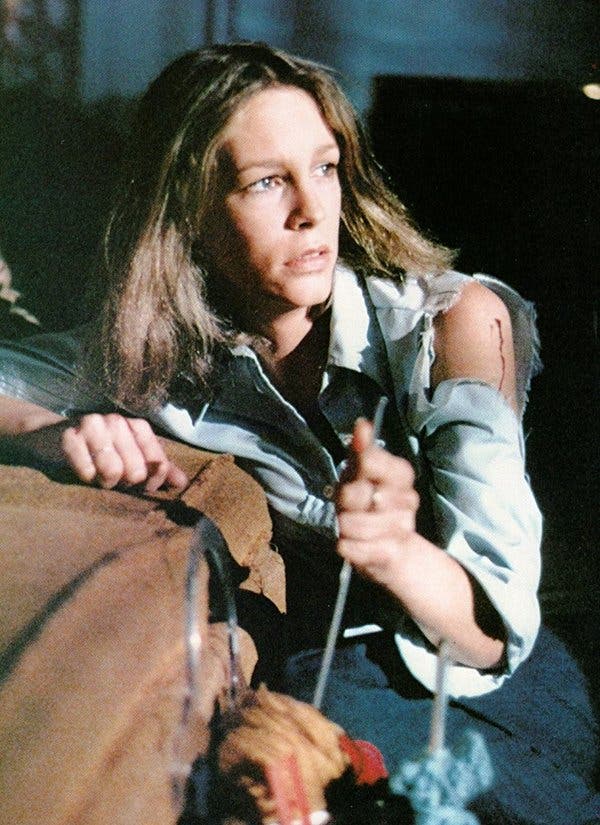
Here is where we meet Laurie Strode (Jamie Lee Curtis), a meek and lonely teenager who happens to live in Haddonfield. She’s good-natured and smart as a whip; but her closest “friends,” Annie and Lynda (Nancy Loomis and P.J. Soles), constantly treat her like shit, making fun of her good grades and her shyness around dudes. Yet Laurie does, in fact, attract a “man” when she passes by the Myers House on her way to school that Halloween morning in 1978. For a mysterious Shape inside the abandoned property notices her and fixates on her, following her wherever she goes from that point on. Laurie keeps catching glimpses of the Shape as she sits in class, walks home from school, and goes to babysit her pre-adolescent friend Tommy Doyle (Brian Andrews) for the evening. But the Shape keeps appearing and vanishing like a phantom, and Laurie doesn’t really believe what she sees as first, thinking it’s probably just some holiday prankster, or perhaps her eyes playing tricks. Tommy refers to the Shape as “the Boogeyman” whenever he sees it lurking outside the windows, and Dr. Loomis insists this thing is really the devil himself. By the time Laurie is forced to defend herself and Loomis arrives to shoot the Shape six times in the chest at close range, the viewer is unable to dispute with Tommy or Loomis on either of these theories. There really is no “Michael Myers” at all, or at least not in any human sense; there is only the deathless Shape, which has now dropped all pretense at being a mortal man.
This story might not seem to have anything to do with magic or the occult, but there is a curious parallel to Celtic mythology and folklore that is seldom noticed. Celtic lore tells of changelings, or faery children who are swapped for human babies (without the human parents’ knowledge or consent). A changeling will look and behave just like a human baby at first, but eventually it starts exhibiting weird superhuman powers, and misfortune follows it wherever it goes. It seems to me that Michael Myers fits this motif perfectly; his parents appear to have had no idea of what they were really raising, and much like the evil spirits in Celtic folk religion, he only roams free during the festival of Samhain. Additionally, the apotropaic Halloween traditions that once kept us safe from entities like the Shape—wearing costumes, carving pumpkins, trick-or-treating, etc.—have been completely secularized, rendering them powerless. The evil can stalk and slash as much as it wants to now, since the people of Haddonfield aren’t even willing to acknowledge its existence in the first place.
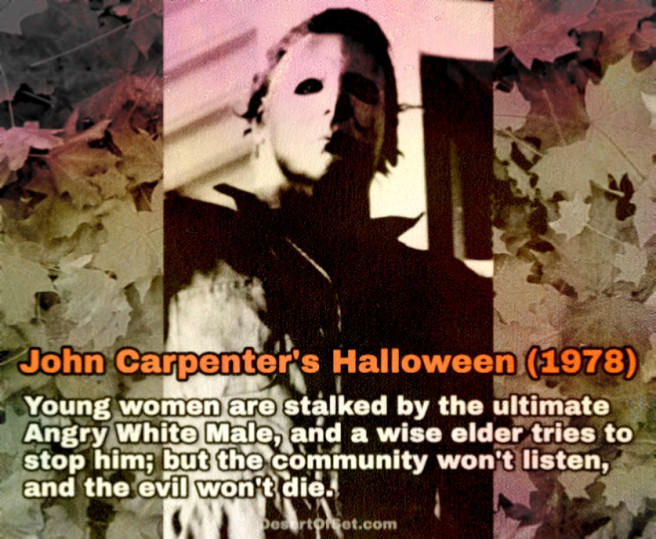
The fact that Myers wears a pale white mask and stalks defenseless young women is also significant. Myers is the ultimate Angry White Male, and he is just as difficult to kill as the horrific patriarchy in which we all live. The authorities’ insistence on minimizing his evil is paralleled by how our society continues to trivialize issues like systemic misogyny and toxic masculinity today. I think most people would agree with me that even when these evils are exposed in broad daylight for all to see, the common reaction is to ignore the problem and pretend nothing bad is really happening. Here in 2020, the entire United States is still responding to evil men the same way Haddonfield responded to the Shape in 1978: by ignoring them and letting them do whatever the fuck they want.
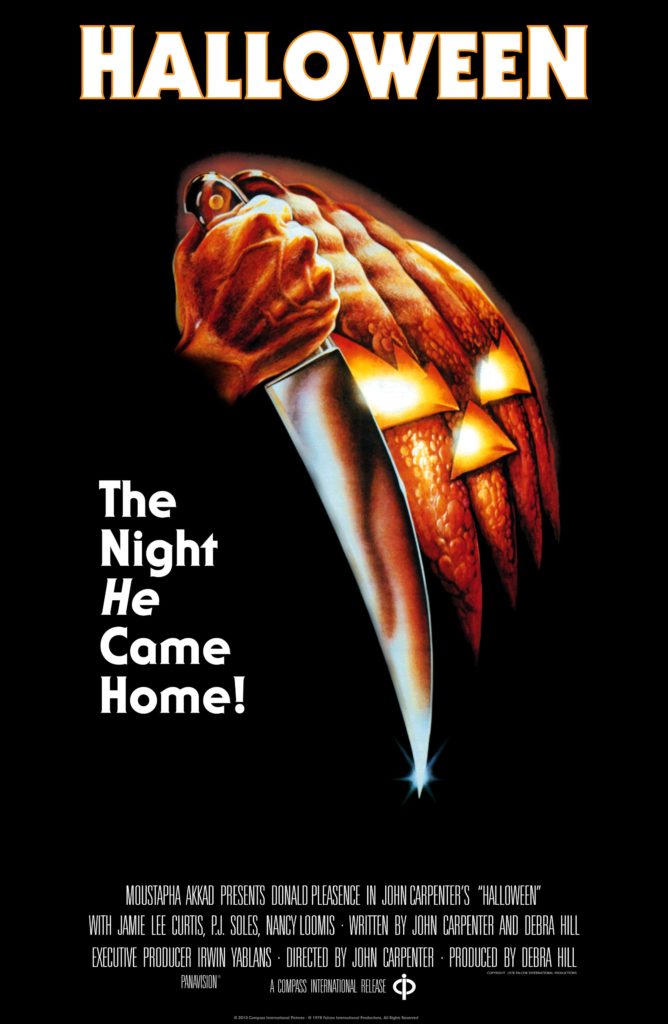
John Carpenter’sHalloween (1978) is amazing and beautiful on many different levels. It is, in fact, my all-time favorite film. It might be a “slasher” film (and the template for many slashers to come, at that), but it feels much more like an old-fashioned ghost story to me. The point is not to build a body count or gross out the audience with gore, but to build relentless suspense, to make us yell at the characters in the movie, and to leave us all wondering, “What happens next?” when the credits roll. The fact that this film was made on a nonexistent budget by mostly unknown talent (many of whom worked multiple jobs on set for free, including Curtis) only enhances the impression it leaves on the viewer. The most expensive part of the entire production was probably just hiring Donald Pleasence to play Dr. Loomis for a few key scenes, and even he (being the fantastic professional that he was) admired all the heart that was put into the project. This was also Jamie Lee Curtis’ first big break, and she truly shines as Laurie Strode, the timid girl who never goes looking for trouble, but who turns out to be much tougher and cooler than she or her peers think she is. And lest I forget, the eerie electronic music by director John Carpenter is truly a work of art unto itself. The soundtrack is my #1 favorite album to listen to, which I suppose is probably obvious to anyone who’s heard my music.
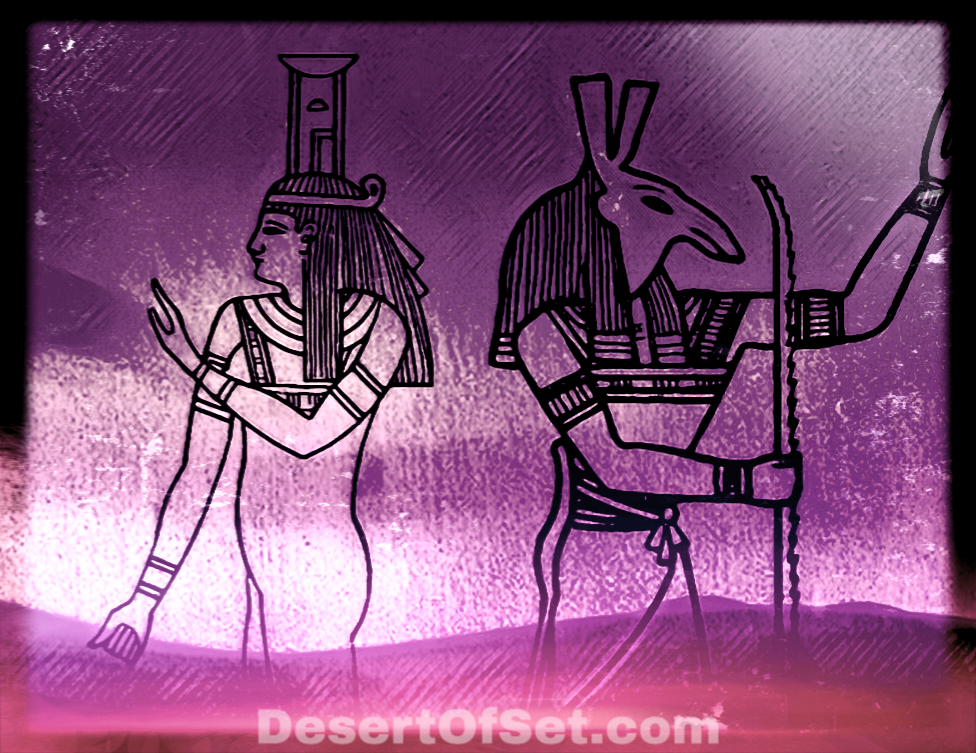
The sister and ex-wife of Set is a renowned healer of wounded hearts and minds.
Even more than Ishtar or Taweret, Nephthys is the Goddess who is most often linked with Set. In fact, some people might be wondering why it’s taken me 40 whole episodes before I got around to discussing Her. Truth is, I wanted to highlight the aforementioned Goddesses first because Their interactions with Set are far less known. I also think Set and Nephthys share a much more complex relationship than what is typically imagined about God and Goddess couples, for reasons I shall explain.
The name of this Goddess, which comes from the Egyptian Nebet-Het, means “Lady of the House.” It refers to a temple enclosure, rather than a domestic residence. In the Heliopolitan cosmogony, Nephthys is one of the fourth generation of Netjeru (the others being Osiris, Isis, Set, and even Horus in some accounts). As such, She is one of the divinities who facilitate life here on earth, and who contributes to the arts of human civilization.
The fourth generation of Gods was somewhat disruptive to the natural order of things at first. There is even a story about Ra, the first Netjer, prohibiting their granddaughter, the sky Goddess Nut, from giving birth to these young’uns (despite already being pregnant). Thankfully, the wise God Thoth finds a technicality that allows Nut to have her children while still technically obeying Ra’s decree. So first it was just Ra, and all things were united in them. Then Ra begat Shu and Tefnut, the breath and the waters of life, who are the first male and female. After that, Shu and Tefnut begat another male and female, Nut and Geb, the deities of heaven and earth. While Ra themself is hermaphroditic, the second and third theological generations are dichotomous, falling into a strict gender binary that is strongly tied to the reproductive cycle.
Reproduction becomes a major theme for the fourth generation of Netjeru as well, but in a radically different way. For one thing, there are not just two deities in this generation, but at least four (if not five, depending on whether you choose to include Horus—but more on that in a moment). Only two of these figures—Isis and Osiris—are a fertile heteronormative couple, and they become the darlings of the pantheon for this reason. Set and Nephthys are sterile and barren, incapable of producing any offspring. Set is also attracted to Gods of the same sex, and there is reason to think the same might be true of Nephthys. While Isis and Osiris are like celebrities, receiving all the glory and the privilege from their elders, everybody tries to forget about Set and Nephthys in the beginning, pairing Them together and leaving Them to fend for Themselves.
The way I see it, this is what sets the entire Osirian drama into motion. More than anything, Nephthys—sometimes described as “an imitation woman with no vagina”—wants to have a child; She wants to experience all the same parts of womanhood that Isis enjoys. So She disguises Herself as Isis and sleeps with Osiris, who is so miraculously fertile, he could even impregnate a corpse. Nephthys then gives birth to Anubis, the jackal God, and tries to hide Him so Set won’t find out what happened. But Set learns the truth and loses His temper big time. Instead of trying to harm Nephthys or Anubis, however, He squashes Osiris instead (twice, in fact). Then Isis goes on her journey to raise Osiris from the dead. She succeeds, sleeps with her brother-husband one last time before he goes to Duat, and becomes pregnant with Horus. (This is where the question of when Horus is born comes up again. I prefer to place it here at this point in the narrative, as it makes the most thematic sense to me personally; but there are other versions of the same narrative that cite Nut as the mother of Horus. Just one more example of how the ancient Egyptians were way ahead of quantum physicists or science fiction writers when it comes to the idea of alternate universes.) Nephthys dutifully accompanies Isis through all of this insanity, helping Her sister every step of the way.
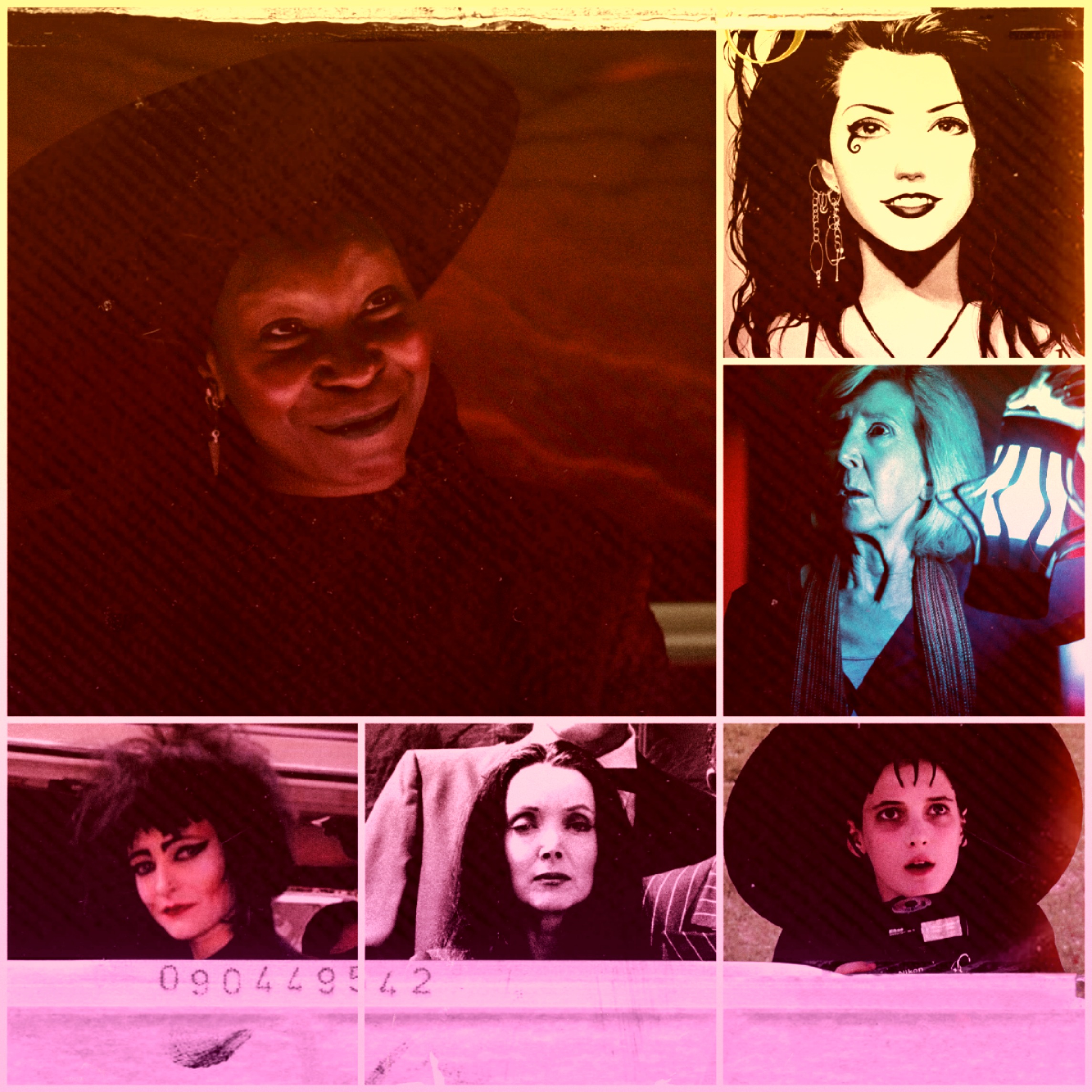
Women from popular culture who have a “Nephthys vibe.” From left to right and up to down: Guinan (Whoopi Goldberg) from Star Trek: The Next Generation; Death from DC/Vertigo’s The Sandman comics; Elise Rainier (Linda Shaye) from the Insidioushorror film franchise; goth rock artist Siouxsie Sioux; Morticia Addams (Carolyn Jones) from The Addams Family; and Lydia Deetz (Wynona Ryder) from Beetlejuice.
This is especially the case when it comes to the funeral of Osiris; and here is where Nephthys’ innermost drive becomes most evident. She and Her son Anubis help Isis reconstruct the body of Osiris and restore him to life. Through much of this process, Nephthys weeps and wails and whimpers with Isis, empathizing with the widowed Goddess and sharing in her profound sorrow. The Egyptians prayed to Nephthys as a kind of “dark midwife” you might say, a divine grief counselor who assists those in terrible emotional anguish, helping them heal and feel better over time. This fits together with the role of Anubis, who invents the funerary arts and becomes the first mortician. Nobody enjoys experiencing death or loss, but they are facts of life, and those of us who survive must find a way to live again. To think that Nephthys and Anubis have always been there to nurture things that help us cope with such experiences (such as counseling or mortuary science) makes my heart glow like a jack-o’lantern.
Nephthys sides with the Osirian Trinity during the Contendings of Horus and Set, and She sticks with them for the most part after the Great Reconciliation. She continues associating with Big Red when it comes to fighting the Chaos Serpent, and She appears to have been revered as a powerful fire-breathing warrior in this regard. But the one member of the Divine Family Nephthys truly seems to have fallen in love with is Isis. To make things even more interesting, other cosmogonies have cited Set as being Anubis’ father; the two are often linked (or even outright confused with each other) even today.
None of what I say next should be treated as any kind of official religious dogma. This is just what I personally take from these wonderful stories, and you can either take it or leave it. But I think Nephthys is a lesbian Goddess. I think She and Set still love each other; They have just always loved each other as brother and sister for the most part. They are divorced, but for good reason; They were never very attracted to each other in the first place. Isis and Osiris are married because they love each other; Set and Nephthys were paired together as an afterthought to make the rest of the pantheon happy. This refusal to properly integrate the forms of life and being that Set and Nephthys represent is what almost caused the downfall of Creation, and the apocalypse was only averted when the Netjeru got wise as a society and changed their ways. Now these two outcasts are truly accepted by Their family as equals, and Set has even grown to love Anubis and become His stepdad.
This trinity of Set, Nephthys, and Anubis is truly remarkable for many reasons. A divorced pansexual genderbending dad, a barren lesbian spinster mom, and a so-called “illegitimate” stepchild born of “adultery”? What isn’t there to love about this, or the fact that these figures were considered acceptable and divine in ancient Egyptian culture? The Western patriarchal concept of “the nuclear family”—which insists that all families must consist of two heteronormative cisgender adults with 2.3 biological offspring born in wedlock—is not only a more recent invention in the grand scheme of things, but a blatant work of isfet (poisonous falsehood and injustice) that contradicts Ma’at (everlasting goodness and truth). There is a place for EVERY sentient being in this world, AND for the sentient beings they love too. It simply DOES NOT MATTER whether we are male or female, gay or straight, trans or cisgender, married or unmarried, monogamous or non-monogamous, biologically related or adopted—and it NEVER has. Other religions need to hurry the fuck up and get wise to this, already. Set, Nephthys, and Anubis were already on top of this well ahead of Yahweh and Jesus, and things still don’t look so good for those two on this score today.
(Plus, Set, Nephthys, and Anubis are all goth as hell, like They’re the original Addams Family—and that is just cool.)
If there is any one divinity I associate with Hallowtide in particular (which is no easy task, given the sheer quantity of Gods who align with the occasion perfectly), Nephthys is the one. My wife and I enjoy visiting cemeteries all around our state in October and November, and to me, this is a way of honoring Nephthys throughout the holiday season. Just to walk among the graves and admire the craftsmanship of the headstones and tombs; to see all the ancient iconography that still shows up, even among the newer statuary; to soak in the names of the ancestors who rest there, and the times in which they lived; to be alone in the eerie silence. Even if you don’t believe in ghosts, there is just something about visiting such places for a couple of hours that has an effect on you. Most people seem to find the idea spooky, but I find it very peaceful and meditative, helping me achieve a level of mindfulness I usually can’t reach otherwise. To me, this kind of mindfulnessness is a huge part of what Lady Nephthys is all about.
Lest She be accused of never being colorful, Nephthys is also the guardian of the Bennu. This avian divinity was associated with heron birds and the solar cycle in Heliopolis. The Greek writer Herodotus described it as the phoenix (a possible Greek derivative of Bennu), which later developed into the archetypal “bird of fire” that ritually burns and rises from its own ashes. These more modern associations are fascinating when put together with Nephthys’ reputation as a healer of wounded minds and hearts, as well as Her role as a fiery monster-slayer. Though it is really about Russian folklore, I enjoy listening to Igor Stravinsky’s The Firebird each year at Hallowtide because I find the titular creature analogous to that of the Bennu, and phoenix symbolism is very evocative of Nephthys to me personally.
Gorgo (1961) is a British kaiju (giant monster) movie with several interesting subtexts, all of which seem relevant to the Goddess Taweret.
In Gorgo (1961), two guys named Sam and Joe are traveling the British seas, looking for gold and other precious junk on the ocean floor. Their ship gets damaged during a weird volcanic eruption that happens in the middle of the sea for no apparent reason, and they end up having to stay on an island off the coast of Ireland for a few days. While repairing their ship, Sam and Joe notice that the people of this island seem to be hiding something. Well, that something turns out to be a giant bipedal lizard with big floppy fins for ears. Sam and Joe decide to capture the creature, and when they do, the Irish government implores them to give the beast to the University of Dublin for scientific research. Unfortunately, our protagonists decide to bring the reptile to Dorkin’s Circus in London instead, where they make a shit-ton of money off the poor creature. The joke’s on them, though, because they soon learn that “Gorgo” (the name Dorkin gives to the creature, which is taken from the three Gorgons in Greek mythology) is not the only one of its breed. It’s really just a baby, in fact, and its mother—who is significantly larger and meaner—is now on her way to file one hell of a grievance against the entire city of London.
That’s pretty much the entire plot to the film right there, and considering its year of release, we’re dealing with some pretty predictable stuff. For the most part, Gorgo is largely a remake of King Kong (1933), save that its giant monster is of the saurian persuasion. Yet there are several things that distinguish this kaiju film from all of its contemporaries. At the most obvious level, it’s not Japanese but British, and it provides some interesting insight into the United Kingdom’s sociopolitical situation at the time. When Sam and Joe arrive at the island with their crew, they seek help from the Irish locals. But the locals will only respond to them in Gaelic, even though they clearly understand English. Sam and Joe also learn the harbormaster has been salvaging archaeological finds from the ocean, and they bully the dude into giving them all of his loot as “payment” for capturing Gorgo. Later on, when they decide to sell Gorgo to the London circus, they are effectively giving the Irish government the middle finger. That’s not once, but twice in the same film where Ireland gets screwed over by Anglo-Saxons, who rob the Gaels not only of their history (in the form of their archaeological treasures), but of their very own real-life dragon as well.
I first saw Gorgo when I was five or six years old. I had already seen a lot of giant monster flicks by that point, and in most of them, the “ethnic” people are usually people of color (or white and/or Japanese people in blackface or brownface). This goes all the way back to King Kong (1933), which unfortunately depicts black people as savages whom the white characters could easily exploit. But Gorgo was the first of these movies I ever saw where it’s white people treating other white people this way. Seeing Englishmen mistreat Irish people and animals in Gorgo was my introduction to subjects like Hibernophobia and the Troubles of Northern Ireland. I also love the film for being my first exposure to Gaelic language and culture.
But there’s another subtext in this film. So there’s this Irish kid named Sean, and he’s the only character who sympathizes with the monsters at first. He even stows away on Sam and Joe’s ship, hoping to free Baby Gorgo out at sea. The kid gets caught, but what do you think happens after that? Sam and Joe decide to let Sean live with them, that’s what. And yes, I said “with them.” With only a few brief exceptions, these two men spend the entire movie together; and the body language they use around each other at home is most interesting. There’s one scene where Sam and Joe are comfort little Sean while he tries to go to sleep, and Joe stands at the head of the bed in a typical fatherly pose, while Sam sits beside Sean on the mattress in a more gentle and nurturing pose. Then there’s another scene where Sam and Joe squabble over a carnival worker who has been killed by Baby Gorgo. Sam is worried about the guy’s wife and kids, and Joe, not wanting Sam to worry, promises he will send the family some money. There’s even a scene where the two of them are introduced as “Joe Ryan and his partner, Sam Slade”—and while that kind of terminology didn’t have the same connotation in 1961 that it has today, it’s hard not to imbue it with contemporary significance. It’s also interesting that there isn’t a single girl or woman in the entire cast, and that when one of the adult characters finally starts to side with Sean about setting Baby Gorgo free, it’s Sam (the “motherly” father). In other words, it’s totally believable to me that Sam and Joe are a couple, that they’ve adopted Sean, and that the three of them have become a family.
Sam (William Sylvester), Joe (Bill Travers), and Sean (Vincent Winter)—a 1960s same-sex family?
I say Gorgo has no women in it (aside from a few here or there among the extras during the final act), but there is at least one female in the film (if not two), and that’s Mama Gorgo. It’s never specifically confirmed at any point that she’s got a XX pair of sex chromosomes, but I think we can safely assume that this is true. How else can we explain Baby Gorgo? If you’re wondering where the father might be, there are such things as the New Mexico whiptail, a lizard species that is entirely female and that reproduces through parthenogenesis. It seems likely to me that Baby Gorgo is female as well, given that Dorkins names her after the Gorgons of Greek mythology (all of whom are ladies). Gorgo was also the name of a famous Queen of Sparta who lived and ruled during the 6th and 5th centuries BCE. So any way you slice it, it would seem that the giant lizards in Gorgo are the only female characters in this entire movie. This would make sense in light of certain combat myths like the Enuma Elish, for just as Marduk used his masculine strength to slay his saurian mother Tiamat and create the universe from Her corpse, so too do Sam and Joe try to create a multimillion dollar empire with the female Irish sea dragon they’ve captured. But things don’t go quite so well for them as they did for ol’ Marduk, which brings us to why I think Gorgo is something more than just a King Kong cash-in.
I’ve always found the original 1933 King Kong too horrific to watch, because it’s about people committing acts of animal cruelty and not having to pay any real consequences for doing so. While many viewers sympathize with the titular giant ape, there is no indication in the film itself that we’re supposed to; Kong is presented as being just a big dumb animal who has to die so the damsel in distress can live to marry the dashing male hero. None of the characters mourn for Kong, and no one acknowledges that removing him from his natural environment and exploiting him was wrong (or at least, not until the remakes came along). Such was the general attitude audiences had toward giant monsters until 1954, when Ishiro Honda gave us the original Godzilla. The monster in that film also had to die, but its death is treated more like a funeral; the audience is actively encouraged to sympathize with it and to consider the aftermath of all the violence that happens in the film. Gorgo, in contrast, is the first kaiju film in which the monsters are not only sympathetic, but victorious. There’s nothing quite so satisfying as seeing Mama and Baby Gorgo swimming back home to Ireland at the end of the film, and it wasn’t long after their victory that Mothra, Godzilla, King Kong, and the giant turtle Gamera were each re-imagined as kid-friendly superheroes.
No phallic symbolism is safe from Mama Gorgo!
So the conflict in this film would seem to exist between two different same-sex families: (1) a single mother and her little girl (the Gorgos), and (2) two men and their son (Sam, Joe, and Sean). Neither of these two families is “normal” according to “traditional” patriarchal standards; and yet the film never tries to “punish” either of them for this. As mentioned earlier, the Gorgos are reunited and get to go home, alive and happy; but even the human family turns out okay in the end. They also share a collective character arc; at first it’s just Sam and Joe, and all they care about is fame and money. Then they adopt Sean, and Sam starts sympathizing with the Gorgos like Sean does. Joe—the “fatherly” dad—remains an asshole for most of the story, but then redeems himself during Mama Gorgo’s attack on London. He protects Sean amidst all the destruction, and they are both safely re-united with Sam at the end. Based on how Joe behaves earlier in the film, you would expect this character to try and save his own skin while leaving the kid alone to die (and then be promptly eaten by the monster for being a dick). Not so with Joe; he sees the light, chooses his kid over his own self-preservation, and actually works hard to be a good dad. You almost never see this kind of character transition in giant monster movies, especially in the 1960s, and to think Joe is a gay man just makes it cooler.
Gorgo does have its flaws, but most of them are the kind I tend to overlook. The writing isn’t as sharp as it could have been; most of the character development is restricted to the first two acts (which tends to bore the hell out of most viewers), while most of the action occurs during the final act (at which point, the film forgets its human characters almost entirely). These things don’t really bother me; the only serious criticism I have about Gorgo is the fact that during its final 18 minutes, it suddenly introduces a news reporter character who narrates every single detail about Mama Gorgo’s parade through London. This segment is so glaringly unnecessary, it’s virtually impossible to ignore it. The first 60 minutes of the story are easy enough to follow, so why the hell did anyone think the last 18 needed a narrator?
Another thing I love about Gorgo is the fact that it makes me think about Taweret, the hippo fertility Goddess. Taweret is like a benign chaos monster; instead of being killed to save (or create) the world, She kills other monsters that threaten the future of the world. Mama Gorgo is a perfect cinematic avatar for Taweret, and watching this film is like watching the Great Female crush the white racist capitalist patriarchy beneath Her cute, stubby toes. Seeing this movie as a kid probably helped put me on Taweret’s wavelength, even back then. If you’re Pagan and you love animals (especially gigantic reptilian beasties with wiggly ears), I bet dollars to donuts you will enjoy Gorgo. If you’ve never seen it and you’d like an additional bonus to go with it, this movie is featured in Episode 9 from Season 9 of Mystery Science Theater 3000.