Setken’s The Praying Mantis God of Ancient Egypt (Mini-Documentary)

My good friend, the artist Setken, has directed a mini-documentary about the Egyptian praying mantis god, Abyt. Setken asked me to compose some music for the film, and I was very happy to oblige. I’m also happy to announce that Setken’s film has been selected by the Anatolian Short Film Festival for September 2020. Follow the link below to watch the documentary and vote for the film!

And if you enjoy the music in the film, you can also stream or download it for free by clicking the image below:

We sincerely hope that everyone enjoys this work – especially Abyt Himself! Dua Abyt!

Setian Meditations

Three brief sermons in which I discuss Set’s affinity for the color red, why Setianism is substantially different from many other religions, and how the Red Lord saves us all every night.

Red isn’t just a color; it’s a part of Set Himself. Or to put it another way, the Red Lord doesn’t just “like” the color red; He is the very essence of redness.

Within the spectrum of visible light, red exists between orange (where red meets yellow) and violet (where red meets blue). Technically, its wavelength is approximately 620–740 nanometers on the electromagnetic spectrum. It has historically been associated with aggression, blood, heat, lust, and passion. It’s also linked to the planet Mars and the sphere of Geburah on the Qabalic Tree of Life. Mars, of course, is named after the Roman God of war, who is often conflated with the Greek God Ares. (Hence why Mars is so often associated with hostile alien space invaders, as in H. G. Wells’ The War of the Worlds.) Geburah is where the Gods pass judgment and destroy things, causing us all to be transformed (whether we want to be or not). It’s also the sphere where the Gods take whatever steps they need to beat the crap out of evil.

Red is further linked to iron, which is likely because (1) there is actually iron in our blood and (2) Late Stone Age people often used ochre, a clay that is given a reddish tint by iron oxide. Even today, tribal peoples still use ochre to treat animal skins, repel insects, stop bleeding, and protect themselves from the sun. Red also continues to be the preferred color for warnings and danger signs (both in human society and in nature), with the highest threat levels being “red alerts.”

The Egyptians associated Set with red because He is a storm deity. While most Thunder Gods are linked with fertility and kingship due to the part storms usually play in fertilizing crops, storms almost never occur in the Nile Valley. The crops there are sufficiently irrigated by the Nile itself when it floods each year; so even when storms do happen, they tend to have disastrous consequences. They more often occur in the deserts on either side of the Nile Valley, the sands of which are colored red (making Set “the Lord of the Red Lands”). Red-haired animals and people were likewise linked with Set as well, and by the time He was completely demonized during the Late Period, it wasn’t uncommon for such animals and people to be killed as a way of execrating Him. Redheads continued to be demonized by European Christians, who thought such people were especially prone to “worshiping the devil” and becoming “witches.” This construct came from the Egyptians, who considered Set to be the original “red-headed stepchild.”

In many Typhonian spells from the Greek magical papyri, the directions call for magic words to be written in donkey’s blood (which is often described as “Typhon’s blood”). In the LV-426 Tradition, we think that harming any of Set’s sacred critters will definitely draw His attention to you, but not in a way that any sane or rational person would want. I do, however, think that the more red things you can include in your rituals, the better. I prefer to light red candles for the Big Guy, myself.


What does it mean to be “religious”? The answer to this question is much more nuanced and evasive today than it was hundreds of years ago.

When I use this descriptor in relation to myself, it often catches people off guard because I just “don’t seem like the religious type.” I don’t attend any kind of church, take any scriptures literally, try to convert people, or seek to legislate other people’s lives. I also cuss like a sailor and tend to be hypercritical of organized religion in general (to the point of supporting the strict taxation of all churches).

Some people dismiss my religiosity for just these reasons, because their definition of “religion” is limited to the conservative Christian model. And since my religion does not fit within those specific parameters, people always want to tell me I am “spiritual, not religious” at best.

Excuse me, but let’s make something perfectly clear: I am a SETIAN, and SET is my God. I do what I do out of profound reverence and devotion to HIM. The only theological expectations I care to meet are HIS; the standards of other faiths DO NOT APPLY.

Furthermore, Set is not some bullshit authoritarian deity; He has nothing to do with giving commandments, judging humanity for its sins, or bullying anyone with the threat of a miserable afterlife. Set is a cosmic individualist in the truest possible sense of the term; He demands not only freedom for Himself, but for EVERY sentient individual to be the unique and different creature they really are. And even in 3200 BCE, this included everyone from foreigners and immigrants to LGBTQ people to nomadic desert peoples to others who just “didn’t fit in” for whatever reason (especially if they were redheads).

Set is a God who approves of having drag queens read books to children at public libraries, for instance, while contemporary Christians still quarrel over whether Jehovah even accepts such lovely people as human beings. So do not presume to judge MY religiosity according to YOUR (highly questionable) standards. As far as Setians like me are concerned, your own religious priorities are absolutely fucked!

As for the “spiritual but not religious” crowd, I fully support everyone’s right to self-identify as they please. I reject this label myself, for it simply doesn’t do me justice. Walking with Set is not a “hobby” or a “game,” it’s a motherfuckin’ QUEST that takes your entire life, and which continues long after you die! I will not belittle myself, my God, or the magic we work together by referring to it as anything else BUT religious. And those who want to bash all religion in general because “it’s all the same” can kindly kiss my ass.


With respect to the

Wise Donkey  from L. Frank Baum’s The Magical Monarch of Mo.

“Have I been saved? Yes; in fact, my God saves me every day. He saves you every day, too, even though you don’t believe. The fact that the world is still here when we wake up each morning—that we don’t all just blink right out of existence while we’re asleep—is a direct result of His operations out there, on the Frontier of Creation. He’s out there right now, fighting for all of us. He doesn’t care if you’re strong or weak, noble or corrupt, pious or irreligious. Nor does He care that most people vilify Him, if they acknowledge Him at all. Whether He is cursed as a devil or dismissed as a fairy tale, it makes no difference to Him. It’s neither His job nor His concern to judge the world. Even if no one ever rooted for Him at all, my God would still be out there, saving the whole of Creation each night!

“Don’t get me wrong; He does notice those mortals who call out to Him in praise. Given that there are so few of us, it would be hard for Him not to! And though He has His own battles to fight, He shares His strength and His steel with us. When we have tribulations that are too much for us to bear alone, we can ask Him for strength and clarity of vision. We can use our words of power to actually become Him in human flesh, and nothing—not even the Chaos Serpent itself—can stand against us when we do! When we perform this Great Work, we are saving our own little parts of the world. With our Holy Father, salvation becomes a team effort; our victories are His, and His victories are ours!

That is why Set, alone of all the Gods, has my undying loyalty. That is why the subjective realities of other faiths can just never compare to mine. There are no threats, no guilt trips, and no extortions here. It all comes down to just one thing, baby: making sure there’s always tomorrow!

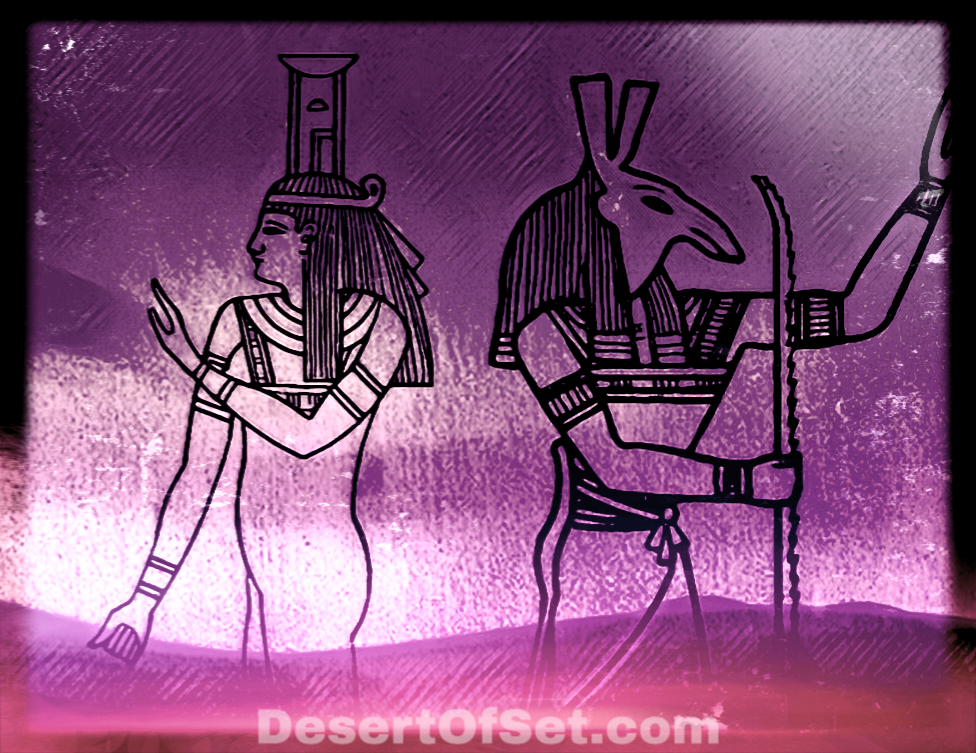
Nephthys, the Dark Midwife

The sister and ex-wife of Set is a renowned healer of wounded hearts and minds.

Even more than Ishtar or Taweret, Nephthys is the Goddess who is most often linked with Set. In fact, some people might be wondering why it’s taken me 40 whole episodes before I got around to discussing Her. Truth is, I wanted to highlight the aforementioned Goddesses first because Their interactions with Set are far less known. I also think Set and Nephthys share a much more complex relationship than what is typically imagined about God and Goddess couples, for reasons I shall explain.

The name of this Goddess, which comes from the Egyptian Nebet-Het, means “Lady of the House.” It refers to a temple enclosure, rather than a domestic residence. In the Heliopolitan cosmogony, Nephthys is one of the fourth generation of Netjeru (the others being Osiris, Isis, Set, and even Horus in some accounts). As such, She is one of the divinities who facilitate life here on earth, and who contributes to the arts of human civilization.

The fourth generation of Gods was somewhat disruptive to the natural order of things at first. There is even a story about Ra, the first Netjer, prohibiting their granddaughter, the sky Goddess Nut, from giving birth to these young’uns (despite already being pregnant). Thankfully, the wise God Thoth finds a technicality that allows Nut to have her children while still technically obeying Ra’s decree. So first it was just Ra, and all things were united in them. Then Ra begat Shu and Tefnut, the breath and the waters of life, who are the first male and female. After that, Shu and Tefnut begat another male and female, Nut and Geb, the deities of heaven and earth. While Ra themself is hermaphroditic, the second and third theological generations are dichotomous, falling into a strict gender binary that is strongly tied to the reproductive cycle.

Reproduction becomes a major theme for the fourth generation of Netjeru as well, but in a radically different way. For one thing, there are not just two deities in this generation, but at least four (if not five, depending on whether you choose to include Horus—but more on that in a moment). Only two of these figures—Isis and Osiris—are a fertile heteronormative couple, and they become the darlings of the pantheon for this reason. Set and Nephthys are sterile and barren, incapable of producing any offspring. Set is also attracted to Gods of the same sex, and there is reason to think the same might be true of Nephthys. While Isis and Osiris are like celebrities, receiving all the glory and the privilege from their elders, everybody tries to forget about Set and Nephthys in the beginning, pairing Them together and leaving Them to fend for Themselves.

The way I see it, this is what sets the entire Osirian drama into motion. More than anything, Nephthys—sometimes described as “an imitation woman with no vagina”—wants to have a child; She wants to experience all the same parts of womanhood that Isis enjoys. So She disguises Herself as Isis and sleeps with Osiris, who is so miraculously fertile, he could even impregnate a corpse. Nephthys then gives birth to Anubis, the jackal God, and tries to hide Him so Set won’t find out what happened. But Set learns the truth and loses His temper big time. Instead of trying to harm Nephthys or Anubis, however, He squashes Osiris instead (twice, in fact). Then Isis goes on her journey to raise Osiris from the dead. She succeeds, sleeps with her brother-husband one last time before he goes to Duat, and becomes pregnant with Horus. (This is where the question of when Horus is born comes up again. I prefer to place it here at this point in the narrative, as it makes the most thematic sense to me personally; but there are other versions of the same narrative that cite Nut as the mother of Horus. Just one more example of how the ancient Egyptians were way ahead of quantum physicists or science fiction writers when it comes to the idea of alternate universes.) Nephthys dutifully accompanies Isis through all of this insanity, helping Her sister every step of the way.

Women from popular culture who have a “Nephthys vibe.” From left to right and up to down: Guinan (Whoopi Goldberg) from Star Trek: The Next Generation; Death from DC/Vertigo’s The Sandman comics; Elise Rainier (Linda Shaye) from the Insidious horror film franchise; goth rock artist Siouxsie Sioux; Morticia Addams (Carolyn Jones) from The Addams Family; and Lydia Deetz (Wynona Ryder) from Beetlejuice.

This is especially the case when it comes to the funeral of Osiris; and here is where Nephthys’ innermost drive becomes most evident. She and Her son Anubis help Isis reconstruct the body of Osiris and restore him to life. Through much of this process, Nephthys weeps and wails and whimpers with Isis, empathizing with the widowed Goddess and sharing in her profound sorrow. The Egyptians prayed to Nephthys as a kind of “dark midwife” you might say, a divine grief counselor who assists those in terrible emotional anguish, helping them heal and feel better over time. This fits together with the role of Anubis, who invents the funerary arts and becomes the first mortician. Nobody enjoys experiencing death or loss, but they are facts of life, and those of us who survive must find a way to live again. To think that Nephthys and Anubis have always been there to nurture things that help us cope with such experiences (such as counseling or mortuary science) makes my heart glow like a jack-o’lantern.

Nephthys sides with the Osirian Trinity during the Contendings of Horus and Set, and She sticks with them for the most part after the Great Reconciliation. She continues associating with Big Red when it comes to fighting the Chaos Serpent, and She appears to have been revered as a powerful fire-breathing warrior in this regard. But the one member of the Divine Family Nephthys truly seems to have fallen in love with is Isis. To make things even more interesting, other cosmogonies have cited Set as being Anubis’ father; the two are often linked (or even outright confused with each other) even today.

None of what I say next should be treated as any kind of official religious dogma. This is just what I personally take from these wonderful stories, and you can either take it or leave it. But I think Nephthys is a lesbian Goddess. I think She and Set still love each other; They have just always loved each other as brother and sister for the most part. They are divorced, but for good reason; They were never very attracted to each other in the first place. Isis and Osiris are married because they love each other; Set and Nephthys were paired together as an afterthought to make the rest of the pantheon happy. This refusal to properly integrate the forms of life and being that Set and Nephthys represent is what almost caused the downfall of Creation, and the apocalypse was only averted when the Netjeru got wise as a society and changed their ways. Now these two outcasts are truly accepted by Their family as equals, and Set has even grown to love Anubis and become His stepdad.

This trinity of Set, Nephthys, and Anubis is truly remarkable for many reasons. A divorced pansexual genderbending dad, a barren lesbian spinster mom, and a so-called “illegitimate” stepchild born of “adultery”? What isn’t there to love about this, or the fact that these figures were considered acceptable and divine in ancient Egyptian culture? The Western patriarchal concept of “the nuclear family”—which insists that all families must consist of two heteronormative cisgender adults with 2.3 biological offspring born in wedlock—is not only a more recent invention in the grand scheme of things, but a blatant work of isfet (poisonous falsehood and injustice) that contradicts Ma’at (everlasting goodness and truth). There is a place for EVERY sentient being in this world, AND for the sentient beings they love too. It simply DOES NOT MATTER whether we are male or female, gay or straight, trans or cisgender, married or unmarried, monogamous or non-monogamous, biologically related or adopted—and it NEVER has. Other religions need to hurry the fuck up and get wise to this, already. Set, Nephthys, and Anubis were already on top of this well ahead of Yahweh and Jesus, and things still don’t look so good for those two on this score today.

(Plus, Set, Nephthys, and Anubis are all goth as hell, like They’re the original Addams Family—and that is just cool.)

If there is any one divinity I associate with Hallowtide in particular (which is no easy task, given the sheer quantity of Gods who align with the occasion perfectly), Nephthys is the one. My wife and I enjoy visiting cemeteries all around our state in October and November, and to me, this is a way of honoring Nephthys throughout the holiday season. Just to walk among the graves and admire the craftsmanship of the headstones and tombs; to see all the ancient iconography that still shows up, even among the newer statuary; to soak in the names of the ancestors who rest there, and the times in which they lived; to be alone in the eerie silence. Even if you don’t believe in ghosts, there is just something about visiting such places for a couple of hours that has an effect on you. Most people seem to find the idea spooky, but I find it very peaceful and meditative, helping me achieve a level of mindfulness I usually can’t reach otherwise. To me, this kind of mindfulnessness is a huge part of what Lady Nephthys is all about.

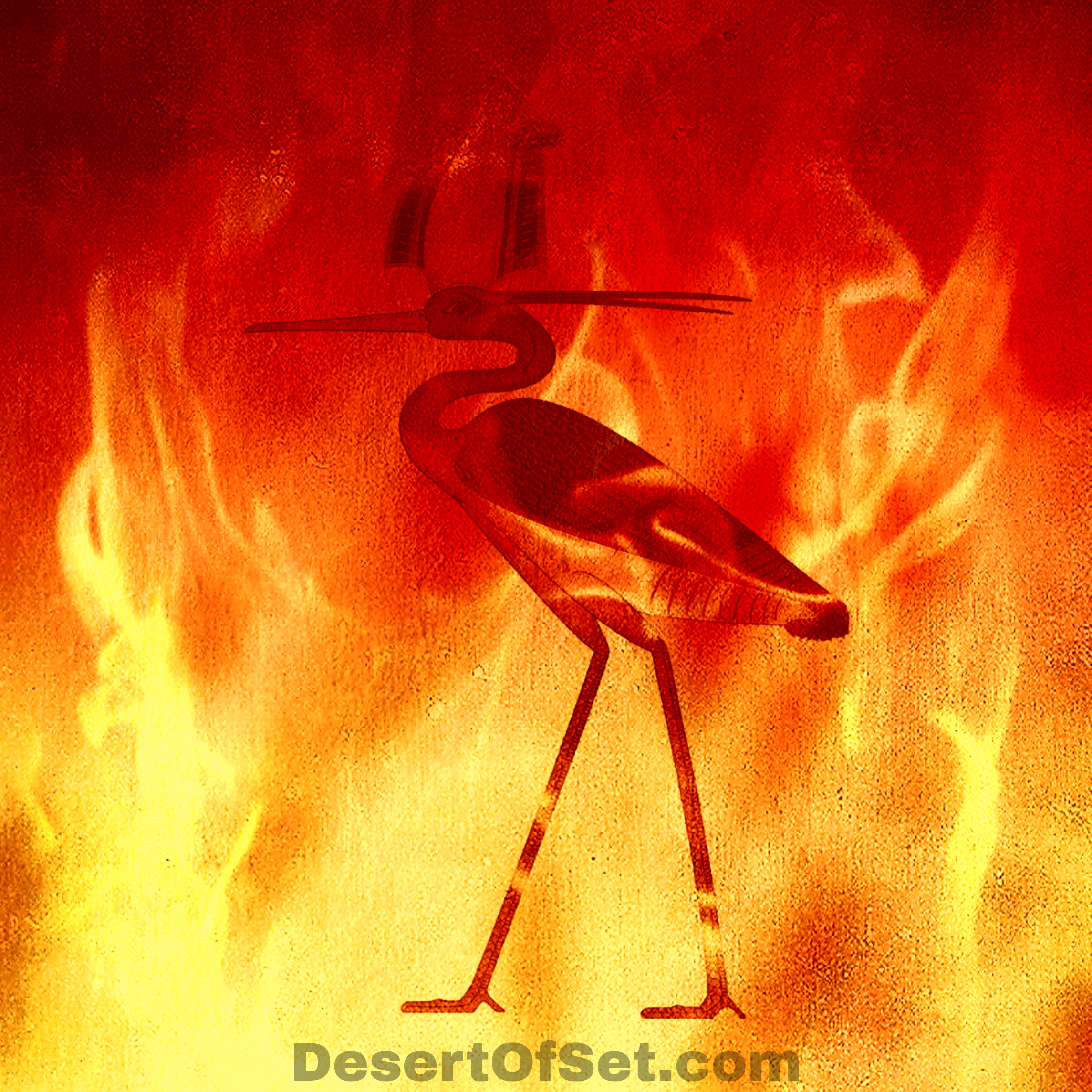
Lest She be accused of never being colorful, Nephthys is also the guardian of the Bennu. This avian divinity was associated with heron birds and the solar cycle in Heliopolis. The Greek writer Herodotus described it as the phoenix (a possible Greek derivative of Bennu), which later developed into the archetypal “bird of fire” that ritually burns and rises from its own ashes. These more modern associations are fascinating when put together with Nephthys’ reputation as a healer of wounded minds and hearts, as well as Her role as a fiery monster-slayer. Though it is really about Russian folklore, I enjoy listening to Igor Stravinsky’s The Firebird each year at Hallowtide because I find the titular creature analogous to that of the Bennu, and phoenix symbolism is very evocative of Nephthys to me personally.

1 7 8 9 10 11 13