Day: March 6, 2026
Remembering Hatshepsut
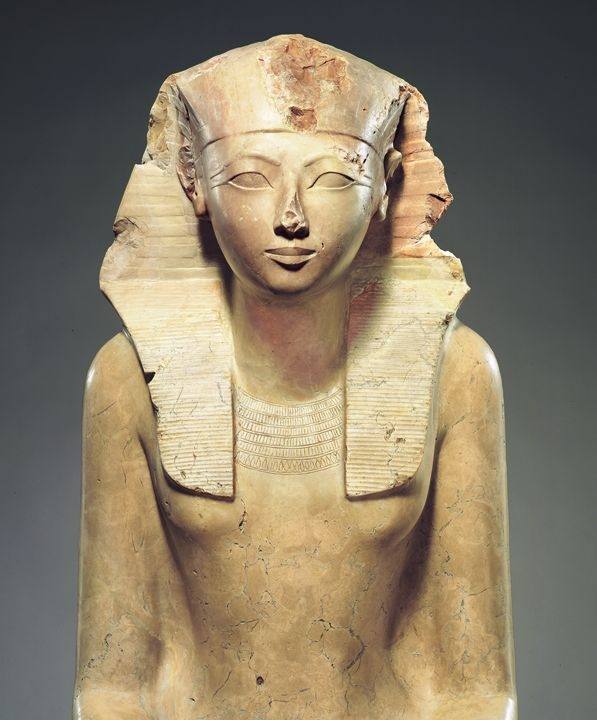
The Pharaoh Hatshepsut was a woman. But in her role as Pharaoh, she presented herself as a man. When you become the Pharaoh, you became a human incarnation of the male God Horus, and the Egyptians figured this applies just as well to a woman as it does to a man. The office itself was more important than the sex or gender of the office-holder. So Hatshepsut wore the Pharaoh’s crown, the royal kilt, the trademark “false beard,” and she was even addressed as male by the people, at least within the context of her rulership. And since her reign was remarkably stable and successful, no one in Egypt considered her being the Pharaoh or wearing men’s clothes to be “scandalous.”
While this is not exactly a perfect parallel to the world we live in today, it does go to show that ancient peoples were not nearly so rigid about sex and gender as people living today would like to assume.
Shut Up About “Ba’al” and “Moloch,” Already!
Everyone who keeps repeating this bullshit about “worshiping Ba’al” needs to treat themselves to a nice hot cup of SHUT-THE-FUCK-UP.
When people start murdering people in the name of HaShem, Jesus or Allah, you don’t get to re-write the narrative and blame Paganism.
A Near Eastern polytheist storm deity is not in any way, shape or form responsible for the evil things that people who claim to be Christian, Muslim, or Jewish are doing.
Saying, “These people aren’t really worshiping ‘God,’ they’re worshiping BA’AL” is real fucking cheap. Their evil and hypocrisy can’t POSSIBLY be due to something toxic within their very own religions, cultures or power structures, right? It HAS to be some kind of external “Pagan” influence, right? Because absolutely nothing good can ever come from anything that isn’t monotheism, right?
It is vital that we distinguish historical polytheism from the ghoulish polemics of monotheistic establishments. Modern claims of “Ba’al” or “Moloch” worship among global elites are based on ancient propaganda, not archaeological reality.
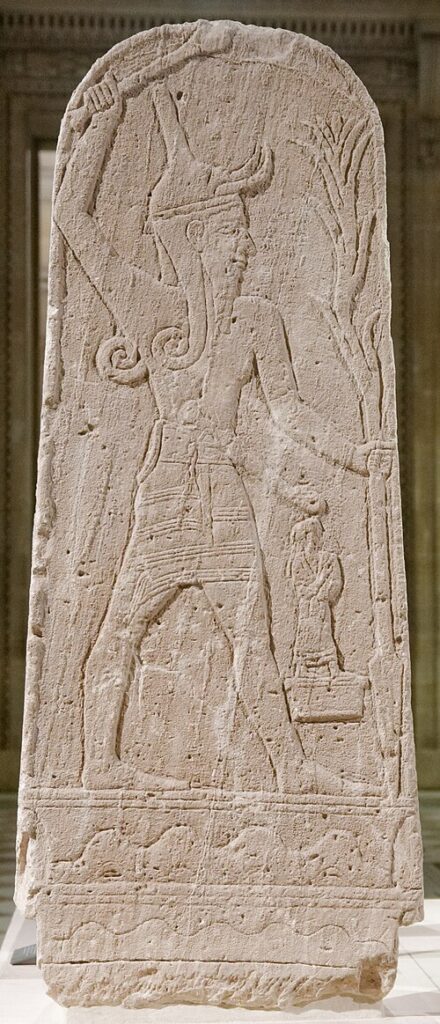
“Ba’al” is not a name; it is a Semitic title meaning “Lord,” “Master,” or “Owner.” Historically, it was applied to numerous distinct deities, such as Baal Hadad (storm god) or Baal Melqart. Treating “Ba’al” as a singular, demonic entity is a historical oversimplification used by biblical redactors to demonize neighboring cultures.
Modern scholarship suggests “Moloch” was never a deity. The term likely derives from the Punic word mlk (molk), referring to a type of sacrifice or votive offering.
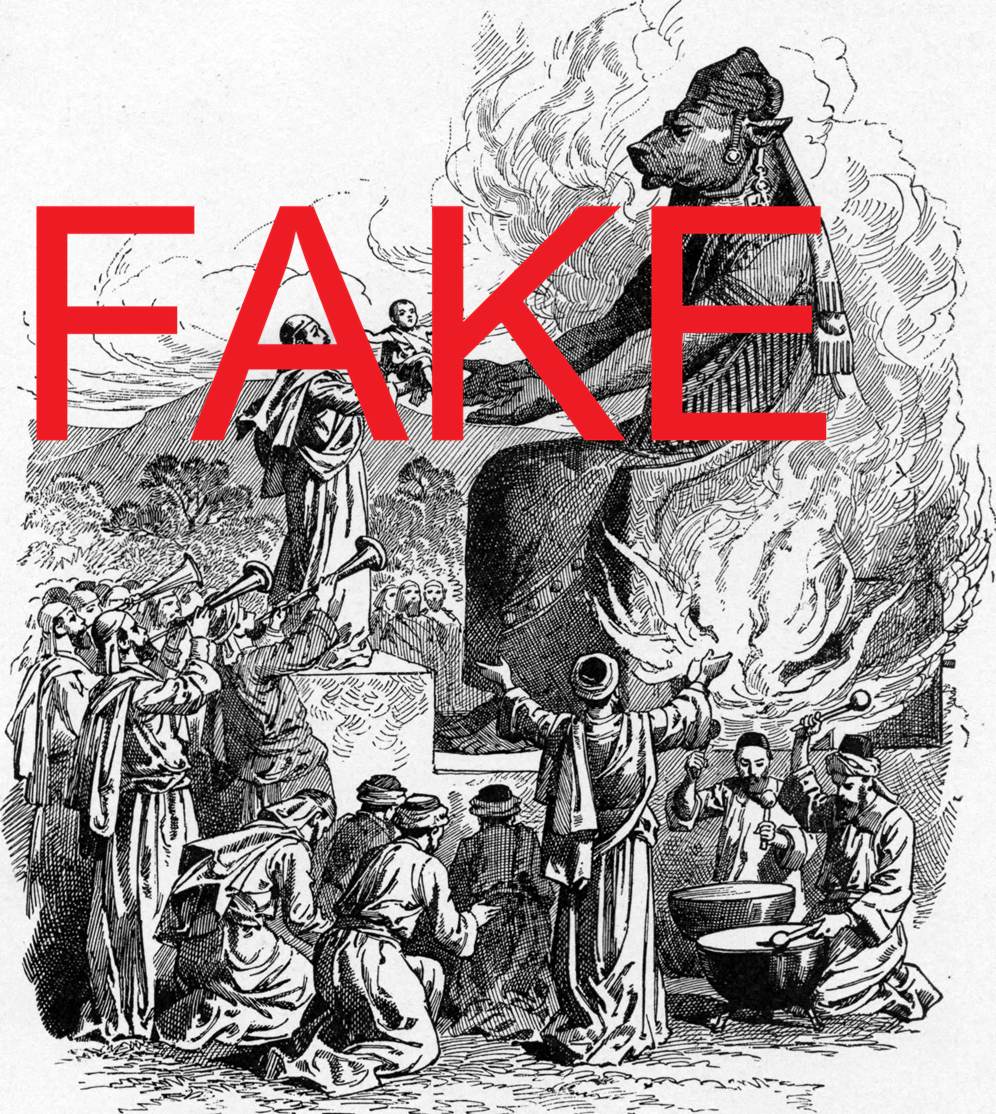
- The “Bull Oven”: There is zero archaeological evidence of a “bronze bull” used for burning infants. These accounts were largely Greek and Roman literary inventions (e.g., Diodorus Siculus) used to justify the destruction of Carthage.
- The Tophets: While infant burial sites (Tophets) exist, osteological evidence suggests many remains were infants who died of natural causes. In a time of high infant mortality, these cremations were likely a ritualized return of the deceased to the gods, not mass murder.
The “infant sacrifice” trope is a recurring tool of blood libel. Just as the Romans used it against Carthage and medieval Christians used it against the Irish (Crom Cruach), modern fundamentalists use it to demonize “Pagans” and those supporting reproductive freedom. This mythologizing transforms political enemies into “barbaric sociopaths.”
There is no organized, well-funded community of “Ba’al worshipers” today. Contemporary polytheists are decentralized and lack the resources to fund global conspiracies. Those currently holding power and committing atrocities typically align with Abrahamic traditions or secularism, not ancient Levantine polytheism.
“Moloch” is a centuries-old polemic. Insisting that modern atrocities are “Moloch worship” only serves the evangelical establishment’s goal of demonizing minority faiths.
So I mean this from the very bottom of my heart: FUCK you. FUCK you and your privilege, FUCK you and your “spiritual warfare,” FUCK you and your satanic panics, and FUCK you and your cheap, fragile, performative, empty-headed “faith.”