Rest In Peace, Sam Neill

I was sad to learn yesterday of Sam Neill’s passing. Like most people, I first encountered Neill in Steven Spielberg’s Jurassic Park (1993), wherein he plays Dr. Alan Grant. I next encountered him in John Carpenter’s In the Mouth of Madness (1995) and in Paul Anderson’s Event Horizon (1997). But what really captivated me was Neill’s performance as the adult Damien Thorn in Graham Parker’s The Final Conflict (1981), which is the third and final entry in the original Omen Trilogy. 

I have already reviewed this film extensively in In the Desert of Set #34: Ishtar’s Final Conflict with “the Man,”; it is, in my opinion at least, the single most engaging entry in the entire Omen series to date. While the 1976 original starring Gregory Peck is probably the superior film by all objective standards, I personally enjoy The Final Conflict much more. This film also features the very best cinematic portrayal of the Antichrist I have ever seen; none of those Left Behind movies on the Trinity Broadcast Network can compare to it. Sam Neill doesn’t just play Damien as some two-dimensional cartoon villain; he plays the role as if he personally believes Damien is actually the hero in this story. And he succeeds in getting us to actually root for his character, even while he orders countless newborn babies to their deaths.

I’ve showed this movie to several people over the years, and they have each had the exact same initial reaction: “Sam Neill is supposed to be the bad guy here, right? I’m not supposed to be rooting for him, right? Because I really, really want to see him win, and this is making me feel really weird.” That right there is the brilliance of this film in a nutshell. The entire point of the Antichrist is that he’s supposed to be this evil world ruler who deceives people into loving him and worshiping him. He’s supposed to be so suave and charismatic that no one can resist him, not even when they learn what he really is. To date, I have never seen any other actor portray the Antichrist as being so irresistable; Sam Neill is the only actor to have truly captured this aspect of the legend. 

The Final Conflict is also much more than a “normal” Antichrist or Armageddon film, in that its titular conflict is not simply between Satan and Christ, but between male religious tyranny (both Christian and Satanist) and female agency. The character of Kate Reynolds (played by Lisa Harrow, who was Sam Neill’s romantic partner for a few years, as well as the mother of his son Tim) is the true savior figure in this narrative. She is not the normal “Christian” hero we might expect to see in this kind of story; in fact, she is actually a skeptic, a secularist, a feminist, and a single mother to boot. In my opinion at least, Kate is almost like a cinematic avatar for the Babylonian Goddess Ishtar, sent to sacrifice Damien for his failed and tyrannical leadership. Though the film has some structural flaws, it offers a suprisingly feminist and Pagan-influenced reinterpretation of biblical horror. 

Alas, I’m supposed to be commemorating Sam Neill here. I first saw The Final Conflict when I was 17 years old, and this viewing coincided with a phase in my spiritual journey where it seemed like Set had “traded” me with the Goddess Ishtar for about a year. This is probably why the film makes me think about Her so much, in particular. I am indebted to both Sam Neill and Lisa Harrow for helping me connect with Ishtar in such a fulfilling way during this time. I love this film, it’s what made me a Sam Neill fan for life, and now that Mr. Neill has departed, I feel the urge to watch it several times on loop. 

Rest in peace, good sir; you will be remembered for each and every one of your roles by those who adore you.

Near Death Experience

I almost died in October 2003. For reasons that remain evasive, I started bleeding in my colon at an alarming rate. At the hospital, they told me they would need to remove the part of my colon that was bleeding; and they further explained that this would be an extremely risky procedure considering my youth. For a while there, I was really scared I might die in the operating room.

But when the morning of the procedure came and the nurses wheeled my bed into the hospital’s surgical wing, I saw a tall, muscular shadow standing in the hallway. It had long rectangular ears and glowing eyes. If I had been anyone else, I would have been terrified; but being me, I recognized the presence of Set immediately. I knew I wasn’t seeing Him with my physical eyes, either, but with the eyes of my ka or spirit.

I only saw Set for a split second that day, but it was enough. As they hauled me into the operating room and put me under for the procedure, I rest assured that no matter what might happen, my Lord would be with me.

And here I am, 18 years later, still alive to tell the tale.

Nephthys, the Dark Midwife

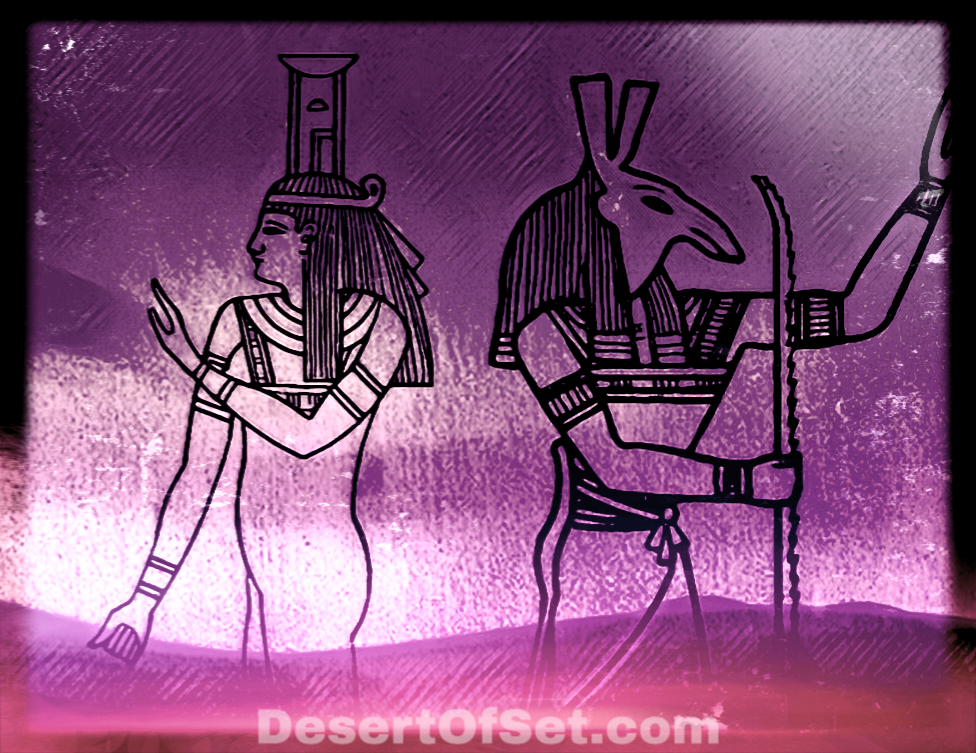
The sister and ex-wife of Set is a renowned healer of wounded hearts and minds.

Even more than Ishtar or Taweret, Nephthys is the Goddess who is most often linked with Set. In fact, some people might be wondering why it’s taken me 40 whole episodes before I got around to discussing Her. Truth is, I wanted to highlight the aforementioned Goddesses first because Their interactions with Set are far less known. I also think Set and Nephthys share a much more complex relationship than what is typically imagined about God and Goddess couples, for reasons I shall explain.

The name of this Goddess, which comes from the Egyptian Nebet-Het, means “Lady of the House.” It refers to a temple enclosure, rather than a domestic residence. In the Heliopolitan cosmogony, Nephthys is one of the fourth generation of Netjeru (the others being Osiris, Isis, Set, and even Horus in some accounts). As such, She is one of the divinities who facilitate life here on earth, and who contributes to the arts of human civilization.

The fourth generation of Gods was somewhat disruptive to the natural order of things at first. There is even a story about Ra, the first Netjer, prohibiting their granddaughter, the sky Goddess Nut, from giving birth to these young’uns (despite already being pregnant). Thankfully, the wise God Thoth finds a technicality that allows Nut to have her children while still technically obeying Ra’s decree. So first it was just Ra, and all things were united in them. Then Ra begat Shu and Tefnut, the breath and the waters of life, who are the first male and female. After that, Shu and Tefnut begat another male and female, Nut and Geb, the deities of heaven and earth. While Ra themself is hermaphroditic, the second and third theological generations are dichotomous, falling into a strict gender binary that is strongly tied to the reproductive cycle.

Reproduction becomes a major theme for the fourth generation of Netjeru as well, but in a radically different way. For one thing, there are not just two deities in this generation, but at least four (if not five, depending on whether you choose to include Horus—but more on that in a moment). Only two of these figures—Isis and Osiris—are a fertile heteronormative couple, and they become the darlings of the pantheon for this reason. Set and Nephthys are sterile and barren, incapable of producing any offspring. Set is also attracted to Gods of the same sex, and there is reason to think the same might be true of Nephthys. While Isis and Osiris are like celebrities, receiving all the glory and the privilege from their elders, everybody tries to forget about Set and Nephthys in the beginning, pairing Them together and leaving Them to fend for Themselves.

The way I see it, this is what sets the entire Osirian drama into motion. More than anything, Nephthys—sometimes described as “an imitation woman with no vagina”—wants to have a child; She wants to experience all the same parts of womanhood that Isis enjoys. So She disguises Herself as Isis and sleeps with Osiris, who is so miraculously fertile, he could even impregnate a corpse. Nephthys then gives birth to Anubis, the jackal God, and tries to hide Him so Set won’t find out what happened. But Set learns the truth and loses His temper big time. Instead of trying to harm Nephthys or Anubis, however, He squashes Osiris instead (twice, in fact). Then Isis goes on her journey to raise Osiris from the dead. She succeeds, sleeps with her brother-husband one last time before he goes to Duat, and becomes pregnant with Horus. (This is where the question of when Horus is born comes up again. I prefer to place it here at this point in the narrative, as it makes the most thematic sense to me personally; but there are other versions of the same narrative that cite Nut as the mother of Horus. Just one more example of how the ancient Egyptians were way ahead of quantum physicists or science fiction writers when it comes to the idea of alternate universes.) Nephthys dutifully accompanies Isis through all of this insanity, helping Her sister every step of the way.

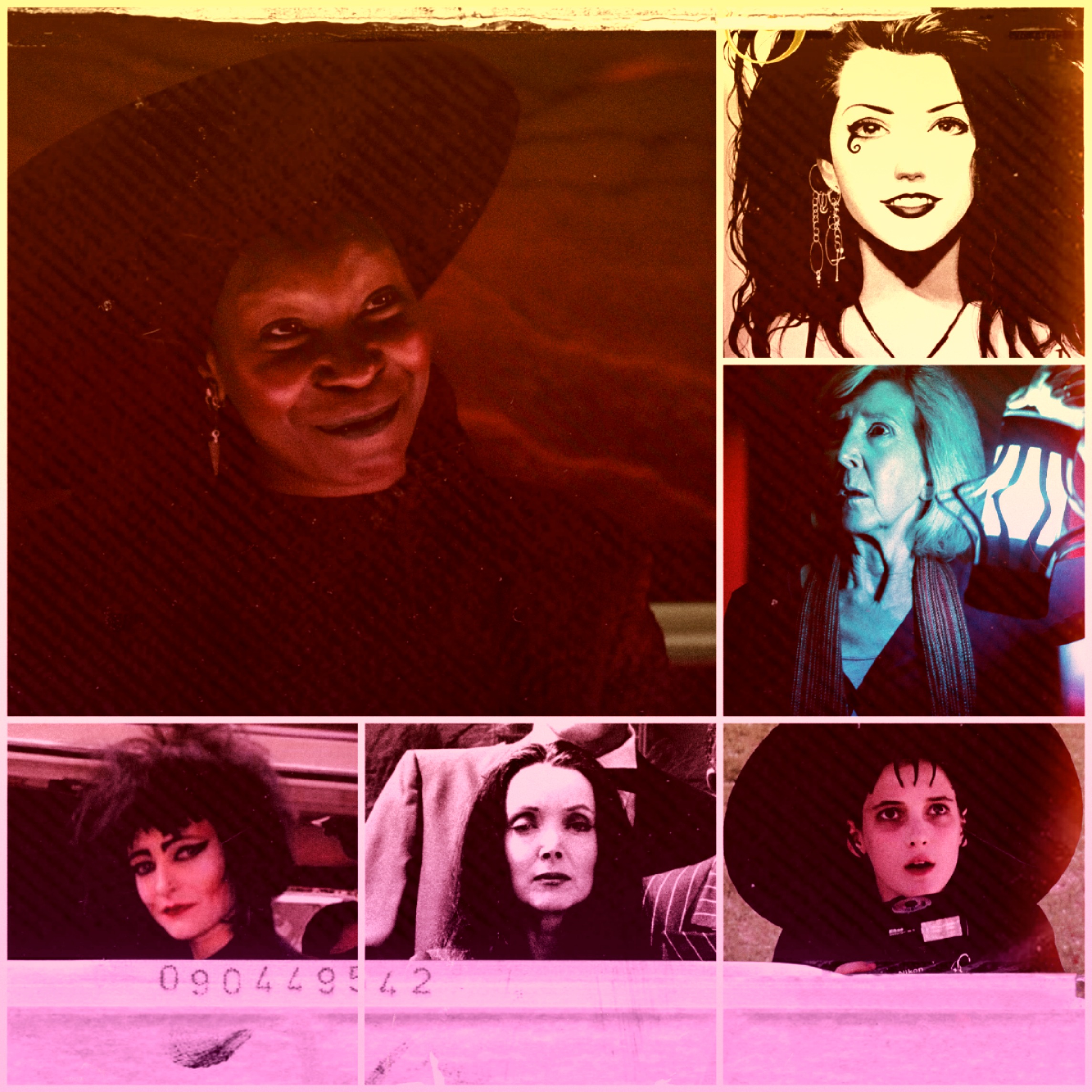
Women from popular culture who have a “Nephthys vibe.” From left to right and up to down: Guinan (Whoopi Goldberg) from Star Trek: The Next Generation; Death from DC/Vertigo’s The Sandman comics; Elise Rainier (Linda Shaye) from the Insidious horror film franchise; goth rock artist Siouxsie Sioux; Morticia Addams (Carolyn Jones) from The Addams Family; and Lydia Deetz (Wynona Ryder) from Beetlejuice.

This is especially the case when it comes to the funeral of Osiris; and here is where Nephthys’ innermost drive becomes most evident. She and Her son Anubis help Isis reconstruct the body of Osiris and restore him to life. Through much of this process, Nephthys weeps and wails and whimpers with Isis, empathizing with the widowed Goddess and sharing in her profound sorrow. The Egyptians prayed to Nephthys as a kind of “dark midwife” you might say, a divine grief counselor who assists those in terrible emotional anguish, helping them heal and feel better over time. This fits together with the role of Anubis, who invents the funerary arts and becomes the first mortician. Nobody enjoys experiencing death or loss, but they are facts of life, and those of us who survive must find a way to live again. To think that Nephthys and Anubis have always been there to nurture things that help us cope with such experiences (such as counseling or mortuary science) makes my heart glow like a jack-o’lantern.

Nephthys sides with the Osirian Trinity during the Contendings of Horus and Set, and She sticks with them for the most part after the Great Reconciliation. She continues associating with Big Red when it comes to fighting the Chaos Serpent, and She appears to have been revered as a powerful fire-breathing warrior in this regard. But the one member of the Divine Family Nephthys truly seems to have fallen in love with is Isis. To make things even more interesting, other cosmogonies have cited Set as being Anubis’ father; the two are often linked (or even outright confused with each other) even today.

None of what I say next should be treated as any kind of official religious dogma. This is just what I personally take from these wonderful stories, and you can either take it or leave it. But I think Nephthys is a lesbian Goddess. I think She and Set still love each other; They have just always loved each other as brother and sister for the most part. They are divorced, but for good reason; They were never very attracted to each other in the first place. Isis and Osiris are married because they love each other; Set and Nephthys were paired together as an afterthought to make the rest of the pantheon happy. This refusal to properly integrate the forms of life and being that Set and Nephthys represent is what almost caused the downfall of Creation, and the apocalypse was only averted when the Netjeru got wise as a society and changed their ways. Now these two outcasts are truly accepted by Their family as equals, and Set has even grown to love Anubis and become His stepdad.

This trinity of Set, Nephthys, and Anubis is truly remarkable for many reasons. A divorced pansexual genderbending dad, a barren lesbian spinster mom, and a so-called “illegitimate” stepchild born of “adultery”? What isn’t there to love about this, or the fact that these figures were considered acceptable and divine in ancient Egyptian culture? The Western patriarchal concept of “the nuclear family”—which insists that all families must consist of two heteronormative cisgender adults with 2.3 biological offspring born in wedlock—is not only a more recent invention in the grand scheme of things, but a blatant work of isfet (poisonous falsehood and injustice) that contradicts Ma’at (everlasting goodness and truth). There is a place for EVERY sentient being in this world, AND for the sentient beings they love too. It simply DOES NOT MATTER whether we are male or female, gay or straight, trans or cisgender, married or unmarried, monogamous or non-monogamous, biologically related or adopted—and it NEVER has. Other religions need to hurry the fuck up and get wise to this, already. Set, Nephthys, and Anubis were already on top of this well ahead of Yahweh and Jesus, and things still don’t look so good for those two on this score today.

(Plus, Set, Nephthys, and Anubis are all goth as hell, like They’re the original Addams Family—and that is just cool.)

If there is any one divinity I associate with Hallowtide in particular (which is no easy task, given the sheer quantity of Gods who align with the occasion perfectly), Nephthys is the one. My wife and I enjoy visiting cemeteries all around our state in October and November, and to me, this is a way of honoring Nephthys throughout the holiday season. Just to walk among the graves and admire the craftsmanship of the headstones and tombs; to see all the ancient iconography that still shows up, even among the newer statuary; to soak in the names of the ancestors who rest there, and the times in which they lived; to be alone in the eerie silence. Even if you don’t believe in ghosts, there is just something about visiting such places for a couple of hours that has an effect on you. Most people seem to find the idea spooky, but I find it very peaceful and meditative, helping me achieve a level of mindfulness I usually can’t reach otherwise. To me, this kind of mindfulnessness is a huge part of what Lady Nephthys is all about.

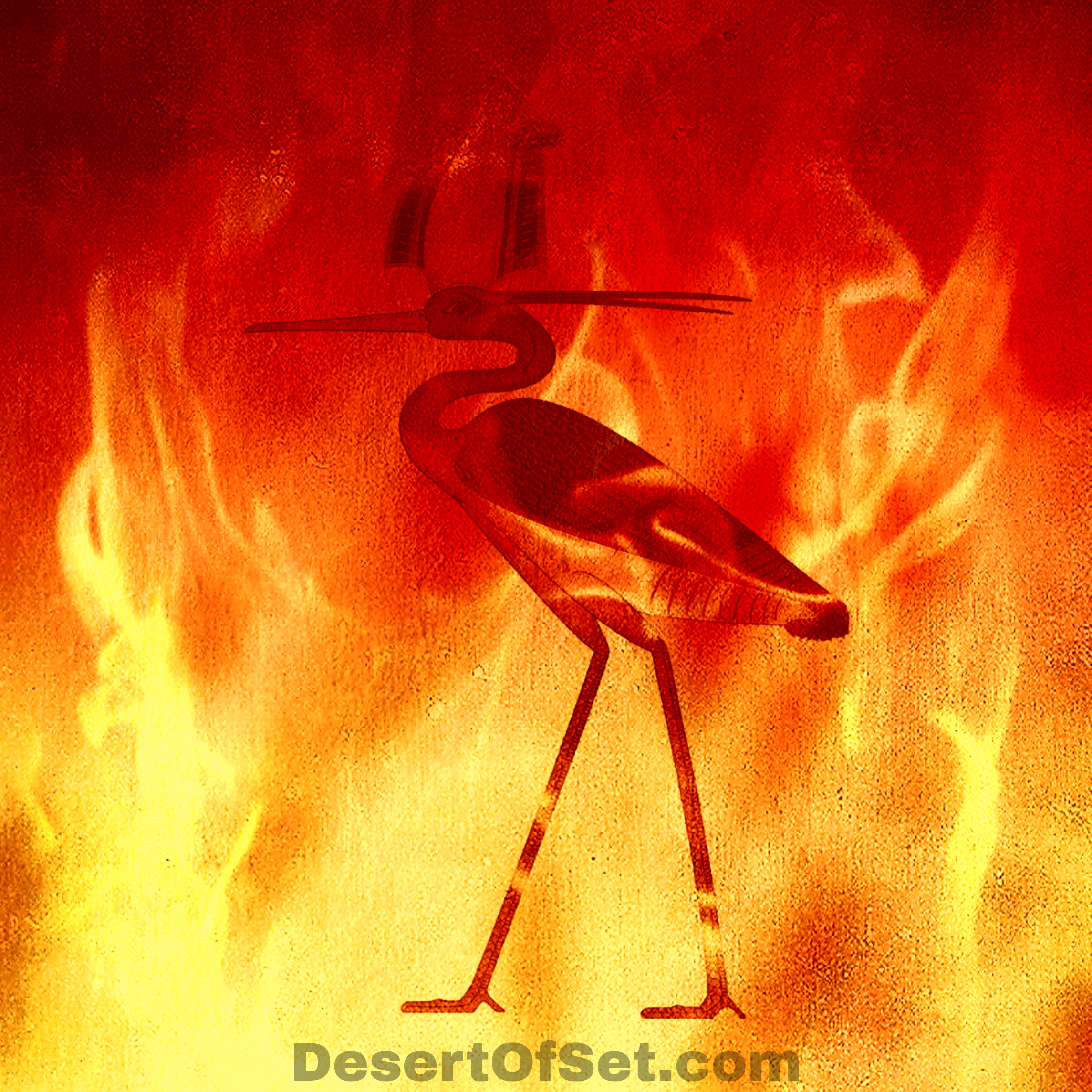
Lest She be accused of never being colorful, Nephthys is also the guardian of the Bennu. This avian divinity was associated with heron birds and the solar cycle in Heliopolis. The Greek writer Herodotus described it as the phoenix (a possible Greek derivative of Bennu), which later developed into the archetypal “bird of fire” that ritually burns and rises from its own ashes. These more modern associations are fascinating when put together with Nephthys’ reputation as a healer of wounded minds and hearts, as well as Her role as a fiery monster-slayer. Though it is really about Russian folklore, I enjoy listening to Igor Stravinsky’s The Firebird each year at Hallowtide because I find the titular creature analogous to that of the Bennu, and phoenix symbolism is very evocative of Nephthys to me personally.