
Tag: Sutekh
Rest In Peace, Sam Neill

I was sad to learn yesterday of Sam Neill’s passing. Like most people, I first encountered Neill in Steven Spielberg’s Jurassic Park (1993), wherein he plays Dr. Alan Grant. I next encountered him in John Carpenter’s In the Mouth of Madness (1995) and in Paul Anderson’s Event Horizon (1997). But what really captivated me was Neill’s performance as the adult Damien Thorn in Graham Parker’s The Final Conflict (1981), which is the third and final entry in the original Omen Trilogy.
I have already reviewed this film extensively in In the Desert of Set #34: Ishtar’s Final Conflict with “the Man,”; it is, in my opinion at least, the single most engaging entry in the entire Omen series to date. While the 1976 original starring Gregory Peck is probably the superior film by all objective standards, I personally enjoy The Final Conflict much more. This film also features the very best cinematic portrayal of the Antichrist I have ever seen; none of those Left Behind movies on the Trinity Broadcast Network can compare to it. Sam Neill doesn’t just play Damien as some two-dimensional cartoon villain; he plays the role as if he personally believes Damien is actually the hero in this story. And he succeeds in getting us to actually root for his character, even while he orders countless newborn babies to their deaths.
I’ve showed this movie to several people over the years, and they have each had the exact same initial reaction: “Sam Neill is supposed to be the bad guy here, right? I’m not supposed to be rooting for him, right? Because I really, really want to see him win, and this is making me feel really weird.” That right there is the brilliance of this film in a nutshell. The entire point of the Antichrist is that he’s supposed to be this evil world ruler who deceives people into loving him and worshiping him. He’s supposed to be so suave and charismatic that no one can resist him, not even when they learn what he really is. To date, I have never seen any other actor portray the Antichrist as being so irresistable; Sam Neill is the only actor to have truly captured this aspect of the legend.
The Final Conflict is also much more than a “normal” Antichrist or Armageddon film, in that its titular conflict is not simply between Satan and Christ, but between male religious tyranny (both Christian and Satanist) and female agency. The character of Kate Reynolds (played by Lisa Harrow, who was Sam Neill’s romantic partner for a few years, as well as the mother of his son Tim) is the true savior figure in this narrative. She is not the normal “Christian” hero we might expect to see in this kind of story; in fact, she is actually a skeptic, a secularist, a feminist, and a single mother to boot. In my opinion at least, Kate is almost like a cinematic avatar for the Babylonian Goddess Ishtar, sent to sacrifice Damien for his failed and tyrannical leadership. Though the film has some structural flaws, it offers a suprisingly feminist and Pagan-influenced reinterpretation of biblical horror.
Alas, I’m supposed to be commemorating Sam Neill here. I first saw The Final Conflict when I was 17 years old, and this viewing coincided with a phase in my spiritual journey where it seemed like Set had “traded” me with the Goddess Ishtar for about a year. This is probably why the film makes me think about Her so much, in particular. I am indebted to both Sam Neill and Lisa Harrow for helping me connect with Ishtar in such a fulfilling way during this time. I love this film, it’s what made me a Sam Neill fan for life, and now that Mr. Neill has departed, I feel the urge to watch it several times on loop.
Rest in peace, good sir; you will be remembered for each and every one of your roles by those who adore you.
Every Day Is Judgment Day
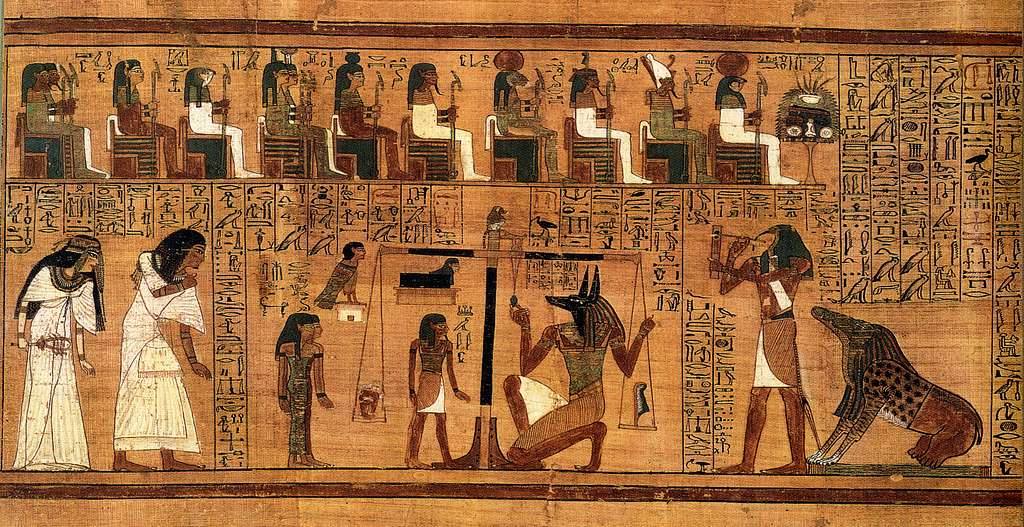
I firmly believe that in the afterlife, we will be judged for what we have done during our lives.
Despite the Western Orientalist use of “reincarnation” as a narrative device in several different “Mummy” movies, reincarnation does not figure into the Egyptian afterlife scenario. Souls instead have a linear afterlife wherein they are either transfigured into akhu (blessed ancestor spirits, identified with the stars in the nighttime sky) or are fed to the daemon Ammut, whereupon they cease to exist for all time. In other words, we will either live forever beyond death or we will “die the second death.”
In this way, Kemetic eschatology is much closer in principle to Christian afterlife beliefs than it is to, say, Hindu or Buddhist ideas. But there is still an extremely important difference. In evangelical Christianity especially, entrance into heaven is “impossible” without personal submission to Christ. But in Kemetic theology, the soul is measured against its earthly deeds and misdeeds during the Weighing of the Heart. We are either “saved” or “damned” based on OUR OWN ACTIONS, here upon this earth.
Evangelical eschatology is problematic because it prioritizes submission to a specific deity over ethical decision making. You could be a horrible psychopathic murderer your entire life, and all you have to do is “accept Christ” and alashazam, you’re suddenly “saved.” On the other hand, you could be a perfectly good person your entire life, but you will “go to hell” for “rejecting Christ” no matter how good a person you are. This theology makes the evangelical God seem like a total narcissist who just doesn’t care whether His followers are actually good people or not.
In Egyptian polytheism however, this problem does not exist. It literally doesn’t matter whether you worship Set, Osiris, Sekhmet, or even nobody at all. As long as you uphold Ma’at by being a good neighbor, modeling compassion, helping those who need help, taking responsiblity for your own actions, etc., then you have nothing to worry about. You don’t have to be a perfect person; you just have to have enough Ma’at in your heart that it outweighs any isfet or toxicity.
For someone like Jeffrey Epstein, who has committed countless crimes and abuses against innocent people, it will not matter how much they cry or beg for forgiveness. It will not matter if they beg Osiris, Set, or even Jesus Christ Himself to “have mercy” on them. There will be no mercy for them at all, for at the end of the day, neither Osiris nor Set nor Christ is responsible for what they have done. THEY are responsible for bringing their own damnation upon themselves.
The point here is that our eschatological destinies have nothing to do with which God(s) we worship (if any); nor are they dependent upon the whims of any God(s). What happens to us after we die is literally DETERMINED BY OUR VERY OWN ACTIONS IN THE HERE AND NOW, while we live and breathe.
Every single ethical decision we make will have some bearing on our afterlives, no matter how small or insignificant that decision might seem. Even the smallest acts of kindness can make all the difference; so too can even the smallest acts of malice.
The next time you’re standing in line for coffee and you find yourself losing patience with your barista, remember that even the way you choose to interact with this stranger is being spiritually tracked, and even this can have repercussions that reach far beyond your current scope of awareness. Maybe the barista is having a bad day, or maybe they are suicidal. The way you treat them can make their day either better or worse. It can also make the day better or worse for everyone else who might be involved in that person’s life. This one little interaction can either improve or ruin the day for a whole lot of people you might never even meet. If you are someone who values Ma’at, you will want to treat this person with kindness, even if they make a mistake or do something wrong. But if you are a toxic person whose soul is already destined for Ammut’s litterbox, you will more likely treat this person like an insect, or perhaps even yell at them or try to humiliate them in front of everyone,
There is also an apocalyptic implication to this, as well as the eschatological implication. If enough people uphold Ma’at and treat each other well, things get better and better for more people. But if too many people spread isfet and treat each other like total sacks of shit, things get worse and worse for more people instead. This shows us that even the smallest acts of kindness or malice can contribute to larger social trends. If we want to save the world, we have to start by improving ourselves and the ways we treat others. No amount of prayer or wishful thinking can replace this extremely important work.
“Well There’s Your Problem Right There, Vern”: Deflecting Accountability for Christian Hypocrisy
I think most of us can agree that political violence is evil, that Charlie Kirk didn’t deserve to be murdered, and that his killer is a real fucked-up person who should be brought to justice.
What we CAN’T seem to agree on is just how hateful and destructive Kirk’s rhetoric actually was during his life.
I’m sorry the man was killed, but I’m not shedding any tears for him, and his forward to Lucas Miles’ recently published The Pagan Threat is a textbook example as to why.
I won’t dissect the entire thing, and there are numerous problems with Lucas’ entire book that will require a much more in-depth analysis. The trouble is that there are so many falsehoods crammed into each and every sentence, it might require an entire encyclopedia collection just to address them all. For now, I will just address this one cute little hum-dinger from Kirk right here:
“In the Pagan world, the individual human life was of no importance. Therefore abortion, infanticide, human sacrifice, and more were just a part of life. Under Paganism, there is no notion that humans had equal innate worth, so one tribe enslaved another, or rulers enslaved their subjects, all with impunity.”
The idea that only Christianity introduced the concept of human dignity, or that human dignity was utterly unknown in ancient polytheism, is provably false.
Ancient Egypt alone possessed a complex legal system, with extensive writings on Ma’at. People valued hospitality and kindness, and they mourned both people and animals who died, very much like we do today.
The entire concept of Ma’at involves living a good, balanced life and being a responsible member of society who treats others with dignity. The way we treat others has a direct effect on one’s afterlife as well: for people who uphold Ma’at will have a good afterlife, while those who violate Ma’at will not.
And this is just from ancient Egypt; other polytheist civilizations had their own complex legal and ethical systems as well. Virtually all of them had space for things like (1) grieving for the dead, (2) seeking lawful action against crime, and (3) believing they might somehow be judged in the afterlife for their actions here on Earth. Each of these ideas is built upon the assumption of human dignity; you don’t have things like funerals or laws against theft of personal property when you think the individual human life is of “no importance.”
I find it extremely problematic whenever Christians raise alarms about “human sacrifice.” For one thing, “human sacrifice” often served as capital punishment in many societies, with the sacrifices being criminals or prisoners of war. While there was often a ritualized element to appease certain deities or restore cosmic order, the functionality was really no different from sending someone to the gas chamber today (and having a minister “pray over” them before they go).
In other cases, the “human sacrifices” were not killed but left to die, either because they were fatally ill or there weren’t enough resources to be spared. This might sound callous, but we can be sure that it wasn’t easy for the families involved. Imagine having to leave a baby behind because you can’t feed it, and there are no hospitals or orphanages. Not a very easy decision to make, and I daresay that even Christians would find themselves making such hard decisions under the right circumstances. Thankfully, such practices tend to die out as civilizations (including polytheist ones) develop more and more infrastructure over time.
In still other cases, the “human sacrifices” were not killed to glorify any deities at all, but to accompany a king or a loved one in the afterlife (these are called “retainer sacrifices”). There is evidence to suggest that these were voluntary suicides, rather than ritualized murders. Either way, the practice was eventually phased out, EVEN DURING POLYTHEIST TIMES. The Egyptians in particular developed ushabti figures as a replacement, which could be used to accompany people in Duat *without* anyone being killed. And again, none of these “sacrifices” had anything to do with appeasing any deities; they had more to do with afterlife beliefs than with any theological claims about the Gods.
It is also a little bizarre to see Christians froth at the mouth against “human sacrifice,” when all of their religious symbolism and literature emphasizes the torturing and painful death of a man who was executed for an alleged crime, and who is himself presented to be their own version of a “human sacrifice.” Something about (1) the glorification of this horrific imagery combined with (2) the appetite many American Christians seem to have for watching other people suffer or be punished has always made my skin crawl. So much for Matthew 7:3-5, I guess.
Plenty of people in history have been slaughtered either for (1) not believing in Christ or for (2) not believing in Christ “correctly,” according to whichever authorities happened to be in power at the time. From the Crusades to the Inquisition to the witch hysterias, history is full of murders and violence being committed in the name of Christ. These heinous acts qualify as “human sacrifices” as well, and NOWADAYS, most religious violence and terror is being perpetuated by either Christians, Muslims or Jews. You’re more likely to be murdered by someone just for talking shit about Christ or Allah or Israel or Palestine than you are to find yourself in any real-life re-enactments of “The Wicker Man” or “Rosemary’s Baby.”
As for abortion; the concept of “fetal personhood” literally didn’t exist ANYWHERE – not even IN CHRISTIANITY – until the 1960s CE, *after* Roe v. Wade. This belief is NOT EVEN A CENTURY OLD, and Christians can’t even apply it to their very own predecessors. It’s about as “biblical” and “historical” as the Rapture.
Now for the bit about slavery. Dear GODS, Charlie; SLAVERY? Where do I even start?
Slavery has existed in virtually EVERY human society at some point – INCLUDING those shaped by Christianity, long after its arrival. Our own American history is full of horrific examples. American slaveholders often used selectively quoted scripture to argue for the divine sanction of slavery. They even popularized the so-called “Curse of Ham” as justification for this unfounded belief. Additionally, here are some specific examples of American Christian involvement in promoting slavery:
- The Jesuits sold 272 enslaved people in 1838 to save Georgetown University from financial ruin; the Society of Jesus had previously relied on slave labor for decades.
- The Church of England (Anglican) made direct investments in the transatlantic slave trade, operating profitable sugar plantations in Barbados. Profits from these plantations funded the church, and the slaves there faced brutal conditions.
- The Southern Baptist Convention specifically broke away from their northern counterparts in 1845 to defend the “right” of their missionaries to own slaves; the entire denomination is founded on a pro-slavery ideology.
- The Presbyterian Church had ministers who were slaveholders, including its earliest American leader, Reverend Francis Makemie, and it invested profits from selling slaves to generate income.
Frankly, I don’t want to hear ANOTHER FUCKING WORD about Christianity supposedly being morally “superior” to other religions in terms of its historical stance on slavery, EVER AGAIN. This is categorically, and quite despicably, FALSE.
To equate Paganism with wanton violence, and Christianity alone with compassion, is to erase the genuine spiritual, ethical, and legal advancements made by various non-Christian cultures throughout history. It also ignores the history of violence and oppression that has historically occurred under Christian rule, including slavery, persecution, and marginalization of outsiders.
This is NOT to say that “nothing good” ever comes from Christianity, or that everything ancient polytheists ever did was “okay.” Reality is seldom ever so cut-and-dry, no matter how much we might want it to be. No one is bad or evil just for being Christian, any more than they are just for being Pagan or anything else. I would like to live in a world where we don’t even need to have these discussions anymore, and everyone just understands that there are good people and crazy people in every possible religious category you might care to mention, and that no one is “evil” just because they fall into one category or another.
The point here is that Kirk and his fellows are blaming Pagans (in addition to transgender people, atheists, leftists, feminists, Democrats, etc.) for “stealing” people away from Christianity, when the thing that’s really driving most people away from their religion is CHRISTIAN HYPOCRISY. This is a problem that can only be addressed by Christians, and for which Christians can only hold themselves responsible.
But of course, such distortions of reality are the entire point, aren’t they? In writing this and other such extreme statements, people like Kirk show us they have zero interest in any facts or the truth. They don’t care about fairness, good faith, or actual dialogue. This is not the kind of verbiage people use when they truly believe in “peaceful coexistence.” If you truly “love your neighbor,” you don’t talk about them like they’re systematically organized and funded to “infiltrate” society, “brainwash” your kids, “overthrow the government,” etc.
No, this kind of language is specifically designed by and for people who want to see whatever demographic(s) they’re talking about removed from public life entirely. Dehumanize the target as much as possible so as to discourage any further helpful dialogue between our communities whatsoever. Make the reader feel “persecuted,” when really THEY are the ones most well-positioned to do the persecuting. Increase the likelihood of persecution—and religious violence—against the target by instilling as much misinformation and fear in the audience as possible. People are always more likely to obey and not ask questions when they’re scared.
In contrast, you won’t find nearly so many Pagan authors who call for Christians to be completely removed from society. Most of us just want to co-exist and be left alone. Some of us might say things that are extremely critical about Christianity, but this is no different from any other religion critiquing its peers. Besides, if Charlie Kirk can accuse people like me of being an “evil conspiracy” that threatens the very fabric of society, it seems only justified that I should be able to have my say too. And I say that all the right-wing politicians and media people who are actively capitalizing on Kirk’s death right now—like, say, Lucas Miles, for instance—are the REAL evil conspiracy, and one that we should ALL be worried about (Christians, Pagans, atheists alike).
How ironic it is that Kirk should claim Paganism denies the significance of individual human life, when the significance of his OWN life appears to have been denied to him by a fellow Christian, and when the entire narrative of his life has now been hijacked by OTHER fellow Christians, who are now using his “martyrdom” to fill their pockets, demonize innocent Americans, and dismantle our entire republic.
“His Nocturnal Majesty” Retro VHS Art
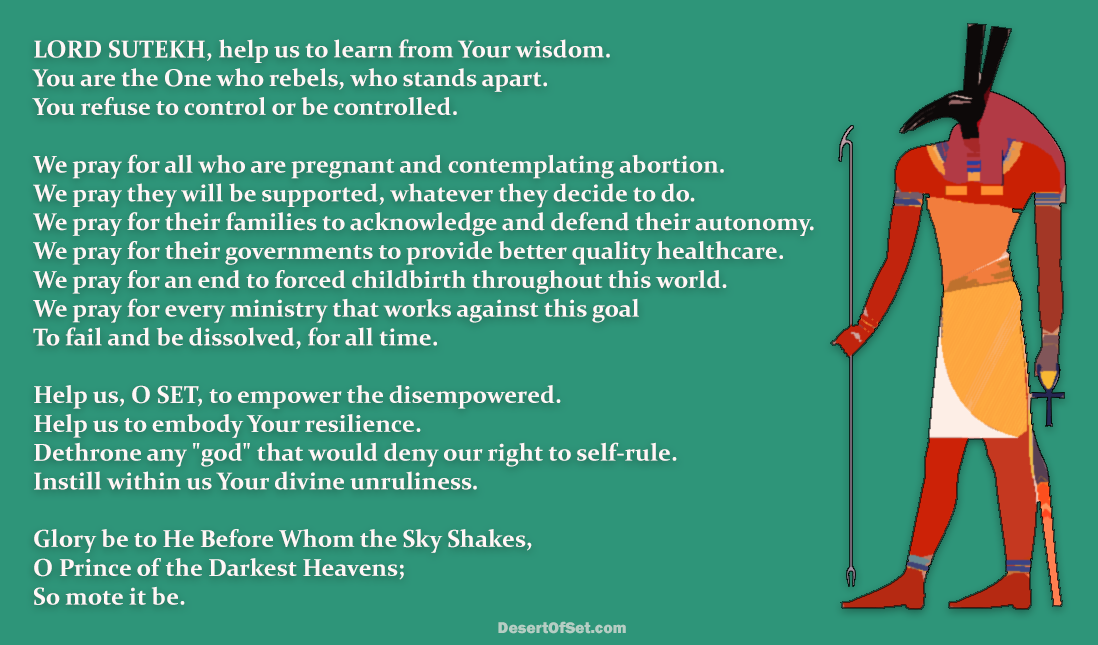
Retro VHS art for His Nocturnal Majesty!

The Gods Can Handle Our Anger
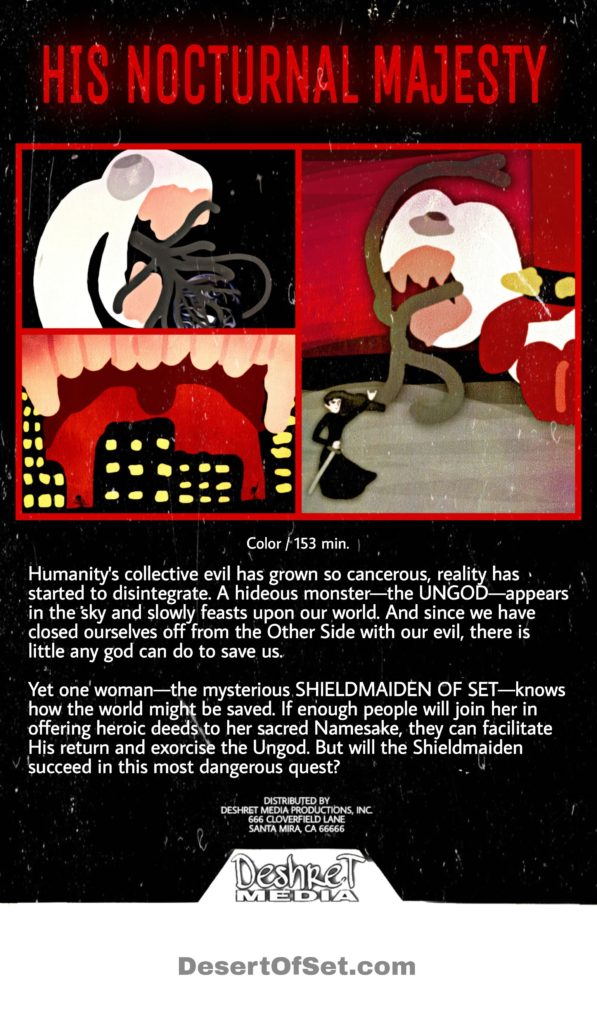
It’s okay to be angry or upset with the Gods, and it’s okay for us to tell Them so as well.
A very good friend of mine occasionally becomes profoundly angry with Set and/or the other Netjeru for not saving them from the horrific things they endured as a child. When this happens, they put away every religious icon they own. When they are especially upset, they might even smash these holy images in a fit of blind rage. Then they feel guilty and anxious afterwards, fearing the Netjeru will punish them for being so disrespectful.
(I will not go into details, but I do wish to be extra super double sure I’m making myself absolutely clear on this point: these behaviors are coming from a place of pain and fear, not from a place of pride or insolence. Any comments that assume otherwise will be removed. Thank you.)
When my friend confides in me about these occasions, I do what I always do. I gently remind them that no, they are not bad for feeling anger, and no, they are not bad for expressing their anger to the Gods.
The ancient Egyptians got angry with the Netjeru all the time, even threatening to withhold offerings from Them if They failed to answer certain prayers in times of great need. Here, the God-and-worshiper relationship is symbiotic and reciprocal. We must give to the Gods, but the Gods must also give to us. If the Gods give and we do not, They can condemn or abandon us; and if we give and the Gods do not, we can condemn or abandon Them.
Mind you, the Netjeru are not mere genies who exist just to grant our wishes. It is unreasonable to condemn or abandon Them for not solving all of our problems for us. But it is at least reasonable for devotees to expect some kind of benefit from worshiping Them. We deserve to at least feel guided or supported by our Gods somehow; and if a deity can’t even seem to deliver that much for whatever reason, it is only natural for a person to stop worshiping Them.
The idea that we are obligated to continue worshiping a particular God no matter what They do or don’t do for (or to) us is profoundly un-Setian. I would argue it is even un-Kemetic, since each of the Netjeru can potentially receive angry tirades or threats of abandonment from Their followers. Besides, even if you scream obscenities at a Netjer, you are still communicating with Them in a heartfelt manner. You are still engaging Them in a kind of prayer. You are just praying a prayer of grievance rather than gratitude, if you will.
So I tell my friend it’s absolutely okay for them to put away their religious icons whenever they feel upset with the Gods. It’s even okay for them to smash said images when they are especially distressed (provided, of course, that they actually own the icons they smash, and no person or animal gets hurt in the process, including themselves).
Learning about the Netjeru turned out to be very helpful for my friend; yet they are still trying to reconcile their past with the idea that there are actually Gods out there who care about them. If this is true, they ask me, why then did the Gods allow them to be harmed as children?
There is very little anyone can say to answer such a question that is actually helpful (or even truthful, in my opinion at least). All I know is, if the Gods are truly Gods, They are big and tough enough to take our anger, especially if it’s coming from someone who is confused and hurting very deeply.
I also don’t believe for one second that the Gods hold it against anyone for being traumatized and needing help. I think Set would actually prefer that my friend curse and smash His icons to having them traumatize any of the other people in their life. No matter what they might do to His icons, my friend can at least be sure they won’t hurt Set Himself; the same cannot be said for their loved ones.
There aren’t any easy answers for when bad things happen to good people. But if you happen to find yourself in a situation similar to that of my friend, I just want someone to have told you it’s okay. Set is not going to smite anyone just for being traumatized and crying out to Him for help—not even if the only way they are currently able to seek help is combative or confrontational. (He can always smite us for other reasons, of course; but Big Red is big enough to handle our feelings, even the really bad ones.)
It’s Okay To Have Demons
Expecting people to be John Rambo—including Setians—is unrealistic.
It’s fucked up how the behaviors we develop to survive as kids can bite us in the ass when we are grownups.
As a kid, I was conditioned to believe that asserting myself is bad, wrong, mean, and selfish. I was taught that if I love someone, I should just keep my mouth shut whenever they do anything that disappoints me or hurts me. If I speak up about it, I am being an asshole and I don’t deserve to be loved.
How insidious it is that such conditioning can affect us even as adults. I recently lost a good friend who occasionally did things that disappointed me. I kept silent about my feelings for so long that when I finally tried to express myself, it destroyed the friendship. Then I started hating myself for even trying to talk with this person about my misgivings at all. “If I just hadn’t said anything, we would still be friends,” my brain keeps telling me. “I ruined this friendship, and it’s all my fault.”
This kind of childhood conditioning can even affect your professional life. If I land a better job and my current employer gets upset that I am leaving, I feel like a horrible person. I feel like I’m an ungrateful prick. I feel like I’m being mean and something bad is going to happen to me, as a “punishment.” Even when my logical mind knows I am doing something good for myself, even when I remember that other people hire into better jobs all the time; I still feel like I am bad.
Well the reality is that NONE of these things is true. The voice that whispers these awful things to me inside my brain is not my own voice, but the voice of my childhood trauma. When I blame myself for ruining that friendship, or when I hate on myself for doing something that’s good for my own professional development, it is not really me that’s speaking; it’s my male parental unit. It’s the man who bullied me and manipulated me when I was little; the man who was never impressed by anything I tried to do; the man who delighted in making me feel powerless, trapped, and afraid.
I resonate with Set because He refuses to control or be controlled. Like Him, I chafe at the thought of anyone telling me who or what I can or cannot be. And like Him, I absolutely detest the idea of trying to control anyone else’s life. When I came to Set at age 14, it drove my male progenitor nuts. Here was something he couldn’t take away from me, no matter how much he hit me or tried to shame me. He could burn all my books and break all my sacred objects, but he could never remove Set from my heart. And this gave me the resilience I needed to truly start defining myself apart from the toxicity in which I was raised.
But even though I started on this quest all those years ago, the journey is still in progress. I am still learning how things in my childhood are affecting my adult life. I am still learning how to not hate myself when I do things that are good for me. I am still learning how to love myself and not listen to that ugly voice in my mind that expects me to fail. I am still learning how to determine myself and to not let anyone else define me.
So take it from a Setian who has been walking with Big Red for over 24 years… Ain’t NONE of us here are “Nietzschean supermen.” It’s totally OK if you are still fighting demons from your childhood. Nobody, least of all Set, expects you to be John Rambo. (And even if Rambo were real, he’d be suffering from PTSD too, just like all the rest of us.) If you struggle with hating yourself because of traumatic things that happened to you, you are not alone by any stretch of the imagination. And it’s absolutely OK. Just try to remember that when you get to feeling that way, it’s your trauma talking; it is NOT reality. And try to remember too that talking about your feelings is a STRENGTH, not a weakness. Listening to others talk about their feelings, and helping them feel comfortable enough to share them, is a strength as well.
It’s Setian, Not “Satanic”
Christians and Satanists might hate each other’s deities, but Setians can honor Set and Osiris at the same time.
One of the more annoying misconceptions against Setianism is this idea that Set is the “Egyptian devil” or “God of evil,” and that we His followers are all a bunch of raving psychopaths who thrive on chaos and violence. Another annoying assumption is the idea that if you ever attract Set’s attention to yourself, your house will burn down and your entire family will drop dead. (Or something like that.)
People who describe Set as “evil” have no business pontificating on Him (or any other Netjer or Egyptian deity, for that matter). He is really not comparable to the Christian devil at all. He is not a “fallen angel” who tries to drag people down into hell with him. He is a full-blown GOD in His own right. He is a SAVIOR who wards off the monsters of chaos.
Yes, Set has some drama with certain other members of the Egyptian pantheon; but this is not at all relatable to the “God versus Satan” dynamic of Christianity. The antagonism between Set and Osiris, for example, is not about some moral dichotomy of “good versus evil”; it is instead a theological metaphor for how ecosystems and agricultural cycles work. Christians and Satanists might hate each other’s deities, but it is not unusual for Kemetic polytheists to honor Set and Osiris together at the same shrine. This is because we know BOTH Gods are really necessary and good, and that BOTH deserve to be loved and appreciated. That’s just how polytheism works.
And I have never met a single Setian who resembled a real-life Mad Max character, gleefully running from one explosion to the next. Every Setian I know is a regular everyday person who values consistency, security, and safety. We get PTSD when bad things happen to us, just like everyone else. Many of us also seem to work in fields relating to public health, helping other people achieve a better quality of life. I am actually super fucking impressed with the number of Setians I personally know who work as counselors, caregivers, educators, and other similar roles. I think this alone demonstrates that our God is neither as “chaotic” nor as “destructive” as certain people like to think.
As for the idea that reaching out to Set will cause a bunch of chaotic shit to happen in your life… Well I’ve been worshiping Him for more than 24 years now, and it has never caused my life to fall apart. In fact, my life has only become more organized and secure since I first met Him at age 14. Besides, chaotic things will happen to us no matter WHAT we do. They will happen whether we pray to Set or not. They will even happen if we pray to someone else, or if we pray to no one at all. Worshiping Set does not increase anyone’s chances of having chaotic things happen to them; it also doesn’t PREVENT such things from happening, either. But let me tell you, it sure does help to have the Red Lord in your corner during a crisis. Setians do not thrive on chaos; we thrive on SET, who helps us PERSEVERE against chaos.
One other idea I find super annoying is this notion that Setians are supposed to be having intense paranormal experiences all the time, like on a near-daily basis or something. Ghosts, visions, and prophetic dreams are actually just as rare for me as they are for most other people. I suspect this is true of most other Setians, as well.
You don’t have to be a psychic or a ghosthunter to be Setian. Hell, some people don’t even need rituals. Maybe you just don’t “feel right” going through the motions for whatever reason. Maybe you feel more comfortable just meditating, or trying something different. As long as you have Set in your heart, you’re Setian enough by my standards. If people can still be Christian without going to church every Sunday, you can still be Setian without keeping any shrines or casting any spells. We each get to walk with Big Red in our own way.
Our Lady of Thrones (Coming 11/1/2021)
Coming November 1, 2021 to gbmarian.bandcamp.com
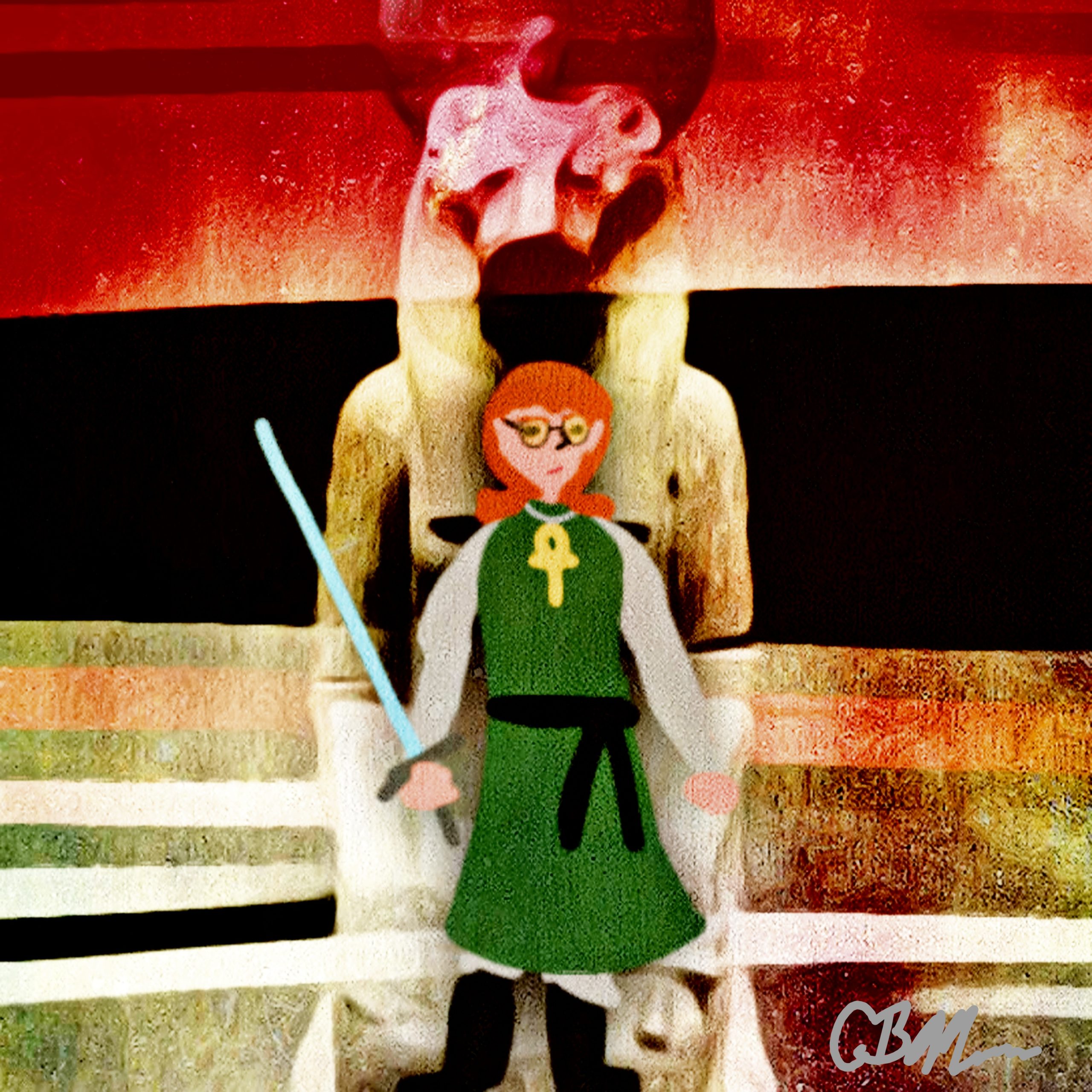
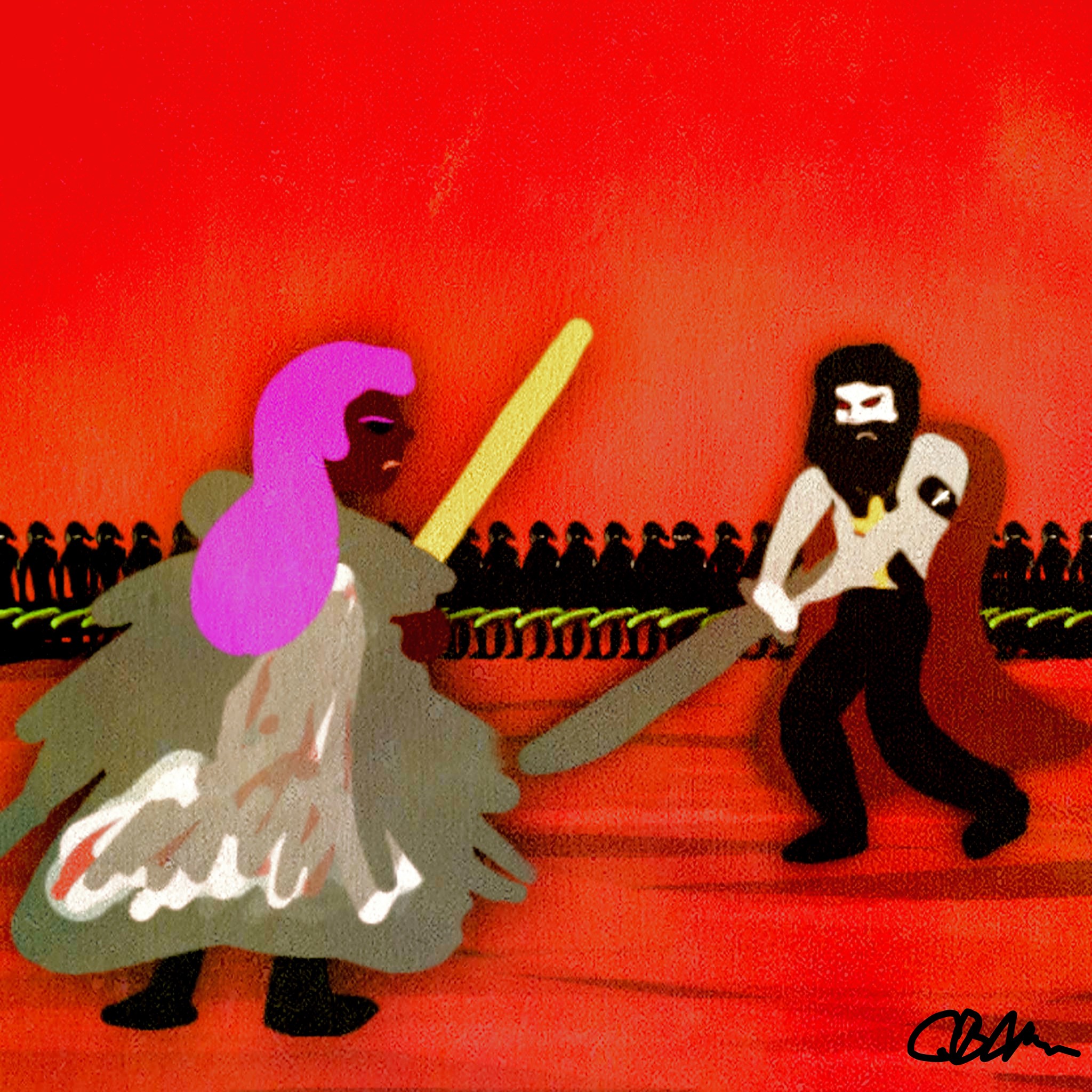
Our Lady of Thrones is the follow-up to last year’s His Nocturnal Majesty (2020). Both stories revolve around the appearance of a monster called “the Ungod” in the sky. But while His Nocturnal Majesty concerns one group of characters and their efforts to repel this monster back to the Other Side, Our Lady of Thrones concerns a very different group of characters and their efforts to rebuild human civilization. It is also a double album, with Disc One taking place prior to His Nocturnal Majesty, and Disc Two taking place afterwards.
(For more detailed character biographies, check out His Nocturnal Majesty & Our Lady of Thrones – Cast of Characters.)
Album Art
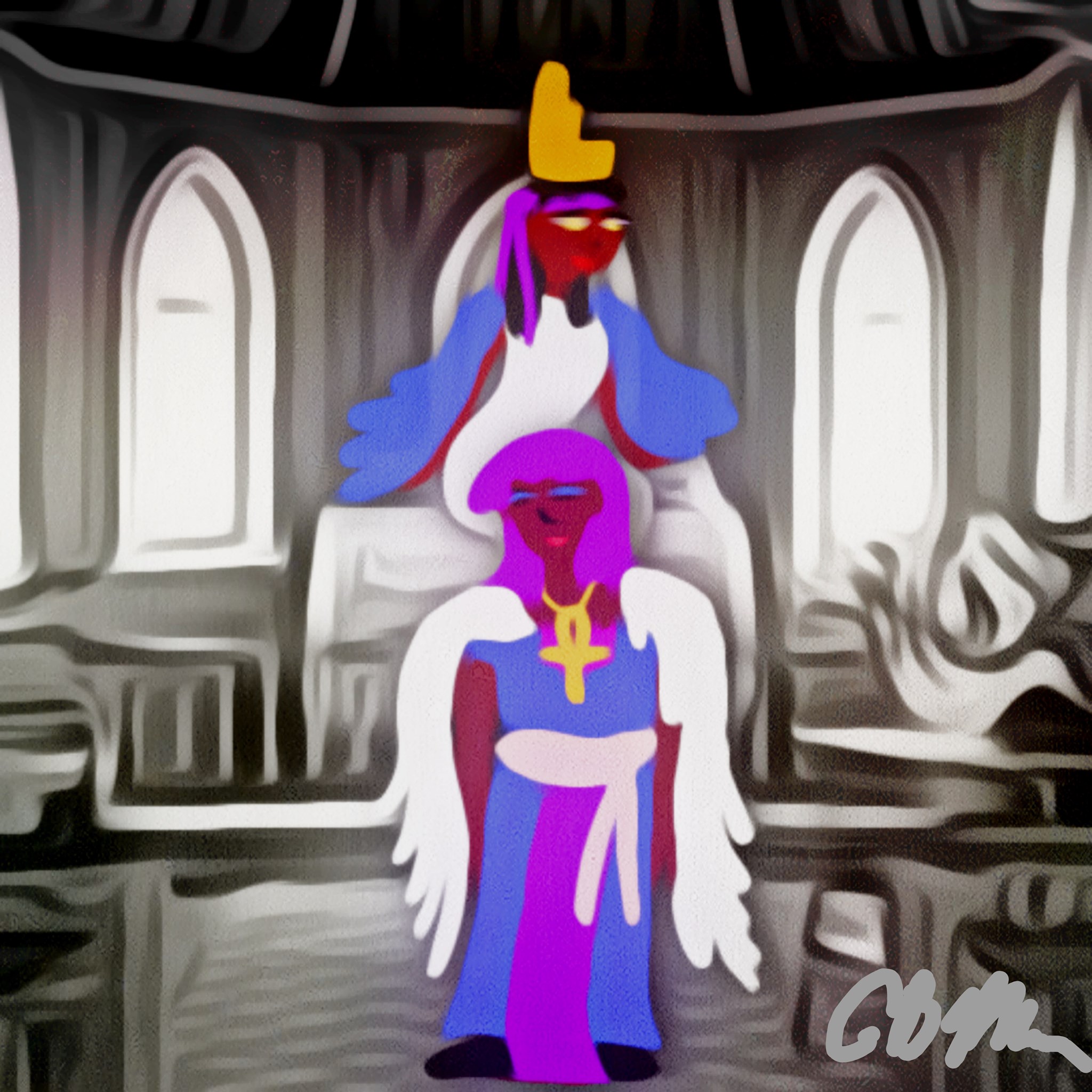

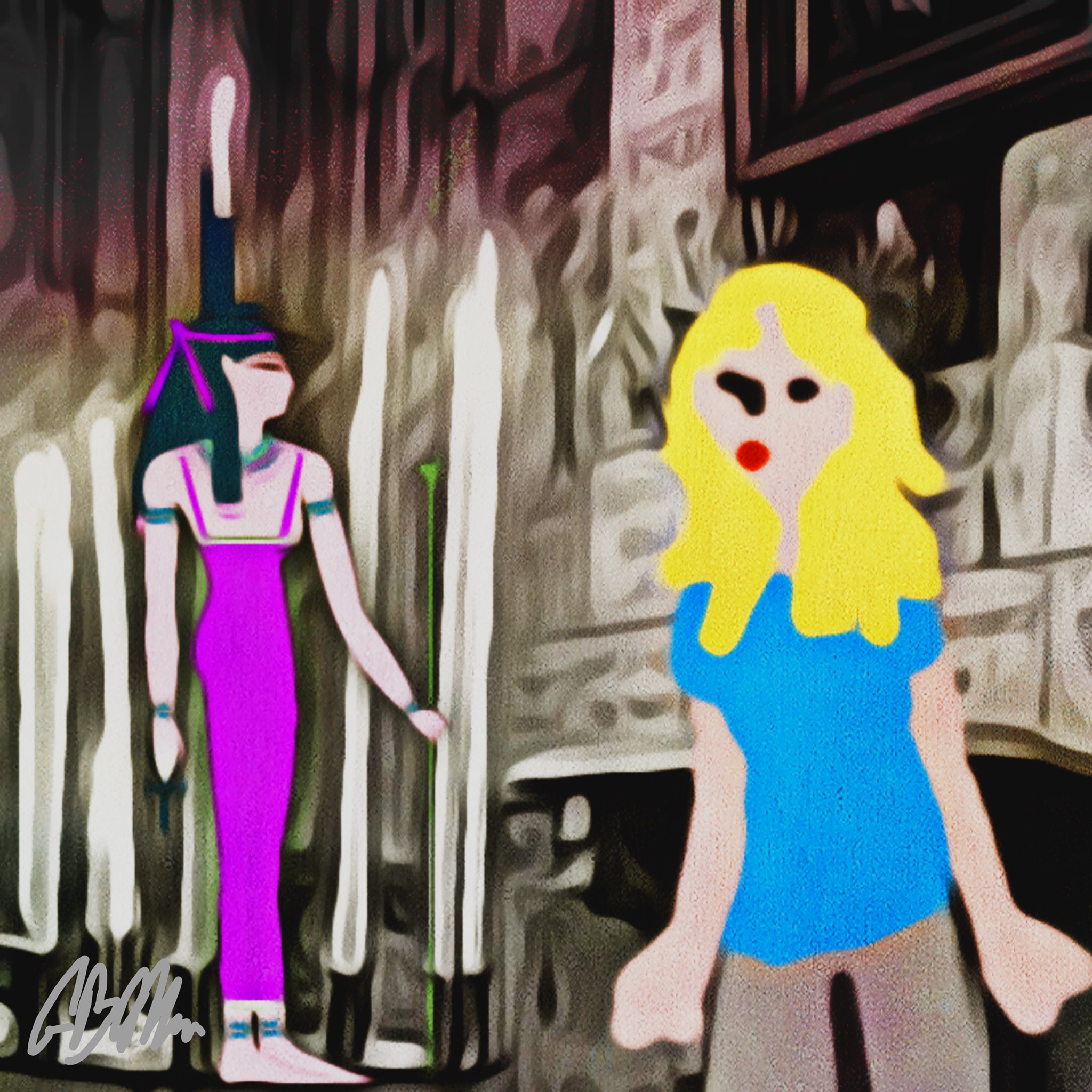




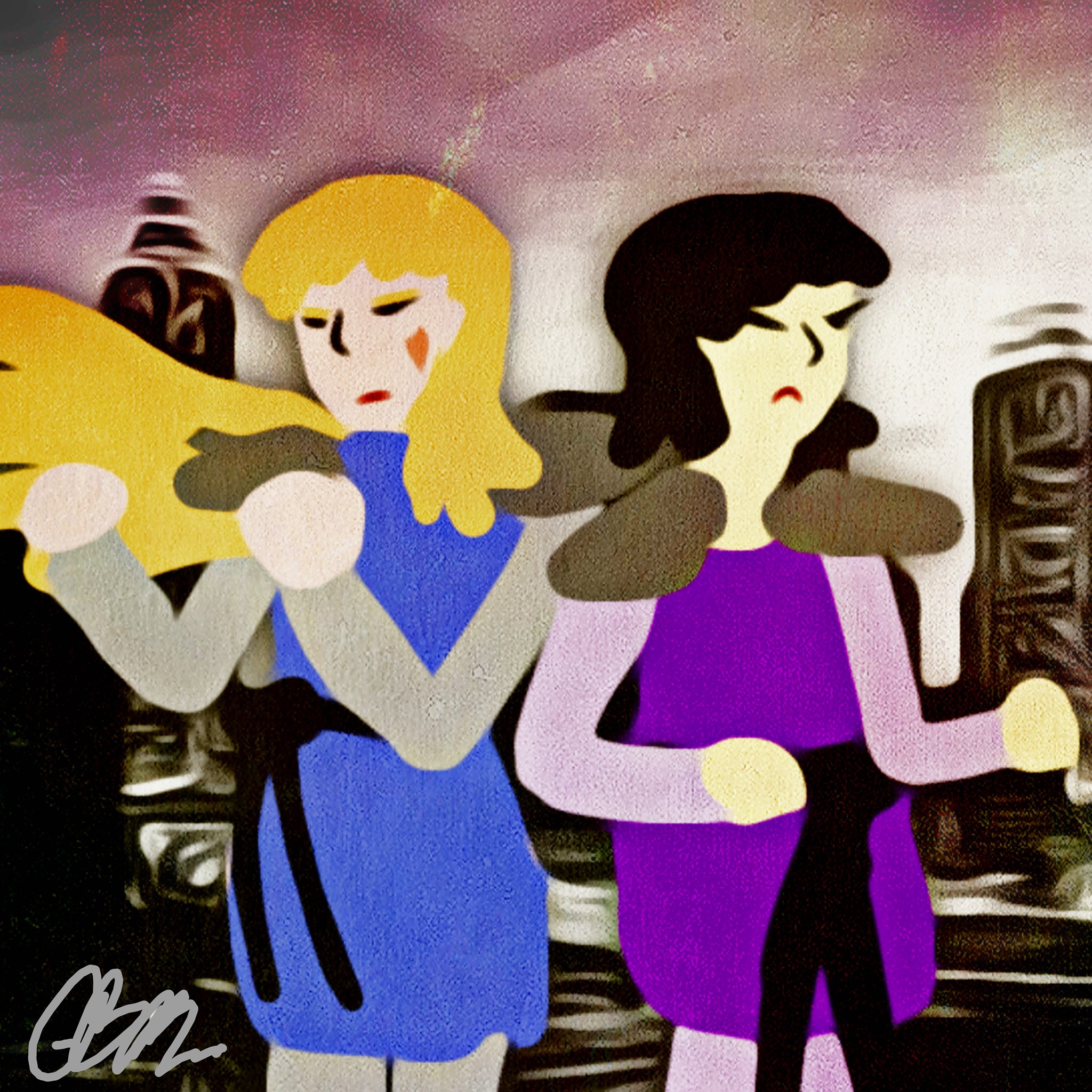


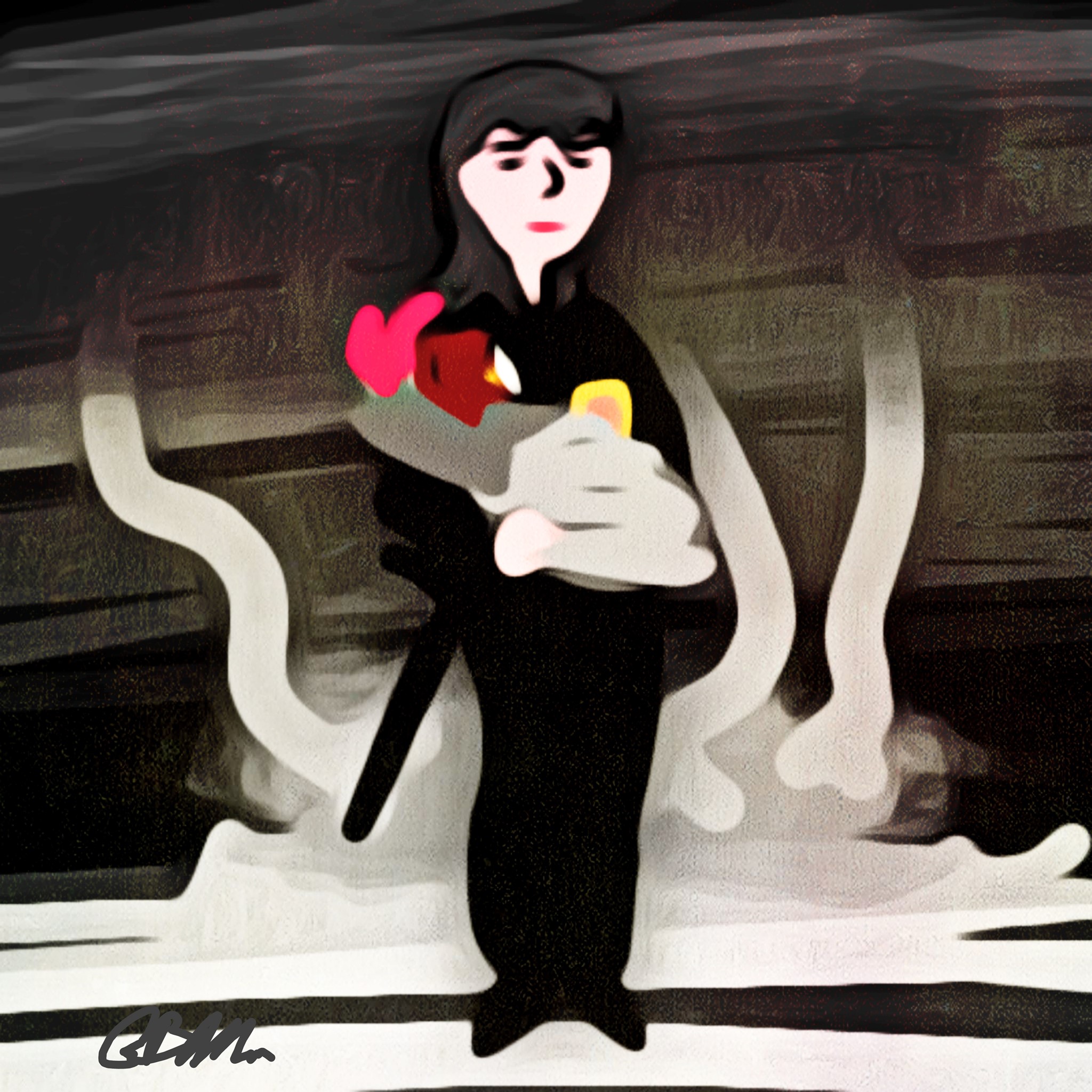






The Whole Story:
Sorceress (The Prophecy)
When the Sorceress was a girl, Lady Isis spoke to her in dreams, showing her the end of the world. “You must gather as many of your sisters in humanity as you can,” the Goddess advised. “Together, go forth and build the city of New Sennebytos. Those who follow My guidance will survive to heal this world from the horror that is soon to come.”
Witchfinder
No one knew the Witchfinder’s true name or origin, but he could hear thoughts. He knew when other people had similiar abilities to his own. He killed as many such “witches” as he could, one by one, by any means necessary. No matter what was done to stop him, the “God” that commanded him to kill would not let him die. And the Sorceress, still a young girl, was next on his list…
The Church of Many Mothers
The Sorceress traveled far and wide, bringing women together in spirit from across the continent. Caregivers, educators, public servants…all became sisters in Lady Isis, and all pooled their resources to buy land in the West. Together, they built the community of New Sennebytos and made preparations to survive the coming disaster.
Initiation
When Rae first learned of the Church of Many Mothers, she thought they were just another doomsday cult. But it soon became clear the Sorceress was no false prophet. And when Rae saw for herself how safe, happy, and powerful these women were together…she began to realize she was one of them at heart.
The Reverend President
He was a televangelist. He hypnotized the masses into swallowing his toxic brand of Christianity. He advised several American presidents on both foreign and domestic policy. Then the people voted him into the White House, and the Church of Many Mothers became Public Enemy Number One.
Satanic Panic (Disciple of the Worm)
The Reverend President enlisted the aid of the Warlock, who engineered a spell to possess thousands of viewers through their television sets. Like flicking a switch, the evil magicians drove entire communities to commit acts of mass violence and terror. This horror was then blamed on “cults” like the Church of Many Mothers, and the world descended into madness.
Go With The Goddess
It was time for New Sennebytos to retreat underground, but the Sorceress refused to abandon those members of her church who had not yet escaped to the city. She sent her best warriors to rescue as many of their sisters from across the country as they could. One sister chosen for this quest was Rae, who had since taken a wife named Autumn. The lovers feared they might never see each other again.
Escape to New Sennebytos
Along with a warrior named Adrienne, Rae was assigned to rescue those Isians who were trapped in Atlanta. While there, the women were pursued by the Witchfinder. Rae sacrificed herself so that Adrienne and the other women could escape. It broke poor Autumn’s heart when her wife did not return home; but there was nothing to be done. For the end was about to begin…
The Screaming Sky
As civilization decayed, Ma’at began to unravel. Then the Ungod appeared in the sky, just as the Warlock had secretly planned. The monster’s countless tongues slithered down from its gigantic mouth to slowly encircle and devour the entire world. Most everyone who witnessed this immediately went insane. Our planet would never be the same again…
The Shieldmaiden’s Daughter (Part I)
While the Church of Many Mothers remained hidden beneath New Sennebytos, the Shieldmaiden of Set fought to survive above. One day, the Shieldmaiden found an orphaned baby girl, whom she adopted as her own. Whenever mother and daughter both felt hopeless at night, Lord Sutekh appeared and gave them comfort. “You are My Shieldmaidens,” He explained, “and the Ungod will tremble when you are near.”
After the End
After the elder Shieldmaiden of Set repelled the Ungod back to the Other Side, the earth slowly returned to life. The Church of Many Mothers returned to the surface and began to rebuild civilization. They welcomed refugees into their society, and they helped neighboring communities rebuild themselves too. The women of New Sennebytos then became legendary defenders of civility and peace.
Sentinels of Sekhmet
Meanwhile, the Reverend President and the Witchfinder had both survived as well. Together, they transformed Atlanta into a theocratic totalitarian empire: the Kingdom Guard. In time, the Church of Many Mothers sent a special taskforce—the Sentinels of Sekhmet—to infiltrate the Kingdom Guard and help those of its citizens who were trying to escape. Autumn was chosen to lead this quest. She believed her wife Rae might still be alive in Atlanta, and she was desperate to find out.
The Kingdom Guard
The Sentinels of Sekhmet infiltrated Atlanta, searching for citizens who sought refuge. While there, they witnessed just how horrible things within the Kingdom Guard really were. They were soon captured and imprisoned, whereupon they found a tortured and beaten Rae, near death. Sobbing, Autumn embraced her wife and gave thanks to Lady Isis.
The Shieldmaiden’s Daughter (Part II)
Just when the Sentinels of Sekhmet thought they were done for, the second Shieldmaiden of Set appeared, now fully grown. She helped the women break free, and she battled the Witchfinder as they made their escape. All of the women, including the Shieldmaiden, safely returned to New Sennebytos…But not in time for Rae’s life to be saved.
Resurrection Ceremony
Back in New Sennebytos, Autumn begged the Sorceress to use her magic and restore life to Rae. The Sorceress agreed, but explained that her magic could only resurrect Rae for a limited time. Once that time was up, Rae would have to return to the Other Side with all the rest of the dead. The Sorceress performed the ceremony, and Autumn and Rae were able to spend one last night together after all.
Last Embrace
Autumn and Rae spent their last night together in each other’s arms. Rae promised to do whatever she could as a ghost on the Other Side to help Autumn in her battles. Autumn swore she would never take another wife so long as she lived.
Warlocked (Disciple of the Worm)
Before she left this world, Rae told Autumn what she had seen as a prisoner of the Kingdom Guard. Even the Sorceress was surprised to learn the Reverend President was actually long dead, and that his corpse was but a rotting puppet. The Warlock had been the true mastermind all along, manipulating the entire Kingdom Guard for his own purposes. Now he sought to facilitate the Ungod’s return…by destroying New Sennebytos.
Witchfinder General
The Sorceress and the Witchfinder faced each other on the battlefield. The Sorceress was mighty, but even she could not phase her opponent. Then she shouted a word only the Witchfinder could hear. It was a name no one else understood. When the Witchfinder heard this, he froze like a statue…and he never moved again. Exhausted from her injuries, the Sorceress smiled…and then she died.
Defy the Ungod
The women of New Sennebytos launched their final assault against the Warlock’s hordes. They were joined in battle by the Shieldmaiden of Set, who had just returned from reuniting the Knights in Sutekh’s Service. When these mighty Setian warriors joined their Isian sisters on the battlefield, the Kingdom Guard soon dissolved into chaos.
Long Live the Queen
After defeating the Kingdom Guard, the Church of Many Mothers and the Knights in Sutekh’s Service returned to New Sennebytos. All who fell during the battle, including the Sorceress, were given the most beautiful funerals anyone had ever seen. Autumn was then coronated Pharaoh, and with their new Queen, the women of New Sennebytos went forth to continue rebuilding our world.