

With apologies to Bruce Wolfe, the artist who originally painted the Indiana Jones and the Temple of Doom poster; this was just too much fun for me to resist.
With apologies to Bruce Wolfe, the artist who originally painted the Indiana Jones and the Temple of Doom poster; this was just too much fun for me to resist.
Songs from a Setian soul.

Today’s episode is not a proper sermon as such, but a collection of brief melodies composed by yours truly. I don’t consider myself much of a musician, but I hope you will enjoy. Praise be to Set!
The times we consider most sacred in our coven.

Today I figured I’d discuss the major holidays observed by Setians of the LV-426 Tradition. These aren’t necessarily the only holidays we celebrate; some of us also celebrate things like Christmas, Mabon, or even St. Patrick’s Day. But these particular times are the ones we all agree are most important to our shared religious calendar.
The LV-426 Sabbat

The word Sabbat is used differently in many faiths. In LV-426, we use this term in reference to a weekly night of worship that has most often been observed on Friday nights, but which can really be observed on any night of the week. The idea is to meet with Set for a Sabbat every seventh night, in any case, and whenever possible.
Our Sabbat procedure is simple. We use the basic rite that is offered in the very first episode of this series (Setianism: A Brief Introduction). When we get to the part when we speak our wills to Set, we discuss all the high and low points of our week with Him, speaking informally. If more than one person is present for worship, each attendee takes a turn at doing this.
Once everyone has had a chance to say what they wish to say, we throw on some heavy metal and break out the booze, chatting through the night until dawn. Set is asked to remain present if it pleases Him to do so, and He guides the conversations we have during these sessions. There is no other situation in which I am quite so comfortable, happy, or grateful as when I am meeting with Set and my brothers and sister in Him for our Sabbat.

It’s been several years now since our coven has been able to keep the Sabbat together as a group; but the procedure can be followed in a solitary context as well. You don’t even need the booze or the heavy metal; all you really need is to pick a night that works best for you, then try your best to spend some time with Set on that same night every week. How you choose to spend or structure that time with Him is entirely up to you. And if you are unable to follow the same procedure every week for any reason, do not hate on yourself. Set is always with His chosen ones, and He knows what we are all going through. Our Sabbat is not a commandment, but a gift. There is no expectation that we must observe it every week; but it is always there whenever we need it.
Egyptian New Year
The Egyptian New Year festival (or Wep Ronpet, which means “Opening of the Year”) coincides with the heliacal rise of Sirius, the annual flooding of the Nile, and the Dog Days of Summer. It technically falls on a different date each year, and the precise calculation of this date depends on your geographical location.

A heliacal rising occurs when a star that hasn’t been seen in the nighttime sky for a while becomes visible again in the east, just before dawn. Sirius disappears for about 70 days in May, and it reappears toward the end of July and the middle of August. (This is called the “Sothic Cycle.”) The Nile River always floods soon thereafter, just like clockwork. There isn’t much rainfall in Egypt at all, so this annual inundation provided the only means for irrigation in ancient times. And when the Egyptians saw Sirius rising in the east just before dawn in late July, they took it as a sign from the Goddess Isis (the ruler of Sirius) that it was time to start planting all their crops for the year. To this very day, the Egyptian people still celebrate the annual flooding of the Nile as a two-week civil holiday called Wafaa El-Nil, which begins each year on August 15.
August 15 is also a significant date for me personally, as it marks the anniversary of when I first came to Set in 1997. So while everyone who observes this holiday will understandably observe it on different dates due to the Sothic Cycle, I just celebrate it on August 15 each year and call it a day. To be honest, the Dog Days of Summer (which take their name from Sirius, “the Dog Star” in Canis Major) just feel very sacred to me in general.

Wep Ronpet is not just the start of a new year; it is also an echo of the Zep Tepi or “First Time,” when the first God began to stir within the primordial ocean of chaos. One way to mark this occasion is to greet the sun as it rises (on whichever date you prefer to celebrate) beside a body of water (preferably a large one, if possible). As you watch the sunrise, know that you aren’t just watching the start of another day; you are witnessing a “re-run” of the Creation of the universe. Another worthwhile holiday activity would be execrating any negativity you might have collected in your life over the past year, which is something many people who walk with the Egyptian Gods do. (For an example of an execration rite that we use in LV-426, check out Episode #31 of this series.)
Hallowtide
Halloween isn’t “just for kids,” and it wasn’t invented by the candy companies either. It originates from a blend of Celtic folk religion and Roman Catholicism. It is just the first of three holy days—All Hallows’ Eve (October 31), All Saints’ Day (November 1), and All Souls’ Day (November 2)—which are collectively known as Hallowtide.

Even before the Catholic Church reached Great Britain and Ireland, these three dates were already an ancient festival called Samhain (“SOW-wynn”) in Gaelic and Nos Galan Gaeaf (“knows GAIL-uhn GUY-ov”) in Welsh. It marked the end of the harvest season and the start of winter, which was an extremely frightening time for the Celts. Many of them would die of starvation, disease, or freezing temperatures before the following summer. For this reason, the first night of winter weighed heavily upon their minds, and people thought the barriers between this world and the next were temporarily lifted, allowing the dead and other paranormal beings to roam free. This wasn’t so bad when it came to ghosts, who were viewed as beloved ancestors to be welcomed. Malevolent faeries and qliphothic entities were the real concern, and people dressed in frightening animal skins, carved protective charms from turnips, and left out offerings of food to keep such things away. It’s from these ancient traditions that wearing costumes, carving jack o’lanterns, and trick-or-treating are all descended.

Halloween was always my favorite holiday growing up, more important than the winter holidays, and it’s the first thing in which I ever took a religious interest, even before Set. I enjoy handing out candy to trick-or-treaters on October 31st; but once the boils and ghouls have all gone home, I begin my all-night vigil for the dead. I light some candles for our ancestor shrine in the kitchen, and I say some words to our dearly departed. I keep the candles burning all night long, not going to bed until 5:30 in the morning or so. Then I repeat this process the following two nights.

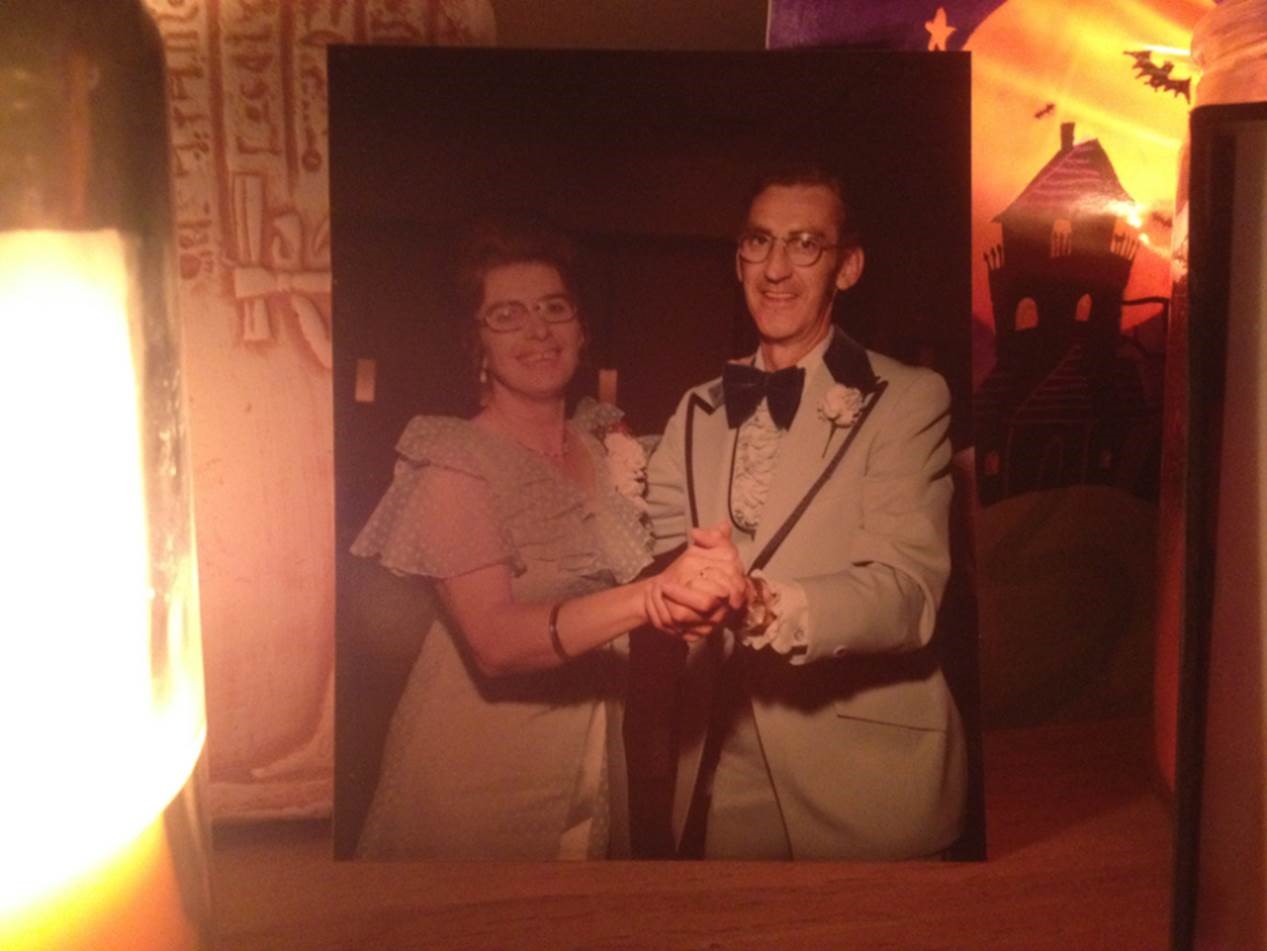


Spooky things do tend to happen during these vigils, like voices or footsteps that come from nowhere (especially around 3:00 am). But nothing scary or sinister ever happens, perhaps due to our ancestors’ protection. Call it “superstition” if you like, but we take this stuff pretty seriously. I think it’s important to keep the true spirit of Halloween alive as much as we can.

Walpurgis
Walpurgisnacht or Walpurgis Night is a spring fertility festival that’s observed each year on April 30. It’s the Teutonic equivalent to May Day or the Celtic Beltaine, but was later renamed after the medieval Christian Saint Walpurga. It represents the cross-quarter point of our solar year between the Spring Equinox and the Summer Solstice, and it’s a time for warding off the last vestiges of winter. It’s most often observed in continental Europe by wearing scary costumes, lighting huge bonfires, and making all kinds of Gods-awful racket to scare away the evil spirits. In fact, you might say Walpurgisnacht is Germany’s version of Halloween; one might even call it “Samhain in the Spring.”

A Walpurgisnacht gathering at the Heidelberg Thingstätten in 2007 (from Wikimedia Commons)
For Setians in LV-426, the lore of witches roaming mountains on this night, throwing bacchanalian rites to a horned God mistaken for “Satan” is suggestive of our own experiences with Set. Since He is a nocturnal God of the wilderness, we’ve always preferred to recite our incantations to Him in lonely woodsy areas after dark (or immediately before dawn). And since the ears of Set’s most holy symbol, the Sha, resemble “horns” (not to mention that some of His other sacred animals include such horned and hoofed critters as antelope and oryx), it is easy enough to conceptualize ourselves as “witches” who invoke a horned God at night. So adopting Walpurgisnacht into our religious calendar has always made sense, at least to us.
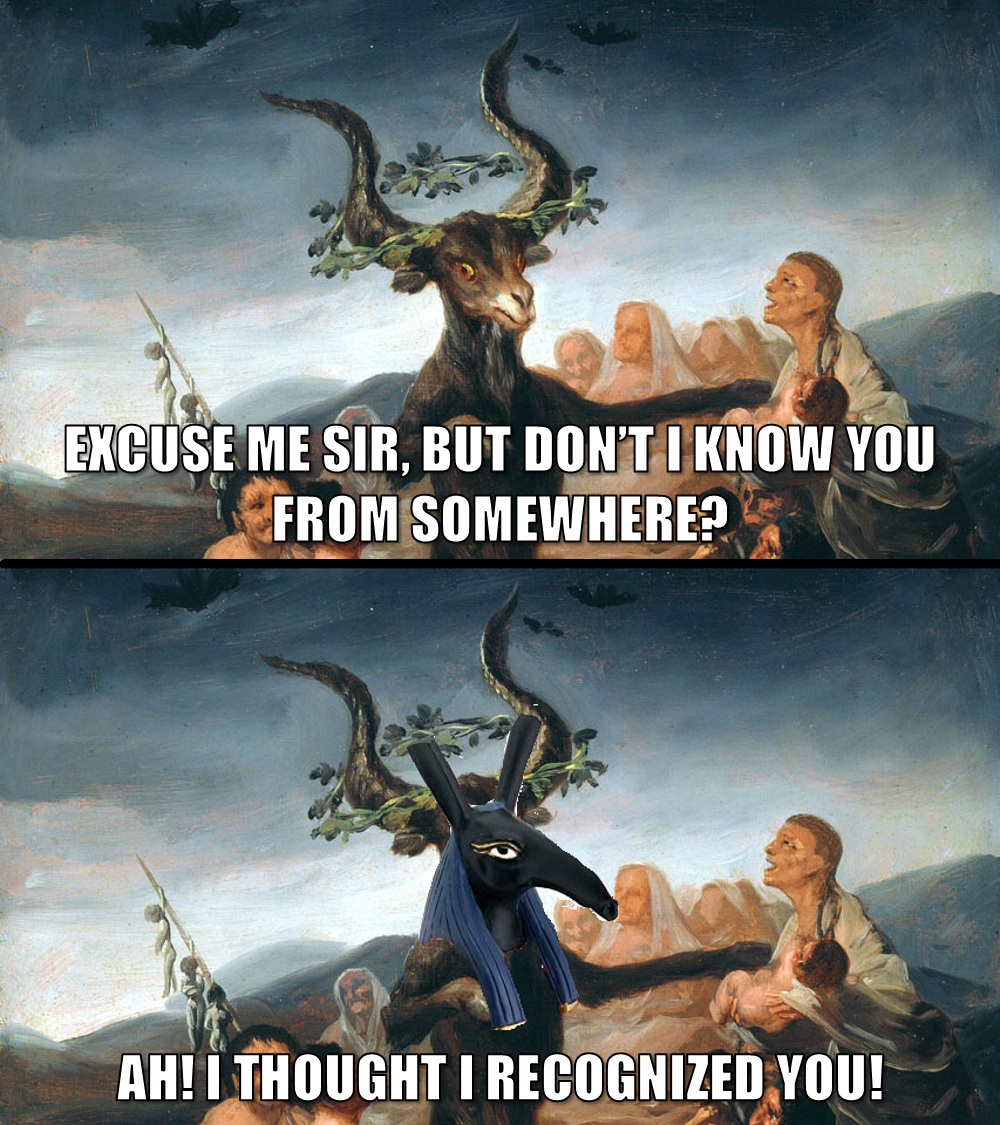
With apologies to Francisco Goya…
Perhaps the greatest Walpurgisnacht in LV-426 history so far was in 2005. It was on a Saturday that year, and I was living in Houston. The Tonester drove down to visit me for the whole weekend, and we hit the city together like bricks fired from a machine gun. We roamed every strip club, antique book store, and vintage record shop we could afford at the time, growling the lyrics to all our favorite death metal songs and shouting a random “DUA SET!” at every turn. It was perhaps the only time in my life that I have ever felt completely comfortable wearing my spirituality on my sleeve in public. It was a weekend full of booze, lewd jokes, horror flicks, and about a ton and a half of heavy fuckin’ metal. We really shook the pillars of heaven, by Gods, and when it was over, we both knew Big Red was mighty pleased.

“Turn it up to 11, Hoss!”
Saturday, April 30, 2005: The city of Houston fell under siege to a bizarre sect known only as LV-426. Heads were turned and jaws were dropped as two strapping young lads of Sutekh took to the streets. No slice of pepperoni pizza was safe. No vintage record shop could run. No 1970s folk horror movie could hide. But lo, musical instrument shops had it the worst by far; for Set’s crazed servants did ecstastically hammer on drums, strum on electric guitars, and scream psalms to His Majesty on microphones turned up to 11 in full public view. Never before had such madness been seen or endured by the community, and the dark wizards soon vanished as mysteriously as they had appeared, like a nightmare before the break of day. No evidence remains of the outlandish lunacies that were witnessed on that fateful Walpurgis Night—not even a photograph…

Friday the Thirteenth
When Set slays Osiris in Egyptian mythology, He chops him into 14 pieces, 13 of which are then buried throughout the world (before they are re-assembled and restored to life by Isis), while Set feeds the final piece—Osiris’ phallus—to an elephantfish. (Dennis Wheatley refers to this fish as “the Talisman of Set” in his 1934 novel, The Devil Rides Out.) There were also 13 people at the Last Supper of Christ, which was soon followed by his crucifixion (on a Friday, no less). In both tales, the dying-and-rising God can’t rise from the dead until he is killed first (with Judas Iscariot fulfilling the Setian role in the Christian narrative). The God must be sacrificed before he can rise again and offer new life to the world, and in this context, the number 13 represents initiation: the (often painful) ending of one phase of existence, followed by the glorious emergence of a new and better life.
In LV-426, we don’t view Set and Osiris as “enemies”; we think of the two as being like a gardener and a rosebush, respectively. It’s Set’s job to “prune” Osiris so the latter can produce fresh “blooms,” which keeps the universe alive and healthy. If Set were not there to keep Osiris regenerating himself, there would be no past and no future; there would only be a static present in which nothing new can thrive. So while the experience of being “pruned” by life’s hard knocks certainly isn’t pleasant for anyone, Setians in LV-426 believe it’s important to honor Set for His role in this process. We also think it’s important to take a moment and Hail Osiris as well, and Friday the Thirteenth is our preferred time for doing so.

Watermelon is reported to be one of Set’s favorite foods, and since it’s a plant, it is also sacred to Osiris. So one LV-426 custom for Friday the Thirteenth is to buy a watermelon, recite some prayers over it, chop it up, and share it with Set and Osiris as a sacred meal. As we each eat the watermelon, we also partake of Osiris’ regenerative powers so we can heal and grow back stronger from whatever trials we are currently facing in life. One year, we hosted this dinner at a derelict cemetery, and we respectfully shared our offerings of watermelon with the forgotten ancestors who were buried there.

“Dinner with the Dead” we hosted in honor of Osiris for Friday the 13th, August 2010.
Aside from hockey masks (thanks to Jason Voorhees), black cats are one of the first things people associate with Friday the Thirteenth. Everyone knows the old superstition about how you’ll get “seven years’ bad luck” if a black cat crosses your path. But what most people don’t realize is that cats are actually very lucky creatures to have around, and that black cats are especially lucky. Remember, cats were worshiped in ancient Egypt; they were protected by law from injury and death, and families mourned, mummified, and buried their beloved felines as if they were human beings. Cats were thought to have a special connection to the spirit world, and were especially cherished for driving away evil spirits. The color black was also considered very lucky indeed, given its association with the fertile soil of the Nile Valley. From this perspective, a black cat is twice as lucky as usual, for it not only has all the standard demon-repelling bells and whistles; it also carries the promise of hope, fertility, and regeneration wherever it goes.

My youngest child, Bishop.
The number of days in February and March are such that if Friday the Thirteenth ever falls in the former, it will also fall in the latter (unless we’re in a leap year). Having two consecutive Friday the Thirteenths in the same month like this only happens 3 times every 28 years, and it never happens at any other time of year. For these and other reasons, this occasion is considered highly sacred in LV-426 and is observed as a month-long festival that we call Miew Khem or “the Month of the Black Cat.”
An example of an execration ritual, a procedure to cast out and/or ward off negative energy.

Everyone showed up at our house around 5:00 PM that Saturday, and each person was given a small ceramic pot and a black Sharpie marker. I instructed them to write and/or draw whatever they liked on their pots. Whatever they wrote or drew had to represent negative things that were bothering them and that they wanted to cast out from their lives. It was a silent and solemn twenty minutes as everyone meditated on the demons that were haunting them the most, pouring all that sad and frightening energy into their drawings.
Once everyone had finished decorating their qliphothic pots, I implored them not to touch anyone else’s pot (or to let anyone else touch theirs). We had just created the magical equivalent of bio-hazardous waste products, and it was vital that no one be “infected” by anyone else’s bad vibes.
Then we all went out into the back yard, where Blackwyn and I had prepared a small altar to Set (complete with His statue and a big red lantern). We had also set up a couple of garden tiles on which all of our qliphothic pots could be smashed.
One of our friends brought her 2-year-old daughter, and the little girl had brought her toy pig. As we prepared to recite the opening invocation, the girl approached the altar and stared at Big Red’s statue. We were briefly worried that we’d need to intercede, but she just stood there, quietly and respectfully gazing at the man with the funny animal head. Then she placed her toy pig right beside the statue and said, “That better”—as if she somehow understood that pigs are one of Set’s favorite critters. As the child walked back to her mother, everyone who was present felt a powerful chill, including those who weren’t committed believers.
It was evident that Set was already present, but I invoked Him into our ceremony just the same:
Hail, Son of Nut! You Before Whom the Sky Shakes! Hear us, O Lord of the Wastelands! O Divine Foreigner! O Bringer of Winds! O Savior of the Sun! As You travel the Desert between the Worlds, as You smite the Evil One again and again, look down upon us and straighten our spines! Open our mouths to speak great words of power! We are Your soldiers upon this Earth; put us to Your work!
Now it was time to conjure the Chaos Serpent and kill it together as a tribe—as a constellation brought together by Set from across the Earth:
Torment be upon you,
Apep! You enemy of Set, of all gods and all creatures! The Companions of Set prevail over you, for you are but the filth of unborn pasts! Accursed shell and nothingness, the Typhonian Beast shall rip and tear you asunder, and scatter your meat as confetti to the winds! Taste your death,Apep! Get back and retreat, O enemy of Set! Fall down, be repulsed, get back and retreat! For the Eye of Set is upon you, piercing you like a spear! It is His Army that drives you back with all of our thunder and metal! O vile and vapid corruption, WE CAST YOU BACK INTO NOTHINGNESS!
Then we all took a deep breath…and we chucked our qliphothic pots upon the garden tiles as forcefully as we could, all at the same time.

No one expected the crash of the pots to be as loud as it was; it echoed throughout the neighborhood like a thunderclap. The shards flew more violently than we had anticipated as well, but no one was harmed. We were briefly shaken by the sight and the sound of what we had done, but we also felt a clear and powerful sense of release, like a knotted muscle melting into butter.
Then I brought our spell to a close:
Back, fiend! An end to you! Set has driven thunder and lightning at you! Set has made you to be destroyed, and Set has condemned you to evil! An end, an end to you! Taste your death! An end to you! You will NEVER swallow the dawn! You will NEVER win the night!
Our curse had been cast, and our demons were on the run. The others went inside to decompress from this experience, and Blackwyn and I went to sweep up the debris of the qliphothic pots.
Then, as if on cue, it started to rain.
We decided to leave the qliphothic pots alone, so Big Red could piss on the Chaos Serpent’s corpse for a spell.
Everything I write and produce for Set is for free. This ongoing work is a devotional offering not only to Him, but to anyone else who loves the mighty Red God, or who might just be interested in Him, even if it’s for non-spiritual reasons.
If you enjoy my work, by all means, please share it with others. I only ask that I be acknowledged as the author; apart from that, you can print everything I write out on printer paper and hand it out on the streets for all I care. (Though that probably isn’t wise right now; I would recommend sticking to electronic circulation for the time being.)
If you speak another language apart from English and you would like to translate my work, please feel free to do so and to disseminate the translated material in your locale. I’m sorry I can’t pay you, but I’m not making any revenue here either, and I don’t want to. No one should have to pay any money or kiss any hiney to learn about the mighty Champion of Ra!
That being said: If you catch anyone trying to SELL my work to you or to others, please let me know so I can take the appropriate legal action against them. This is all for SET, gods dammit, not for money, and I don’t want ANYONE to profit from this work except in a purely spiritual or intellectual sense.
May the Great of Strength be with you all!
Yes Virginia, some people still believe in many Gods today, and it’s every bit as legitimate as believing in just one.
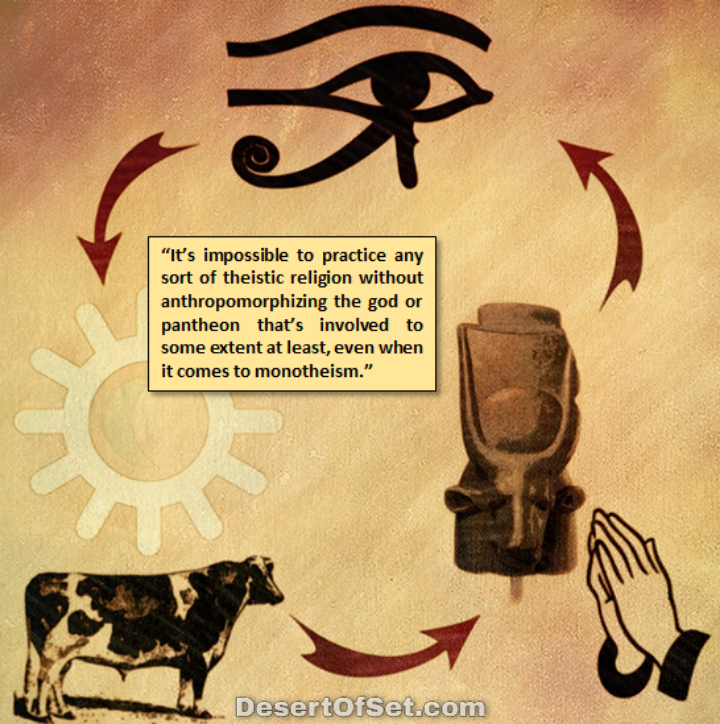
Anthropomorphism is the act of characterizing something that isn’t human (whether animal, vegetable, or mineral) with human qualities, feelings, and motivations. Bugs Bunny, for instance, speaks English, stands on two legs, and is generally a smartass. We all know real rabbits don’t do either of these things, so Bugs is what we call an anthropomorphized rabbit (and a damn funny one, too).
It’s impossible to practice any sort of theistic religion without anthropomorphizing the God or pantheon that’s involved to some extent at least, even when it comes to monotheism. Polytheists are only the most obvious example, given that we actually invoke our Gods into cultic images. Usually these icons are at least somewhat humanoid, even if they have animal heads (like the Egyptian pantheon) or multiple appendages (like the Hindu pantheon). Even when these images are completely zoomorphic, polytheists tend to be animists as well, believing that animals have souls just as humans do (as well as trees, rivers, stars, planets, etc.). So polytheism actively encourages us to anthropomorphize the entire cosmos.
Monotheists condemn this practice as “idolatry,” which is extremely offensive to polytheists for several reasons. First, it demonstrates a complete misunderstanding of what we believe and do. For some reason, monotheists always think we are cavepeople who think the icons we create and use for worship are actually alive and can move around or something like that. But not even ancient polytheists were that naïve. Our Gods are not the man-made images themselves, but the cosmic forces these images are designed to signify. The statue of a God is merely a tool for worship, not the actual object of worship itself.
Just consider this story from biblical folklore:
Abram tried to convince his father, Terach, of the folly of idol worship. One day, when Abram was left alone to mind the store, he took a hammer and smashed all of the idols except the largest one. He placed the hammer in the hand of the largest idol. When his father returned and asked what happened, Abram said, “The idols got into a fight, and the big one smashed all the other ones.” His father said, “Don’t be ridiculous. These idols have no life or power. They can’t do anything.” Abram replied, “Then why do you worship them?”
While I understand this story is allegorical, it is still dehumanizing and insulting to polytheists. Personally, I hope Abram’s father replied, “I don’t worship the idols; I worship THE GODS, whom the idols REPRESENT!” (And then I hope he grounded the little ingrate, since that little stunt probably cost their entire family several meals!)
When I invoke Set into one of His sacred images that I keep in my home, I treat the image as if it were a living, breathing entity. I kiss it, share offerings with it, or even blast some heavy metal and headbang with it. However, I am not naïve enough to think the image really IS Set. Gods are powerful, invisible cosmic forces that we’ve never been able to completely understand; we can see them working through natural phenomena, but we can’t actually see them directly. (And even if we could, it would probably make our brains explode and leak right out of our ears!) By anthropomorphizing the gods and inviting them into humanized images that we have created for them, we can demonstrate our love and respect for them just like we do for all the people and animals we love. When I kiss an image of Set, I know I am really only kissing an image; but the act of kissing that image is itself a powerful symbolic act. So while we can’t see or hear or touch the Gods like we can see or hear or touch each other, this is the next best thing.

I fail to see how this is any different from how Roman Catholics treat their images of Jesus, the saints, and the Virgin Mary. They light candles in front of these statues and talk to them while they pray, but none of them are daft enough to think the statues are actually Jesus, Mary, or the saints themselves. At the same time, most Christians (including non-Catholics) would consider it blasphemous to step on a crucifix or tear up a Bible, both of which are powerful iconic images. And when people think about the Christian God, they visualize him as a white-bearded patriarch sitting on a throne in the clouds. Part of the entire point to Jesus, in fact, is that he’s supposed to be Yahweh himself in human form—and it doesn’t get any more anthropomorphic than that! In other words, Christianity anthropomorphizes its God and is every bit as “idolatrous” as Paganism is; but for some reason, it’s only “bad” or “evil” when non-Christians do these things.

This image wasn’t invented by Seth McFarlane; it goes all the way back to the Canaanite God, El.
Despite what anyone else might say, anthropomorphism is not a “bad” thing at all. It is also not entirely removed from reality. For example, we now know that willow, poplar, and sugar maple trees will actually warn each other about impending insect attacks; that bees possess cognition and an extremely complicated language; and that beavers are basically hydraulic engineers, creating dams to make ponds and build houses for their families. Trees, bees, and beavers might not think, feel, or communicate the same way human beings do, but they DO in fact think, feel, and communicate. And when ancient peoples anthropomorphized these and other aspects of nature, it was their way of living in balance with the rest of the universe. Even atheists can’t help projecting human thoughts and emotions onto their beloved pets, and it’s really a good thing that human beings do this. Anthropomorphism encourages us to empathize with nature, rather than treating it like some soulless, alien thing that only exists for us to exploit. The earth would not be burning out of control like it is right now if more people anthropomorphized nature today.
Polytheists are also stigmatized for offering gifts, especially of food and drink, to images of our Gods. People assume we think the images will actually move and eat the food, or that we think our Gods will “starve” if we don’t “feed” them. In all my years of identifying as a polytheist, I have never met a single person who ever believed either of these claims—not even once. If you have trouble understanding why anyone would want to offer food to a God, all you really need to grasp is the historical importance of sharing meals. Food is just as important today as it was in ancient times, and having enough of it is often a struggle for many people. Hence why sharing your food with someone else is considered a HUGE sign of compassion and respect in virtually every culture across the globe. Even today, inviting people to breakfast, lunch, and/or dinner is still a prominent form of social bonding. And that right there is the true purpose of offering food to deities: to bond with them socially. By invoking Gods into images and offering them food, polytheists are inviting these cosmic forces over to dinner and treating them as distinguished houseguests. This is not just some wacky superstition, but a deeply affectionate form of religious worship that is every bit as authentic, legitimate, and passionate as anything that Christians, Muslims, or Jews practice.
Different polytheists make offerings in different ways. The Egyptians ingested their offerings, believing their Gods would consume the spiritual energy of the food while the worshipers consumed its physical substance. I have always liked this way of doing it best, because it feels more like one is sharing with the deity than simply giving them things. When we treat people to dinner, we don’t just pay for them to eat and not eat anything ourselves; we eat with them. And if the Gods truly consume anything during this process, it is the love and good will we express to them through such demonstrations of faith. But food and drink are not the only things we can offer; we can also offer actions, like helping a deity’s sacred animals, or writing literature and/or creating art for the God(s). We can participate in our communities in ways that honor them, like donating to a library for Thoth, picking up trash in a park for Geb, or visiting a dairy farm and feeding the baby milk cows for Hathor. There are all kinds of things we can offer to the Gods and share with them and others that will make our souls and spirits glow with love and good vibes.
Another stigma against polytheists is the belief that we commit human sacrifices. It is true that certain civilizations engaged in this practice, but the Egyptians do not seem to have done so for any theological purpose. In those cases where a Pharaoh’s servants were ceremonially killed and buried with the deceased king, it was to appease the king, not the Gods. As a polytheist, I think killing anyone except in self-defense is a barbaric offense against the Gods, and most other polytheists will tell you the same. If a person kills someone in the name of a polytheist God, they are in the exact same category as monotheists who bomb abortion clinics or fly airplanes into skyscrapers because “God told me to.”
As for animal sacrifice, most polytheists do not engage in this practice today, but those who do usually live in rural areas and are accustomed to killing their own food. They are not cat-slashing sociopaths, but regular hunters or farmers; all that’s different is that they dedicate the animals to their Gods and thank the animals for their lives before killing them and eating them. It’s not that different in principle from butchers preparing kosher or halal meat products. Suffice it to say that polytheists who live in urban or suburban areas have no reason to kill any animals, since we are just as accustomed to buying our food from local supermarkets as everyone else. Many of us are also vegetarians, vegans, and/or animal rights activists, so the idea that we run around bathing ourselves in goat’s blood is total bullshit.
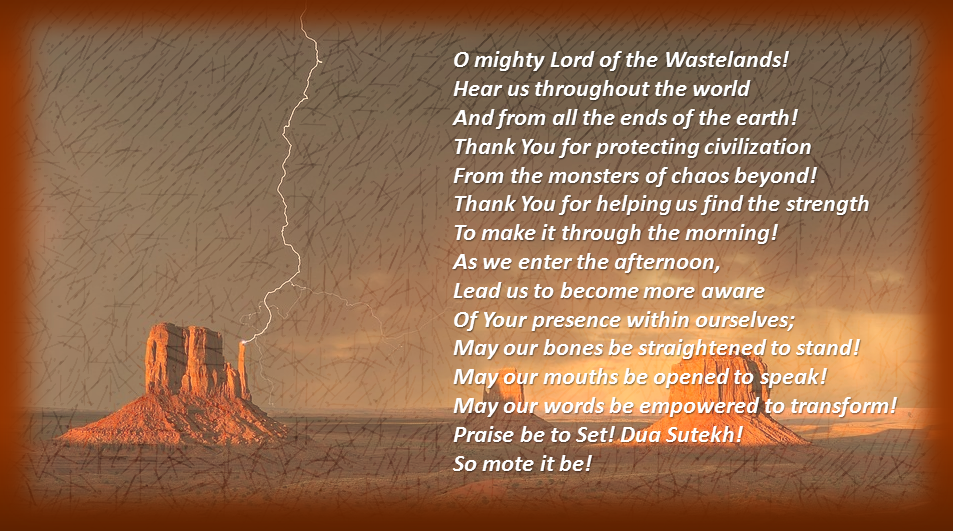
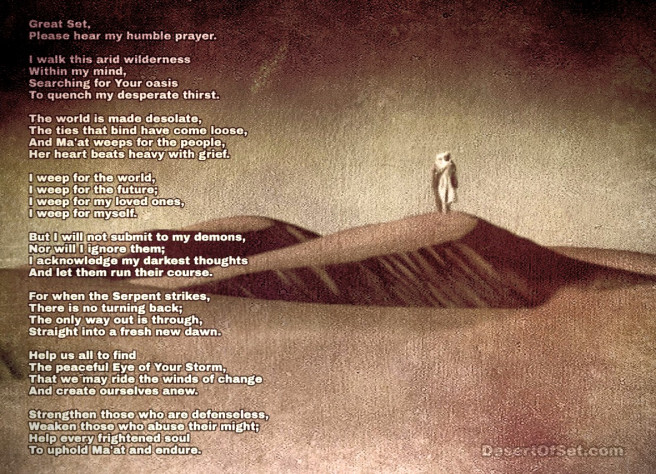
Not a proper sermon, but a series of assorted prayers and incantations to Set.
I offer these as examples for anyone who might be wondering how they too can pray to the Red Lord.





A Setian look at Ishiro Honda’s Gojira (1954) and how Big G parallels Set in Egyptian mythology.
Prior to the 1950s, creature features were dominated by gothic characters like vampires, werewolves, and Frankenstein’s monster. This all changed after the bombings of Hiroshima and Nagasaki. At the height of the Cold War, Count Dracula and the Wolf Man just didn’t seem that frightening anymore. Now people were worried about the effects of atomic radiation. Would it cause terrible mutations to plague the earth (like in 1954’s Them)? Would it awaken prehistoric monsters and drive them to seek revenge (like in 1953’s The Beast From 20,000 Fathoms)? Would it attract the attention of aliens who could easily conquer or even destroy us (like in 1951’s The Thing From Another World)? This was the age of the “atomic horrors,” when people wrestled with the dark side of science. In many of these films, the horrific events result from unethical scientists who overstep the boundaries between mortals and the Gods. By upsetting the cosmic balance in this way, these anti-heroes enable the Chaos Serpent to wreak havoc upon the earth in any number of forms. They are, in fact, the direct progeny of Dr. Victor Frankenstein, who had a much easier time adapting to the atomic era than either of his more supernatural colleagues.
The tropes of the “mad science” subgenre came into much clearer focus during the aftermath of World War II. It was absolutely horrible that the United States dropped not one but two atomic bombs on Japan during the war. But lest we forget, the Japanese committed some truly ghoulish atrocities as well. Kamikaze suicide flights; the attacks on Pearl Harbor, Malaya, Singapore, and Hong Kong; the systematic extermination of 30 million Filipinos, Malays, Vietnamese, Cambodians, Indonesians, and Burmese; the Nanking, Manila, and Kalagong massacres of civilians; the use of chemical weapons, biological warfare, and human experimentation on civilians and prisoners of war; the list goes on and on. The atrocities of Imperial Japan rival those of Nazi Germany, and for better or worse, the A-Bomb was the only thing that stopped them. And though Japan and the United States have been peaceful allies ever since, Japan continues to be haunted by the experience of being bombed with nuclear weapons.

When the U.S. started testing hydrogen bombs on the Marshall Islands during the 1950s, a Japanese fishing boat called The Lucky Dragon 5 was accidentally exposed to fallout from one of the exploded bombs. The entire crew was contaminated and suffered nausea, headaches, and bleeding gums. The chief radio operator, Aikichi Kuboyama, died in terrible agony and pain, praying that he would be the last victim of such terrible weaponry. Next thing anyone knew, the whole country of Japan was plunged into a panic, and that’s when the guys at Toho Studios decided to make a film about nuclear chaos as a living thing. Pulling together the creative team of director Ishiro Honda and special effects wizard Eiji Tsuburaya, it wasn’t long before Japanese movie screens were showcasing everyone’s favorite Iguanadon/Stegosaurus/Tyrannosaurus hybrid, the one and only Godzilla (or, as he is known in Japan, Gojira).
The original Godzilla, released in 1954, begins with a re-creation of the Lucky Dragon 5 incident, wherein the crew of a Japanese fishing boat notice that the ocean is glowing around them. Something roars from beneath the surface of the water, and the boat burns and sinks. A few of the men survive, but by the time the Japanese coast guard rescues them, the survivors are all suffering from radiation sickness. Not long after that, a fishing village on Odo Island is destroyed during a storm. A scientist named Kyohei Yamane (played by Takashi Shimura) leads a detailed investigation of the island, only to learn that it’s experiencing nuclear fallout. All the wells are poisoned, and the place is riddled with giant radioactive footprints. Then Godzilla shows up, and everyone gets a real good look at him. Lucky for them, Big G is just going for a walk, not seeking to cause any trouble, and he soon returns to the sea. Dr. Yamane and his team then return to Japan and report what they’ve found to the government, which promptly divides itself between those who think the story should be kept under wraps (and who are mostly men) and those who think they should be warning everybody in the country about what’s really happening (and who are mostly women).
Now Dr. Yamane has a lovely daughter named Emiko (played by Momoko Kochi), and she is caught in a tragic love triangle. She’s engaged to marry a scientist named Dr. Daisuke Serizawa (Akihiko Hirata), who is a World War II veteran. He was injured in the war, now wears an eyepatch, and seems to be alienated from everyone else around him. Unfortunately for Dr. Serizawa, Emiko has fallen in love with another dude named Hideto Ogata (Akira Takarada), a salvage ship captain who’s involved in the investigation of Godzilla. But before Emiko can break off their engagement, Serizawa shows her why he’s become so alienated from everybody. He takes her to the basement of his house and shows her a new invention he’s been working on. We can’t really see what the device does just yet, but whatever it is, it makes Emiko scream and faint. And when she leaves Serizawa’s house, it’s like she’s been lobotomized.
Meanwhile, the government begs Dr. Yamane for a way to kill Godzilla; but as Yamane himself points out, the creature has absorbed all that fallout from those H-Bomb tests at the Marshall Islands. In other words, Godzilla literally eats, pisses, and shits pure atomic energy; so just how the fuck is anyone supposed to kill the big guy? Furthermore, Dr. Yamane does not want Godzilla to die, but thinks the creature should be contained and studied instead. He figures there are probably all kinds of things scientists can learn from an animal that’s strong enough to survive a atomic blast. But the government doesn’t listen; it just tries to neutralize Godzilla before he becomes too much of a nuisance. This only pisses the monster off, of course, and Big G eventually hits the city of Tokyo for a night on the town.
When Godzilla attacks Tokyo for the first time, there’s absolutely nothing humorous or “cheesy” about it. We see men being set on fire and screaming for the mercy of death. We see a mother holding her children and crying, “We’ll be with your Daddy in heaven very soon, now!” We see news anchors offering their lives to keep reporting on Godzilla for any listeners who are still trying to escape the city. We see hospital doctors waving Geiger counters over newly orphaned children (while the kids scream for their dead parents), and we see schoolchildren singing prayers for all the people who’ve died. These scenes are made even more disturbing by the fact that they weren’t just “dreamed up” by a storyboard artist. They’re based on real events Ishiro Hondo personally witnessed during the aftermaths of Hiroshima and Nagasaki. So in a way, the 1954 Godzilla isn’t just a science fiction/horror film; it’s practically a documentary.
Some have argued that Godzilla is a work of anti-American propaganda; surely, having the giant lizard puke radioactive shit all over Tokyo is really America’s fault, right? But it seems to me that Big G is actually a self-critical symbol of Japanese ultraviolence turned against itself. The way Ishiro Honda frames the narrative, it feels almost as if he thought Japan deserved to be wiped off the face of the planet by an atomic fire-breathing dinosaur. Godzilla is like a judgment from the Gods, sent to humble Japan for every horrific war crime it ever committed as an Axis Power. And as the film eventually reveals, the only way to defeat the monster is by creating something even worse than what awakened him. That’s when Emiko finally reveals what Dr. Serizawa’s been hiding in his basement all this time.

Akihiko Hirata as Dr. Daisuke Serizawa.
Serizawa fought on the wrong side of an immoral war. He has directly experienced true evil more than any other character in the entire film. Perhaps he has even committed a few wartime atrocities of his own. Horrified by what probably he saw (and did) during the war, he is now a devout pacifist; yet he has invented something called “the Oxygen Destroyer,” completely by accident. This device somehow removes all oxygen from the body, instantly skeletonizing its victims; and after witnessing the holocaust in Tokyo, Emiko and Ogata try to convince Serizawa to use this new weapon against the beast. But Serizawa refuses; he’s terrified that if his Oxygen Destroyer is ever discovered, corrupt political forces from around the world will conspire to use it as a new weapon of war. What if they somehow coerce or trick him into creating more of these hellish devices? And if nuclear weapons have given us Godzilla, what terrible thing will the Oxygen Destroyer bring in its wake? That’s when Ogata says the most chilling line in the entire movie. He admits that Serizawa’s fear might become a reality; then he points out that Godzilla is reality.
Serizawa agrees to use the Oxygen Destroyer, but he destroys all of his research first to prevent anyone from ever building another one. Then he is joined by Emiko, Ogata, Yamane, and the entire Japanese navy out at sea. They find where Godzilla is currently located, and Ogata and Serizawa descend together to the ocean floor. There they find Godzilla resting, at peace with himself and his surroundings. This is the most disturbing part of the film for me personally, because it reminds us that Godzilla is just an animal, another innocent victim of World War II. After Ogata returns to the surface, Serizawa activates the Oxygen Destroyer; then he decides to stay with Godzilla. He gives his life to take the secret of his invention to his grave, and I sense he also thinks it would be unjust for Godzilla to die alone. When Godzilla and Serizawa are skeletonized together, it never fails to make me weep profusely. Godzilla is like Set in His role as the slayer of Osiris; he’s this frightening destructive force that’s been pushed too far, and which has finally gone berserk. But Serizawa is like Set as the Champion of Ra; he is capable of causing great destruction, yet he’s a good guy who wants to protect civilization from chaos. In dying together (during their first and only meeting), these two versions of Set come together as one. Normally in this kind of movie, it’s a “good” thing when someone figures out a way to defeat the monster; but here, the creature’s death is treated as a tragedy and a potential starting point for even more violence and horror to come.

“Awwww! Who’s a good little atomic dinosaur?”
Ishiro Honda’s Godzilla was so tremendously successful in Japan that an American film company called Jewell Enterprises bought the international rights for the movie in 1956. Then they adapted the film for an English-speaking audience, and this went far beyond just dubbing the film with American voice actors. Due to the sizable rift between the American and Japanese styles of storytelling, Jewell totally restructured Godzilla to make it more accessible to the average American moviegoer. They filmed entirely new scenes with Raymond Burr, who played a new character named Steve Martin (not to be confused with the comedian). This character was then edited into the film (along with some Japanese-American actor doubles), and he was made a news reporter so he would have an excellent excuse for asking so many questions of the Japanese characters. This would give American audiences a character with whom they could identify, and to whom important plot elements could be explained.
Truth be told, most Americans would never have seen Godzilla if Jewell Enterprises hadn’t re-tooled the film for its own purposes in this way. In 1956, World War II was still fresh on everyone’s minds, and Americans were still racist as fuck against Japanese people. While the original Toho film isn’t “anti-American” at all, the folks at Jewell worried that some viewers might interpret it that way. They wanted the audience to identify with the Japanese characters as much as possible, not react to them with hostility. Plus, adding Raymond Burr to the mix does absolutely nothing to brighten or cheapen the sequence in which Godzilla destroys Tokyo; the entire segment is still just as dark and depressing as it is in the Japanese cut. If it hadn’t been for Jewell’s re-packaging of the film, no one outside Japan would even know about Godzilla today. It’s definitely not above criticism, and it’s certainly inferior to the original Japanese cut; but Jewell’s Godzilla: King of the Monsters (the American title) still deserves some respect for what it’s given us. (Besides, you’re missing out on the full Godzilla experience if you only watch one version of the film or the other.)
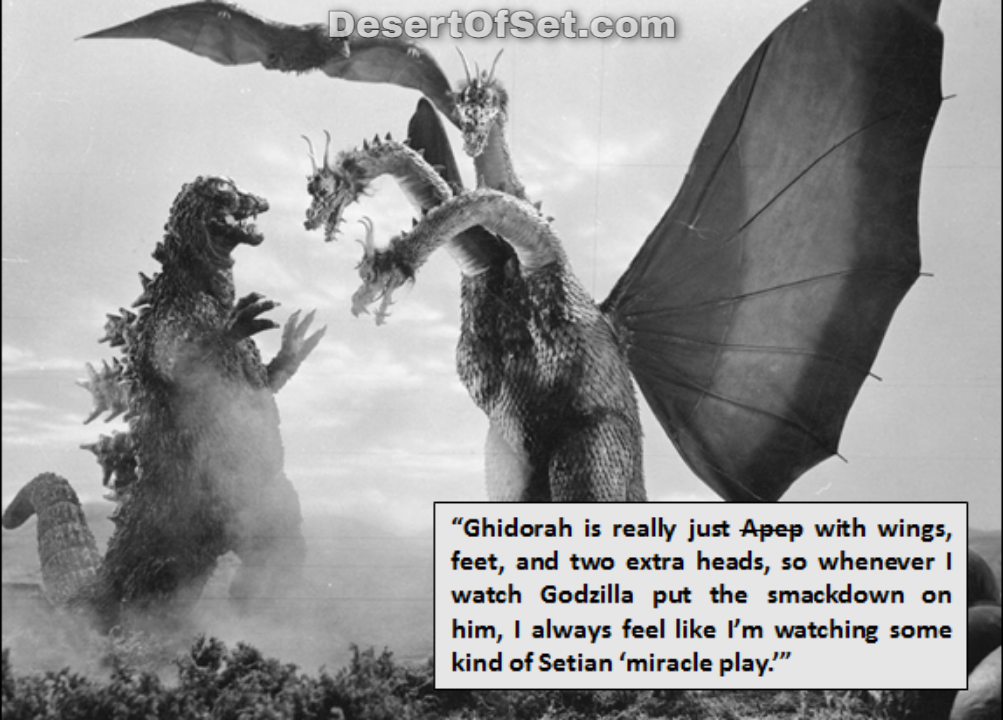
At the end of Godzilla, Dr. Yamane predicts that if people don’t end the nuclear arms race, another Godzilla might eventually appear to punish the world again. He was proven correct less than a year later when the much less impressive Godzilla Raids Again was released in 1955. Since then, Godzilla has appeared in over 30 different films. One of my personal favorites is Ghidorah: The Three-Headed Monster (1964), which is when Godzilla becomes a defender of the earth rather than its potential destroyer. A three-headed space dragon named King Ghidorah shows up and starts burning everything to the ground with his yellow lightning breath. Then Mothra, a giant caterpillar Goddess, appears and tries to get Godzilla and Rodan (a giant pterosaur) to help her kick Ghidorah’s ass. This leads to one of the most endearing scenes in any Godzilla film ever, where the three beasties actually speak to each other (while being translated for the human audience by Mothra’s twin fairies). Godzilla and Rodan say they don’t give a shit what happens to humankind; they just want to be left alone. So Mothra goes to face Ghidorah herself, only to have her ass handed to her; and when Godzilla and Rodan see that, they get royally pissed and start beating Ghidorah like he owes them money. It’s one of the greatest monster throwdowns ever made!
This sequence is so damn important and inspirational to me, I’m going to throw up a video review someone else has made about it, just so you can see some clips.
https://www.youtube.com/embed/7iXU8LYo-dE
From Michael D.’s “Depression & Anti-Bullying Awareness” web series on YouTube.
Godzilla’s evolution from apocalyptic monster to child-friendly superhero is a fascinating discussion in and of itself. Recall that in the original 1954 film, Big G is a lot like Set as the slayer of Osiris. The story goes that once His rivalry with Osiris was resolved, Set was “reigned in” by the rest of the Gods to save them from Apep, the Chaos Serpent. In much the same way, Godzilla starts out in the first movie as an innocent freak of nature who goes apeshit and almost nukes the entire planet; then, in Ghidorah, the world realizes it needs Godzilla to defend us from even worse monsters that just want to eat our planet. Ghidorah is really just Apep with wings, feet, and two extra heads, so whenever I watch Godzilla put the smackdown on him, I always feel like I’m watching some kind of Setian “miracle play” (with Godzilla and Rodan as a combative Set and Horus, respectively, and with Mothra as Thoth the mediator).
Since Godzilla’s rise to fame, Hollywood has tried adapting him for American audiences a number of times. In 1998, Dean Devlin and Roland Emmerich produced that terrible remake starring Matthew Broderick. It’s odd that they even chose to name the film Godzilla, considering that it’s actually a remake (or perhaps a parody) of The Beast From 20,000 Fathoms (1953). Any hardboiled Godzilla fan will tell you the 1998 film stinks and should be ignored at all costs; but in 2014, director Gareth Edwards tried adapting Big G for the West once again. And while audience reactions have been very mixed, I was quite pleased with the result myself. It is surprisingly not a remake of the 1954 original, but more of an homage to all the sequels that make Godzilla the hero. Michael Dougherty’s 2019 follow-up, Godzilla: King of the Monsters (named after the Raymond Burr re-edit from 1956), was even better in my opinion, since it’s more or less a remake of Ghidorah: The Three-Headed Monster (complete with Mothra and Rodan teaming up with Godzilla). There’s even a scene that pays homage to the Oxygen Destroyer sequence from 1954, and it makes me cry like a baby whenever I see it. These newer Godzilla flicks might not be to everyone’s liking, but I wholeheartedly approve, and I can’t wait to see more of them.

Yippee skippee!!
