
Tag: Music
Set Is Now
Set is Now, my first full-length album to feature lyrics, was released in June 2021 and available at gbmarian.bandcamp.com, Amazon, iTunes, Spotify, and other digital music platforms.
Pazuzu, The Exorcist (1973), and Sorcerer (1977)
Pazuzu is most well-known today thanks to a horror movie about demonic possession; yet He is evoked much more faithfully in a completely different film by the same director.
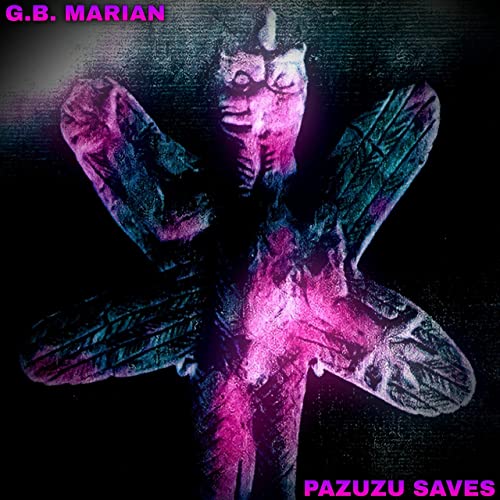
So far, 2021 has not been much easier than 2020. But if there is one amazing thing for which I will always remember this year moving forward, it’s the fact that I met Pazuzu and He helped me heal myself some when I needed it very badly.
I have known about Pazuzu since I was a teenager, but my understanding of His lore and symbolism was severely inhibited by popular culture at the time. I have no memory of ever reaching out to Him at any point in prayer. I had considered writing a song about Him sometime in 2020; but I eventually forgot about this idea, and I certainly wasn’t planning to write an entire album devoted to Him. When 2021 began, I experienced a near complete mental break and did not think I would ever produce anything again for a while. But then in April, I suddenly felt driven by Pazuzu to write and record 10 songs for Him in less than one week.
And by the time it was over, I felt….something like myself again. Better. Healthier. Not exactly what you’d expect from a figure who is most commonly portrayed as a horror movie villain, is it?
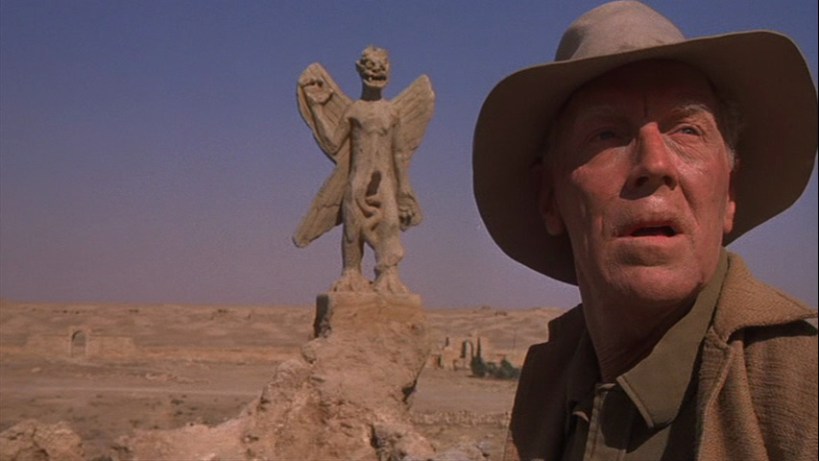
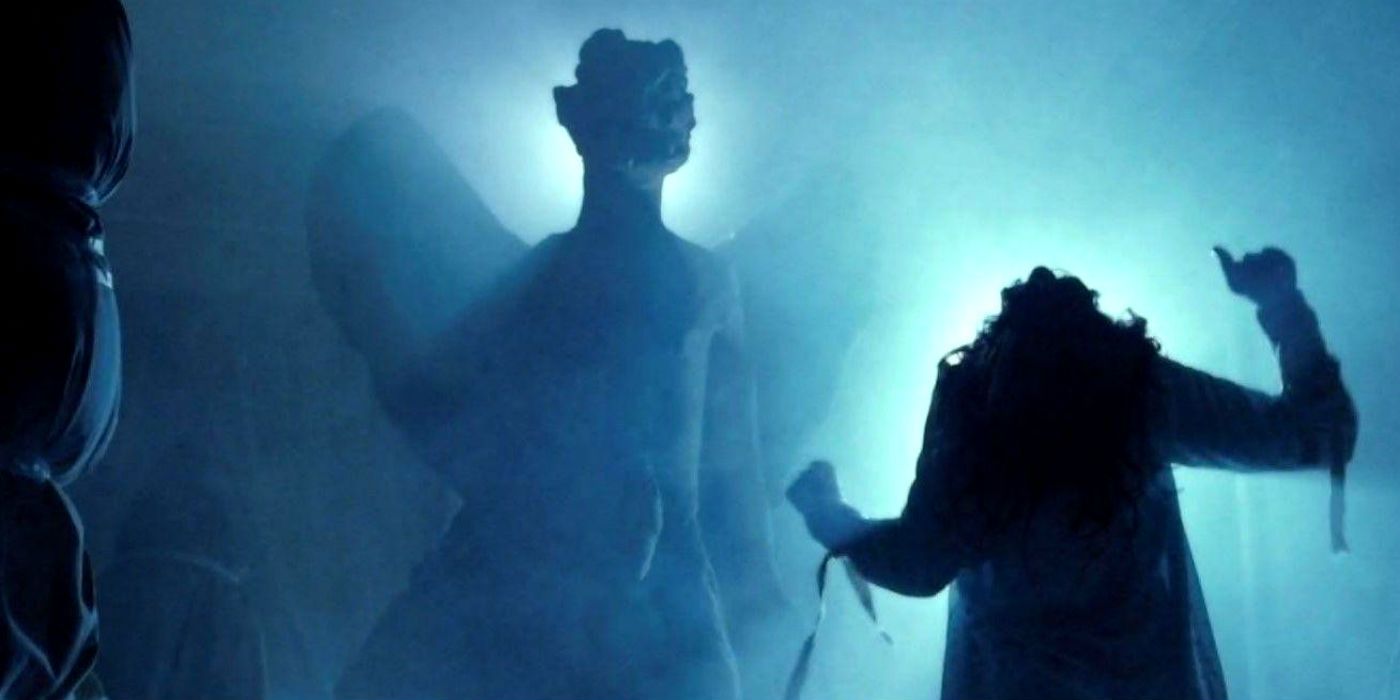
Most people who are familiar with Pazuzu these days are first introduced to Him by William Peter Blatty’s The Exorcist (1973), which was directed by William Friedkin. Blatty is another one of those self-proclaimed “experts” in demonology from the Satanic Panic era, and his novel The Exorcist was inspired by a “real life” exorcism he investigated. The story features Pazuzu as its antagonist, an evil demon that possesses an adolescent girl and drives her to commit all manner of vile obscenities. The film version is one of the most faithful screen adaptations of a novel I have ever seen, and great pains were taken to design a giant Pazuzu statue that is more or less true to ancient Mesopotamian motifs. As a result, it could be said that Pazuzu Himself was actually cast in the film, if only for a few brief cameos.
The Exorcist was a real game changer, and if you need any convincing, just look at how horror movie soundtracks changed after 1973. Prior to The Exorcist, most horror films featured romantic orchestral scores. The themes and melodies might crescendo and increase in tempo at certain points, but they still have harmony, being fairly easy on the ears. William Friedkin originally enlisted the composer Lalo Schifrin to score The Exorcist, but was unsatisfied with everything Schifrin offered and eventually fired him. Friedkin ended up using all pre-recorded music for the film, music that was progressive and experimental for the time.
Most everyone knows the Exorcist “theme song” is actually just a brief clip from Mike Oldfield’s Tubular Bells (1973); but the film also includes selections from Krzyzstof Penderecki’s Polymorphia (1962) and George Crumb’s Black Angels (1970). And while these latter pieces are technically considered “classical,” they belong to that lovely postmodernist category where it’s all orchestral drones and ambience. Shit like this had seldom been used in any films before, and it sounds terrifying as hell, so it didn’t exactly get much radio play either. But it speaks volumes that nearly every horror movie made since 1973 has used much the same sound design template. This is most obviously exemplified by Stanley Kubrick’s The Shining (1980), which includes quite a bit of Penderecki in its soundtrack. But you can also hear this kind of influence in the music of Goblin (e.g., Suspiria, 1977), John Carpenter (Halloween, 1978), Christopher Young (Hellraiser, 1987), and countless others.
(An interesting aside: Ennio Morricone scored Exorcist II: The Heretic in 1977, and Morricone was already known for incorporating some postmodernist influences into his work; consider his scores for Sergio Leone’s Westerns from the 1960’s, for example. Meanwhile, Lalo Schifrin was recruited for The Amityville Horror in 1979, and he repurposed the score he had previously composed for The Exorcist in 1973. There is most definitely a solid Penderecki influence in the finished product, with all those shrill discordant strings.)
The Exorcist is a fantastic film, and it is one of my favorites. Yet there are certain things about it that annoy me. I would enjoy it much better if the story didn’t use a Pagan God for its villain. I understand the movie is really just a giant commercial for the Catholic Church; but there was no need to pick on a random God from another religion to make this point. Still, I probably wouldn’t even know about Pazuzu if I had never seen this film, and the same is likely true of many who walk with Him today. Perhaps in this sense, the ulterior purpose of Blatty’s novel has backfired, providing Pazuzu with an unexpected gateway to our hearts.
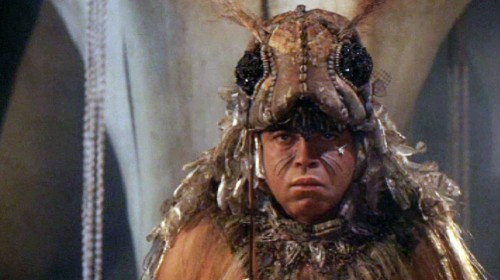
Naturally, the success of The Exorcist has led to several sequels and even a recent television series. The absolute worst of these continuations—Exorcist II: The Heretic (1977)—is simultaneously the most fascinating. Directed by the ever-pretentious John Boorman (oh Gods please rescue me from ever seeing Zardoz again), The Heretic is really just an excuse for the male gaze to linger on Linda Blair’s blossoming physique, and for Richard Burton to stumble through the script while drunk off his ass. For a more articulate synopsis of this bizarre piece-o-shit movie, I highly recommend my friend ChillerPop’s magnificent review thereof. For our purposes here, the important thing is that Pazuzu is still the villain, but He is not just the “fallen angel” He is claimed to be in the first movie. He is more like a force of nature that can actually be tamed or domesticated by human beings via magic and/or science. The Heretic appears to suggest that the Catholic Church is powerless to stop a force like Pazuzu…and this is a step in the right direction, at least.
Pazuzu is not a fallen angel, but an Assyro-Babylonian God. He is indeed described as the “King of the wind demons” in His original lore; but this means something very different in context. It is really referring to elemental nature spirits, and not to any demons from Christian mythology. Pazuzu is the “King” of these spirits because the rest are all afraid of Him, and they flee if He gets angry. This is exactly why the ancients invoked Him to protect their women and children from other spirits like Lamashtu, which thrive on harming and murdering both. Writers often describe this practice as “using evil against evil” (a line that is even used in the original Exorcist), but I call bullshit. The God of the Bible seems plenty wrathful and violent himself, but people don’t generally think of Christian exorcisms as “using evil against evil.” There really isn’t much difference in principle here, save that Pazuzu is a lesser-known polytheist deity. And as someone who has survived child abuse, I think it really says something that Pazuzu was thought to be so personally invested in the safety of human mothers and babies. That sounds like the complete opposite of “evil,” if you ask me.

None of the Exorcist films do any justice to Pazuzu; but there is another film I have seen that seems to resonate with Him somehow. William Friedkin’s next project after The Exorcist was a movie called Sorcerer from 1977. Despite its supernatural-sounding title, Sorcerer is not a horror film, but more of a bizarre jungle adventure. It’s about these four nefarious men from different countries (one of whom is played by Roy Scheider) who are hiding from mobsters and the law in some unnamed South American country. When a nearby oil rig explodes, killing countless workers, the company owners decide to stop the fire with some nitroglycerin—but the closest batch is damaged, extremely old, and highly volatile. So they enlist the four main characters to haul that nitro through the mountains and rainforests in these really big trucks. What follows is one of the most engrossing and suspenseful quests I’ve ever seen in any film, for just one false move could blow all these poor sweaty bastards straight to hell!

Despite its lack of any supernatural content, there is a powerful mystical edge to Sorcerer. William Friedkin deliberately chose the title as a reference to The Exorcist, stating that the titular “Sorcerer” is actually Fate itself. The trucks that are used for transporting the nitro have demonic-looking “faces,” with their headlights and grills resembling eyes and mouths full of teeth. At numerous points, the protagonists drive past stone figures of ancient Gods and monsters from South American folklore. There is one sequence when they must drive across an extremely flimsy bridge, and we can hear the sound of wailing demons in the wind. One of the trucks even has Pazuzu clearly drawn in chalk on its hood—as if He were being asked to watch over these men and their deadly burden!
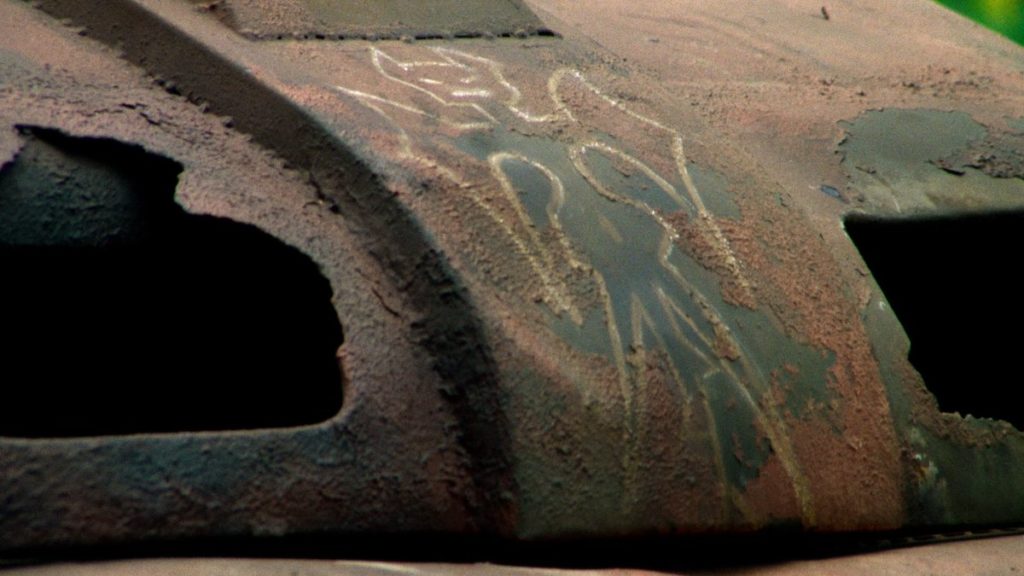
And then there’s that magnificent electronic music score by Tangerine Dream, which sounds like it belongs in a fucking horror movie. The band composed and produced all of this music without seeing any video footage from the film at all. They delivered even more music than William Friedkin could use, and he was so delighted with their work that he wished he could go back in time and have them score The Exorcist for him. Remember, Friedkin had trouble finding the unique sounds he wanted for that film. Mike Oldfield’s Tubular Bells was an excellent choice for the theme, but can you imagine The Exorcist with music by Tangerine Dream instead? Listen to the Sorcerer soundtrack, and you will have an idea of what such a score would have sounded like. (The very first track, “Main Title,” is especially terrifying to hear in the dark.)
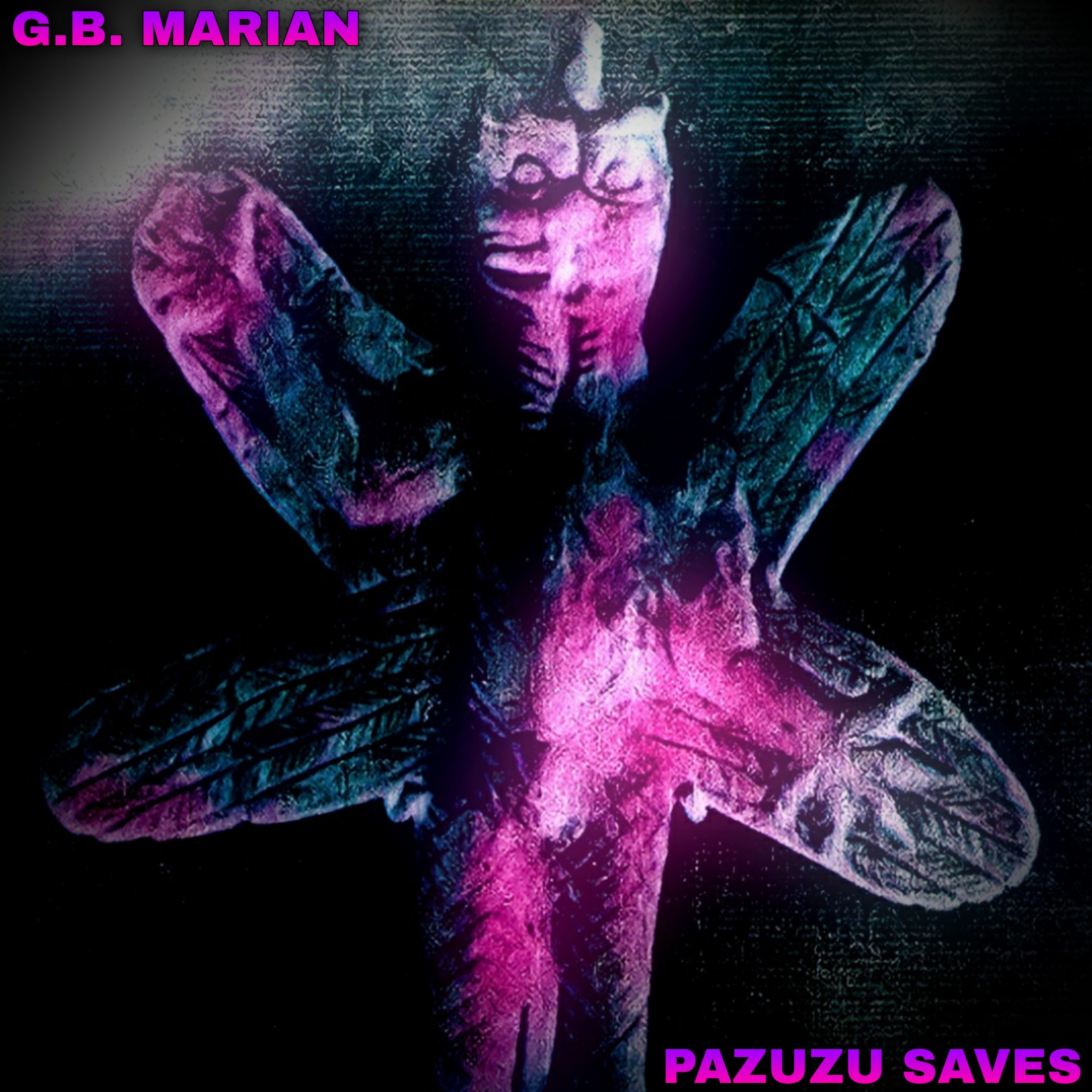
The Sorcerer soundtrack is one of my all-time favorite albums; I first discovered it as a 7th grader in 1995, and I am sure its influence can be found in my latest album, Pazuzu Saves (2021). This was actually unintentional; I wasn’t even thinking about this movie when I first composed the music. But something moved me to re-watch the film a few days after releasing Pazuzu Saves, and I was blown away by all the incidental references to this God (which I had never noticed before). Then I got to thinking about how this movie is all about these roughnecks ascending treacherous mountains to rescue the impoverished South American village they have learned to call home. The story of Pazuzu Saves is partially inspired by tales of the God flying up a mountain to break the wings of all the wind demons that menace humankind. It is difficult for me at this point NOT to watch Sorcerer and draw some kind of parallel to this theme, even though the film is not intended to convey any kind of religious message. Perhaps Pazuzu appreciated being cast in The Exorcist so much, He returned the favor by acting as William Friedkin’s muse for Sorcerer. The latter film certainly feels more in line with what Pazuzu is really all about, at least in my opinion.

Pazuzu Saves
Forget what you think you “learned” from The Exorcist (1973) about Pazuzu, and join this mighty deity as He quests against both human and spiritual cruelty.
The last several months of my life have been quite painful, and I imagine I am not alone in this respect. Yet the Gods are merciful and good, and one of them in particular saw fit to help me just recently, even though I have never specifically reached out to Him before.
Pazuzu is another ancient God who, like Set, has an extremely bad reputation today, thanks largely to William Peter Blatty and his novel, The Exorcist (i.e., the source material for the 1973 movie). It is interesting that Blatty would choose an explicitly Pagan deity for his novel’s antagonist, rather than one of the fallen angels from his own religious lore.
Far from possessing little girls and making them vomit pea soup or spider-walk up and down staircases, Pazuzu was commonly invoked in ancient times to protect pregnant mothers and newborn children from horrific monsters, most especially the night demon Lamashtu. Sure, He’s creepy and He’s kooky (again, much like Set), and He ain’t much for sunshine and rainbows. But no matter how “evil” people think Pazuzu might be, He clearly hates bullies who harm the defenseless; and though the identity of His mother in Assyro-Babylonian mythology seems unclear, I get a strong feeling that Pazuzu loves His mother very much indeed.
Last week, Pazuzu “possessed” me to record a new album in His honor (ha ha). I could barely sleep or even take any breaks while I put this puppy together. It HAD to be finished last week for some reason; imagine my surprise when I suddenly remembered that Friday was Walpurgis Night!
Anyway, this is my attempt at setting the record straight about Pazuzu, and at providing something good and helpful for His worshipers who live today. Working on this has been an incredibly healing experience; I pray that Pazuzu enjoys it, and that others will too.

Midnight Mass
A Setian midnight mass performed and recorded for an imaginary AM radio station.
Good evening.
For tonight’s episode of “In the Desert of Set,” we are brought to you live from the First Typhonian Anabaptist Church of Grover’s Mill, Pennsylvania by Hem Sutekh Radio, WZLP AM 770.
We now give you Reverend G.B. Marian, Priest of Set in the LV-426 Tradition, who will now lead tonight’s Midnight Mass.
Happy Holidays from LV-426!
His Nocturnal Majesty
My soundtrack for a Setian apocalypse.
2020 has been a year of horrors. Apart from the pandemic and watching the world burn and living beneath a stumbling demented child-king, I have essentially lost my mother, even though she is still alive. There have been so many times this year that I have wanted to just give up and die. But in searching for ways to cope with all the madness, I have at least been able to channel my immense grief into the work I do. Creating the In the Desert of Set podcast, the Summer’s End album, and other artistic projects has been very therapeutic to me, and I hope these works prove helpful to others too.
The week of the 2020 American presidential election was so taxing on my nerves and emotional state that I couldn’t eat, sleep, or concentrate on anything much; I couldn’t even focus on writing any sermons. All I could do was try to capture the fear, despair, and rage inside me in music. In doing so, I have surprisingly put together a new full-length album just one month and some change after releasing Summer’s End.
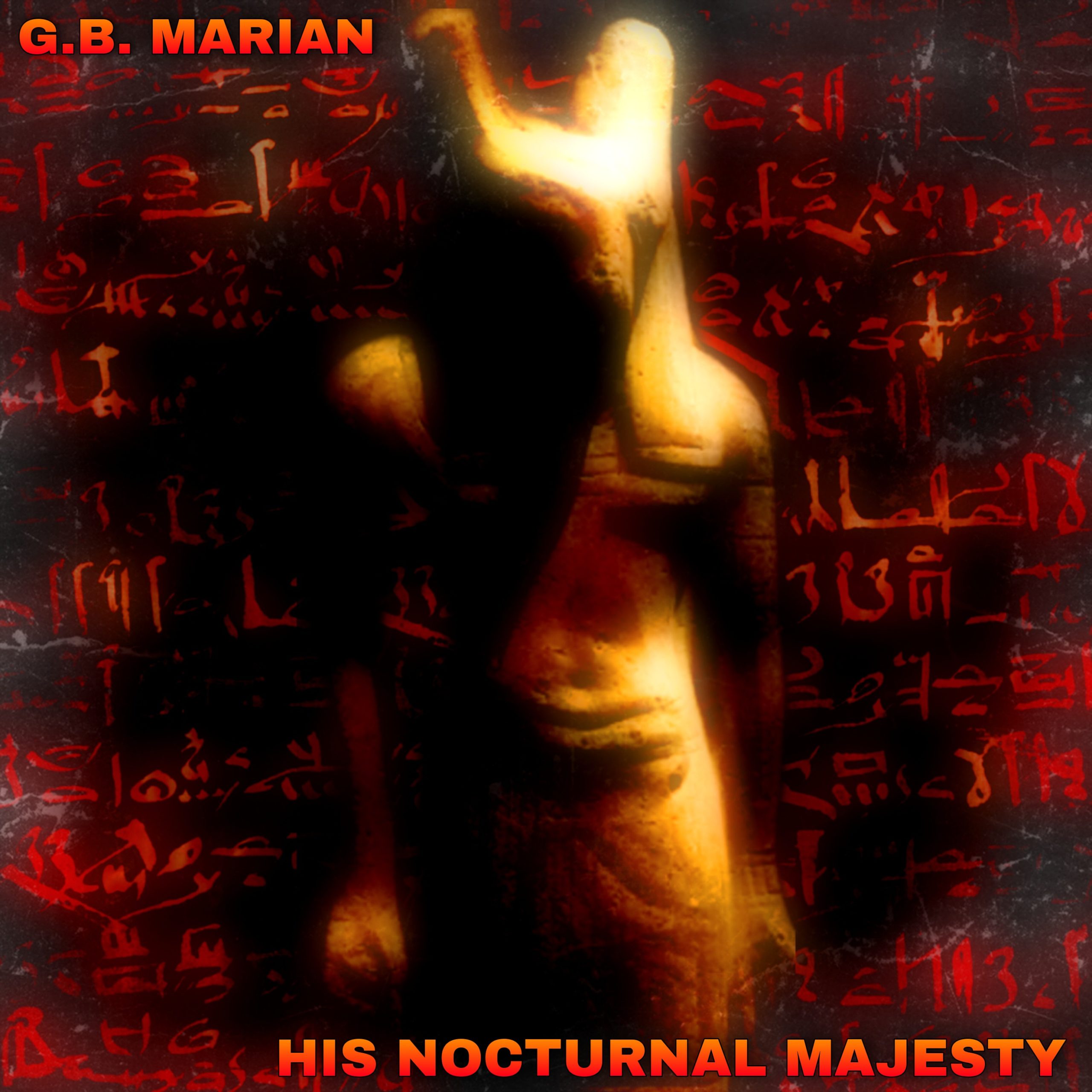
This work, His Nocturnal Majesty, is something like a soundtrack to a movie that doesn’t exist. It is very much inspired by two of my favorite films, The Final Conflict (1981) and John Carpenter’s Prince of Darkness (1987), which both deal with the apocalypse and ultimate evil in ways that subvert organized religious dogmas. (In The Final Conflict, the Antichrist is defeated by a godless feminist and single mother; in Prince of Darkness, Lucifer turns out to be the Supreme Being!) I’ve always wanted to see something of this unique subgenre that takes its cues from Kemetic rather than biblical sources. I have tried developing this premise into some kind of novel, comic, movie or TV show for decades, but I can never seem to figure out just how I want the story to go, or even who the characters are.
All I know is, I had a terrible nightmare back in the 2000s that I have never forgotten. In this dream, the world had grown so irredeemably evil and corroded that the very fabric of reality started to unravel, and the Chaos Serpent was finally able to slither into this world and devour us all PHYSICALLY. It appeared in the sky, big enough to blot out the sun and the stars, just a gaping giant mouth surrounding the globe, ready to swallow and digest us into its putrid gut. It was suddenly nighttime all over the world at the same time, and people and animals were all losing their minds and eating each other in the streets. But just when all seemed lost, a big beefy red hand came out of nowhere and knocked the Serpent right back into hell. And somehow, this battle between Set and Apep above our atmosphere was being magically reflected in a battle here on earth between some courageous heroes and these profoundly evil terrorists who actually wanted the world to be eaten.
I awoke from this crazy dream scared out of my mind—I will never forget seeing the sky turn into a MOUTH like that—and I knew I had to do something with it. Like I said, I struggled to develop it into any kind of coherent story with interesting characters. I can’t even draw the things I imagine; my drawing style is a little too cute and cartoony-looking for me to stomach its inclusion in a concept as serious and heavy as this. But while I was sitting there screaming in silence during the 2020 election, I kept thinking about that crazy nightmare, and it hit me rather suddenly: I just released Summer’s End, which is kind of like my soundtrack for a Halloween-themed movie that doesn’t exist. Why not turn this other movie that doesn’t exist into an album too? And next thing I knew, I had 50 minutes of new music ready to release.
My first plan was to sit on this material and wait to release it till next year, in case I wanted to make any changes. Something in my brain said, “You just released an album, wait till next year to release the next one.” But I have listened to this thing over and over again non-stop all week, and I’m pretty sure it’s finished now; His Nocturnal Majesty is ready for the public. I also get the sense that Set would like it very much if I released this album so people can enjoy it now. After all, why wait? Maybe hearing this stuff might really help someone. Well I don’t know who you are, but here you go; I hope you enjoy this latest batch of Kemetic Setian darkwave goodness!