My second full-length album with vocals, with hymns to various Middle and Near Eastern divinities.
This is a collection of Setian hymns to various Middle and Near Eastern divinities of interest, including the cow goddess Hathor, the jackal god Anubis, and the peacock god Tawusê Melek.
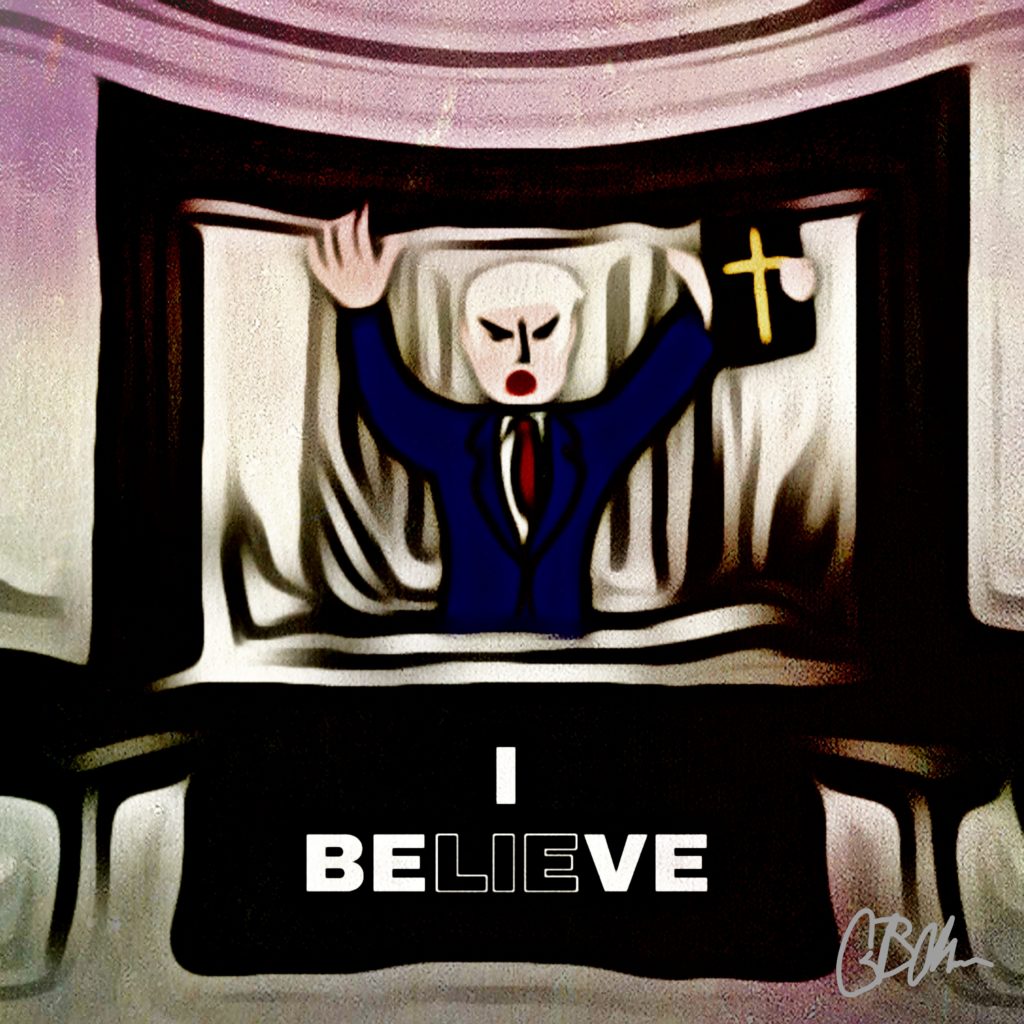
I believe…in me
I believe…in you
I believe…in us
I believe…in them
The Tadpole’s Prayer (Heqet)
Praise be to Heqet
O sprouter of seed
Mother of mothers
Whose guidance we need
Amphibious Goddess
Tender midwife
Grant every child
A full happy life
Such a treacherous path
From Duat to Earth
But our Lady Heqet
Assures a safe birth
Peacock King (Tawusê Melek)
All hail the Peacock King
The first of seven angels, sing
Custodian of all this world
The Earth is Your entrusted pearl
You refused to worship man
Devoted to Your Maker’s plan
And though You are by men maligned
You rule this cosmos for all time
O guiding light of Sheikh Adi
Your solar feathers flying free
Help us all to understand
This wayward beast, the ape called man
Turn to the Sun
Pray to the Son
Naqada
[Instrumental]
Lady of the Sycamore Tree
Lady of life
Queen of the sky
Milk cow of heaven
Goddess on high
When my time is done
Help me reach the Sun
Please welcome me
To Your Sycamore Tree
Oooh
What more can one ask for?
Oooh
Dining with Hathor
Syzygy
One dark night, a friend and me
We met alone, just him and me
We called upon Him, that we might see
And learn our true identities
Candles aglow, all black and red
Sacred incantations said
Image of the God with equine head
Hymns to the One all serpents dread
I AM THE HURRICANE INSIDE YOU
YOU ARE THE COMPASSION IN ME
WE’RE HEAVY METAL THUNDER
WE ARE IN SYZYGY
(Chanting: Dua Set! Dua Set!)
Many hours later, weary from prayer
We blew out the candles and got some air
We heard sound of things that were not there
And knew it was true, we were under His care
Years gone by, and we’re still here
Despite all the haters who reacted in fear
Through thick and thin, we persevere
We still walk with Set, we still hold Him dear
Imhotep
[Instrumental]
Theme For a Different Jackal
When our bodies die
There is no goodbye
Souls and spirits fly
On the Other Side
Dark terrors abound
But there is a Hound
Who is always there
To help us take care
When I was a child
Small meek and mild
You captured my heart
And that was the start
Set Happens
It really doesn’t matter
What other religions think
Whether they accept Him or not
Set Happens
My first full-length album with vocals, inspired by my experiences as a Setian teenager in Satanic Panic America.
Songs of faith and devotion to the Egyptian god Set, the Egyptian goddess Taweret, and the Akkadian goddess Ishtar. This album is my first venture into songwriting with lyrics (with the exception of “Mama Riverhorse [Taweret],” which is an instrumental).
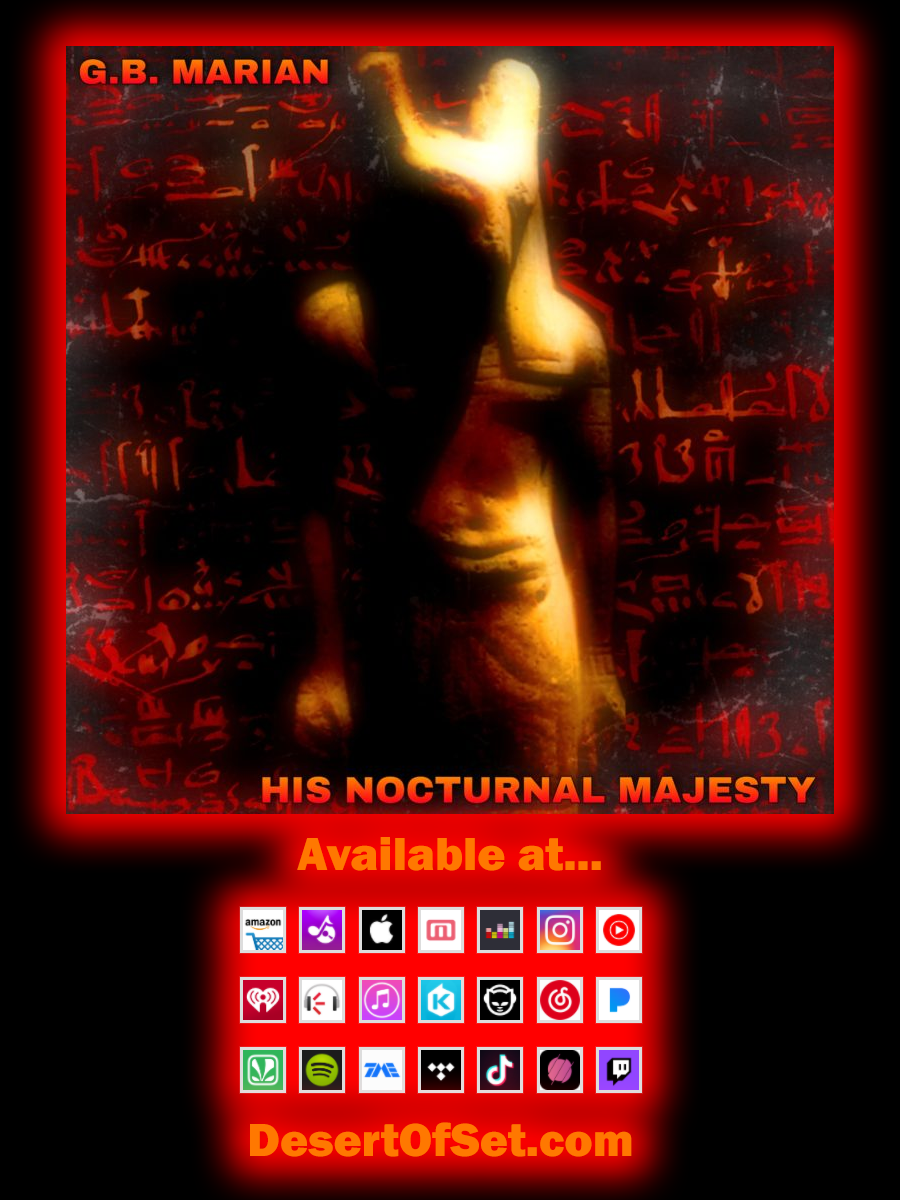
His Nocturnal Majesty and Our Lady of Thrones both hinge on a central apocalyptic event that occurs sometime in the not-too-distant future, and which I first envisioned when I was in high school back in the 1990s.
The key to understanding this apocalyptic event is Ma’at, the Egyptian concept of truth, justice, and healthy reciprocal relationships between sentient beings and the rest of nature.
When Ma’at is upheld, human civilization, the forces of nature, and even Duat (the Spirit World or Other Side) are all made to flourish. But whenever Ma’at is forsaken, it makes a crack in the very fabric of Creation itself. And there are all kinds of nasty things out there in the nothingness outside Creation—the myriad Powers of Isfet—that would like nothing more than to rip our multiverse apart from within.
Chief among these malevolent forces is an entity so utterly toxic and poisonous, even lesser Powers of Isfet are afraid to speak its true name. For the purposes of my narratives at least, this ancient enemy of all gods and creatures is simply called the Ungod.
Each of the Netjeru or Egyptian gods and goddesses plays various roles in upholding Ma’at and repelling the Ungod at a higher, cosmic level of existence. This prevents the foul thing and its hordes from simply swallowing the entire multiverse whenever they want.
But part of Ma’at requires appreciating the autonomy of all sentient beings, and human mortals are sentient. This means the Netjeru can’t just come down here and uphold Ma’at for us in all of our affairs. We are responsible for upholding Ma’at in our own dealings with each other, our environment, and any other sentient species we might eventually encounter. And so long as there are enough people upholding Ma’at across the world, the Powers of Isfet can never just seep into our area of the multiverse…
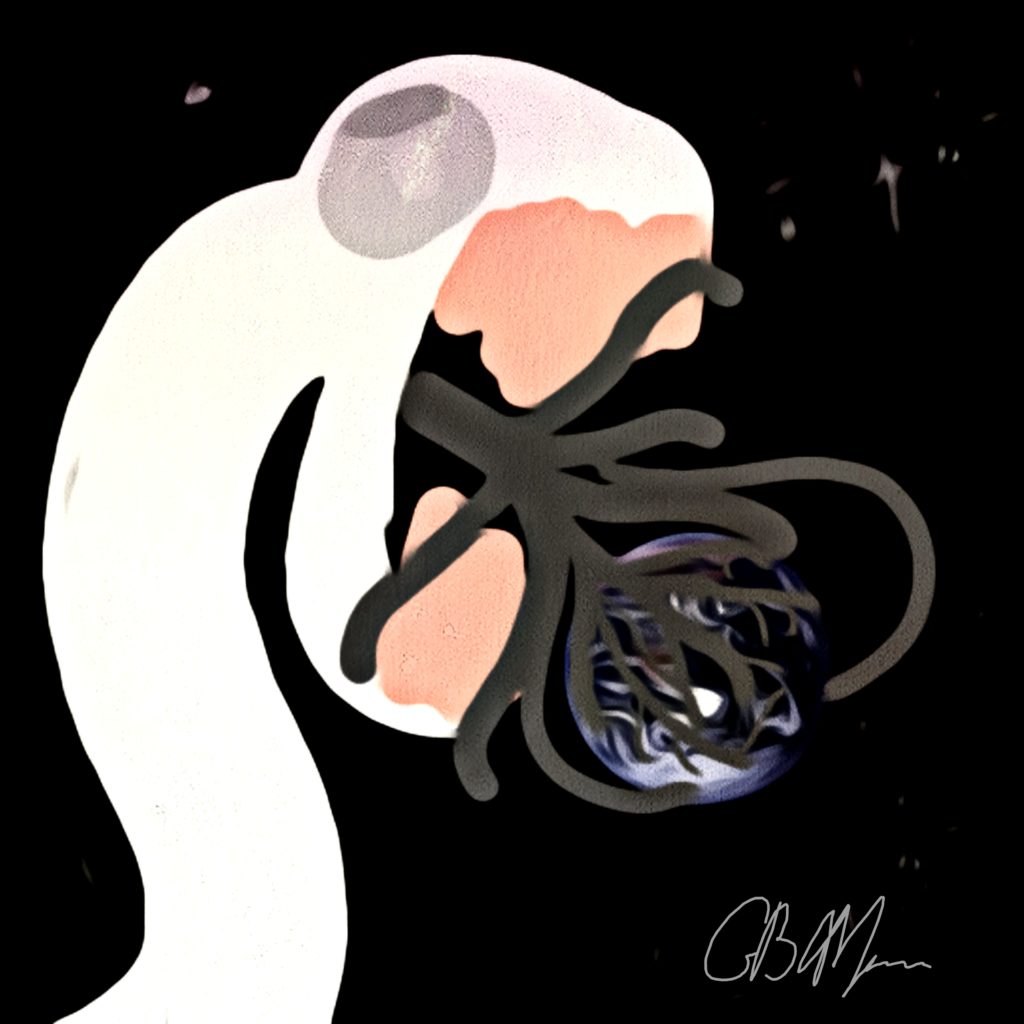
The flip side to this, of course, is that when human beings finally become too rotten and despicable in general, all bets are off. The Ungod will slither through the cracks we have made in Ma’at and un-create us (physically, mentally, spiritually, etc.), doing so as slowly and maliciously as it can. The gods will be unable to save us, as well, for we will have chosen this fate for ourselves by our own catastrophic actions. And this is exactly what I saw in my nightmares as a teen. One day, when it seems there’s just no more hope for humanity at all, the Ungod physically appears to everyone as a giant mouth in the sky. Its massive tongues reach down to devour all the people below. And the damned thing is in absolutely no hurry to eat us all at once, either; it prefers to play with its food first, since we taste much better when we are insane with fear.
I’m pretty sure I dreamed all this up from reading the Lament of Hermes, a Greco-Egyptian “prophecy” that foretells of the world falling apart due to a complete absence of Ma’at among humanity. But in my version of events at least, we still have a chance of reversing all this bullshit and exorcising the Ungod. There are still handfuls of good people across the earth who try to uphold Ma’at, even after the monster breaks loose and slithers into our atmosphere. These include the protagonists of both His Nocturnal Majesty and Our Lady of Thrones, who fight to repel the Ungod and restore enough Ma’at so it can’t return.
Our Lady of Thrones is a double album, and the first disc takes place during the final years before the Ungod breaks loose. The second disc takes place after the events of His Nocturnal Majesty, in which the Ungod is repelled by the Shieldmaiden of Set and the Knights in Sutekh’s Service. Once that particular battle is won, the protagonists of Our Lady of Thrones set to work trying to rebuild our world, and they also face off against the Ungod’s surviving mortal allies (who actually want to bring the monster back).
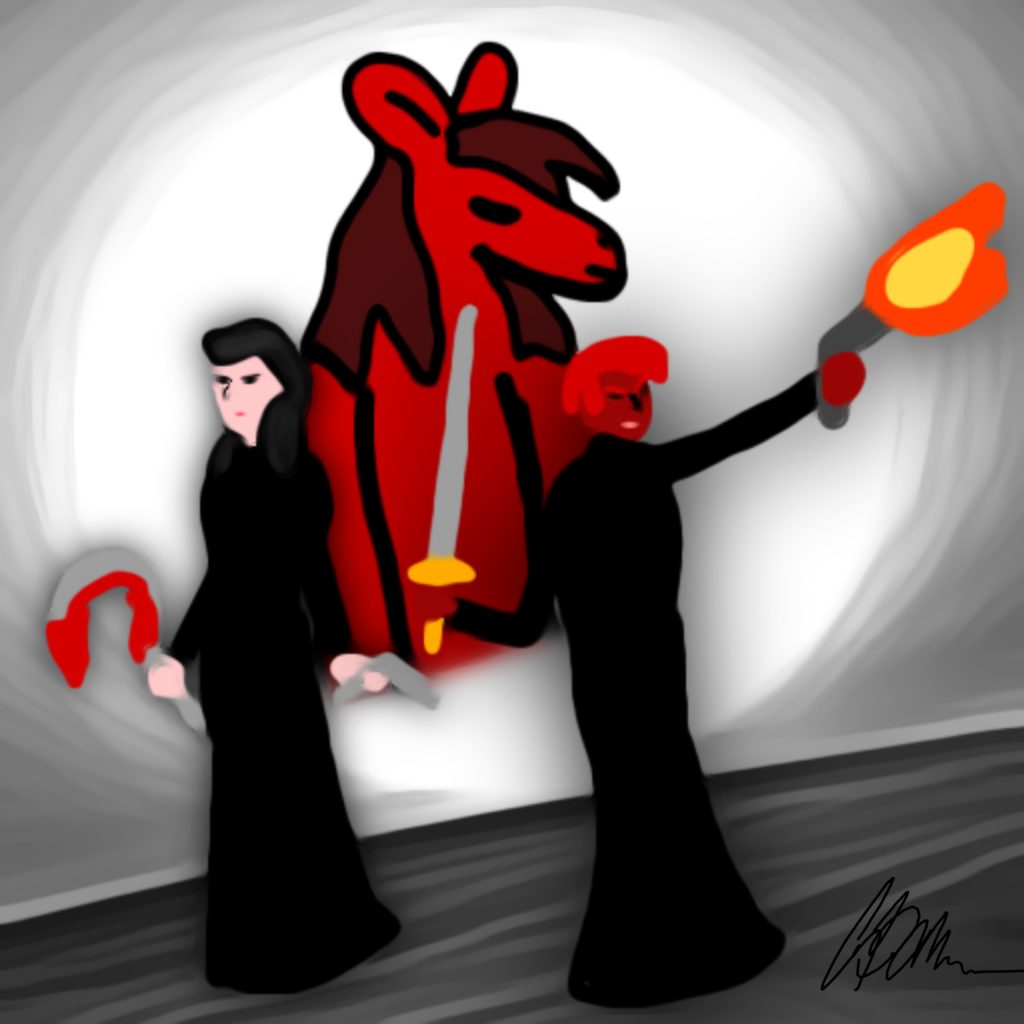
THE SHIELDMAIDEN OF SET
There are actually two Shieldmaidens of Set: a mother and a daughter.
The elder Shieldmaiden was born and grew up long before the Ungod appeared, and she was a police detective. She earned her chops hunting and apprehending some of the most dangerous human predators imaginable. She first encountered Lord Sutekh during a near-death experience, when He warned her of the doom that was to come. After she recovered, she became a survivalist and a martial artist.
When the Ungod appeared, nearly everyone who looked up to the sky went dangerously insane…except for the Shieldmaiden. Somehow, she could look at the Mouth above without losing her nerve. And with this indomitable nerve of steel, she went forth to rescue as many lives as she could during the apocalypse.
One life she saved was that of the second Shieldmaiden, who was just an orphaned baby girl at the time. The woman adopted the child as her own; then they traveled the dying earth, following Lord Sutekh’s instructions. The mother found other people who remained sane at the sight of the Ungod, and she raised a mighty army. The Knights in Sutekh’s Service then launched a counterattack against the Ungod, and the elder Shieldmaiden worked a spell that banished the monster back into the void. She had to attract all of the monster’s attention entirely to herself in the process.
When the Knights saw the gigantic red hand of Sutekh reach into our atmosphere and grab the Ungod in a chokehold, they knew they had won. Then the heroes all dispersed and went to live out their lives in the wilderness (as recounted in His Nocturnal Majesty).
In the years that followed, the elder Shieldmaiden taught the younger everything she knew. The two became known far and wide among the various civilizations that developed after the apocalypse. They were beloved as heroes in most places, but were also feared for being friendly with Lord Sutekh and other Powers people couldn’t understand.
As an adult, the second Shieldmaiden reunited the Knights in Sutekh’s Service to help prevent another visit from the Ungod, which is just part of the story in Our Lady of Thrones.
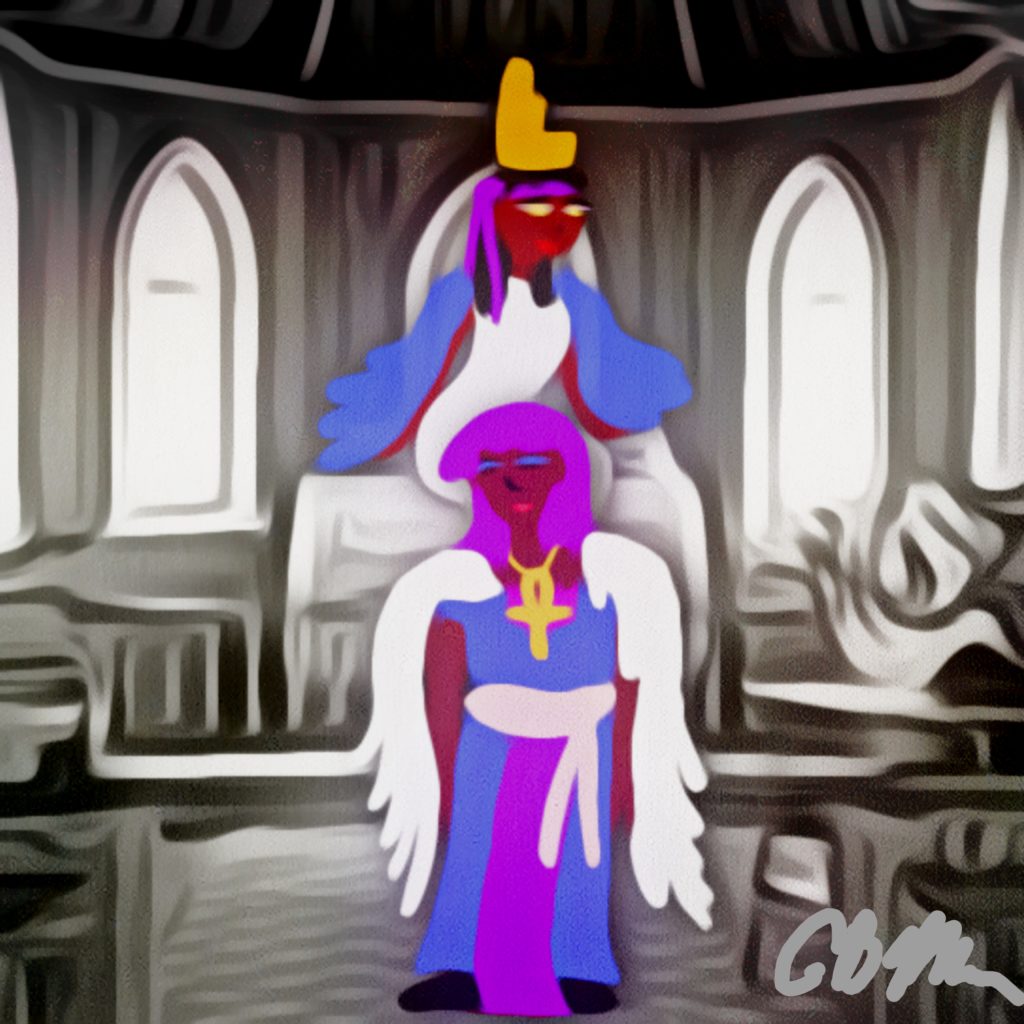
THE SORCERESS
Like the elder Shieldmaiden of Set, the Sorceress was born and grew up long before the coming of the Ungod. When she was still a young girl, Lady Isis showed her the coming apocalypse in her dreams. These nightmares were terrifying, but the Sorceress took them to heart. Lady Isis told the girl everything she needed to do to plan for and survive the apocalypse as an adult, and the Sorceress followed Her instructions faultlessly.
When she came of age, the Sorceress traveled the world and brought women of different backgrounds together. They became the Church of Many Mothers, and they pooled their resources to buy land and build the town of New Sennebytos somewhere in the West. Not only would this town be dedicated to Lady Isis and the Church’s way of life; it was also equipped with plenty of bunkers and provisions for when the apocalypse began.
In time, the Church of Many Mothers became subject to greater scrutiny and was even perceived as a dangerous terrorist group by the federal government. Members of the Church were hunted down, arrested, even murdered. But the majority survived and hid deep within the bunkers of New Sennebytos when the Ungod appeared. After the monster was banished by the Knights in Sutekh’s Service, the Church returned to the surface and began to rebuild human civilization.
Members of the Church regarded the Sorceress as their prophet and Queen. Some have said she could even raise the dead. Later, she and her Church joined forces with the Knights in Sutekh’s Service to try and prevent the return of the Ungod.
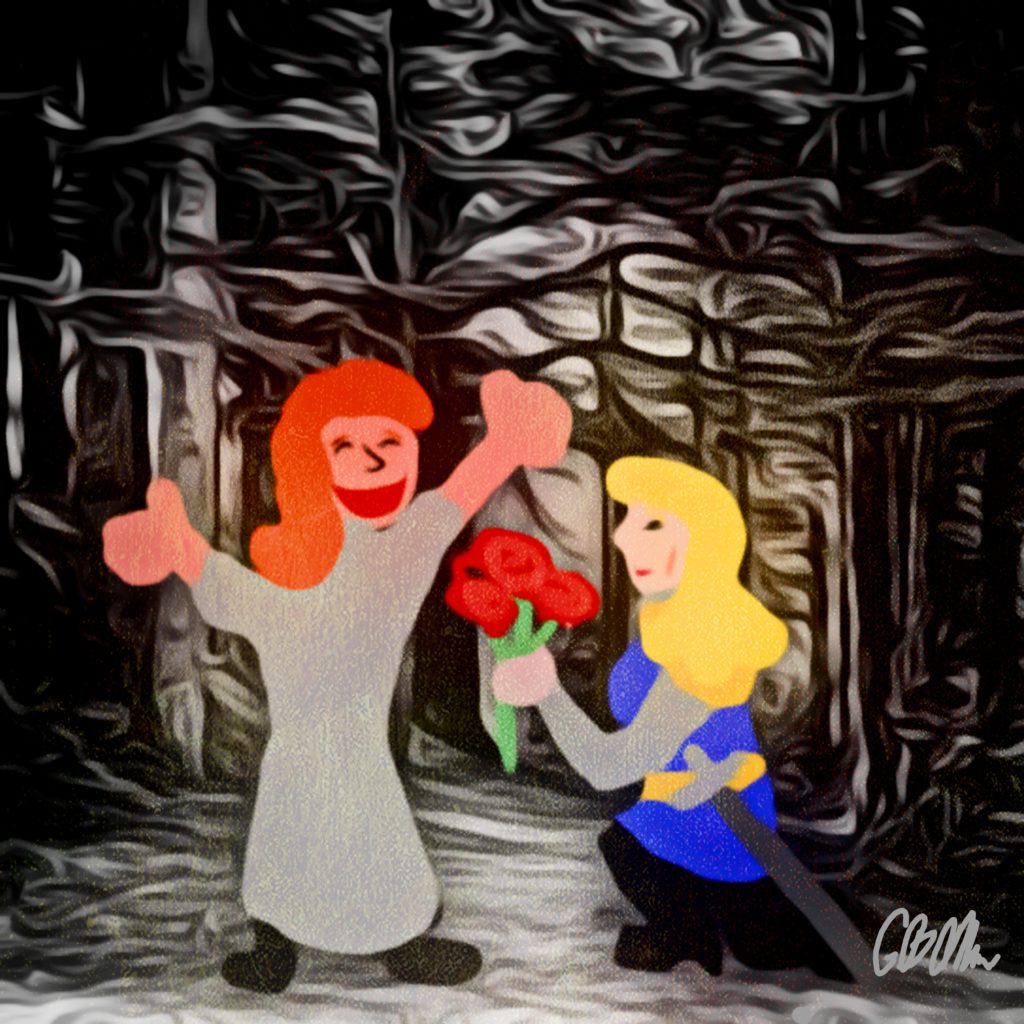
AUTUMN AND RAE
Autumn and Rae were two of the greatest warriors in the Church of Many Mothers. Both thought the Church was just another “doomsday cult” until they saw for themselves how safe, happy, and powerful the women of New Sennebytos really were. After a few years of being members, Autumn and Rae fell in love and were married by the Sorceress.
Shortly before the Ungod appeared in the sky, the monster’s human allies tried to systematically exterminate the Church of Many Mothers. Members were targeted for death in every major city. So the Sorceress appointed a special team of warriors to go and save as many of their sisters in Isis as possible. Rae was chosen to lead the rescue team in Atlanta, and though she managed to save her sisters there, she did not return home herself. Autumn was mad with grief when she and the rest of New Sennebytos were finally forced to retreat underground.
After the Ungod was defeated and the women of New Sennebytos returned to the surface, Autumn trained like hell to become the deadliest warrior in the entire Church. Years later—when the second Shieldmaiden of Set was fully grown—Autumn would lead an excursion back to Atlanta and try to find Rae, assuming she was even still alive…
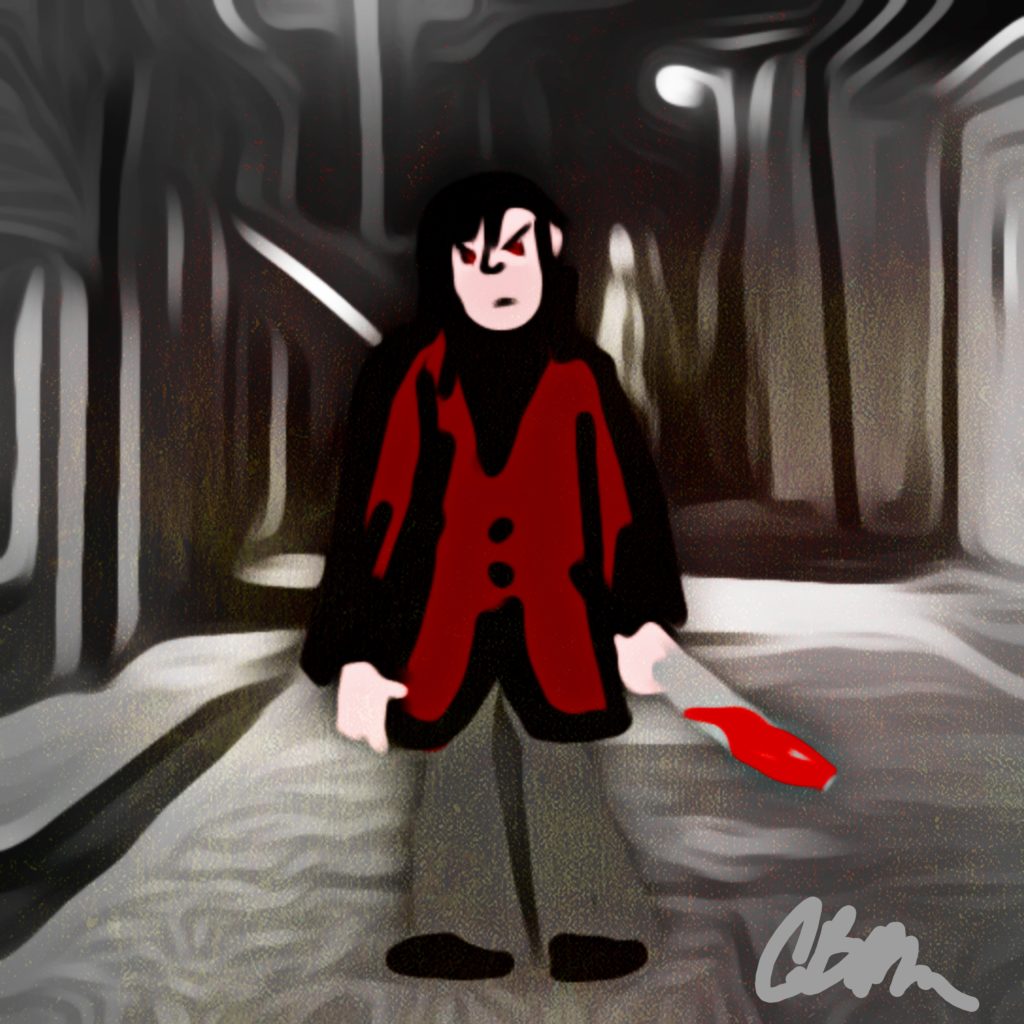
THE WITCHFINDER
No one knew the Witchfinder’s true name or origin, but he first appeared long before the World Fell Apart, when the Sorceress was still a young maiden. His existence was really known mostly to the Church of Many Mothers. What little media coverage he received was very closely monitored and censored from the general public.
The Witchfinder was absolutely impervious to any physical injury; he never became ill, and neither blades nor bullets nor blasts could bruise him. He was also a born psychic and could hear thoughts. He knew when other people had paranormal abilities, and he relentlessly stalked and killed as many of these “witches” as he could. He did this because he heard a voice in the sky telling him to do so—the insidious hiss of the Ungod.
The Witchfinder first attacked the Sorceress shortly after she started receiving her prophetic visions from Lady Isis. He relentlessly stalked her entire Church (among others) for decades afterwards. Then the end came, and after the Ungod was repelled, the Witchfinder became the second highest authority in the Kingdom Guard. He would eventually lead the armies of this brutal regime to war against the women of New Sennebytos, and with zero intent of taking any prisoners.
THE REVEREND PRESIDENT
The Reverend President began his career as a televangelist. He heard the hiss of the Ungod, whispering to him from the sky. He mistook it for the voice of “God,” and things always seemed to go his way when he heeded its advice.
He preached that “the Lord” was displeased with society recognizing the freedoms of women, the LGBTQ+ community, minority religions, and atheists and agnostics. He wanted his creeds made into law, requiring Americans to convert and obey upon threat of public execution by the state. The Reverend further taught that if this were not made to happen very very soon—within the next seven years, in fact—”the Lord” would give this world to Satan, and it would be forever destroyed.
As if on cue, the country was besieged by a cult of domestic terrorists who claimed to worship Satan. Even normal rational people started buying into the Reverend’s wild-eyed claims. It wasn’t long before the Reverend was voted into the White House and started issuing executive orders that tyrannized anyone who didn’t worship him and follow his every command. Suspected “witches” were harassed, assaulted, even murdered by their neighbors all across the country, and institutions like the Church of Many Mothers became Public Enemy Number One.
Then the Ungod appeared, and the World Fell Apart.
While the Knights in Sutekh’s Service fought to repel the Ungod back to the void, the Reverend President and the Witchfinder joined forces in Atlanta, which became the capital of their new empire. Known as the Kingdom Guard, this regime invaded and enslaved as many surviving communities across the country as it could. All who were occupied were either converted or exterminated. Those who encountered the Kingdom Guard and escaped with their lives have consistently described its citizens as monsters in the shapes of men.
Our Lady of Thrones culminates in the final confrontation between the Kingdom Guard and the Church of Many Mothers.
THE WARLOCK
The Warlock or “Disciple of the Worm” was known by many names across multiple universes. He wasn’t human, though he had a thousand human faces. Each world he visited soon decayed into nothingness. He used the same method for interdimensional travel as beings like the Fae—by walking between the worlds on different Halloween nights in history (a theme also explored in Summer’s End II)—and he first arrived in this reality in 1982. The Warlock then used (at least) two fake human identities to engineer the end of our world.
In one of his roles, the Disciple was a multimillion dollar media tycoon whose TV programs made him insanely rich. He pretended to be a born-again Christian, and he used his media wizardry to help the Reverend President win the White House.
In his other role, the Warlock was a psychiatrist who worked with the criminally insane. He discreetly hypnotized his patients and helped them all escape. Once free, his patients burned down entire neighborhoods in the name of Satan. The Warlock then encouraged the Reverend President to capitalize on these “satanic terrorists” and seize more and more power over time.
When this evil spell had spread across enough of the globe, the World Fell Apart and the Ungod appeared in the sky. The Warlock was seldom seen afterwards; yet his presence continued to be felt, especially in cities occupied by the Kingdom Guard. His true appearance remained unknown, and it was rumored he could create doubles of himself. Perhaps not even the Reverend President had ever seen the actual Disciple of the Worm face-to-face.
How could anyone know who, when, or where this master of misdirection really was?
I have been asked before: “Why don’t you start your own church?” Here are some reasons why this is not only unnecessary for Setians, but probably undesirable as well.
The question has been raised before: why not start a new Setian church—one that speaks to those of us who actually revere and venerate Set, and which honors Him above all other Gods?
It is certainly true that some things are easier to accomplish in groups, and that there are limits to what any one individual can do alone. But what exactly do we need to “do” for Set in large crowds? He does not demand to be worshiped by the masses. He is a hunter God who is always on the prowl, and who is much more concerned with saving all our butts from crazy hellbeasts than He is with micromanaging our lives. Divinities like Set are loners who tend to prefer the company of other loners, if They desire any company at all.
It will be pointed out, of course, that His Nocturnal Majesty was worshiped in certain ancient Egyptian temples. This is quite true, but Egyptian temples worked very differently than modern churches do. Their innermost sanctuaries were closed to the public, and the priestly rituals for a temple’s God(s) were generally private. Though public piety existed, the Egyptians had no concept of “going to church” as such; they more often honored their ancestors and/or the God(s) of their choice at home, or at neighborhood shrines that technically weren’t on temple grounds. Along with just being good neighbors and citizens, this was the basic template for religion in ancient Kemet; there were no dogmatic litmus tests for “membership,” and there was no real concern for what individuals might or might not believe theologically. I think it’s probably fair to say most Setians, Kemetics, and polytheists in general are already living this way by default, and we clearly don’t need a church to continue doing so.
It’s also worth noting that our Western model of religious affiliation appears to be slowly going extinct. The most vocal and visible churches continue to deny science and harbor known evildoers among their leadership. Such institutions have consistently raped, murdered, or otherwise oppressed countless innocents throughout history. The masses have grown tired of their bullshit, and church attendance is now at an all-time low. So perhaps starting a church in today’s environment would not be the wisest investment of anyone’s time and resources. Again, our God doesn’t necessarily want to be worshiped by large crowds of people anyway; nor does He want us to waste our energy fighting each other, which we are much more likely to do when we gather in large numbers. Virtually every organized religion has been fragmented by its own rival sects over time; it is human nature for groups of people to quarrel and eventually schism. I therefore see little point in trying to coordinate such a project, only to have it eventually fall apart or become corrupt.
Church corruption is most blatant when it comes to our tax exemption laws, which are meant to help them invest as much of their funding into charity as possible. This seems perfectly legit—money that is used to help others ought not to be taxed. But the problem is that most church spending around the world does not actually go into charity. Most of that spending goes into building lavish cathedrals, lobbying for (usually conservative or right-wing) political causes, and acquiring more converts (i.e., donors). In some cases, the money just goes straight into the leadership’s pockets. The truth is that churches are really more like businesses than anyone wants to admit. Time and time again, the government has given stimulus money to corporations so they can pay better wages to their employees, only for the employers to predictably keep all that money for themselves. Churches function in much the same way, except they don’t have to pay any of what they keep back to the rest of society, and the government bails them out every fucking year.
The saddest part of all this is that if we DID tax churches, we would have MORE than enough money in the national budget to shelter all of our homeless citizens, improve all of our schools, and finance other badly needed social initiatives—things churches are supposed to do with all their money, but don’t. It seems clear to me at least that organized, institutionalized religion holds us back from evolving and growing into a truly advanced society; it always has, and it always will.
Maybe if churches operated more like Ghost, I’d like ’em better.
I realize I must sound like an atheist to some people. I am not. My faith in Set and other divinities, though unique, is considerably devout. I did not say religion is the problem—I said that organized, institutionalized religion is the problem. We are taught in this culture to think of faith as something that must always be standardized and static, never being allowed to change. But once upon a time, religion was much more personal and fluid for the vast majority of believers across the globe. Some of us, including yours truly, still adhere to this perspective today, and it may very well become the norm again quite soon.
It is true that churches can provide avenues of critical social support for their members; yet there are safer and more sensible alternatives today. If Sally Setian needs money for an operation, we can launch a Kickstarter drive for her, and all the money donated to her will actually go to her bank account; it won’t be divided up (or outright stolen) to pay for some pastor’s new limousine. I enjoy sending donations to random people I know online who really need it whenever I can; but I would not enjoy being pressured to donate money to a church at regular intervals (upon fear of being considered “un-Setian” if I don’t).
Yet there is another, deeper reason why starting a Setian church doesn’t seem too worthwhile. We do not need to “serve” Set by “bringing more people” to Him. He neither expects nor even wants us to actively seek converts. If what we do helps others to find Him, it is a blessing and a work of great magic; but to try and aggressively expand our numbers is antithetical to the Setian disposition. It also suggests that Set needs us to go around convincing people to believe in Him, when He is perfectly capable of doing this Himself. If it is important enough to Him that someone should believe in Him for whatever reason, it is for Him and that person to decide together, and no one else. So most of us who are drawn to Set deplore proselytism, and would find the idea of “winning souls” for Him quaint at best.
I propose an alternative to all of this church nonsense: simple social networking. We are already talking to each other, collaborating with each other, and helping each other right here on the various social media we all frequent. And each of us is already doing and contributing about as much to our scene as we probably would if we were all in a church together (or in rival churches, bickering and quarreling with each other). I think this is more or less how walking with Set is meant to be. Our faith is not a dogma but an art, and our God is not a micromanager but a muse. Must artists join organized groups with rules and regulations to be artists? No, that isn’t how art works; and it isn’t how Setianism works either. We are not a congregation in need of a church; we’re more like a bunch of individual artists who just network with each other as needed or desired.
As a final note, some readers and listeners have referred to the LV-426 Tradition as a “church.” Just to be clear: we are not and have never claimed to be any such thing. LV-426 currently consists of only four people who grew up knowing each other; so I would sooner describe us as “a very small coven” at best.
I am sincerely grateful to Setken, Siobhan Welch, and several other beloved friends and family for their generous help in preparing this sermon for the public, and for encouraging me to preach again. Thank you all, and thank Set for each of you.