Updates

A Setian Exegesis of John Carpenter’s The Thing

Here I geek out for a bit about my vote for “the scariest monster movie ever made,” and I draw some parallels between the themes of this film and my beliefs as a Setian.
John Carpenter’s The Thing (1982) wins my vote for “the most frightening monster film ever made.” Its unique history begins with a science fiction author named John W. Campbell, Jr., who wrote a short story in the 1930s called “Who Goes There?” It features a team of scientists who discover a spaceship buried beneath the ice in Antarctica. They dig out the ship’s pilot and bring it back to their base, thinking it’s just a frozen fossil. But once the creature thaws out, it springs into action and starts terrorizing everybody. Then it’s discovered that the Thing (as this hostile invader comes to be called) not only digests its prey, but can manipulate the cells of its body to shapeshift into whatever it has eaten at will. The men at the research facility soon learn this applies to human beings as well as to animals, and they descend into violence and paranoia as they accuse each other of being the monster. That’s when a guy named R.J. MacReady takes charge of the situation and figures out a way to determine who’s who.

In 1951, the great Howard Hawks decided to make a film adaptation of “Who Goes There?” that was renamed The Thing From Another World. This was the first of what would later be called the “atomic horror” films, in which humanity is threatened by giant radioactive animals, mad science experiments, or Commies from outer space. For whatever reason, the setting of Campbell’s story was switched from Antarctica to the North Pole, and the shapeshifting alien was re-conceptualized as a blood-drinking humanoid made entirely of vegetable matter. (One character actually refers to it as a “super-carrot.”) Despite these drastic changes, The Thing From Another World is one of the greatest sci-fi/horror films ever made. It has lovable and humorous characters, some intense machine gun-paced dialogue, and several suspenseful scenes that still hold up today. The film influenced an entire generation of filmmakers, including John Carpenter, who loved it so much that he has his characters watching it on TV in Halloween (1978).
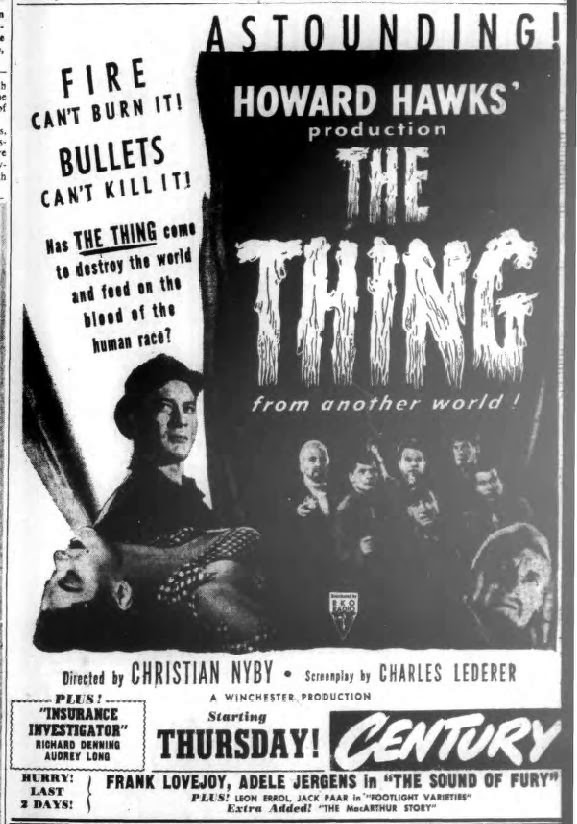
1950's ad for The Thing From Another World (1951)

When Ridley Scott’s Alien came out in 1979, it made a shit-ton of money. Suddenly, big-budget creature features were in vogue. That’s when Universal Pictures acquired the rights to produce a remake of The Thing From Another World. I believe monster movie remakes are generally a horrible idea, and that they should be avoided as much as possible. But in The Thing’s case, this rule does not apply. Part of what makes the Carpenter film work is that the original 1951 version deviated from its source material so much. While it’s still about an alien terrorizing people in the snow, Hawks’ monster and human protagonists are totally different. (There isn’t even a “MacReady” in Hawks’ film.) So John Carpenter and his team decided to make this new film a more faithful adaptation of the original Campbell story, which had never been properly adapted for the screen before. For this reason, the 1982 Thing is radically different from its 1951 predecessor, which caught many audiences off guard at the time. Most viewers in 1982 were expecting to see something fairly light-hearted and optimistic, much like the 1951 original. They weren’t expecting to see anything quite so bleak, depressing, or nightmarish as what they were given.

The Thing boasts some of the most convincing makeup and creature effects you will ever see; in fact, the effects are perhaps a little too convincing. It’s hard to believe the monster is really just a bunch of puppets, but creature effects wizard Rob Bottin put so much of his heart and soul into them that they still look superior to most CGI effects that are used in films today. Unfortunately, audiences in 1982 just weren’t ready for what they saw. The most well-known sequences of the film are those in which the monster devours, digests, and transforms into its helpless prey. Globs of slime, blood, and stinking pus are splattered all over the walls while men are physically disfigured into shapes that defy all rational categorization. These scenes are grisly, revolting, and very hard to sit through, but the amount of imagination put into them is absolutely staggering—even by 2019 standards. The effects are so realistic and excessive, however, that people just went apeshit. Film critics rabidly accused John Carpenter of being “a pornographer of violence,” and he was practically blacklisted by Universal. Indeed, audience reactions to The Thing during its original theatrical run almost ended Carpenter’s career entirely. How ironic, then, that the film would be re-evaluated by fans and critics over the following decade, to the point of being accepted today as Carpenter’s very best work. And the sheer number of other media properties it has influenced (e.g., Dead SpaceThe MistResident EvilSlitherStranger ThingsThe X-Files, and practically everything on Guillermo del Toro’s resume) demonstrates that The Thing has had a major impact on popular culture.

1980's newspaper ad for The Thing (1982)

I love it that this film features an ensemble cast, which means there are multiple principal actors who are given roughly equal amounts of screen time. The great thing about ensembles is that the actors will rehearse together and develop a chemistry you just can’t get anywhere else. The players in this film are all well-seasoned stage actors, to boot. While the script is rather skimpy on character development, the actors make up for this with all the neat visual cues they worked out together. We can tell that Clark (played by Richard Masur) is much more comfortable with the dogs at Outpost 31 than he is with the other men. When he learns that one of the other men has died, he shows little emotion apart from fear; but when he learns that one of his dogs have been killed, he becomes upset and mournful. We can also tell that Garry (played by Donald Moffat) resents being the leader of the group, because he always has a reluctant look on his face whenever he has to take charge. It’s obvious from their expressions that none of the other men take his authority very seriously, and Garry is also much quicker to relinquish his authority to MacReady (played by Kurt Russell) than most leaders would be. Despite having lived and worked together for some time, the men at Outpost 31 seem to know practically nothing about each other. They’re alienated from the rest of the world by living in Antarctica, but they’re also alienated from each other by their own apathy and disinterest. Since the Thing can imitate any life form perfectly, neither the characters nor the audience can ever tell who is who. This is made even more horrific by the notion that these people never really knew or cared about each other that much in the first place. The Thing doesn’t have to work very hard to push them into a panic, for they are already in a position to fear and loathe each other when the film begins. If their humanity is all that really separates these men from the Thing, that wall of separation must be frightfully thin.

One criticism I sometimes hear about this film is that the actors are all male; there are literally no women to be seen anywhere. I can understand why this bothers some viewers, but I actually appreciate the all-male cast for a couple of reasons. First, there’s this unspoken rule in Hollywood that monster movies must always have some kind of heteronormative sex appeal; there must be gorgeous hot women removing their clothes for the male viewers, and there must be one dude and one dame who make it to the end so they can presumably fornicate once the credits roll. The Thing dispenses with this “wisdom” by not even allowing the subject of sex to be breached in the first place. Furthermore, this movie is about a slimy tentacled monster that likes to rip people’s clothes off and insert itself into their bodily orifices, which is already disturbing enough as it is. If there had been any women in the film, I guarantee they would have been sexualized; there were other films being produced during the same era that indulged in this exact form of sexual exploitation (including 1980’s Humanoids From The Deep and 1981’s Galaxy of Terror, which both feature monsters raping women on camera). Indeed, The Thing is one of very few 1980s monster films that doesn’t feature any kind of sexual exploitation at all.

The Thing on the front cover of Fangoria Magazine

I think another reason audiences hated this film upon its original release is that it’s just so Gods-damn bleak. Even the goriest slasher movies of the 1980s usually had some kind of comic relief or silliness in them; but aside from some brief touches of humor here and there, The Thing offers no such relief. Nor does it offer any clarity with regards to its conclusion. Audiences prefer happy endings in their monster movies, but they can also handle bad or scary endings, as long as they’re clear-cut. The evil can either win or be defeated, but it must clearly be one or the other. The Thing throws this archaic rule right out the window, for its ending is completely ambiguous, leaving us uncertain as to how the story really ends. And that is something most people just can’t seem to handle in a movie. Mind you, I can understand why; it bothers me that we never find out exactly who won or who survived. But that’s what makes the ending work; it continues to bother you and haunt you long after the credits have rolled. (I still wake up in the middle of the night every so often, wondering: “Who’s really human at the end of The Thing?!”)

In my opinion, the titular beast is an even better representation of Apepthe supreme enemy of all Gods and creatures, than H.R. Giger’s Alien. The xenomorph can be pleasing to look at, with its shiny symmetrical body and its humanoid shape; but the Thing is absolutely horrible to observe in either of its myriad, spidery forms. And while the Alien is just an animal that seeks to eat and reproduce according to its primal dispositions, the Thing has assimilated countless worlds and species into itself. It is sentient, can build and operate spacecraft far superior to ours, and is totally capable of communicating with humans. (It speaks perfect English whenever it pretends to be an American scientist.) If such an ancient intelligence had any goodness in its heart, it would try to reach some kind of understanding with the men of Outpost 31 at least once. Yet the Thing never bothers to communicate with the men at all (apart from when it imitates them). This suggests that the creature is purely and simply evil. It deliberately terrifies, harms, and divides other sentient beings with a malevolent self-awareness, and it will settle for nothing less than the extinction of all life upon this earth. If that doesn’t sound like Apep, I don’t know what does.
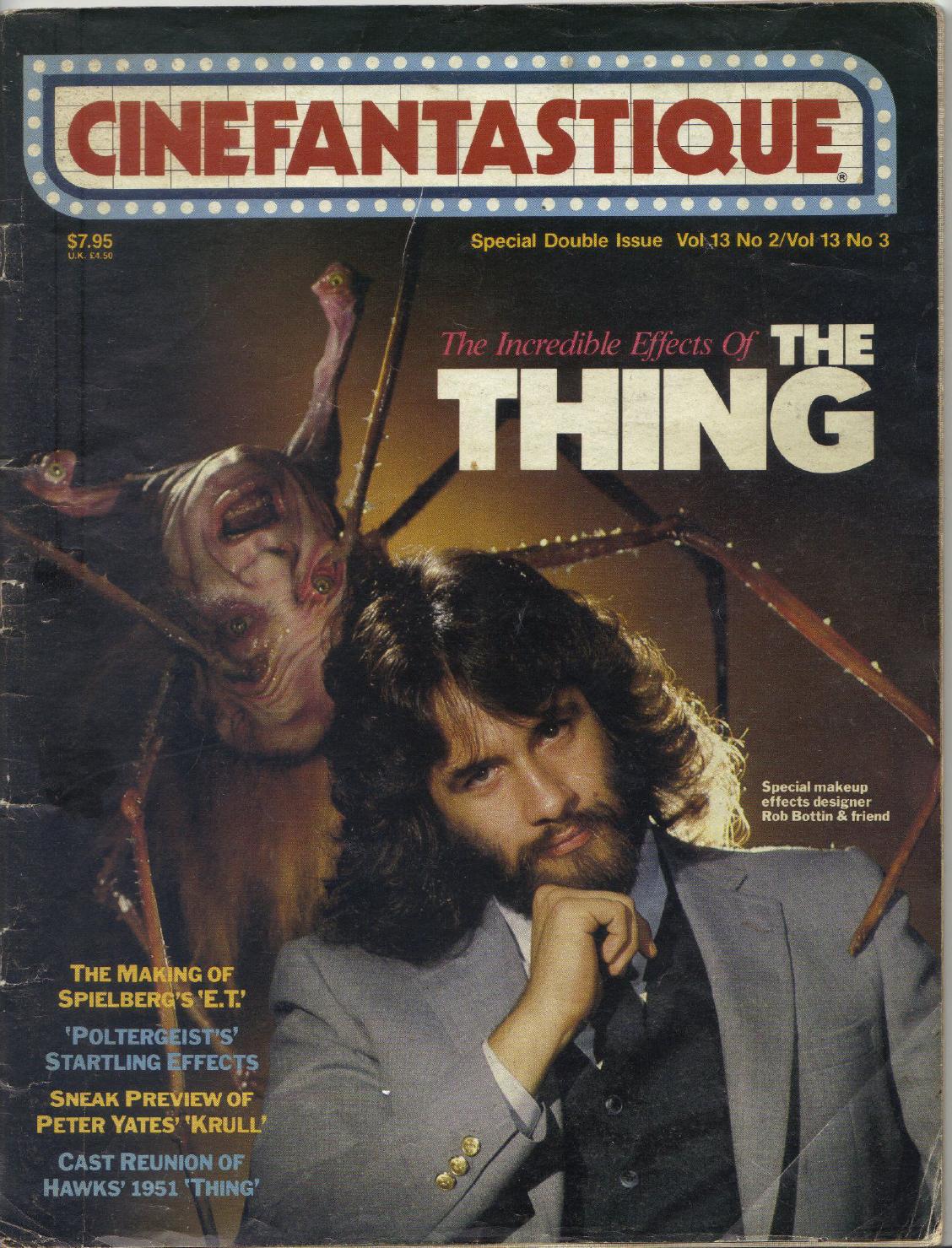
Rob Bottin on the cover of Cinefantastique magazine

But there is much of Set to be found in this film, as well. Most of Antarctica is actually a polar desert, since there is little to no precipitation or vegetation there. A “desert” is technically defined in terms of how dry a given location is (rather than how hot), and Antarctica is drier than a bone; very little rain or snowfall ever occurs across the entire continent. Given that The Thing’s premise is essentially a modernized combat myth (in which a heroic warrior fights a gruesome monster to save the world), it’s only fitting that this battle should unfold in an ecosystem that falls under Set’s jurisdiction. And in Egyptian mythology, Apep has a paralyzing stare that freezes most of the Gods with fear, rendering them motionless and inert. Set is the only God who is immune to this; hence why He was chosen to serve as Ra’s Champion against the beast. Perhaps it is no accident that when most of The Thing’s characters come face-to-face with their extraterrestrial assailant, they too become motionless and inert. MacReady is the only one who seems unfazed whenever he sees the monster; he even has the nerve to taunt it right to its ugly face. (His best line is when he tells the creature, “Yeah? Well fuck you too!”) Indeed, he exudes the time-honored Setian attitude of “I’m-just-saving-the-world-so-I-can-get-back-to-drinking” quite nicely.

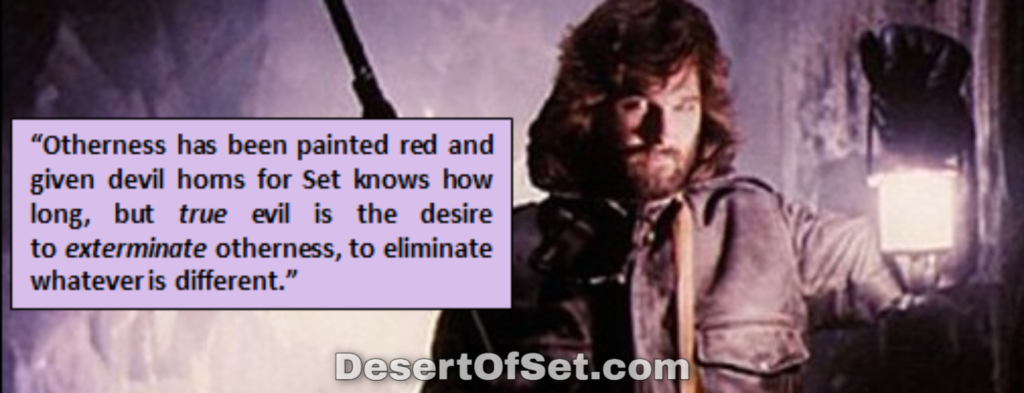
As a Setian, I believe autonomy is divine—a gift not only from the Gods in general, but also from Set in particular. He is the God of otherness, the principle that makes it possible for everyone to exist as individuals with distinct identities. The word “other” often bears a negative connotation in common discourse, as when we speak of societies “othering” minorities. But we are all others to each other, even in the cultures and cliques we call our own. Otherness is a good thing, something to be cherished and celebrated, because it enables each of us to determine ourselves as unique sentient beings. It is not otherness, but the fear of otherness which poses the ultimate threat to our existence. As frustrating and confusing as Set can be for the other Gods, even they must accept Him as a necessary force in this world; for without Him, they would be frozen by the Serpent’s stare and absorbed into its vacuum. They would cease to have selves and be dissolved into the void forever. Otherness has been painted red and given devil horns for Set knows how long, but true evil is the desire to exterminate otherness, to eliminate whatever is different. And the Thing is a perfect representation of such erasure. Just like Apep, it is homogeneity personified, hating whatever is not itself and robbing its victims of their innermost identities and souls.
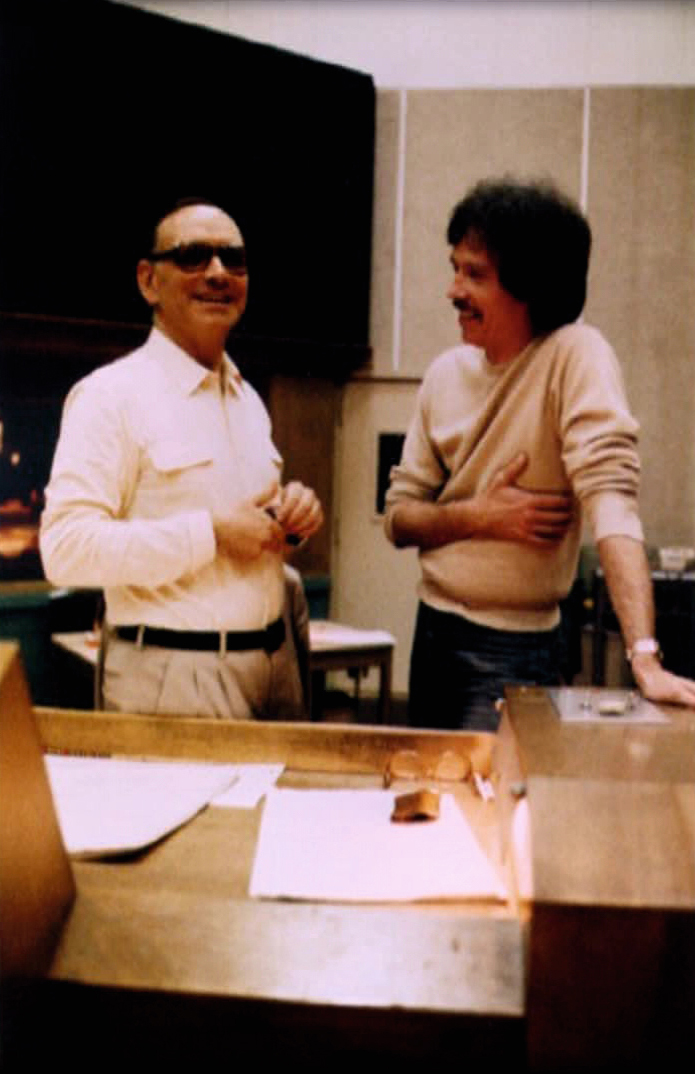
Ennio Morricone and John Carpenter

Ennio Morricone (left) and John Carpenter (right), circa 1982.

John Carpenter is legendary for scoring most of his films himself; but for this venture, he recruited the Italian composer Ennio Morricone (who is most well-known for scoring 1967’s The Good, the Bad, and the Ugly). Morricone wrote about 50 minutes’ worth of orchestral music, approximately half of which would never be used in the final cut. Supposedly, Carpenter had difficulty deciding where to insert certain pieces of music into the film. So while The Thing was in post-production, Carpenter went to the recording studio and hammered out some incidental pieces to make up for the material he couldn’t use. As a result, about 90% of the music in The Thing is Morricone’s work, while the remaining 10% consists of Carpenter’s trademark electronic drones. The theme song (which is actually titled “Humanity Part II”) was originally written by Morricone, but was later re-arranged with electronic instrumentation to make it sound more “Carpenter-esque.” I happen to own a version of the soundtrack that includes both Morricone and Carpenter’s material, and it’s my all-time favorite album to play during worship.

I mention this because I find the Thing soundtrack useful for execrations (i.e., hexes or curses that target spiritual rather than human adversaries). In the procedure we’ve used in the LV-426 Tradition, we take some ceramic pots and draw or write things on them to represent our fears and our personal demons. Then we invoke the Serpent into these pots, and we invoke the Red Lord into ourselves. Once a spell against Apep has been recited (with plenty of angry and forceful language), everyone smashes their “qliphothic pot” to bits and pieces, sending the Serpent back to whatever hell it comes from. This is more than just a therapeutic activity for stress relief; it’s a spiritual battle in which we actually smite the negativity in our lives with all of Set’s power and fury. It’s helpful to use music in this kind of worship service, and the Thing soundtrack has always given me the best results. It heightens the effect of the ritual, making me feel as if I’m actually in some desolate wasteland, getting ready to face off against an ancient evil. Even when I listen to the music outside of ritual, it always puts me in a meditative mood, steeling my nerves against whatever stressful crap I happen to be worrying about at the time.

I suppose I’ve rambled on about this movie long enough now. The point is, John Carpenter’s The Thing isn’t just a great sci-fi/horror movie; it’s also a great parable for Setian spirituality. It’s the ultimate cinematic combat myth for the contemporary age, and it is deeply inspirational to me in my own daily quest against the Serpent. It still gets under my skin, too, despite the fact that I’m an adult now and I’ve seen this movie over a thousand times. I still get spooked whenever the power goes out and I have to walk around my house in the middle of the night; I can’t help but imagine the Thing slithering around down there in the dark beneath my bed, waiting to assimilate me in my sleep. There is simply no other movie monster that continues to hold this kind of power over my imagination today, and there are few other films that inspire me as much as The Thing does. If you’re a Setian and you’ve never seen this movie, give it a try as soon as possible, and feel free to share your thoughts about it with me. I’d love to know what you think!

The Thing From Another World

Welcome

In the Desert of Set

Episode List


Everything I write and produce for Set is for free. This ongoing work is a devotional offering not only to Him, but to anyone else who loves the mighty Red God, or who might just be interested in Him, even if it’s for non-spiritual reasons.

If you enjoy my work, by all means, please share it with others. I only ask that I be acknowledged as the author; apart from that, you can print everything I write out on printer paper and hand it out on the streets for all I care. (Though that probably isn’t wise right now; I would recommend sticking to electronic circulation for the time being.)

If you speak another language apart from English and you would like to translate my work, please feel free to do so and to disseminate the translated material in your locale. I’m sorry I can’t pay you, but I’m not making any revenue here either, and I don’t want to. No one should have to pay any money or kiss any hiney to learn about the mighty Champion of Ra!

That being said: If you catch anyone trying to SELL my work to you or to others, please let me know so I can take the appropriate legal action against them. This is all for SET, gods dammit, not for money, and I don’t want ANYONE to profit from this work except in a purely spiritual or intellectual sense.

May the Great of Strength be with you all!

Calling Professor Quatermass!

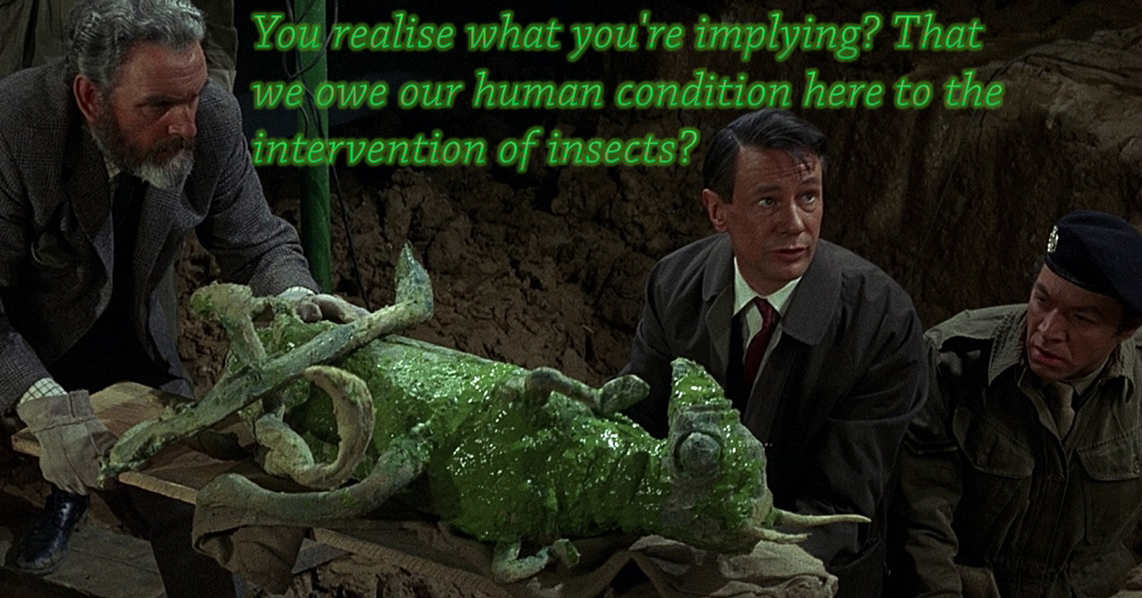
Martian grasshoppers. Genetically modified super-apes. Invisible forces only certain people can see. Quatermass and the Pit (1967) has it all.

I love those old Hammer horror films from the 1960s and 1970s: the ones with Christopher Lee and Peter Cushing, filmed in vivid Technicolor, with some of the most atmospheric set pieces you’ll ever see on screen. Hammer revamped all the traditional gothic horror film monsters, and they weren’t afraid to use gallons of blood in the process (which really pissed off the British censors at the time, even though the gore looks pretty fake by today’s standards). They turned Dr. Frankenstein (portrayed by Peter Cushing) into a psychopathic killer who prefers to get the parts for his monsters fresh (if you know what I mean, and I think you do). They turned Count Dracula (Christopher Lee) into a frothing-at-the-mouth sexual predator who can break mere men in half with his pinky finger. They also cast some of the most beautiful demigoddesses to have ever graced this earth. (Seriously, these ladies make their Victorian costumes look more provocative and exciting than even the skimpiest of modern beach attire.) Whether we are addressing The Evil of Frankenstein (1964), Dracula: Prince of Darkness (1966), or even The Devil Rides Out (1968), Hammer films are fucking awesome and warrant multiple repeated viewings.

If I had to choose just one Hammer film as my personal favorite, it would not be easy; but surely Quatermass and the Pit (1967, also known as Five Million Years To Earth) would be counted among my Top Five. This is a sequel to an earlier 1955 film called The Quatermass Xperiment and its immediate 1957 successor, Quatermass II. All three movies are theatrical adaptations of TV serials that were originally broadcast on the BBC in the 1950s. These serials were written and created by Nigel Kneale, who is also known for writing The Abominable Snowman of the Himalayas (1957), The Stone Tape (1972), and the original screenplay for Halloween III: Season of the Witch (1982). Kneale was a fantastic science fiction writer whose work fits rather nicely with the likes of H.P. Lovecraft, and he has been a major inspiration to such horror maestros as John Carpenter and Stephen King, whose Prince of Darkness (1987) and The Tommyknockers (1987) are both directly inspired by Quatermass and the Pit.

The Quatermass films are named for their main character, Professor Bernard Quatermass, a British rocket scientist who contends with various alien forces that seek to wipe out the human race. (In many ways, the original serials also provided a great deal of inspiration for Doctor Who.) Of the trilogy, Quatermass and the Pit is easily the best; and despite being the third film in sequence, it is written in such a way that you don’t have to view either of its predecessors to understand the characters or plot. All you really need to know going in is that it’s about a small British town called Hobb’s End (which should sound familiar to anyone who enjoys John Carpenter’s In the Mouth of Madness). Some subway workers uncover a bunch of weird fossils and an object that looks like an unexploded bomb from the German air raids during World War II. This was not an uncommon problem in England in the 1960s (hell, it’s still a problem today), so panic immediately ensues, and the military is called in to investigate. But it is soon determined that the excavated object is not a bomb after all, and that’s when Professor Quatermass is called in.

Quatermass discovers that the object is actually a spaceship, and that it contains a couple of ancient alien corpses. (The aliens look like man-sized grasshoppers.) The weird fossils that were discovered close to the ship appear to have been primates that the aliens were using as experimental test subjects. Quatermass also learns that Hobb’s End has been subject to all manner of paranormal disturbances since time immemorial; whenever someone disturbs the ground where the spaceship now rests, ghost and hauntings are soon reported throughout the surrounding area. And when a man accidentally scrapes the spaceship with a wrench, it causes all these weird telekinetic phenomena to start happening.

Quatermass figures the aliens are from Mars, and that they came to colonize the Earth before humans evolved. He thinks they planned to transfer their consciousness to the ancient primates they found, so that they could live more comfortably in our ecosystem. But something went wrong, and the aliens all died. Yet the super-apes they created survived, and some people today are actually descended from them. Such people tend to be born with weird psychic abilities, and Quatermass theorizes that this may be where all our legends of magic and witchcraft come from. The aliens even resemble Satan, with tiny horns poking out of their skulls. But there’s just one problem: even though the aliens and their super-apes are dead, the powers they evoked continue to exist in human beings today, and the alien spaceship is still functional. Quatermass fears that if anything is done to disturb the vessel, it could re-awaken the dormant Martian hive consciousness that resides within every person who is descended from the modified apes. And this is exactly what happens when the British government decides to hold a big press conference at the excavation site. Some knucklehead drops some live electrical wiring on the ship, and it wakes up.

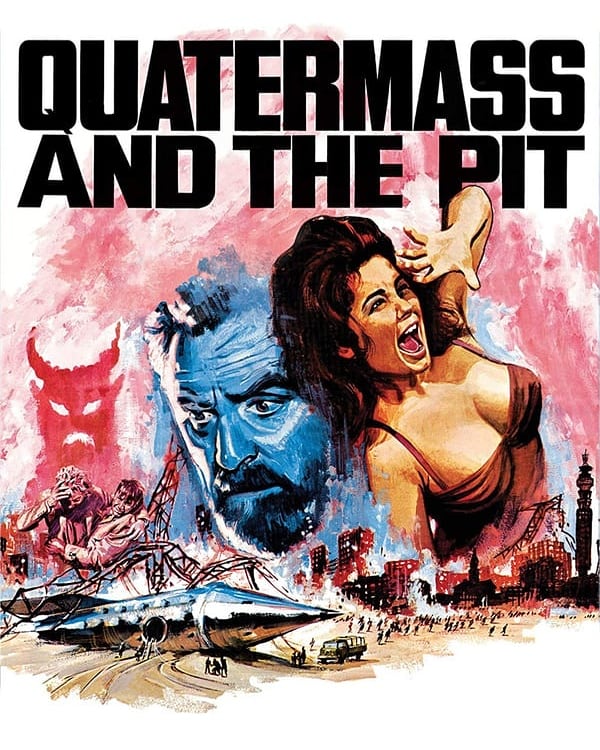
Quatermass and the Pit

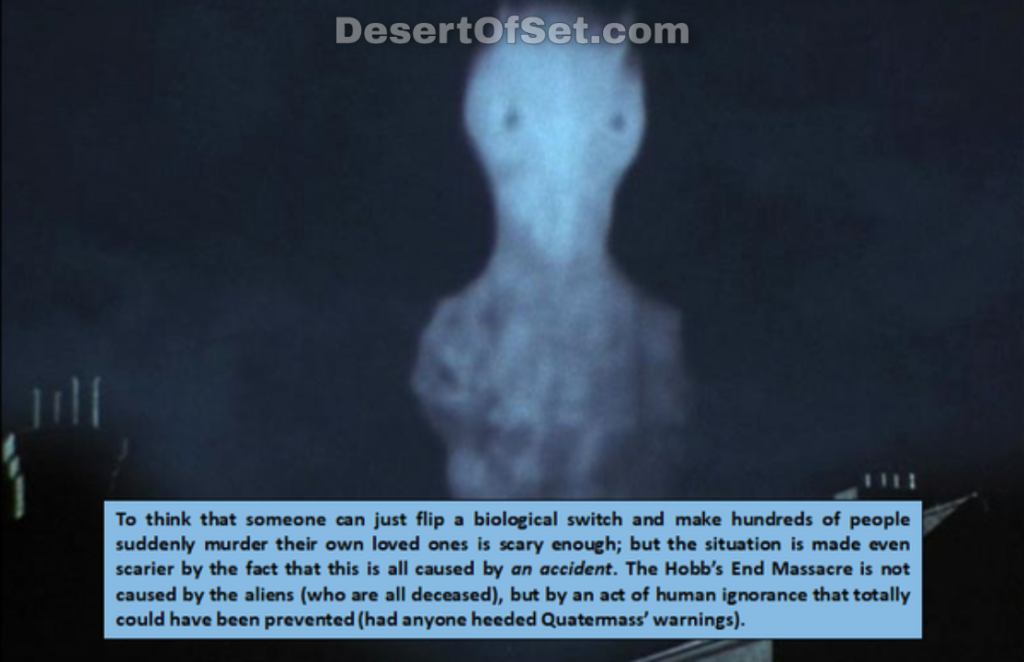
The awakening of the Hobb’s End spaceship is one of the most terrifying sequences I’ve ever seen in any horror film. Approximately half the local population is suddenly possessed by the Martian hive mind, which then drives them to murder all their neighbors, co-workers, and families. These people even kill all the animals they encounter as well; there’s one ghoulish moment when we hear them slaughtering a bunch of cats and dogs outside, and it never fails to make my blood run cold. To think that someone can just flip a biological switch and make hundreds of people suddenly murder their own loved ones is scary enough; but the situation is made even scarier by the fact that this is all caused by an accident. The Hobb’s End Massacre is not caused by the aliens (who are all deceased), but by an act of human ignorance that totally could have been prevented (had anyone heeded Quatermass’ warnings).

The heroes end up using a big iron crane to discharge the Martian spaceship’s energy back into the Earth. As in a great deal of folklore, it is the apotropaic power of iron (a substance most sacred to Set) that dispels the forces of evil in the end. But unlike most other science-fiction/horror films from this period, Quatermass and the Pit does not conclude with the male and female survivors hugging and kissing each other like everything’s going to be all right. Here, Professor Quatermass and his friend Dr. Judd (played by Barbara Shelley, my favorite Hammer glamour girl) are left standing alone amidst a sea of urban ruin, not breathing a word to each other. They’re too frightened to even look at each other, much less touch. (Perhaps they fear that doing so might spark up the Martian hive mind again?) They just stare fearfully into the night, forever traumatized by what they’ve seen and experienced. Roll credits!

One sure way to make me want to read a story or watch a film is by telling me, “It’s horror AND science fiction.” Some of my favorite films fall into this category, including Ridley Scott’sAlien (1979) and John Carpenter’sThe Thing (1982). But Nigel Kneale’s work is distinct because it combines science fiction with supernatural horror, using science to plausibly substantiate the paranormal (rather than dispelling it). The genealogical descent of all witches and wizards from Martian-engineered apes is just one example. Another would be the concept behind The Stone Tape, in which Kneale has scientists discovering that “ghosts” are actually residual “recordings” of past events that have been embedded into certain rocks. (This hypothesis is now called “the Stone Tape Theory,” which still carries considerable weight among paranormal researchers today.) And of course, Halloween III: Season of the Witch proposes that the mineral content of Stonehenge is catastrophically dangerous and can actually be weaponized by any corporation with the necessary know-how. As far as I’m concerned at least, Nigel Kneale belongs in the same company as such hard science fiction masters as Isaac Asimov and Arthur C. Clarke.

In Quatermass and the Pit, the Christian concept of “the devil” is revealed to be nothing more than a genetic race memory of the Martian colonists who experimented on our primate ancestors. These aliens were not necessarily “evil,” either; they were simply doing what they could to survive. As a Setian, the idea that “Satan was originally something else, and it wasn’t evil” has been a very old recurring theme in my life. And the idea that a sufficiently advanced or “magical” technology can be misused to wreak unspeakable havoc is also familiar, given what I have seen when ill-prepared occultniks fuck around with things like qliphoth or the Simon Necronomicon. Finally, I can identify with the idea of there being a scientific basis for “superstitions” like the use of iron objects to execrate evil spiritual forces. Indeed, Quatermass and the Pit is not only scary, but incredibly thought-provoking for anyone who takes an interest in the esoteric side of life. For Pagans and witches, I really can’t recommend it highly enough.

Polytheism Is Not “Idolatry”

Yes Virginia, some people still believe in many Gods today, and it’s every bit as legitimate as believing in just one.

Anthropomorphism is the act of characterizing something that isn’t human (whether animal, vegetable, or mineral) with human qualities, feelings, and motivations. Bugs Bunny, for instance, speaks English, stands on two legs, and is generally a smartass. We all know real rabbits don’t do either of these things, so Bugs is what we call an anthropomorphized rabbit (and a damn funny one, too).

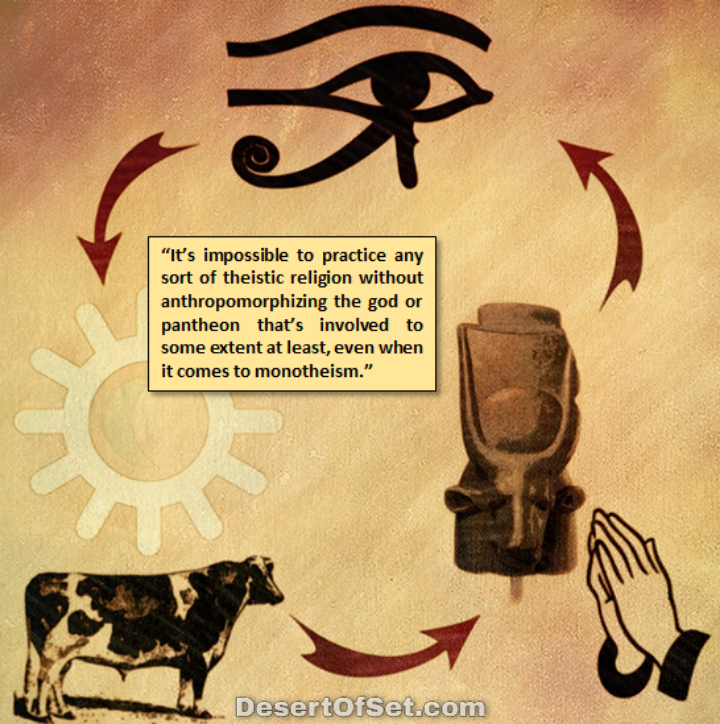
It’s impossible to practice any sort of theistic religion without anthropomorphizing the God or pantheon that’s involved to some extent at least, even when it comes to monotheism. Polytheists are only the most obvious example, given that we actually invoke our Gods into cultic images. Usually these icons are at least somewhat humanoid, even if they have animal heads (like the Egyptian pantheon) or multiple appendages (like the Hindu pantheon). Even when these images are completely zoomorphic, polytheists tend to be animists as well, believing that animals have souls just as humans do (as well as trees, rivers, stars, planets, etc.). So polytheism actively encourages us to anthropomorphize the entire cosmos.

Monotheists condemn this practice as “idolatry,” which is extremely offensive to polytheists for several reasons. First, it demonstrates a complete misunderstanding of what we believe and do. For some reason, monotheists always think we are cavepeople who think the icons we create and use for worship are actually alive and can move around or something like that. But not even ancient polytheists were that naïve. Our Gods are not the man-made images themselves, but the cosmic forces these images are designed to signify. The statue of a God is merely a tool for worship, not the actual object of worship itself.

Just consider this story from biblical folklore:

Abram tried to convince his father, Terach, of the folly of idol worship. One day, when Abram was left alone to mind the store, he took a hammer and smashed all of the idols except the largest one. He placed the hammer in the hand of the largest idol. When his father returned and asked what happened, Abram said, “The idols got into a fight, and the big one smashed all the other ones.” His father said, “Don’t be ridiculous. These idols have no life or power. They can’t do anything.” Abram replied, “Then why do you worship them?”

While I understand this story is allegorical, it is still dehumanizing and insulting to polytheists. Personally, I hope Abram’s father replied, “I don’t worship the idols; I worship THE GODS, whom the idols REPRESENT!” (And then I hope he grounded the little ingrate, since that little stunt probably cost their entire family several meals!)

When I invoke Set into one of His sacred images that I keep in my home, I treat the image as if it were a living, breathing entity. I kiss it, share offerings with it, or even blast some heavy metal and headbang with it. However, I am not naïve enough to think the image really IS Set. Gods are powerful, invisible cosmic forces that we’ve never been able to completely understand; we can see them working through natural phenomena, but we can’t actually see them directly. (And even if we could, it would probably make our brains explode and leak right out of our ears!) By anthropomorphizing the gods and inviting them into humanized images that we have created for them, we can demonstrate our love and respect for them just like we do for all the people and animals we love. When I kiss an image of Set, I know I am really only kissing an image; but the act of kissing that image is itself a powerful symbolic act. So while we can’t see or hear or touch the Gods like we can see or hear or touch each other, this is the next best thing.

I fail to see how this is any different from how Roman Catholics treat their images of Jesus, the saints, and the Virgin Mary. They light candles in front of these statues and talk to them while they pray, but none of them are daft enough to think the statues are actually Jesus, Mary, or the saints themselves. At the same time, most Christians (including non-Catholics) would consider it blasphemous to step on a crucifix or tear up a Bible, both of which are powerful iconic images. And when people think about the Christian God, they visualize him as a white-bearded patriarch sitting on a throne in the clouds. Part of the entire point to Jesus, in fact, is that he’s supposed to be Yahweh himself in human form—and it doesn’t get any more anthropomorphic than that! In other words, Christianity anthropomorphizes its God and is every bit as “idolatrous” as Paganism is; but for some reason, it’s only “bad” or “evil” when non-Christians do these things.

This image wasn’t invented by Seth McFarlane; it goes all the way back to the Canaanite God, El.

Despite what anyone else might say, anthropomorphism is not a “bad” thing at all. It is also not entirely removed from reality. For example, we now know that willow, poplar, and sugar maple trees will actually warn each other about impending insect attacks; that bees possess cognition and an extremely complicated language; and that beavers are basically hydraulic engineers, creating dams to make ponds and build houses for their families. Trees, bees, and beavers might not think, feel, or communicate the same way human beings do, but they DO in fact think, feel, and communicate. And when ancient peoples anthropomorphized these and other aspects of nature, it was their way of living in balance with the rest of the universe. Even atheists can’t help projecting human thoughts and emotions onto their beloved pets, and it’s really a good thing that human beings do this. Anthropomorphism encourages us to empathize with nature, rather than treating it like some soulless, alien thing that only exists for us to exploit. The earth would not be burning out of control like it is right now if more people anthropomorphized nature today.

Polytheists are also stigmatized for offering gifts, especially of food and drink, to images of our Gods. People assume we think the images will actually move and eat the food, or that we think our Gods will “starve” if we don’t “feed” them. In all my years of identifying as a polytheist, I have never met a single person who ever believed either of these claims—not even once. If you have trouble understanding why anyone would want to offer food to a God, all you really need to grasp is the historical importance of sharing meals. Food is just as important today as it was in ancient times, and having enough of it is often a struggle for many people. Hence why sharing your food with someone else is considered a HUGE sign of compassion and respect in virtually every culture across the globe. Even today, inviting people to breakfast, lunch, and/or dinner is still a prominent form of social bonding. And that right there is the true purpose of offering food to deities: to bond with them socially. By invoking Gods into images and offering them food, polytheists are inviting these cosmic forces over to dinner and treating them as distinguished houseguests. This is not just some wacky superstition, but a deeply affectionate form of religious worship that is every bit as authentic, legitimate, and passionate as anything that Christians, Muslims, or Jews practice.

Different polytheists make offerings in different ways. The Egyptians ingested their offerings, believing their Gods would consume the spiritual energy of the food while the worshipers consumed its physical substance. I have always liked this way of doing it best, because it feels more like one is sharing with the deity than simply giving them things. When we treat people to dinner, we don’t just pay for them to eat and not eat anything ourselves; we eat with them. And if the Gods truly consume anything during this process, it is the love and good will we express to them through such demonstrations of faith. But food and drink are not the only things we can offer; we can also offer actions, like helping a deity’s sacred animals, or writing literature and/or creating art for the God(s). We can participate in our communities in ways that honor them, like donating to a library for Thoth, picking up trash in a park for Geb, or visiting a dairy farm and feeding the baby milk cows for Hathor. There are all kinds of things we can offer to the Gods and share with them and others that will make our souls and spirits glow with love and good vibes.

Another stigma against polytheists is the belief that we commit human sacrifices. It is true that certain civilizations engaged in this practice, but the Egyptians do not seem to have done so for any theological purpose. In those cases where a Pharaoh’s servants were ceremonially killed and buried with the deceased king, it was to appease the king, not the Gods. As a polytheist, I think killing anyone except in self-defense is a barbaric offense against the Gods, and most other polytheists will tell you the same. If a person kills someone in the name of a polytheist God, they are in the exact same category as monotheists who bomb abortion clinics or fly airplanes into skyscrapers because “God told me to.”

As for animal sacrifice, most polytheists do not engage in this practice today, but those who do usually live in rural areas and are accustomed to killing their own food. They are not cat-slashing sociopaths, but regular hunters or farmers; all that’s different is that they dedicate the animals to their Gods and thank the animals for their lives before killing them and eating them. It’s not that different in principle from butchers preparing kosher or halal meat products. Suffice it to say that polytheists who live in urban or suburban areas have no reason to kill any animals, since we are just as accustomed to buying our food from local supermarkets as everyone else. Many of us are also vegetarians, vegans, and/or animal rights activists, so the idea that we run around bathing ourselves in goat’s blood is total bullshit.

Get Right With Godzilla!

A Setian look at Ishiro Honda’s Gojira (1954) and how Big G parallels Set in Egyptian mythology.

Prior to the 1950s, creature features were dominated by gothic characters like vampires, werewolves, and Frankenstein’s monster. This all changed after the bombings of Hiroshima and Nagasaki. At the height of the Cold War, Count Dracula and the Wolf Man just didn’t seem that frightening anymore. Now people were worried about the effects of atomic radiation. Would it cause terrible mutations to plague the earth (like in 1954’s Them)? Would it awaken prehistoric monsters and drive them to seek revenge (like in 1953’s The Beast From 20,000 Fathoms)? Would it attract the attention of aliens who could easily conquer or even destroy us (like in 1951’s The Thing From Another World)? This was the age of the “atomic horrors,” when people wrestled with the dark side of science. In many of these films, the horrific events result from unethical scientists who overstep the boundaries between mortals and the Gods. By upsetting the cosmic balance in this way, these anti-heroes enable the Chaos Serpent to wreak havoc upon the earth in any number of forms. They are, in fact, the direct progeny of Dr. Victor Frankenstein, who had a much easier time adapting to the atomic era than either of his more supernatural colleagues.

The tropes of the “mad science” subgenre came into much clearer focus during the aftermath of World War II. It was absolutely horrible that the United States dropped not one but two atomic bombs on Japan during the war. But lest we forget, the Japanese committed some truly ghoulish atrocities as well. Kamikaze suicide flights; the attacks on Pearl HarborMalayaSingapore, and Hong Kong; the systematic extermination of 30 million Filipinos, Malays, Vietnamese, Cambodians, Indonesians, and Burmese; the Nanking, Manila, and Kalagong massacres of civilians; the use of chemical weaponsbiological warfare, and human experimentation on civilians and prisoners of war; the list goes on and on. The atrocities of Imperial Japan rival those of Nazi Germany, and for better or worse, the A-Bomb was the only thing that stopped them. And though Japan and the United States have been peaceful allies ever since, Japan continues to be haunted by the experience of being bombed with nuclear weapons.

When the U.S. started testing hydrogen bombs on the Marshall Islands during the 1950s, a Japanese fishing boat called The Lucky Dragon 5 was accidentally exposed to fallout from one of the exploded bombs. The entire crew was contaminated and suffered nausea, headaches, and bleeding gums. The chief radio operator, Aikichi Kuboyama, died in terrible agony and pain, praying that he would be the last victim of such terrible weaponry. Next thing anyone knew, the whole country of Japan was plunged into a panic, and that’s when the guys at Toho Studios decided to make a film about nuclear chaos as a living thing. Pulling together the creative team of director Ishiro Honda and special effects wizard Eiji Tsuburaya, it wasn’t long before Japanese movie screens were showcasing everyone’s favorite Iguanadon/Stegosaurus/Tyrannosaurus hybrid, the one and only Godzilla (or, as he is known in Japan, Gojira).

The original Godzilla, released in 1954, begins with a re-creation of the Lucky Dragon 5 incident, wherein the crew of a Japanese fishing boat notice that the ocean is glowing around them. Something roars from beneath the surface of the water, and the boat burns and sinks. A few of the men survive, but by the time the Japanese coast guard rescues them, the survivors are all suffering from radiation sickness. Not long after that, a fishing village on Odo Island is destroyed during a storm. A scientist named Kyohei Yamane (played by Takashi Shimura) leads a detailed investigation of the island, only to learn that it’s experiencing nuclear fallout. All the wells are poisoned, and the place is riddled with giant radioactive footprints. Then Godzilla shows up, and everyone gets a real good look at him. Lucky for them, Big G is just going for a walk, not seeking to cause any trouble, and he soon returns to the sea. Dr. Yamane and his team then return to Japan and report what they’ve found to the government, which promptly divides itself between those who think the story should be kept under wraps (and who are mostly men) and those who think they should be warning everybody in the country about what’s really happening (and who are mostly women).

Now Dr. Yamane has a lovely daughter named Emiko (played by Momoko Kochi), and she is caught in a tragic love triangle. She’s engaged to marry a scientist named Dr. Daisuke Serizawa (Akihiko Hirata), who is a World War II veteran. He was injured in the war, now wears an eyepatch, and seems to be alienated from everyone else around him. Unfortunately for Dr. Serizawa, Emiko has fallen in love with another dude named Hideto Ogata (Akira Takarada), a salvage ship captain who’s involved in the investigation of Godzilla. But before Emiko can break off their engagement, Serizawa shows her why he’s become so alienated from everybody. He takes her to the basement of his house and shows her a new invention he’s been working on. We can’t really see what the device does just yet, but whatever it is, it makes Emiko scream and faint. And when she leaves Serizawa’s house, it’s like she’s been lobotomized.

Meanwhile, the government begs Dr. Yamane for a way to kill Godzilla; but as Yamane himself points out, the creature has absorbed all that fallout from those H-Bomb tests at the Marshall Islands. In other words, Godzilla literally eatspisses, and shits pure atomic energy; so just how the fuck is anyone supposed to kill the big guy? Furthermore, Dr. Yamane does not want Godzilla to die, but thinks the creature should be contained and studied instead. He figures there are probably all kinds of things scientists can learn from an animal that’s strong enough to survive a atomic blast. But the government doesn’t listen; it just tries to neutralize Godzilla before he becomes too much of a nuisance. This only pisses the monster off, of course, and Big G eventually hits the city of Tokyo for a night on the town.

When Godzilla attacks Tokyo for the first time, there’s absolutely nothing humorous or “cheesy” about it. We see men being set on fire and screaming for the mercy of death. We see a mother holding her children and crying, “We’ll be with your Daddy in heaven very soon, now!” We see news anchors offering their lives to keep reporting on Godzilla for any listeners who are still trying to escape the city. We see hospital doctors waving Geiger counters over newly orphaned children (while the kids scream for their dead parents), and we see schoolchildren singing prayers for all the people who’ve died. These scenes are made even more disturbing by the fact that they weren’t just “dreamed up” by a storyboard artist. They’re based on real events Ishiro Hondo personally witnessed during the aftermaths of Hiroshima and Nagasaki. So in a way, the 1954 Godzilla isn’t just a science fiction/horror film; it’s practically a documentary.

Some have argued that Godzilla is a work of anti-American propaganda; surely, having the giant lizard puke radioactive shit all over Tokyo is really America’s fault, right? But it seems to me that Big G is actually a self-critical symbol of Japanese ultraviolence turned against itself. The way Ishiro Honda frames the narrative, it feels almost as if he thought Japan deserved to be wiped off the face of the planet by an atomic fire-breathing dinosaur. Godzilla is like a judgment from the Gods, sent to humble Japan for every horrific war crime it ever committed as an Axis Power. And as the film eventually reveals, the only way to defeat the monster is by creating something even worse than what awakened him. That’s when Emiko finally reveals what Dr. Serizawa’s been hiding in his basement all this time.

Akihiko Hirata as Dr. Daisuke Serizawa.

Serizawa fought on the wrong side of an immoral war. He has directly experienced true evil more than any other character in the entire film. Perhaps he has even committed a few wartime atrocities of his own. Horrified by what probably he saw (and did) during the war, he is now a devout pacifist; yet he has invented something called “the Oxygen Destroyer,” completely by accident. This device somehow removes all oxygen from the body, instantly skeletonizing its victims; and after witnessing the holocaust in Tokyo, Emiko and Ogata try to convince Serizawa to use this new weapon against the beast. But Serizawa refuses; he’s terrified that if his Oxygen Destroyer is ever discovered, corrupt political forces from around the world will conspire to use it as a new weapon of war. What if they somehow coerce or trick him into creating more of these hellish devices? And if nuclear weapons have given us Godzilla, what terrible thing will the Oxygen Destroyer bring in its wake? That’s when Ogata says the most chilling line in the entire movie. He admits that Serizawa’s fear might become a reality; then he points out that Godzilla is reality.

Serizawa agrees to use the Oxygen Destroyer, but he destroys all of his research first to prevent anyone from ever building another one. Then he is joined by Emiko, Ogata, Yamane, and the entire Japanese navy out at sea. They find where Godzilla is currently located, and Ogata and Serizawa descend together to the ocean floor. There they find Godzilla resting, at peace with himself and his surroundings. This is the most disturbing part of the film for me personally, because it reminds us that Godzilla is just an animal, another innocent victim of World War II. After Ogata returns to the surface, Serizawa activates the Oxygen Destroyer; then he decides to stay with Godzilla. He gives his life to take the secret of his invention to his grave, and I sense he also thinks it would be unjust for Godzilla to die alone. When Godzilla and Serizawa are skeletonized together, it never fails to make me weep profusely. Godzilla is like Set in His role as the slayer of Osiris; he’s this frightening destructive force that’s been pushed too far, and which has finally gone berserk. But Serizawa is like Set as the Champion of Ra; he is capable of causing great destruction, yet he’s a good guy who wants to protect civilization from chaos. In dying together (during their first and only meeting), these two versions of Set come together as one. Normally in this kind of movie, it’s a “good” thing when someone figures out a way to defeat the monster; but here, the creature’s death is treated as a tragedy and a potential starting point for even more violence and horror to come.

“Awwww! Who’s a good little atomic dinosaur?”

Ishiro Honda’s Godzilla was so tremendously successful in Japan that an American film company called Jewell Enterprises bought the international rights for the movie in 1956. Then they adapted the film for an English-speaking audience, and this went far beyond just dubbing the film with American voice actors. Due to the sizable rift between the American and Japanese styles of storytelling, Jewell totally restructured Godzilla to make it more accessible to the average American moviegoer. They filmed entirely new scenes with Raymond Burr, who played a new character named Steve Martin (not to be confused with the comedian). This character was then edited into the film (along with some Japanese-American actor doubles), and he was made a news reporter so he would have an excellent excuse for asking so many questions of the Japanese characters. This would give American audiences a character with whom they could identify, and to whom important plot elements could be explained.

Truth be told, most Americans would never have seen Godzilla if Jewell Enterprises hadn’t re-tooled the film for its own purposes in this way. In 1956, World War II was still fresh on everyone’s minds, and Americans were still racist as fuck against Japanese people. While the original Toho film isn’t “anti-American” at all, the folks at Jewell worried that some viewers might interpret it that way. They wanted the audience to identify with the Japanese characters as much as possible, not react to them with hostility. Plus, adding Raymond Burr to the mix does absolutely nothing to brighten or cheapen the sequence in which Godzilla destroys Tokyo; the entire segment is still just as dark and depressing as it is in the Japanese cut. If it hadn’t been for Jewell’s re-packaging of the film, no one outside Japan would even know about Godzilla today. It’s definitely not above criticism, and it’s certainly inferior to the original Japanese cut; but Jewell’s Godzilla: King of the Monsters (the American title) still deserves some respect for what it’s given us. (Besides, you’re missing out on the full Godzilla experience if you only watch one version of the film or the other.)

At the end of Godzilla, Dr. Yamane predicts that if people don’t end the nuclear arms race, another Godzilla might eventually appear to punish the world again. He was proven correct less than a year later when the much less impressive Godzilla Raids Again was released in 1955. Since then, Godzilla has appeared in over 30 different films. One of my personal favorites is Ghidorah: The Three-Headed Monster (1964), which is when Godzilla becomes a defender of the earth rather than its potential destroyer. A three-headed space dragon named King Ghidorah shows up and starts burning everything to the ground with his yellow lightning breath. Then Mothra, a giant caterpillar Goddess, appears and tries to get Godzilla and Rodan (a giant pterosaur) to help her kick Ghidorah’s ass. This leads to one of the most endearing scenes in any Godzilla film ever, where the three beasties actually speak to each other (while being translated for the human audience by Mothra’s twin fairies). Godzilla and Rodan say they don’t give a shit what happens to humankind; they just want to be left alone. So Mothra goes to face Ghidorah herself, only to have her ass handed to her; and when Godzilla and Rodan see that, they get royally pissed and start beating Ghidorah like he owes them money. It’s one of the greatest monster throwdowns ever made!

This sequence is so damn important and inspirational to me, I’m going to throw up a video review someone else has made about it, just so you can see some clips.

https://www.youtube.com/embed/7iXU8LYo-dE

From Michael D.’s “Depression & Anti-Bullying Awareness” web series on YouTube.

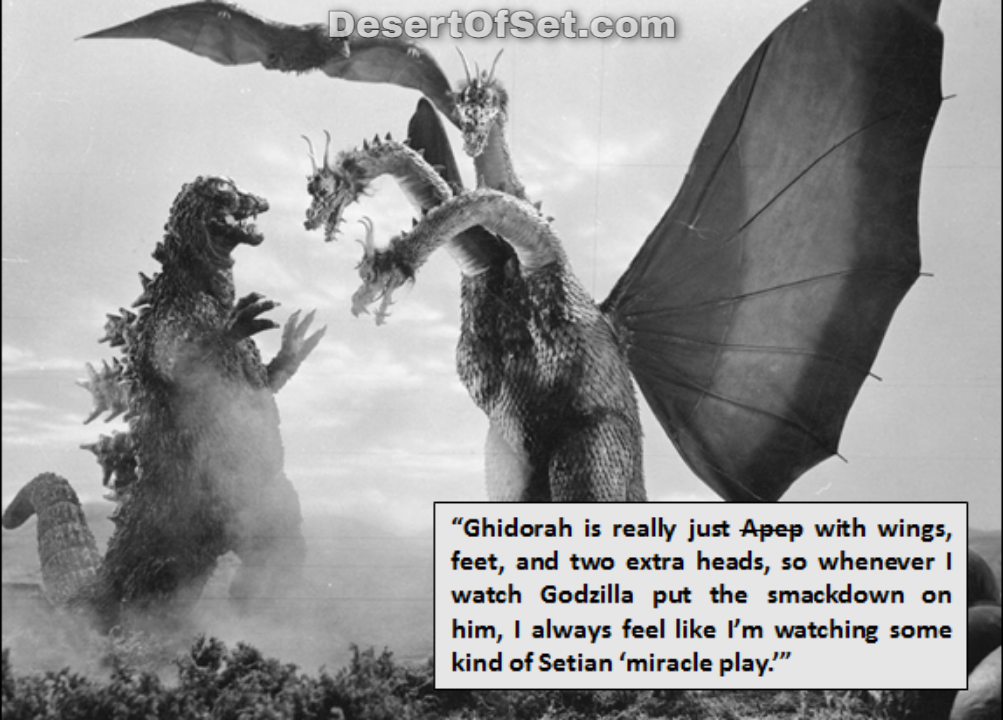
Godzilla’s evolution from apocalyptic monster to child-friendly superhero is a fascinating discussion in and of itself. Recall that in the original 1954 film, Big G is a lot like Set as the slayer of Osiris. The story goes that once His rivalry with Osiris was resolved, Set was “reigned in” by the rest of the Gods to save them from Apep, the Chaos Serpent. In much the same way, Godzilla starts out in the first movie as an innocent freak of nature who goes apeshit and almost nukes the entire planet; then, in Ghidorah, the world realizes it needs Godzilla to defend us from even worse monsters that just want to eat our planet. Ghidorah is really just Apep with wings, feet, and two extra heads, so whenever I watch Godzilla put the smackdown on him, I always feel like I’m watching some kind of Setian “miracle play” (with Godzilla and Rodan as a combative Set and Horus, respectively, and with Mothra as Thoth the mediator).

Since Godzilla’s rise to fame, Hollywood has tried adapting him for American audiences a number of times. In 1998, Dean Devlin and Roland Emmerich produced that terrible remake starring Matthew Broderick. It’s odd that they even chose to name the film Godzilla, considering that it’s actually a remake (or perhaps a parody) of The Beast From 20,000 Fathoms (1953). Any hardboiled Godzilla fan will tell you the 1998 film stinks and should be ignored at all costs; but in 2014, director Gareth Edwards tried adapting Big G for the West once again. And while audience reactions have been very mixed, I was quite pleased with the result myself. It is surprisingly not a remake of the 1954 original, but more of an homage to all the sequels that make Godzilla the hero. Michael Dougherty’s 2019 follow-up, Godzilla: King of the Monsters (named after the Raymond Burr re-edit from 1956), was even better in my opinion, since it’s more or less a remake of Ghidorah: The Three-Headed Monster (complete with Mothra and Rodan teaming up with Godzilla). There’s even a scene that pays homage to the Oxygen Destroyer sequence from 1954, and it makes me cry like a baby whenever I see it. These newer Godzilla flicks might not be to everyone’s liking, but I wholeheartedly approve, and I can’t wait to see more of them.

Yippee skippee!!

The Amityville Error

Discussing the Amityville Horror, the greatest American paranormal hoax of the 1970s, and its influence on the Satanic Panic of the 1980s. 

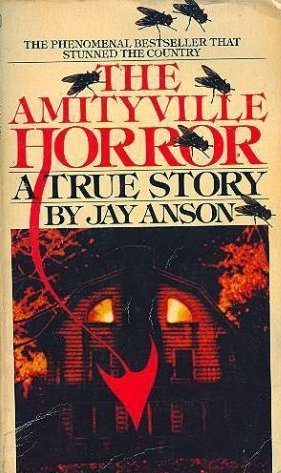
The Amityville Horror began as a hoax concocted by the late George Lutz, which he based on the real life case of Ronald DeFeo. DeFeo murdered his family one night at 112 Ocean Avenue in Amityville, Long Island back in 1973, and the Lutz family were the first to move into that address afterwards. They only stayed there for one month, during which they claimed to be harassed by demonic voices, phantom pigs, invisible marching bands, and a mysterious black ooze dripping out of the walls. Neither of these stories has ever been substantiated, but Lutz landed a book deal with author Jay Anson, who novelized the story as The Amityville Horror (Prentice Hall, 1977). This was later adapted into a 1979 film starring James Brolin and Margot Kidder. For whatever reason, it became one of the most financially successful films of the 1970s, despite the fact that it was produced by American International Pictures (known best for their cheap drive-in schlock from the 1950s and 1960s), and the fact that it’s boring as shit.

Amityville was so successful, in fact, that it quickly spawned a prequel: Amityville II: The Possession (1982). This second film is ostensibly about the DeFeo family, but it takes so many sickening liberties with their lives that I can’t really endorse watching it. It takes its inspiration from Ronald DeFeo’s murder defense, wherein his lawyer, William Weber, seriously tried to push the claim of “demonic possession” in court. This seems especially tasteless considering that George Lutz and William Weber turned out to be in cahoots with each other at the time. (Not for long, though; Lutz soon tried to sue Weber, as well as several other people, for saying things about him he didn’t like. This guy seems to have spent more time suing people than he ever did working an honest job.) Yet Amityville II was also successful at the box office, which meant another film would soon be following in its wake. So in 1983, Orion Pictures gave us Amityville 3D, which is commonly thought to be even worse than the original Amityville.

The Amityville Horror by Jay Anson

The thing is, I actually enjoy Amityville 3D quite a bit; in fact, I think it’s the best Amityville film ever made. (Don’t get overly excited now—that isn’t really saying much!) One thing I like about this one is the fact that it isn’t “based on a true story”; it’s completely fictional, and it never claims to be otherwise. Sure, the story is abysmally stupid, and the characters are more two-dimensional than you can possibly imagine. I can’t even remember any of their names; I just remember Tony Roberts plays an asshole skeptic who moves into 112 Ocean Avenue and stubbornly refuses to believe it’s haunted. Never mind the fact that it kills his best friend (Candy Clark) and his daughter (Lori Loughlin). Then he and his ex-wife Tess Harper get help from Dr. Robert Joy to free their daughter’s soul from the house. There’s also a slimy Bug-Eyed Monster living in the basement, and it seems to be responsible for all the weird shit that happens in the house. That’s pretty much the entire plot right there; there’s nothing about the DeFeos or the Lutzes, and nobody connected with the Amityville Horror hoax appears to have collected any royalties from this entry (which automatically makes it better than either of its predecessors, as far as I’m concerned).

Mind you, Amityville 3D is not what I would call a “good” movie by any means. It’s just that it chooses to exploit a silly movie theater gimmick (3D camera photography) instead of a real-life murder case, which I find much more forgivable. Yet there are some things about this film that I truly enjoy. For one thing, it scared me pretty badly when I first saw it as a kid. In a sequence that shamelessly rips off The Omen (1976), Candy Clark’s character discovers a demonic face in the photos she has taken of the 112 Ocean Avenue property. She freaks out and goes to warn Tony Roberts, but then gets harassed by a demon fly while she’s driving in her car. She crashes her vehicle and is then set on fire, and as she dies, she screams one of the most convincing screams of pain I’ve ever heard in any horror flick. Now up until this point in the film, Clark is built up as being the main female lead, so it was really unexpected (not to mention upsetting) to see her get bumped off like that. It’s not an easy scene for me to watch even as an adult, so I have to give the creative team behind Amityville 3D a great deal of credit for scaring me pretty good.

The Amityville House in 1973

The infamous Amityville house (112 Ocean Avenue) in 1973.

Robert Joy’s character is a parapsychologist who works at some nameless university or institute somewhere, and who is both a “believer” and a “skeptic” at once. He clearly believes in the paranormal, but he’s slow to accept any particular claims about it without sufficient evidence. He was likely only written into the film to make it feel more like 1982’s Poltergeist (which features a number of similar characters), but I enjoy his presence all the same. The other characters are either too quick to believe whatever wild-eyed crap they hear (like Candy Clark and Tess Harper), too quick to dismiss it (like Tony Roberts), or too quick to fuck around with it (like Lori Loughlin and her teenage friends). Of course, the believers turn out to be right about everything in the end; but Robert Joy seems to be the only person in Amityville with a good head between his shoulders, and he’s charming and likable to boot.

It’s too easy to pick this film apart for everything it does wrong; my only serious complaint against it is that there just isn’t enough of the gooey booger monster that shows up at the end. It would have been much more impressive if the writers had decided to unleash this beastie at the beginning of the final act, so he can raise some serious hell for the last 20 minutes or so. As it is, we only see the damn thing for a few seconds before it scorches off Robert Joy’s face and drags his ass down to hell. Then we get some telekinetic-fu as Tony Roberts, Tess Harper, and the rest of Robert Joy’s investigative team get thrown around by invisible forces throughout the house. This part is actually pretty entertaining (especially the shot where the basement door explodes and crashes into one of the scientists, resembling a live-action Looney Tunes segment); but I really wanted to see some monster-fu instead. Oh well, at least the house blows up; if I can’t have my fill of slimy glopola goodness, I’ll settle for a nice random explosion!

Just what in tarnation IS that thing, anyway?

In the earlier movies, the evil of the house is “confronted” by the Roman Catholic Church. The first movie features Rod Steiger as a priest who tries to help the Lutzes from afar, but who really doesn’t accomplish anything useful in the end; he just sort of loses his marbles, and then the movie forgets about him. The second film features a priest who tries to perform an exorcism on the Ronald DeFeo character, but he only succeeds in getting himself possessed instead. In Amityville 3D, Robert Joy’s character is a little more successful in dealing with the evil. (I mean, he does piss it off enough to make it blow its own home to smithereens; that’s got to count for something, right?) This transition from relying on organized religion to relying on quacky pseudoscience for answers was characteristic of the early 1980s. This was the era when the New Age movement really let fly and when “ancient astronauts” were all the rage. Not that I’m criticizing anyone for believing in that stuff if that is what they wish to believe; I just think it’s fascinating that the Amityville filmmakers would choose to take this course. The entire point of 1979’s The Amityville Horror was to cash in on earlier films like The Exorcist (1973), which is practically a late night infomercial for the Catholic Church. Amityville 3D is more like the bastard stepchild of Nigel Kneale’s The Stone Tape (1972), which uses scientific speculation to explain its supernatural events.

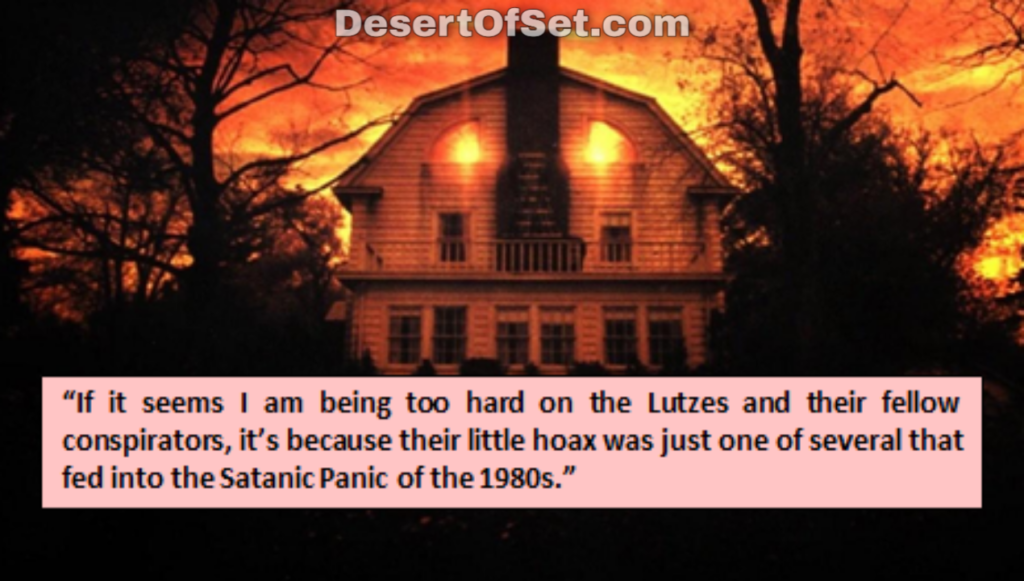
If it seems I am being too hard on the Lutzes and their fellow conspirators, it’s because their little hoax was just one of several that fed into the Satanic Panic of the 1980s. Of all the paranormal investigators who ever looked into their story, Ed and Lorraine Warren are perhaps the most famous and well-known. You might remember their names from all those Conjuring and Annabelle movies that have been produced over the past decade. Ed and Lorraine were a self-styled demonologist and clairvoyant, respectively, who claimed to have investigated over 10,000 hauntings together between 1952 and 2006. And during the late 1970s and 1980s, they were featured on damn near every TV special about the paranormal you might care to mention. My first exposure to them was in Scream Greats Volume 2: Satanism and Witchcraft, a direct-to-video “documentary” from 1986, wherein the Warrens insisted that organized “satanic ritual abuse” (SRA) is absolutely real. These hucksters made their fortunes by hoodwinking people into thinking that minority faiths like mine want to abuse and butcher your children, and the Amityville hoax is what facilitated their rise to fame. Granted, the Warrens weren’t the only SRA-peddlers in business at the time, and they certainly weren’t the worst. But whenever I see a trailer for yet another “Conjuring Universe” movie that probably cost about $140 million to produce, it just makes me feel a little queasy, you know?

There are several other Amityville films that came out after Amityville 3D, but only one of them—the 2005 remake starring Ryan Reynolds—was ever released theatrically. The rest are all direct-to-video or made-for-TV cheapies. The ones that were produced by Steve White—Amityville: The Evil Escapes (1989), Amityville: It’s About Time (1992), Amityville: A New Generation (1993), and Amityville: Dollhouse (1996)—are actually pretty enjoyable in my opinion; but they have almost nothing to do with Amityville or the house at 112 Ocean Avenue at all, so their titles are misleading at best.

On Rosemary’s Baby, the Satanic Panic, and Pagan Leadership

The 1980s Satanic Panic; the persecution of Pagans (in some cases BY Pagans) as “Satanists”; and Rosemary’s Baby as a statement against systemic misogyny. Listener discretion is strongly advised.

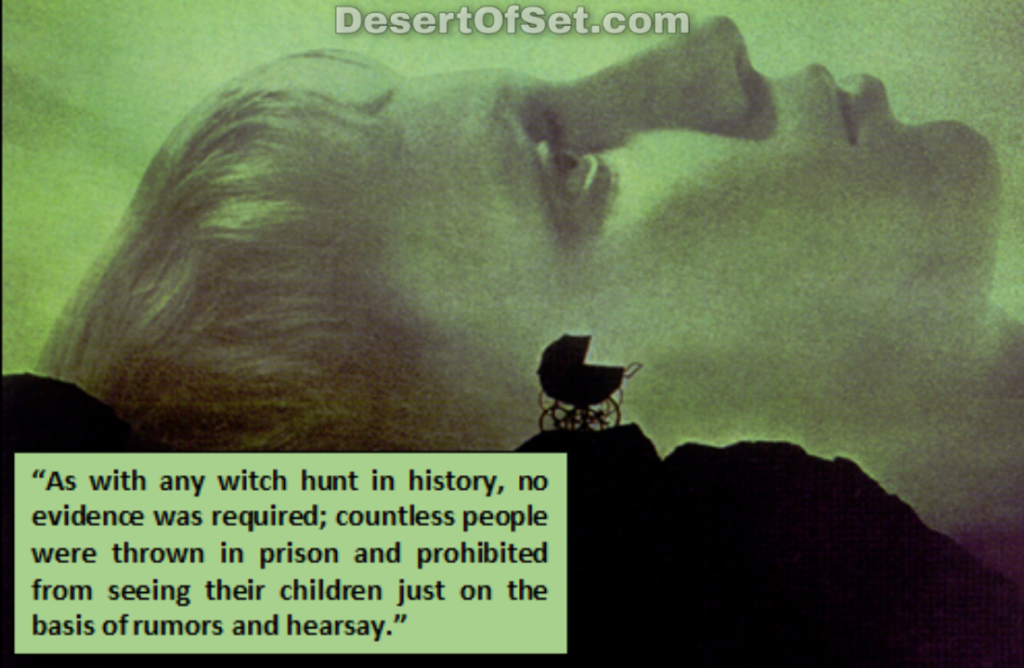
In 1973, a woman named Michelle Smith was treated by a psychiatrist named Lawrence Pazder. Under hypnosis, Smith “remembered” being repeatedly abused by a “satanic cult” as a child. She was allegedly tortured, locked in a cage, and forced to mutilate several babies, all in the name of Satan. These stories were published in Pazder’s 1980 book, Michelle Remembers, which became an overnight sensation. Next thing anyone knew, other hypnotherapists started parading their patients around on TV, calling them “Satanic abuse survivors” and making a shit-ton of money off of them. Sensationalists like Geraldo Rivera popularized these stories, bullying their viewers into accepting these “survivors” and their stories at face value. People started believing there really was an international conspiracy of Satanists who were sexually abusing and cannibalizing little children. Even psychiatric and law enforcement professionals blindly accepted these stories as true. Just being a daycare worker and having someone accuse you of being a “Satanist” (perhaps because you enjoy heavy metal music, or because you play Dungeons & Dragons) was enough to get you prosecuted for alleged child abuse. As with any witch hunt in history, no evidence was required; countless people were thrown in prison and prohibited from seeing their children just on the basis of rumors and hearsay. This was the “Satanic Panic” of the 1980s.

Things didn’t improve until the FBI launched an official investigation of the matter in the early 1990s and said, “Woops! There’s zero hard evidence to support prosecuting any of the people who’ve been put away for this shit! Plus, it turns out that when people are under hypnosis, they’ll remember random shit they saw on TV and think it actually happened!” The adult “Satanic abuse survivors” were actually remembering things they had all seen in popular horror films. Many of them had suffered real abuse in their lives, but were not receiving the kind of care they actually needed. Their therapists were making far too much money being interviewed on daytime talk shows and playing off of people’s fears. Worse yet, this prevented children who really were being abused during the 1980s from getting help as well. The police were too busy hunting imaginary “witches” to do anything about the real pedophiles who were all around them the whole time, preying on children from within their police cars, their clinical offices, or even their church pews. These realizations helped to debunk the entire urban legend of organized “Satanic Ritual Abuse” (SRA), which has not been taken seriously by anyone in psychiatry or law enforcement ever since.

(This isn’t to say that no one has ever been abused by an actual, real life Satanist; it does occasionally happen. It just isn’t as widespread a problem as people think. Such acts are typically committed by lone individuals, not by organized groups, and the victims are usually children in the abusers’ families, not other people’s children. Those who continue to peddle organized SRA stories today are right-wing conspiracy nuts who insist that all the “evidence” for SRA is being “covered up” by nonexistent cults like the Illuminati. (And newer conspiracies like “Pizzagate” are simply a variation of the same theme.) Strange that these people think themselves to be such paragons of moral virtue, given how disappointed they seem to be that there isn’t an international Satanist conspiracy to abuse and murder scores of children!)

As a result of the Panic, the 1980s were a dangerous time to be participating in any new religious movements (NRMs). This was definitely the case for Pagans, many of whom also identify as witches. The word witch is of uncertain origin, but it generally refers to any woman who is wise in the ways of the spirit world. Its use as a slur is rooted in systemic misogyny toward empowered women, and it was reclaimed by Pagans during the 20th century (especially by Wiccans). But the stigma against witchcraft continues to thrive outside of Pagan culture; I can’t tell you how many times I’ve heard about someone calling Child Protective Services on a parent simply because that parent identifies as a witch.

And while it’s understandable that Pagans would want to distance themselves from violent criminals, this was being done in some extremely deplorable ways. Some high profile leaders wrote scathing tirades against Satanism that were every bit as paranoid, deluded, and misinformed as Michelle Remembers. Some even argued that Pagans who follow Gods like Loki and Set should be completely “shunned” from the Pagan community, regardless of anything we might say to explain ourselves. So while Christians were accusing Wiccans and Druids of “worshiping the devil,” Wiccans and Druids were throwing the exact same accusation at Lokeans and Setians. This strategy of deflecting hatred by redirecting it toward other religious minorities is the most disgusting and contemptible act of hypocrisy I have ever personally witnessed, and it continues to color my perspective on many “white light” Pagans to this very day.

Contrary to what most people assume, Satanism never really existed prior to the 20th century. It began as a purely imaginary religion that Christians accused Jews, Muslims, Pagans, and even other Christians of practicing. Apart from the decadent “hellfire clubs” of the Enlightenment period, Satanism wouldn’t become an actual movement until the 1960s. That’s when Anton LaVey founded the Church of Satan and published The Satanic Bible, in which he defined Satanism as a non-theistic spirituality that emphasizes self-deification. Lucifer is viewed not as a supernatural being, but as a symbol for the base animal urges in all people. Satanist rituals are about fulfilling these urges in ways that don’t actually harm anyone, like venting your hatred for someone by destroying something you’ve created to represent them. (Whether this “spell” of sympathetic magic actually works on your intended “victim” is incidental; its true purpose is to work on you.) Many of the people who follow LaVey’s teachings are narcissists, eccentrics, or even Social Darwinists; but surprisingly, most of them aren’t serial killers or child molesters.

The theme of witches harming children goes back thousands of years to the earliest known cases of blood libel in Alexandrian Egypt; but if there is any contemporary influence that gave shape to the Satanic Panic in particular, it is most certainly Rosemary’s Baby (1968), which set the standard for all “devil cult” movies to follow. (In fact, I’m willing to bet most of the “survivors” were specifically remembering things from this film while they were under hypnosis.) And due to its depiction of witches and witchcraft, Rosemary’s Baby can be a very difficult film for many Pagans to watch or even discuss.

Rosemary Woodhouse (played by Mia Farrow) and her husband Guy (John Cassavettes) move into a new apartment in Manhattan. Guy is a struggling actor looking for work, and Rosemary dreams of having a baby to care for at home. She appears to have mixed feelings toward her Roman Catholic upbringing; she blushes when other characters voice criticisms against the Pope, but she dreams of domineering nuns and of parties that are for “Catholics Only” while she’s asleep. The Woodhouses also have some peculiar new neighbors named Minnie and Roman Castavet. They’re an elderly couple who have a young hippie woman living with them, and they make lots of strange noises in their apartment at night. Their young lady friend soon turns up dead (after jumping out a window near the top of the apartment building), and then the Castavets suddenly become very interested in the Woodhouses. Rosemary notices Roman talking conspiratorially with Guy, who seems to have formed a close friendship with the old man, and Minnie keeps invading Rosemary’s space, showing up at the front door all the time and just inviting herself in.

Eventually the Woodhouses decide to try and have a baby, so they schedule a romantic evening at home. But Rosemary falls sick after dinner and collapses in their bed. She has a dream in which she is surrounded by the Castavets and many other elderly people (all of whom are nude). Then she is raped in the dream by a big hairy creature with snake-like eyes. Upon waking, she notices all these bruises and claw marks on her body. This is when we get our first clue that something is seriously wrong with her marriage, because Guy tries to comfort Rosemary by claiming that he had sex with her after she passed out (ostensibly because he was worried about missing her fertile window). Rosemary clearly isn’t comforted by this admission of marital rape, but she suppresses her anger and submits to her husband’s will. And when she discovers soon thereafter that she is actually pregnant, she seems to forget the whole thing for a while.

Rosemary is overjoyed with the prospect of motherhood, but her happiness wanes as she starts to feel a terrible pain in her stomach. The Castavets recommend that she see a doctor named Sapirstein, who prescribes a special vitamin drink for her and tells her she’ll be fine. But the pain only gets worse after that, and whenever Rosemary tries to tell Guy about it, he just becomes angry and belligerent. She begins to lose more and more control over her own body (even receiving criticism for a haircut she gets halfway through the film), and she starts to imagine that the Castavets are child-murdering witches. She comes to suspect Guy of having made a pact with them, a pact that somehow involves her unborn child. This is sustained by the fact that Guy visibly hated the Castavets when he and Rosemary first met them, but now he adores them for no apparent reason, listening to everything they suggest about Rosemary’s pregnancy. But are the neighbors really witches? Do they really want to hurt Rosemary’s baby? And is Guy really in on the plot? Or could it be that poor Rosemary has just gone crackers?

(If you wish to avoid reading any spoilers, stop reading this and go watch Rosemary’s Baby right now. If you’ve seen the movie already, or if you don’t care about spoilers, please proceed.)

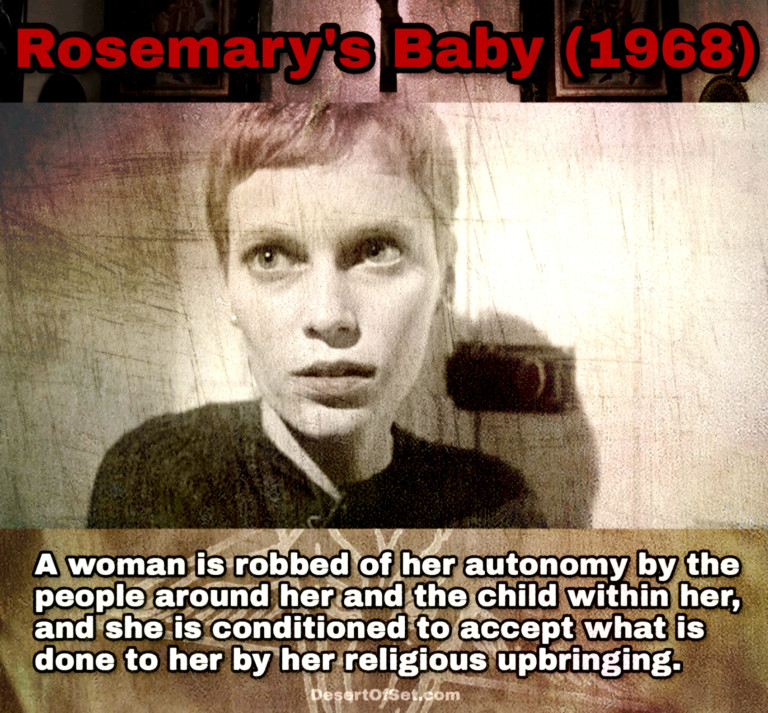
It turns out the Castavets are indeed leading a coven of Satanist witches, but they’re not interested in harming Rosemary’s baby; since the father is actually Lucifer himself, they’re working to protect the little monster instead. And Guy is definitely in cahoots with them, having prostituted his wife to the devil in exchange for a solid movie career. But the real horror in Rosemary’s Baby is neither witchery nor diabolism; it’s the experience of being physically violated, of not being able to trust your spouse, and of being caught between two clashing ideologies that both regard your body as someone else’s property. It’s easy to see how this applies to the Castavets and their followers; for them, Rosemary is simply a vehicle for the delivery of their dark messiah, and she has no choice but to obey them at the end of the film. But do you know what else is good for oppressing women and legislating their uteruses? Roman Catholicism, that’s what. Were Rosemary to approach the Catholic Church for help, her situation would not be any different; she would still be expected to carry her pregnancy to term, and she would still be told what to do with her body by men who know nothing of what it’s like to be pregnant. (If the church thinks it’s a woman’s “duty” to give birth even when she’s been impregnated by a rapist, why should we expect anything different when that rapist turns out to be the devil?) In fact, Rosemary’s Christian upbringing actually helps the Castavets control her, because it has already conditioned her to go along with whatever is expected of her.

But this subtext goes even deeper, for Rosemary is the mother of the Antichrist, who is naturally the opposite of Jesus Christ. And what happens in the story of Jesus? Well, he’s born of a young woman who’s made pregnant by a supernatural being without her prior knowledge or consent, and—

Woops.

The Satanists in Rosemary’s Baby are nothing like real life diabolists; they are instead a metaphor for the twisted chauvinist society in which we all live. Sure, they worship Lucifer instead of Yahweh, and they serve Antichrist rather than Jesus; but at the end of the day, they’re still an oppressive, abusive, and manipulative patriarchy. The men are in charge, the women are subservient, and one woman is raped so their male “savior” can walk the earth. How is the story of the Virgin Mary any different from that of Rosemary in principle? How is the Christian “pro-life” movement any better than what Guy and the Castavets do to keep Rosemary under their control? When I first saw this film, I couldn’t get past the fact that so many people think its depiction of witchcraft is 100% accurate. But as I re-watched it over the years, I began to understand its true purpose: to illustrate how horrible it is for women to be treated as “property” in the name of any male superbeing. Even Ira Levin, who wrote the novel on which Rosemary’s Baby is based, has expressed regret that it would later be used to reinforce the Satanic Panic so much. (Levin is Jewish, which means he doesn’t even believe in Satan and would have no reason to believe in organized SRA.)

Strangely, Anton LaVey was obsessed with this film, and it continues to enjoy a strong fan base among real life Satanists. The reasons for this are not immediately clear. LaVey appears to have thought the Satanist characters are revolutionary insofar as they resemble realistic, everyday people (as opposed to being a bunch of weirdos wearing black hooded robes). He also claimed to have served as an uncredited technical advisor for the film, providing some authenticity to the film’s ritual scenes. To the best of my knowledge, this claim has never been substantiated; LaVey simply spread the rumor around to cash in on the film and generate some free publicity for his church. Every now and then, I encounter a Satanist who thinks Rosemary’s Baby is “pro-Satan” somehow, and I can only shake my head at them. Considering how much fuel this movie gave to the Satanic Panic about 13 years after its original theatrical release, you’d think these people would find it just as troubling as most Wiccans or Druids do; but I digress.

Back in the 1990s, when I was still a young Setian novice, things were very different in the Pagan community than they are now. Nowadays, I can attend a Pagan meetup, mention I worship Set, and most people will probably be OK with having me around. But in the 1990s, it was a whole other deal. As soon as people saw my horned pentacle necklace or heard me praise the Son of Nut, they would tell me I wasn’t welcome, that I was being a “disruptive influence,” and that I should just leave. They automatically assumed I was some demented freak who just wanted to cause trouble. I’m pretty sure most Wiccans and Druids have no idea what it feels like to be excluded and alienated by other Pagans in this way. The thing that has always infuriated me the most about this treatment is that it was trickling down from the top. Big name Pagan leaders like Isaac Bonewits were actively encouraging their followers to treat Setians, Lokeans, and other Pagans they didn’t approve of like we’re all a bunch of extremist psychopaths. These “leaders” seemed to think the most appropriate way to deal with the Satanic Panic was by diverting society’s attention from themselves to people in Paganism they wanted to exclude. In doing this, they helped to promote a “legitimized” stereotype about Paganism that is not representative of the entire Pagan population.

To make things even more interesting, the #MeToo Movement has helped to reveal that some of these Pagan “leaders” are or might have been child abusers themselves. This brings new light to every nasty thing these people have ever said about people like us when the Satanic Panic was still fresh. Trying to save their reputations by targeting an entire sector of the Pagan population for exclusion is one thing; but to think that even the late great Isaac Bonewits was one of the people the police should have been investigating the whole time? I hope you can understand why I would be enraged by this.

The lessons to be taken from all of this are as follows. No one should ever be deprived of their bodily autonomy like Rosemary Woodhouse is by her husband Guy and the Castavets. While the Castavets don’t reflect actual Satanist practices or values, they do reflect the very real issue of human trafficking, which was not an issue most people were aware of during the 1960s. But if Rosemary’s Baby was meant to galvanize society into addressing this particular concern, perhaps it succeeded a little too well. It blurred the line between “new religious movements” and “human trafficking rings,” leading people to assume that all religious minorities are extremely dangerous. This distracted law enforcement from sufficiently investigating and prosecuting some of the real trafficking rings that were actually in operation at the time. It also led to several Pagan “leaders” throwing Pagans they didn’t like under the bus, even while some of them were allegedly abusing children behind locked doors. And if that doesn’t make you feel sick to your stomach, you must have a much weaker gag reflex than I do.

Satan Sells

The Stuff Nightmares Are Afraid Of

Wes Craven’s A Nightmare on Elm Street (1984) is a terrific allegory for the eternal conflict between Set and the Chaos Serpent. With instructions for a spell for protection during sleep.

In Wes Craven’s A Nightmare on Elm Street (1984), some teenagers start having nightmares in which they’re menaced by this disfigured creep who has knives for fingers. Whenever this asshat kills someone in their dreams, they die in real life at the same time. One of the teenagers, Nancy Thompson (played by Heather Langenkamp), discovers that when they were little children, their community was terrorized by a serial killer who preyed on little kids. The man was arrested and put on trial, but he got off on a technicality and was released. Then, fearing for their children’s safety, the parents of the community took the law into their own hands and burned the killer alive. But this has only made things worse, for it is the killer’s ghost who now haunts the kids in their dreams, seeking revenge against the parents by finishing what he started. Now it’s up to Nancy to find a way of execrating this evil spirit.

On the one hand, A Nightmare on Elm Street has more than its fair share of devoted fans; on the other, it receives far more derision from mainstream critics and the general public than it really deserves. I blame this on most of the sequels, which became increasingly goofy with each new installment. By the end of the 1980s, Freddy Krueger was practically a live action cartoon character, and this is the version of him that most people remember today. Sequels like The Dream Warriors (1987) and The Dream Child (1988) are more like self-parodies than straight horror films; they don’t even bother to take themselves that seriously. But if you watch the original Nightmare from 1984, I promise you: even if it doesn’t scare you, it will make you quite uncomfortable at the very least. There’s absolutely nothing “funny” about this film at all, and the Freddy Krueger character is really just the tip of the iceberg.

When the film begins, the daylight reality in which Nancy and her friends all live seems safe enough; but as Freddy Krueger becomes more prominent in their dreams, the ugly truth about their everyday world begins to unfold. These things are never stated to the audience outright, but viewers will notice that Nancy’s parents are divorced (and that the proceedings of this arrangement were anything but amicable). Nancy’s mother is an alcoholic, and her father—the town sheriff—only shows up whenever there’s a tragedy. At the same time, Tina’s mother also seems to be divorced and would much rather spend time with her boyfriend in Las Vegas than stay with her daughter (even when she knows the poor kid has been having terrible nightmares). Rod’s parents seem to be completely absent from his life, leading him to take on a life of petty crime. And then there’s Glenn (played by a baby-faced Johnny Depp), whose parents demonize Nancy for no good reason aside from the fact that two of her friends are dead.

It’s ironic that these parents once resorted to mob justice to protect their community, for they don’t seem to care very much about their community now. None of them are involved in their children’s lives anymore, and none of them seem to care that much when each other’s kids die. When Tina gets butchered, Rod is immediately accused of the crime, and none of the adults ever question this. We never see Tina’s mother afterwards, so we’re left to wonder if she even grieves for her daughter at all. When Rod gets strangled by Freddy in his jail cell, it’s clear to all the adults that it was suicide and no one shows any kind of sympathy for him. Clearly, Tina and Rod’s deaths mean nothing to Glenn’s parents, who seem to think they can avoid having anything like that happen to Glenn by keeping him away from Nancy. Meanwhile, Nancy knows exactly what’s happening, but no one will believe or even listen to her, even when the evidence is staring them in the face. For Duat’s sake, she can’t even get any help from her father, the sheriff!

It is this complete absence of parental support that makes the film truly terrifying, in my opinion. Never mind the idea that Nancy and her friends are being targeted by a supernatural force; Freddy Krueger is simply the 1980s American version of an ancient Akkadian Alû demon (i.e., a spirit that terrifies people while they sleep), and the ancient Akkadians knew well enough how to deal with such things. If an Akkadian child reported having certain experiences while he or she was asleep, his or her parents didn’t take any chances; they simply execrated the Alû with their magic and the problem usually went away. So the idea of Freddy Krueger in and of himself is not that impressive; entities like him are just little things in this world, and it doesn’t take that much to get rid of them. It would help if the Elm Street families were willing to entertain the possibility of such events in the first place; but even more importantly, the fact that the children can neither trust nor depend on their parents is a serious problem. That is what enables demonic forces like Freddy to perpetuate themselves in the first place, and that is what disturbs me most in this film.

Mind you, I’m not claiming that every childhood boogeyman is actually real; nor do I contend that magical thinking is always the best answer to one’s problems. But if I had a kid and she told me that some freak was coming after her in her dreams, I wouldn’t laugh at her or treat her like she’s crazy. I’d say, “Well, it could be one of two things going on here, hon. It could be that there really is some freak coming after you in your dreams; or, it could be that it’s just a dream and nothing more. Either way…I say we whack the fucker, just in case.” And then I’d have her draw a picture of the creep that’s scaring her, and we’d hurl all kinds of abusive language at him in Set’s good name. We’d stick pins in his ass and chop him up into little pieces; then we’d throw him in the fireplace and watch the little bastard burn. Call me superstitious if you like, but like the Akkadians, I don’t believe in taking any chances with this kind of stuff. No kid should ever have to face a monster alone like Nancy does in Nightmare on Elm Street.

(If it seems crazy that I’m talking about the things that happen in Nightmare like they’re real, I’d like to point out that the film is partially inspired by true events. During the 1970s, director Wes Craven read an article in the L.A. Times about a group of Khmer refugees who were living in the United States, and whose children were having nightmares that disturbed them so badly, they refused to sleep. Some of them later died in their sleep, and it was as if they had known they would die if they didn’t stay awake. This story disturbed Craven to his core, and it later became his main inspiration for writing Nightmare. Craven has also said that he took inspiration for the film from certain Buddhist and Taoist ideas, and anyone who’s ever listened to the man talk will know that he actually believed in some kind of spirit world.)

The Nancy Thompson character is easily the best thing about this film; in fact, she’s the very best “Final Girl” since Laurie Strode in Halloween and Ellen Ripley in Alien (1979). Unlike Laurie, she becomes aware of her nemesis early in the film and she actively hunts him down; and unlike Ripley, she has no weapons aside from her own determination and resourcefulness. Nancy eventually discovers that if she holds on to something in her dreams while she’s waking up, she can bring it over to the real world. She decides to conduct this extremely dangerous experiment with Krueger, and when it proves successful, the tables are immediately turned. Freddy finds himself at Nancy’s mercy, suffering every form of abuse the teenager can throw at him; he even becomes afraid of her at one point. And considering just how slimy a character Freddy really is, it feels really good to see him get his comeuppance this way.

This humiliation of the antagonist is a recurring theme in many of Wes Craven’s films (including 1972’s The Last House on the Left, 1977’s The Hills Have Eyes, 1988’s The Serpent and the Rainbow, 1991’s The People Under the Stairs, and 1996’s Scream). There’s almost always a transition point in these movies where the surviving victims gain some kind of advantage over the villains, and the villains become blubbering, pathetic fools. I believe Craven’s intention here was to demonstrate that while evil may often seem very powerful and formidable, it only has as much power as we allow it to have. When we take that power back, evil is revealed for the frail and empty little thing that it really is. And in the original script for Nightmare on Elm Street, that is exactly what happens; Nancy defeats Freddy Krueger by taking back all the energy she’s put into him with her fear, and his spirit is dissolved back into the Void forever.

My only criticism of A Nightmare on Elm Street is the fact that its ending was sloppily changed at the last minute, and for purely commercial reasons. Nancy defeats Krueger, and all seems well; but then she realizes she’s actually having another nightmare, and the rotten bastard gets her after all. This ending always leaves a very bad taste in my mouth. They go through the entire movie developing this really likable character who’s noble and strong and who succeeds in defeating (and even humiliating) the villain; then they pull the rug out from under her at the last minute just to give the audience one last jump scare. Granted, it scared the hell out of me when I first saw this film as a kid; but as an adult who’s digested the rest of Wes Craven’s work, I can see just how “un-Cravenian” that ending really is. As it turns out, Craven had a major dispute with Nightmare’s producer, Robert Shaye, who wanted a scary ending to set the stage for a sequel. Craven eventually gave in to Shaye’s demands just so they could finish making the film. I think this was an unfortunate choice on Craven’s part, as it prevents Nightmare from being a truly perfect film; but the rest of the film holds up remarkably well, even after 30 years, so at least there’s that.

When you stop to think about it, sleep really is kind of a scary thing. If we hold to the Cartesian definition of existence (i.e., “I think, therefore I am”), we technically cease to “exist” for a while when we aren’t awake. Sure, our bodies are still there and our brains continue to function; but we don’t really “think” in the normal sense of the term, since we aren’t conscious. So in a way, we all become like Schrödinger’s Cat when we’re asleep; we’re neither alive nor dead, and we only collapse back into a solid state of reality when we regain our capacity for conscious self-reflection. We’re extremely vulnerable while we’re in this state (both physically and otherwise), and this is partly what the Egyptians were getting at with their tales about Ra being menaced by Apep in the Underworld each night. By attacking Ra, Apep isn’t just posing a cosmic threat against the Creator; it’s also posing a personal threat against all creatures that sleep and dream.

Nancy Thompson’s struggle with Freddy Krueger is a perfect representation of this principle, especially since it’s built upon fears that many cultures traditionally associate with sleep. Apep and Krueger are both astral monsters that try to kill living things while they regenerate (whether this means a sleeping Creator or a sleeping human). Both attempt to kill the future (whether by preventing the dawn or by murdering kids). Both thrive when the good do nothing (whether this is due to a paralyzing gaze or a conspiracy of silence). And both are easily overpowered once you learn how to see through their tricks (whether this is achieved by a badass Thunder God or a plucky suburban teenager). In this way, I consider the character of Nancy Thompson to be a true daughter and warrior of Set.

Set & Nancy Thompson vs. the Serpent & Freddy Krueger

Incidentally, here is a procedure you can use to help you feel a little more like Nancy Thompson when you need it most. If you ever get scared when you’re in bed at night, give this procedure a shot. No Freddy Kruegers can hold a candle to the awesome power of He Before Whom the Sky Shakes.

Get a blank sheet of paper and some red paint. (If you don’t have any red paint, you can use a pen with red ink.) Draw a donkey that’s facing left, and write the word “EOEOE” in the shape of triangle on its neck. Then write “LERTHEMINO” on its back, and write “SABAOTH” on its breast. Finally, write the name “ABRASAX” directly beneath the donkey’s hooves, so that it looks as if the donkey is “walking” on the word. You don’t have to be a great artist; even the simplest and most child-like scribbling will do. (In fact, the simpler and more child-like you can manage, the better.) Just make absolutely sure that you draw the donkey facing to the left and that you write the voces magicae (“words of power”) exactly as I’ve said. When you’re finished, your painting or drawing should look like this:

Typhonian Spell for Protection During Sleep

Next, place this painting or drawing in a folder or something else in which it can stay unfolded and flat. (Under no circumstances should you fold it or crumple it.) You must never let any sunlight touch this image you’ve created; it must always be kept in darkness. Once you’ve placed it inside a folder, place it under the mattress of your bed. Preferably, it should be sandwiched between your mattress and your springboard. If the negative energy in your home seems to be centered on someone else in the house (e.g., a child), place the folder under his or her mattress instead. You can make one of these donkey images for each person who lives and sleeps in your home, if you like. Just follow the exact same procedure for each one. Make sure you place the images in areas where they can’t be seen, where no sunlight can touch them, and where they’re close to you and your loved ones while you sleep. Keep them there for at least seven days and nights; you can feel free to remove them after that amount of time has passed.

On the Temple of Set

Some thoughts on what is probably the most well-known Setian community today.

The Temple of Set was founded by Michael Aquino, a Lieutenant Colonel in the U.S. military, in 1975. This was the result of a schism within the Church of Satan, in which Aquino had been a high-ranking member. Aquino had some major philosophical and administrative differences with the church’s founder, Anton LaVey, especially when it came to the theological existence of “the devil.” LaVeyan Satanists are not theistic devil worshipers, but scientific materialists who just happen to share a taste for gothic theatricality. (And why not? Goth stuff is sexy.) But in 1975, some members believed a real supernatural force was somehow attending their rituals, and Anton LaVey eventually made it clear that such views just weren’t welcome in his outfit. So Aquino left and performed a rite of his own to invoke “the devil” and figure out what to do next. He was answered not by any biblical concept of Satan, but by the Egyptian god Set, who impressed upon Aquino the concept of kheper (spelled Xeper in Temple of Set literature). Aquino then founded the Temple, which is still the most publicly well-known Setian community today.

Aquino’s Setianism requires some explanation. Reconstructing a neo-Egyptian faith was never his intent; his philosophy really begins with a refutation of LaVeyan materialism, and not with any Kemetic groundwork. Aquino was reacting to LaVey’s teaching that human beings are just organic meat machines that cease to exist upon death; he argues that human intelligence is supernatural by its very definition, and that it can indeed survive the shedding of its mortal coil. He drew more of his inspiration from Gnosticism, Neoplatonism, Thelema, and LaVey than he did from actual Egyptian sources; and while he does acknowledge Set as a real being, he has never condoned venerating Him. Temple of Set members prioritize kheper, the evolution of their souls or psyches to become gods after death. Like LaVeyan Satanists, they seem to look down upon devotional religion of any sort, even when it is directed toward Set. They claim that submission to any external deity will lead to total dissolution of the soul in the afterlife. As such, Setians of the Temple of Set are not worshipers of an Egyptian God per se (just as Church of Satan members aren’t “devil worshipers”), but something more like Gnostics, Thelemites, or Satanists who just happen to dig Set. They approach the Red Lord from a completely different playing field than Kemetic-based traditions do; our faiths are rooted in Egyptology, while theirs is rooted in Western ceremonial magic.

I am occasionally asked if I am a Temple of Set affiliate. The answer is no, and I never have been. While I have a great deal of respect for the Temple and many of their publications, I determined a long time ago (when I was 18, in fact) that this organization would not be a good fit for me personally. I identify as a Setian first and foremost because I love Set and want to honor Him as much as I can in this life. I find it annoying when “left-hand path” occultists conflate all devotional religion with “submission” and “self-denial,” since this conveniently ignores the fact that historical Setians like Aapehty and Ramses II clearly worshiped Set. I resent the suggestion that ancient Setians “didn’t understand” Set as well as we do today; that is some major white colonialist bullshit right there. And I have never trusted religious organizations that charge annual membership fees, or that possess rigid hierarchies. I understand things can’t get done without regular funding, and that all churches require good administrative leadership if they are to succeed; but I don’t think anyone should have to pay any money or kiss any hiney to learn about Big Red.

I’ve interacted with some junior Temple members (“Setians I°”) who insisted I couldn’t possibly have any authentic standing with Set without joining the Temple and learning all the secret things they keep from the public. I realize these individuals weren’t speaking for the Temple’s priesthood; but in my experience, such clique-ish attitudes tend to trickle down from the top. And if people can’t reach out to Set and be answered by Him without the Temple’s guidance, how the fuck did people worship Him in ancient Egypt? What do these people have that the Egyptians didn’t, and which the rest of us can’t find by visiting any museum or public library? It’s one thing for homegrown witch covens to keep some of their lore and rituals private, so as to prevent these things that are sacred to them from being appropriated by outsiders. It’s quite another matter for organized, incorporated, tax-exempt churches to claim they hold cosmic secrets one can only learn by paying regular dues. So even as a young Typhonian foal, I saw little point in trying to join.

In Temple of Set literature, Set is often defined as the Platonic Form or Principle of “Isolate Intelligence,” a “non-natural” alien entity that somehow modified the DNA of our primate ancestors so we would evolve to have individual psyches or souls. (It gets even more complicated from there.) This has little to do with anything the ancient Egyptians believed, and that has always been a major turn-off for me. I am a Pagan; for me, Set is a part of nature, not something that exists apart from or in opposition to it. The latter idea is a little too close to qliphothic anti-cosmicism for my interest, and this is only reinforced by all the Temple literature I’ve seen that poo-poos Paganism. Mind you, I don’t believe Set even recognizes words like “heresy” or “blasphemy”; so disagreeing with someone else’s Setian theology is not really a big deal. I can think your understanding of Set is totally batshit while still accepting you as a fellow Setian. Yet I am a proud animist and devotional polytheist, and if you tell me you think worshiping nature is ignorant or backward, I’m going to question why you align yourself with a Pagan God in the first place.

But just as I can appreciate Anton LaVey without agreeing with everything he ever said, so too can I appreciate Michael Aquino. He used his professional reputation to help see that minority religions are better represented among the U.S. Armed Forces, and he was at the front lines when it came to fighting the Satanic Panic during the 1980s. He is somewhat infamous for being so fascinated with Nazi history; but he just writes about how Nazi occult rituals were perversions of Norse polytheism (which is absolutely true, as any Heathen can verify); I’ve never seen him praise Hitler, promote fascism, deny the Holocaust, call for the extermination of Israel, or anything that Nazis actually do. Plus he’s a veteran, and some vets are just really into certain areas of military history that make people uncomfortable in polite conversation. I’m sure the man ain’t perfect, but it means a lot to me that someone like Aquino was there to raise awareness about Set back in the day. Even though I disagree with some of his opinions, anyone who has learned about Set from me should know that learning about Aquino is what catalyzed my own conversion in 1997.

Even Zeena Schreck, the youngest daughter of Anton LaVey, eventually left the Church of Satan and joined the Temple for a while; then she left that as well and started her own project, the Sethian Liberation Movement. Remember that Schreck is the first person on record to have been raised a Satanist from birth. She ditched her father’s Satanism, but she came to Set instead of coming to Jesus you might say (and she identifies as a Buddhist, too). The idea that this forgotten Egyptian God would steal people away from Satan’s “Black Pope”—including his own daughter—and inspire them to be Setians instead has always been especially meaningful to me. Schreck is not the only former Temple member to continue walking with Set in her own unique direction, either. Some have become Kemetics or devotional polytheists, and as I mentioned above, even those of us in the LV-426 Tradition have benefitted from Aquino’s work. So while I have about as much interest in the Temple as they probably do in me, I believe Big Red really did answer Aquino’s call to “the devil” on that dark night in 1975; and I’m quite grateful He did.